Protest songs have been unifying Americans against authoritarianism for centuries, but what happens when you take those pieces off the street and into the concert hall?
On April 19 at Noe Valley Ministry, Palaver Strings offered an answer to this question in its performance of A Change is Gonna Come — a concert conceived in the wake of the police murders of George Floyd and Breonna Taylor in 2020. While the music was often stirring, the classical concert setting at times felt incongruous with the program’s themes of urgent social change.
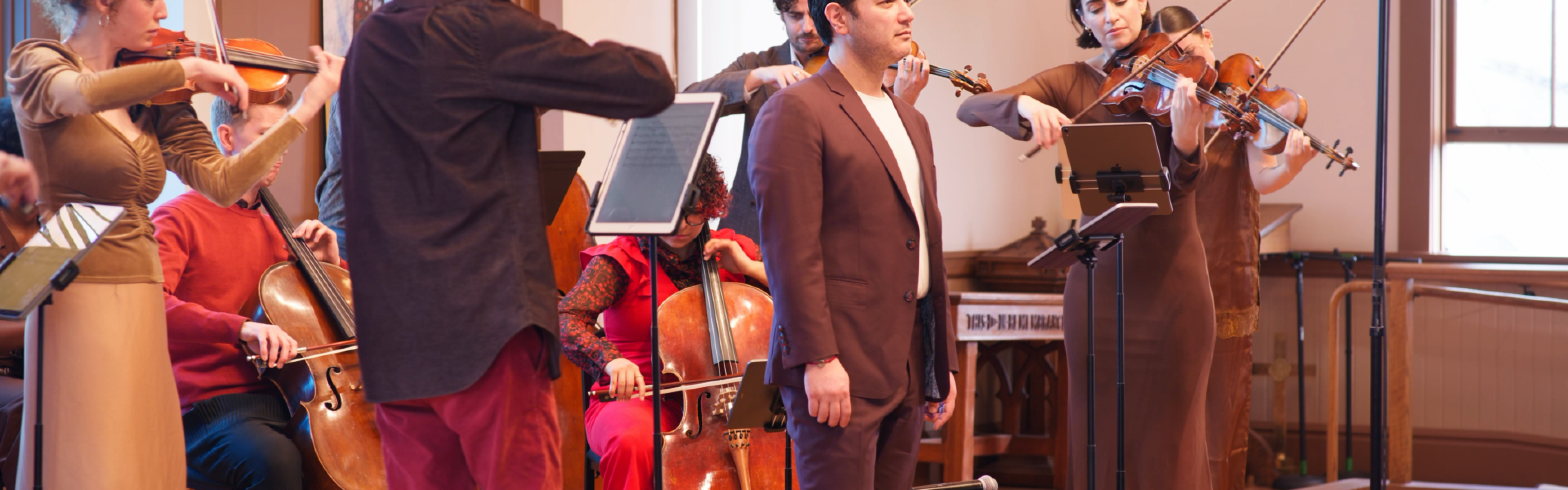
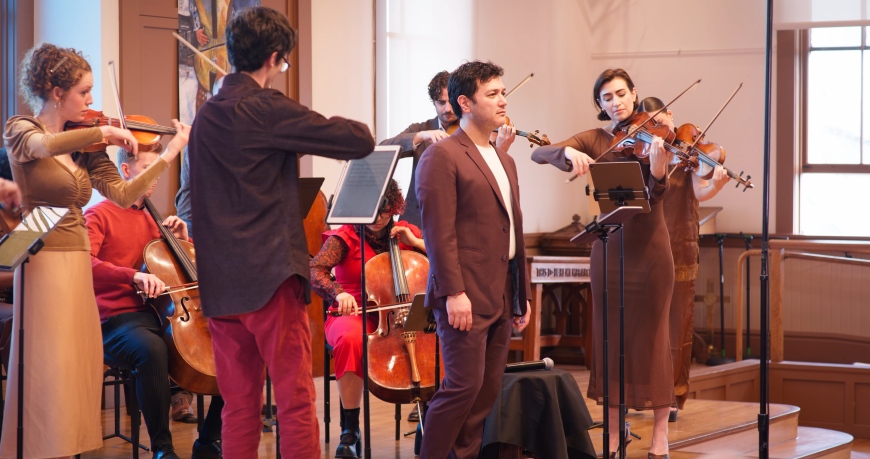
As a conductor-less thirteen-person ensemble, Palaver Strings has the difficult task of making artistic and administrative decisions with "13 co-artistic directors." Any such difficulty was inaudible onstage; each piece started and ended in unison. The musicians played passionately and took cues from one another seamlessly — a captivating feat visually interesting in its own right.
Between each piece, the musicians rotated positions within their sections, giving them opportunities to both lead and follow throughout the concert. Such well-coordinated egalitarian playing stood out amid the hierarchical norms of classical performance.
The Grammy-nominated string ensemble’s democratic structure seems appropriate for a program of protest music honoring civil rights and labor activists, as well new works commissioned from Black composers. However, the 1960’s civil rights and anti-war songs that opened and closed the program presented a challenge to the medium of a classical concert.
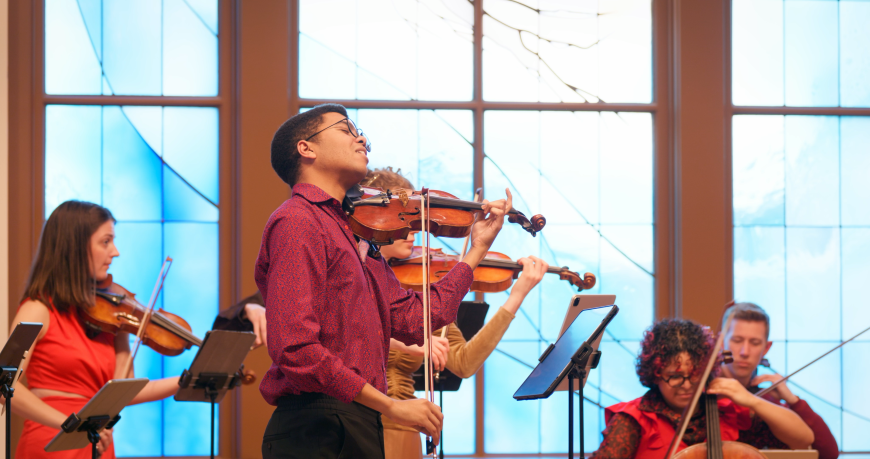
Here were anthems sung originally in a spirit of collective defiance, sometimes before crowds of demonstrators, now played by a string ensemble before a silent audience. The galvanizing potential of this music felt diminished in a space where much of the room took on the role of spectator.
The orchestra beautifully captured in pizzicato the spirit of a drum in Joni Mitchell's "Fiddle and the Drum" and of a march in Pete Seeger's "Where Have All the Flowers Gone," yet the adaptation of these songs for orchestra removed the folksy element that has given these songs their power over time. Perhaps some audience participation could've better evoked a feeling of commonality.
A holier marriage of genre and message arrived in the middle of the concert, when the ensemble played new works commissioned for this program.
Akenya Seymour's “Fear the Lamb,” a piece in three movements about the lynching of Emmett Till, expressed an extraordinary musical narrative. A rich cello solo gave way to jazzy phrases that evoked Till’s life before his untimely death, followed by an elegiac ending where violin and viola traded the melody. Earlier in the concert, two songs by Errollyn Wallen stood out. A dynamic viola section in “Boom Boom” laid the groundwork for a rousing “Song for the People,” whose buoyant march recalled the chorus of “Do You Hear the People Sing” from the musical Les Miserables.
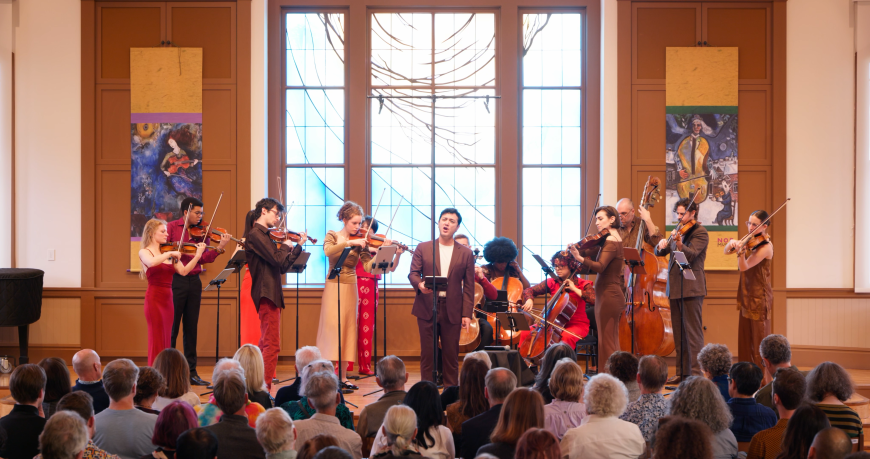
Tenor Nicholas Phan was stunning throughout the evening. His silky voice sounded especially smooth in “Lovely, Dark and Lonely One” (1935), which Harry T. Burleigh wrote by setting to music the poetry of Langston Hughes. In a program featuring African-American spirituals, it felt thematically harmonious to include this gorgeous orchestral piece by Burleigh, who is credited with bringing African-American spirituals into the sphere of classical music.
The venue, a church, complicated the experience of the concert. That we sat in pews usually filled by people singing or clapping further emphasized our silence as an audience, and yet the sacred container of the church felt like a righteous nod to the religious origins of many African-American spirituals.
As several co-directors in the ensemble noted, it's rare that classical music engages themes of social injustice. Palaver Strings, based in Maine, has laudably engaged such issues while amplifying the works of composers often overlooked. In an era of extreme inequality, the ensemble’s effort is commendable, even if the medium at times felt jarring on Sunday night.