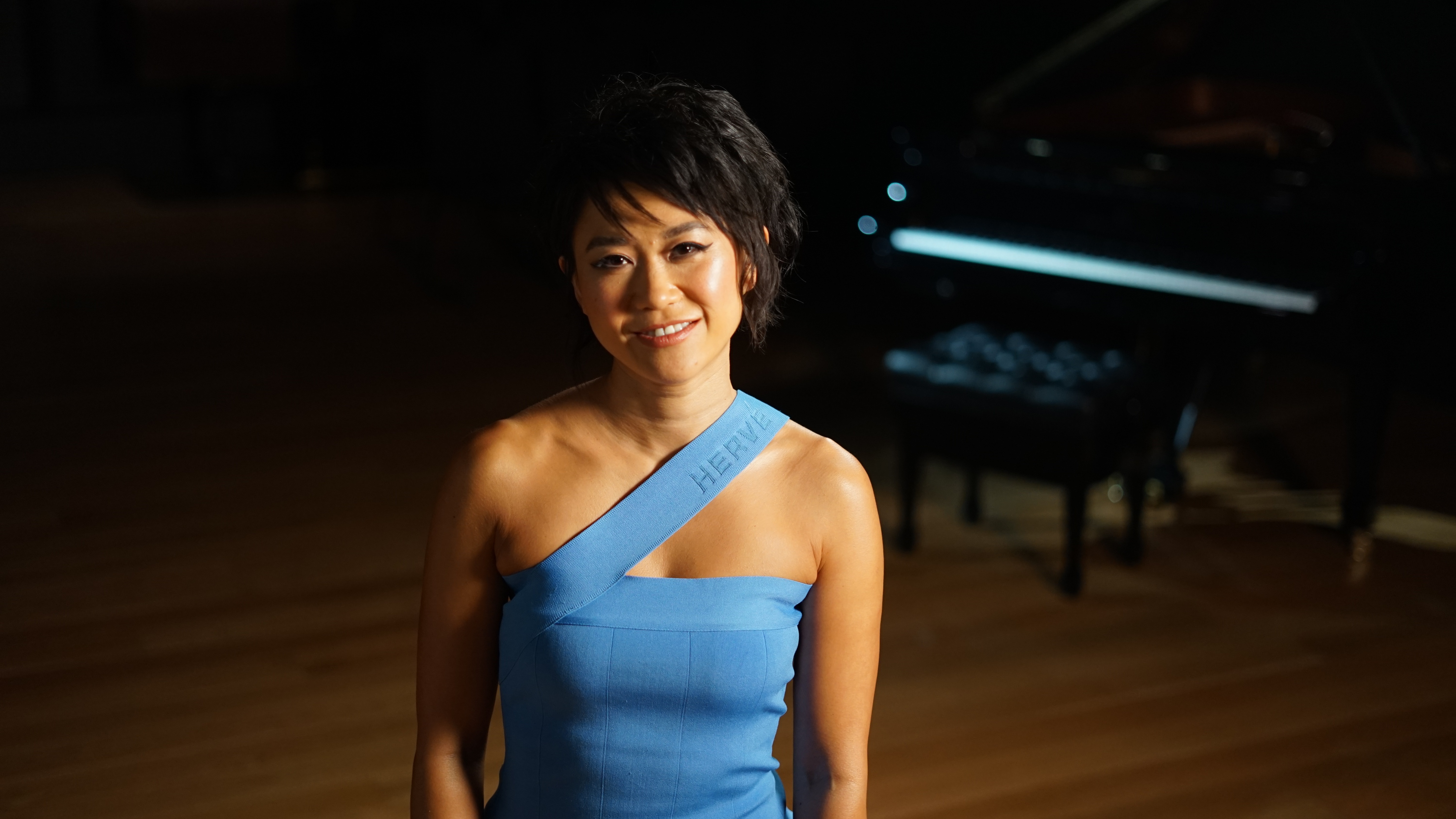
It’s easy, even cliché, to rave about Yuja Wang’s virtuoso playing. But her technique is only part of the story. She brings real musical insight, preserving a sense of risk while giving shape and a distinct voice to the most fearsome music.
Those qualities defined her performance Sunday night, April 26, at Davies Hall, where she played with and led the Mahler Chamber Orchestra. The program of 20th-century Soviet music showed her special affinity for this riotous, machine-age music, with Sergei Prokofiev’s Piano Concerto No. 2 (1923) as the centerpiece.
Many in the audience Sunday night probably remember hearing Daniel Trifonov play it on this same stage just over a year ago. But there’s little comparison. For all Trifonov’s gifts, Wang is the perfect match for this piece’s mystery and magic.
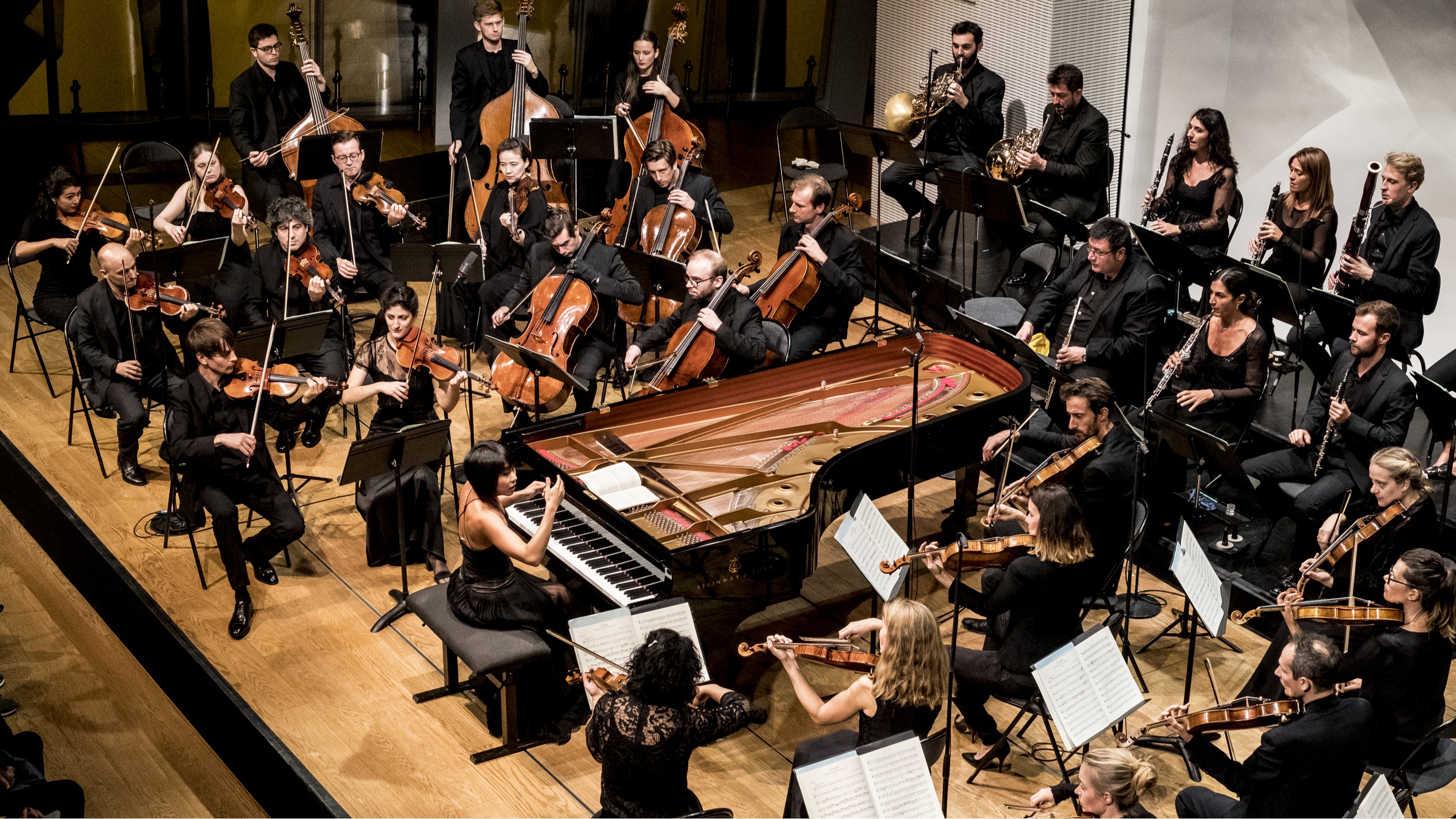
The cadenza of the first movement is a test for even the best pianists. Here and elsewhere — especially in the restless second movement — Prokofiev writes the piano part as a perpetuum mobile, with every phrase bleeding into the next without pause or breath. Wang knows when to draw this fevered music into the background, when to hammer its mechanical accents and when to lend it a softer lyricism.
Inwardness isn’t exactly Wang’s style; she sometimes lacks the warmth and softness that would make her playing more introspective. One of Wang’s three encores, Chopin’s Nocturne in C Minor, Op. 48, No. 1 is a good case: the ruminative piece would’ve benefited from a softer, more searching touch, but no one will deny that it was thrilling in her un-Chopin-like style.
Wang’s sound is what it is — assertive and multicolored. If she glossed over some passages, she more than paid it back in others. In her hands, the concerto’s magic and occasional barbarity were on full display, with Wang exaggerating rather than resolving the tension between its beauty and violence.
While this piece drew out Wang’s mad talent, it also demonstrated the quality of the orchestra playing with her. The concerto, for all its stylistic schizophrenia, is really an experiment in timbre and sound, and the Mahler Chamber Orchestra gets it. In the first movement alone, the group heightened the contrast between the composer’s characteristic hard, angular attacks and the dark, sinewy sound of the Rachmaninoff-like melodies. The sudden punctuations in the piano solo sections were punchy and thrilling all on their own, matching Wang’s take on the music.
While the pianist was the star, the rest of the concert showcased the Mahler Chamber Orchestra’s rich, precise sound. The musicians varied their style, equally reveling in Prokofiev’s Classical Symphony and Alexander Tsfasman’s Jazz Suite.

Tsfasman’s Suite, for piano and orchestra, was written 20 years after Prokofiev’s concerto and put the piece in perspective. Tsfasman was a Soviet composer, 15 years younger than Prokofiev, who took a very different approach, spearheading the Soviet jazz movement and working in orchestras, jazz bands, film and radio.
After the concerto, the Jazz Suite was a whole new world, giving every player the chance to stretch out. The jam-packed piece moved cinematically through a waltz, polka and manic presto finale.
Wang and the Mahler Chamber Orchestra triumphed as much in the glittering suite as in the strange and monstrous Prokofiev concerto, showing their dizzying range. They capped the evening with three encores, the last of which was Arturo Marquez’s teasing habanera-like Danzón No. 2.
Wang, thrillingly pushed to the edge of her pianistic technique, led the orchestra impressively. Together, they shifted from neoclassical brightness to coy jazziness, giving this oversaturated, wild music an unforgettable voice.
This story is published in partnership with the San Francisco Chronicle.