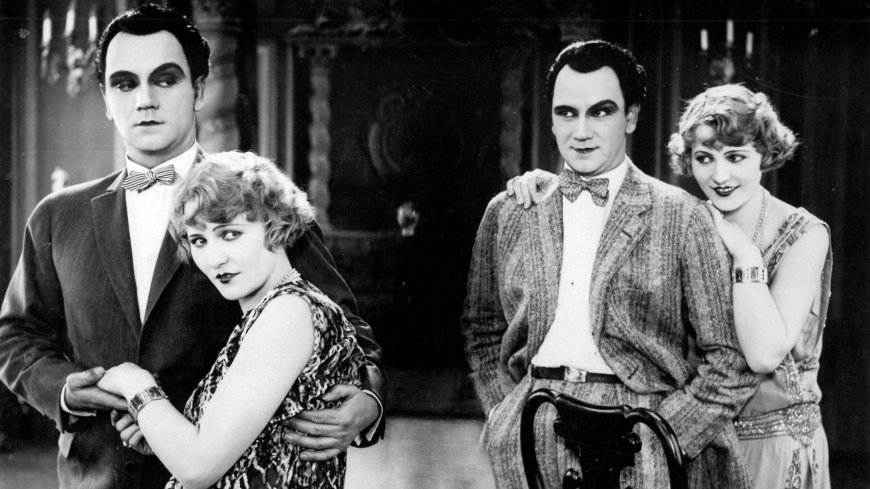
What’s the sound of a silent film being screened?
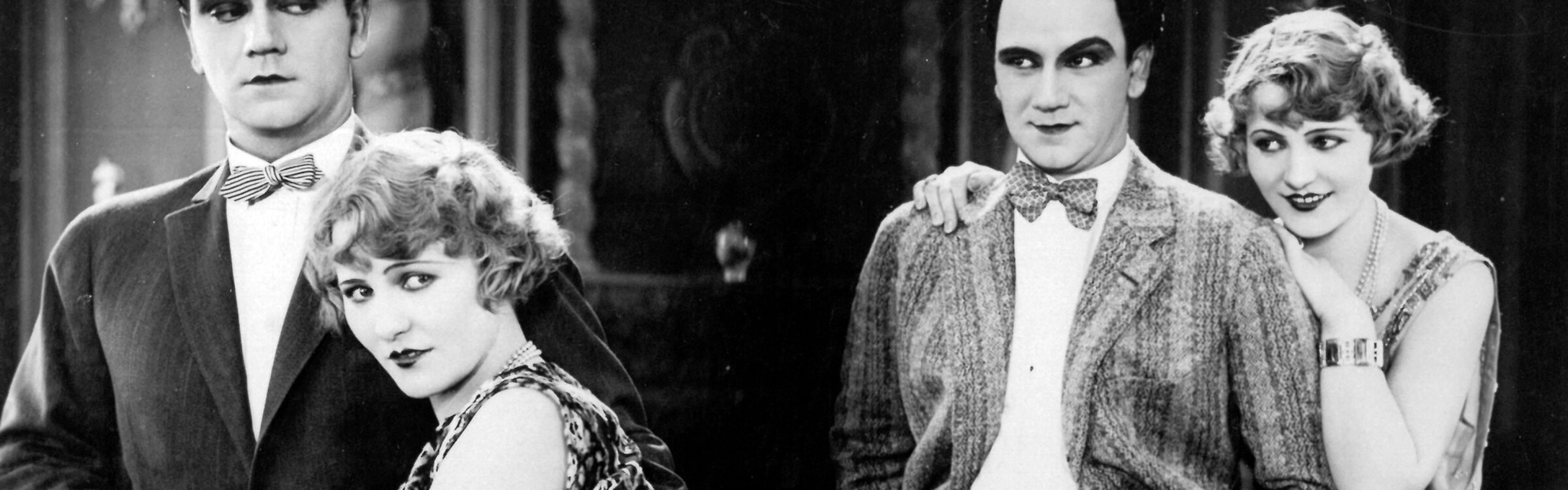
If you’re at the San Francisco Silent Film Festival (SFF), which this year runs May 6-10 and is back at its historic stomping grounds, the Castro Theatre, you’ll hear a range of music created, sometimes on the spot, by living musicians who are right in the theater with you.
It’s a practice that goes back to the dawn of the silent film era. Depending on the venue and who was available, a solo musician might improvise a musical accompaniment at a piano or organ, or might play notated music suggested by a film’s studio.
A small ensemble might play a score based on such notated music, or a full orchestra might play a through-composed score. Fritz Lang’s Die Nibelungen, which, like Wagner’s Der Ring des Nibelungen, is based on the medieval epic poem the Nibelungenlied, has a fine — and Wagnerian — score by composer Gottfried Huppertz, for instance.
Anita Monga, the SFF’s artistic director, chooses the films to show and then matches up composers and ensembles with those films. “Typically, we look for and pay attention to the latest restorations, and we have been a part of a couple of restorations that we are going to be presenting at the 2026 festival,” Monga told SF Classical Voice.
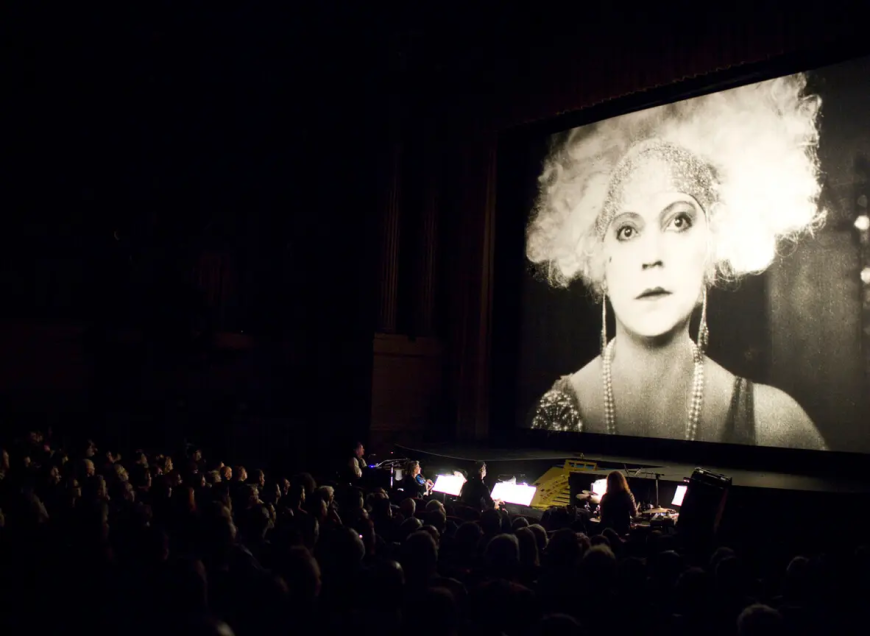
“What I do is pick films, and pick them to balance the show,” she continued. “There’s the big opening night, big closing night, and then within that smaller titles with a balance of melodrama, comedy, and westerns. Our whole modus operandi is to show the depth and breadth of the silent era.”
When Monga joined the SFF in 2009, she already had experience with silent films. She had been the programmer at the Castro for many years, and the theater showed silent films regularly. Moving into the SFF was a natural progression.
For this article, SFCV spoke to several musicians who are performing at the SFF this year, asking about how they entered this unusual field, and the skills they bring to accompanying and composing for silent film.
A degree of happenstance played a role for all of them. Guenter Buchwald, who’s nearing the 50th anniversary of his start in silent film music, was asked to find a pianist who could, just a week later, accompany a silent film. No professional pianist among his acquaintances seemed right for the job, so he took it himself.
He was 26 at the time, studying to be a high school music teacher, and had studied theory, harmony, and singing. His primary instrument was the violin, but he also played the piano, had always improvised, and had played in a Celtic folk group. The film was Wallace Worsley’s 1923 film The Hunchback of Notre Dame, starring silent film great Lon Chaney, and he realized it was exactly what he liked to do.
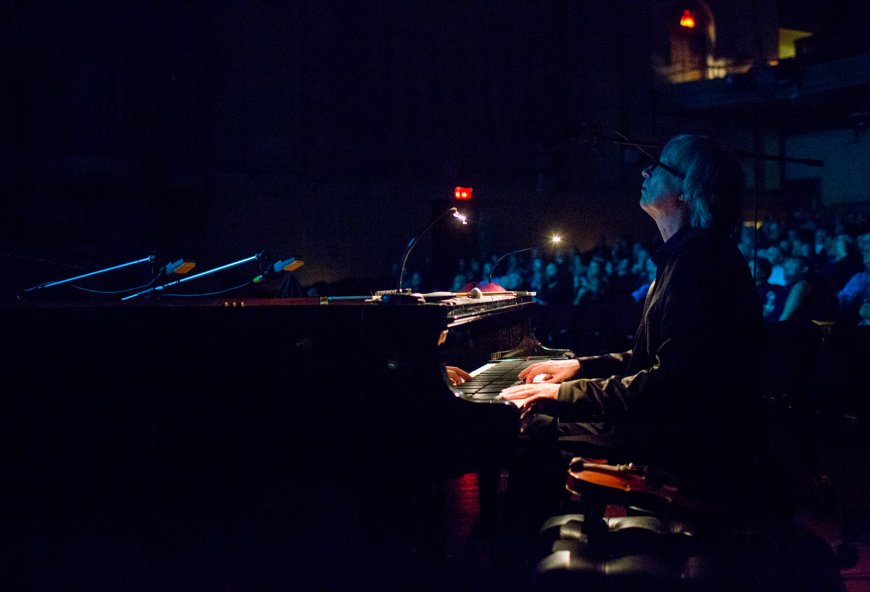
Stephen Horne, who’s coming up on 40 years performing with silent film, describes his start as “a very lucky accident.” Like Buchwald, he’d studied music at university. One of his college teachers who ran a film society, knowing Horne had some experience as a composer, called him and asked whether he could make up music for a silent film she was about to show.
He said sure, and she brought a 16 mm print and projector to his home so he could see the first reel of the film. It was Carl Dreyer’s The Passion of Joan of Arc. “I didn’t realize it’s now regarded as possibly the hardest film to make music for,” he recalled. “I was effectively seeing the bulk of the film for the first time with the audience, so I improvised.”
“I accompanied dance for the first 20 to 30 years of my career, for which I improvised, particularly with contemporary dance. Coming up with music in the moment to accompany visual information was nearly second nature.” Soon after accompanying the Dreyer, he auditioned for the British Film Institute and became one of its house musicians.
Composer and conductor Wayne Barker had a long and distinguished musical career even before he started working with silent films. He composed the score for the Tony Award-winning play Peter and the Starcatcher, for which he earned a Drama Desk Award and a Tony nomination for best original score. He was music director for a number of musical productions, contributed numerous arrangements to symphony pops programs, and for six years he was the Master of the Dame’s Music for Dame Edna Everage.
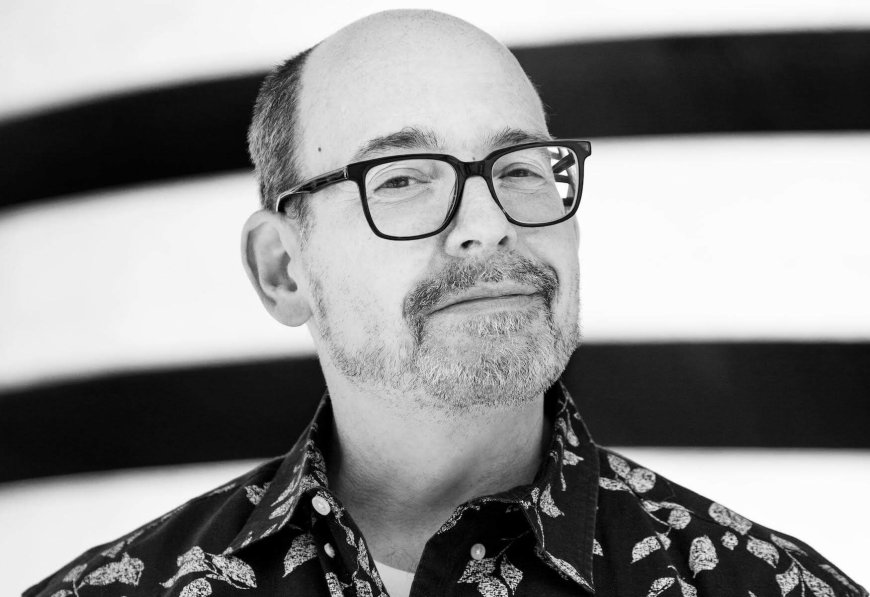
But he’d dreamed of accompanying silent films since childhood, when, at the tender age of 10 or 12, he read an older brother’s copy of film historian Kevin Brownlow’s The Parade’s Gone By … Barker finally got his chance when he attended a 2018 master class in Berkeley by composer Donald Sosin, a modern pioneer of silent film music, about scoring silent films.
“At this talk, Donald had his laptop and little QuickTime movie excerpts, and it was a very dialectic approach. He would show a little film and then just ask the audience, ‘What kind of music do you think would go with this?’
“He showed one clip, which had a scene of a dubious vaudeville show. You couldn’t tell from the context, are we supposed to think this is a bad act? Is it funny because it’s a bad act, or is this just a movie that has a bad act? But I spoke up from the back of the house and I said that this could be very bad music, which is my high concept to tell the audience that it’s supposed to be funny.”
Sosin asked Barker if he could demonstrate what he had in mind. “And then Anita Monga called me to say, ‘Hello, three people are telling me that I need to meet you.’ I had been wanting to meet Anita and play for 15 years,” Barker said. She hired him for the very next Silent Film Festival.
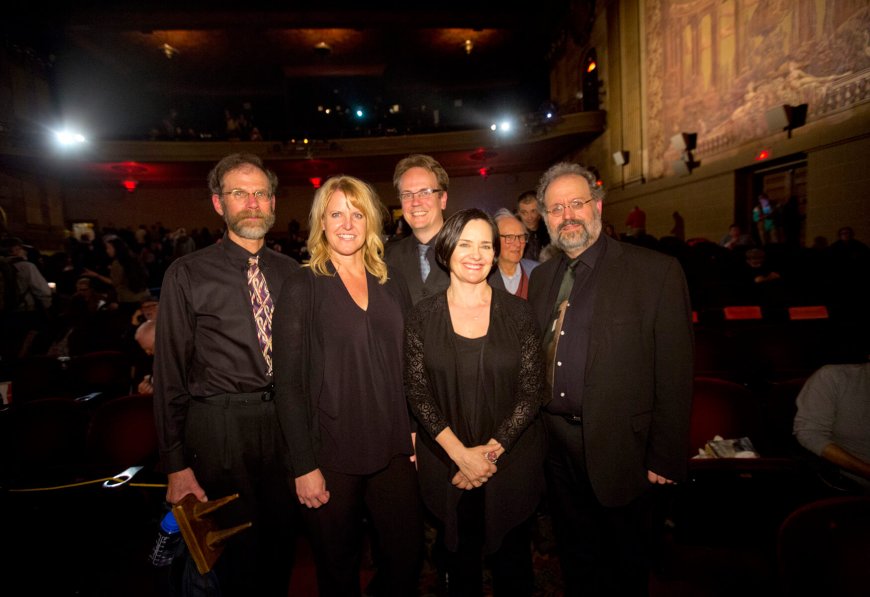
Rodney Sauer, founder of the Mont Alto Motion Picture Orchestra, took piano lessons as a child, and though he went to Oberlin College, which has a famed conservatory, his undergraduate degree is in chemistry. His studies toward a Ph.D. in chemistry didn’t work out — he left with a master’s degree — and over time he transitioned from desktop publishing and graphics into music.
He started the group as a dance band in 1989 and later transformed it into the Mont Alto Motion Picture Orchestra. He had discovered that the University of Colorado Boulder had a collection of silent film music, and that “changed everything, because I had never heard of this kind of music before, and it’s like a vast repertoire of classical music that nobody knows about.”
The collection includes cue sheets and musical scores. Cue sheets contain a list of film cues tied to specific titles or moments in the film, each accompanied by a melody drawn from a larger musical work. A theater or musician could purchase those works to incorporate them into the musical accompaniment for a film.
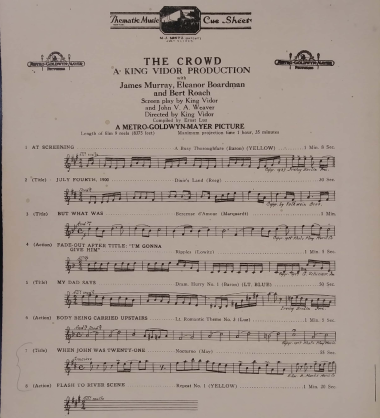
“A lot of it’s quite serious music, and it was serious composers who were working on it, and there’s some beautiful stuff in there. It turns out to be very popular with audiences,” Sauer said. “There’s a learning curve to using this music, but once you figure it out, it’s kind of remarkable how quickly you can put a film score together, because the music is all composed and arranged.
“It’s designed to be played with a variable orchestra, because they didn’t know who was going to be in the pit at every theater, so as long as you’ve got a piano trio, you can play pretty much everything. [The parts] use extensive cross-cueing, so that, for instance, oboe parts are written in the clarinet and clarinet parts are written in the violin in small notes, so that if you’re missing those instruments, those musicians know to play it.”
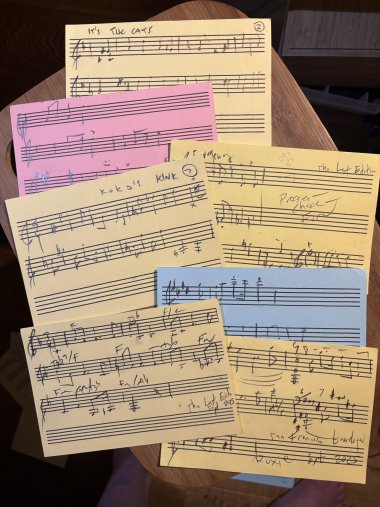
Like Buchwald and Horne, Barker and Sauer can improvise as needed. When Barker is thinking about a film he’s going to accompany, or screening it for the first time, he often writes themes for specific characters or moments in the film, and these become the basis for what he plays.
Most musicians have their own preferences about the types of films they like to accompany. Buchwald named Nordic films from Sweden, Norway, Denmark, and Finland as among his favorites, for the landscapes that often feature prominently in silent films from those countries. He’ll accompany those with Norwegian and Swedish music. He also likes Japanese films, where nature often plays a role. “If there’s a thunderstorm coming, it’s not the thunderstorm which counts, but it reflects the inner psychological situation of the person,” Buchwald said.
Horne noted that he is more at home with drama than with comedy. “It feels as though you have a bit more space to be creative with the music. I love watching comedy, and if you accompany a comedy that the audience really falls in love with, that’s a guaranteed good night out. But musically, it feels a bit more restricted, because you have to hit the beats of the comedy.”
Asked how she matches musicians with films, Anita Monga said, “That is just sheer intuition, actually.” She looks at what the musicians have a particular affinity for and matches them up on that basis.
“Let the Music Do the Talking” is the tagline on the Mont Alto Motion Picture Orchestra’s website, and it says a lot about the function of silent film music in enhancing what you see.
“What I like to let people know is that seeing a silent film in a theater with live music is like nothing else,” said Sauer. “You’re going to get a performance that’s a little bit like a jazz concert, in that it’s not going to be the same way twice. You can watch it on TV with a recorded score, but it’s not going to keep your attention like it does in a theater.”