At first glance, The Turn of the Screw is the stuff of a Hallmark movie.
In Henry James’s Christmastime story-within-a-story — and later, Benjamin Britten’s opera — there’s a new governess, a kindly housekeeper, and two angelic children at an old country house. What could possibly go wrong?
Well, for starters, two departed servants (who in life had untoward dealings with the children) reappear as hungry ghosts, and a distant uncle is of no help. The children, Miles and Flora, might just be too perfect, and the governess herself seems an increasingly doubtful figure.
But there was nothing ambiguous about the merits of Heather Mathews’s production of the opera, which was mounted at the San Francisco Conservatory of Music and performed by students on Thursday, Nov. 20. (The show repeated on Friday with a different cast.)
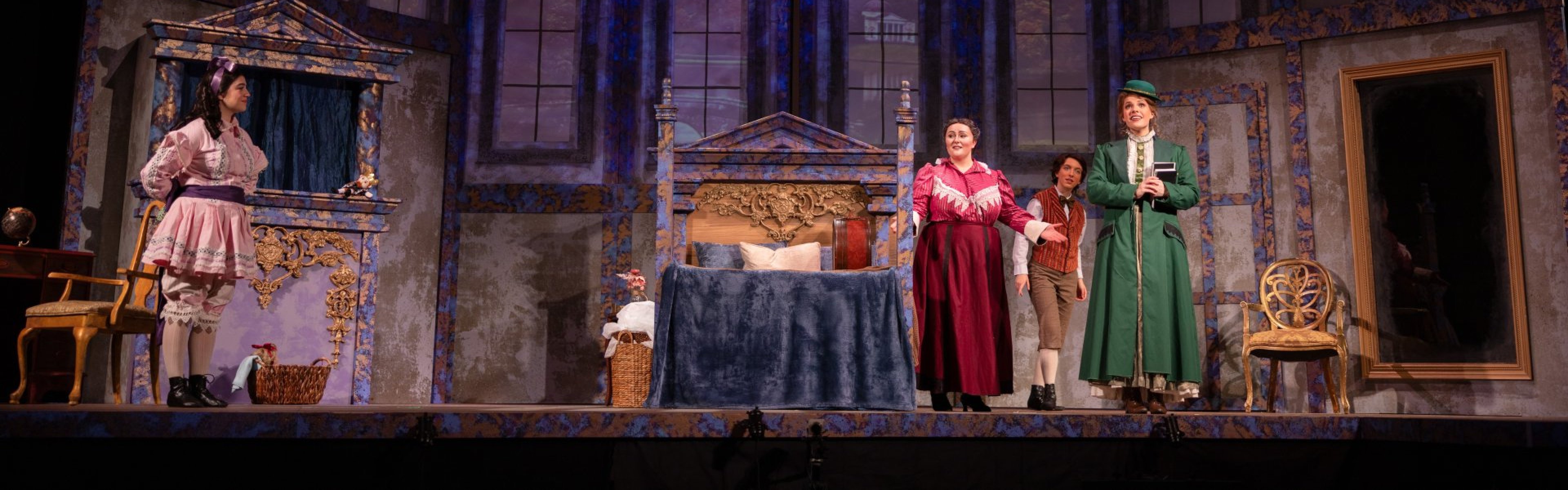
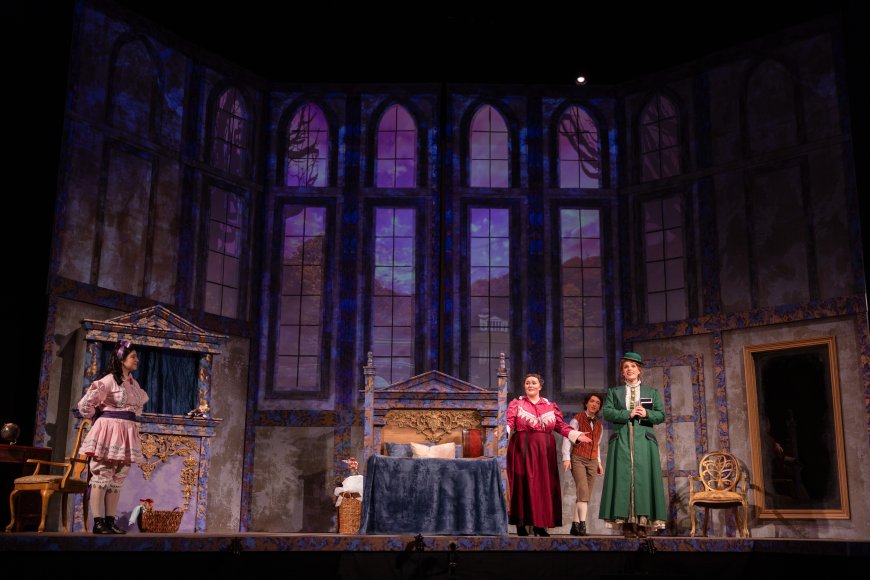
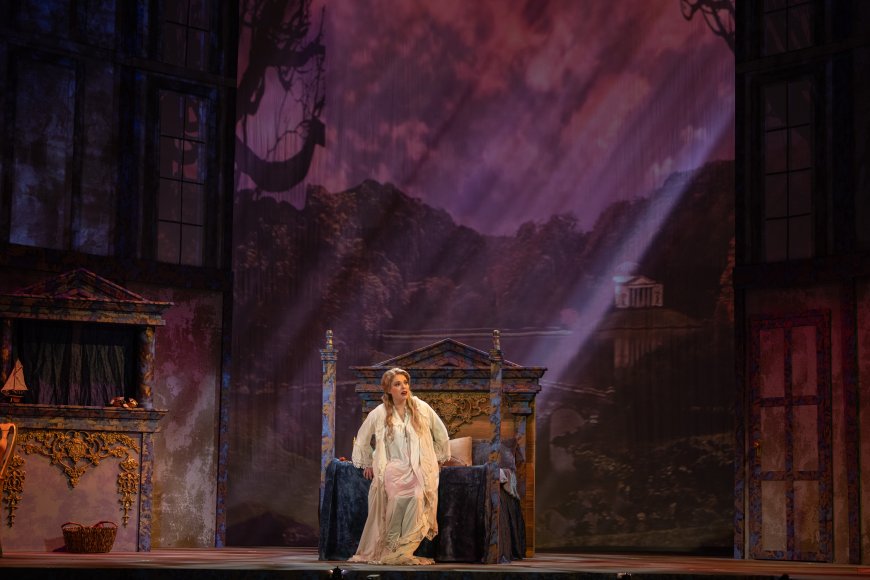
The opera has a sexual subtext running the gamut from possibly bawdy Latin to hinted-at horrific abuse but this production plays it straight. The setting is Victorian England; the scenery is paper doll-thin (with, alas, no tower for Quint.)
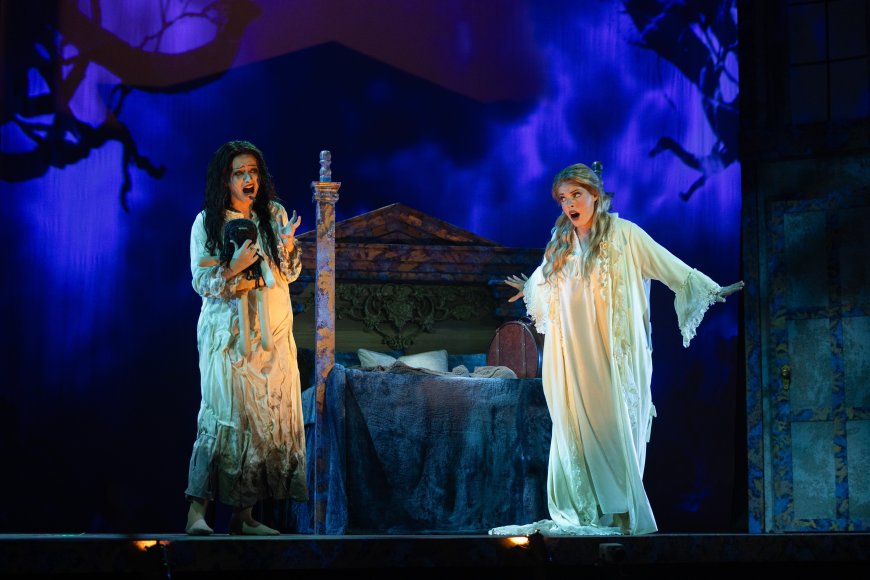
Yet what at first seems like a necessary convenience – the action’s being anchored to the governess’s quarters – underlines in an unexpected way the claustrophobia inherent in Britten’s 1954 score. The governess’s drifting attention during Flora’s geography lesson might be excusable at the lakeside in good weather. In a shared room, it feels downright neglectful – and easy to see why the little girl might seek the company of another. But it’s always the governess’s
world, and Mathews, an SFCM faculty member and alumna, redesigns the haunting scenes to place her at the center, sleeping. Is it all in her head, or is she being gaslit?
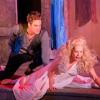
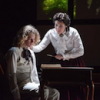
Pointed visual references tip the gothic story into horror territory. As for the servants, Quint’s uplit face perpetually looms over the bed, seemingly detached from a body. Miss Jessel, bedraggled and clutching a Flora voodoo doll, looks like she clawed her way out of a well. The children, who get along far too well for siblings, hold hands like the twins from The Shining. (Garish backdrop projections, uncanny in an AI-slop kind of way, are their own horror.) There are Jason masks. It’s sophomoric, sure — and scary as hell.
Conductor Michael Christie is accustomed to working with professionals (in 2023, he conducted The (R)evolution of Steve Jobs at San Francisco Opera). He gave this one-per-part chamber orchestra a good guiding hand, and certainly didn’t condescend to take the easy way out with the tempi — notably in the marching Variation IV, with its unruly bleatings and nail-bending pizzicato.
The orchestra handled the trickier corners of this score admirably. The long, abstruse duet of the alto flute and bass clarinet — a summit of the ghosts — was assured in its strangeness. The strings played the nervous tarantella of the governess’s inner turmoil with dexterity.
Mila Zhou brought a mellifluous urgency to the role of Miss Jessel, and Sid Chand was charismatic as Quint. Lanie Anthan was ideal as the stentorian Mrs. Grose. Clara Abrahams, as Miles, successfully straddled naivety and something more sinister. And Gabi Esquenazi, a wonderfully petulant Flora, was the opera’s sleeper hit.
Thursday’s throughline was Morgan Wolfe, whose nimble coloratura worked wonders with the governess’s fitful, febrile lines. And in Mathews’s show, she comes undone. Less than an hour in, the poor dear is reduced to double-checking for monsters under the bed. When she realizes that she’s lost control of the children, she pounds out a tantrum, dolly in hand.
There was also a tenderness in Wolfe’s singing to the children, a warmth that made the opera’s denouement — a vicious power struggle over a sarabande — all the more harrowing.
But no spoilers: let’s hope this production graduates to the big leagues.