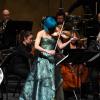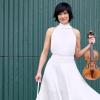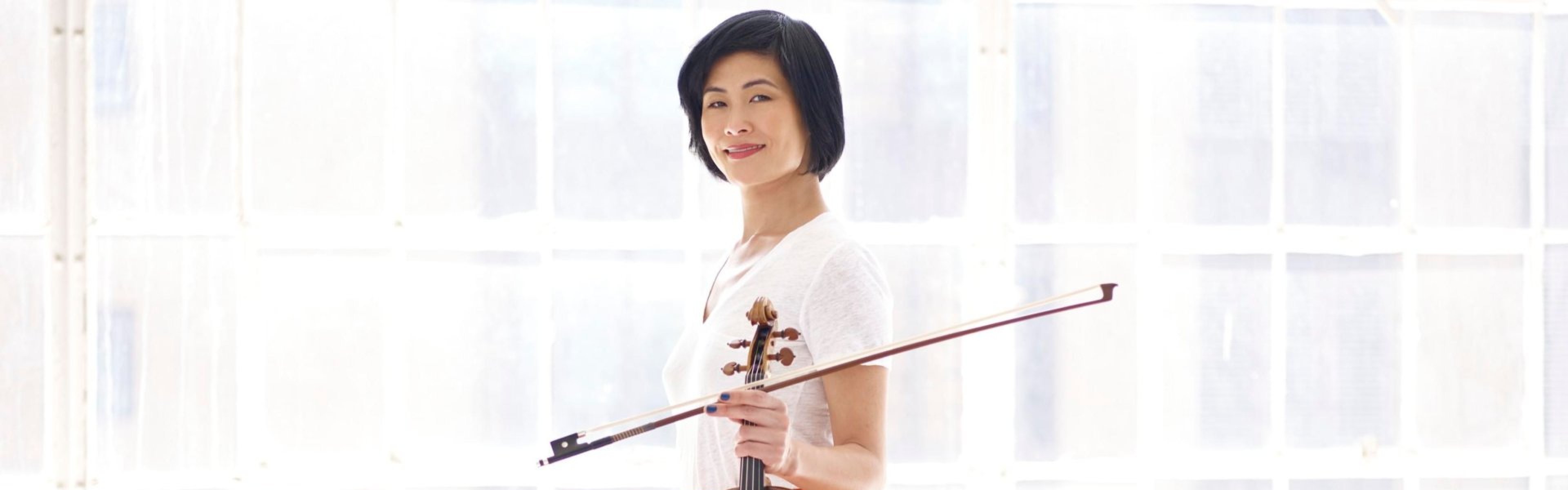
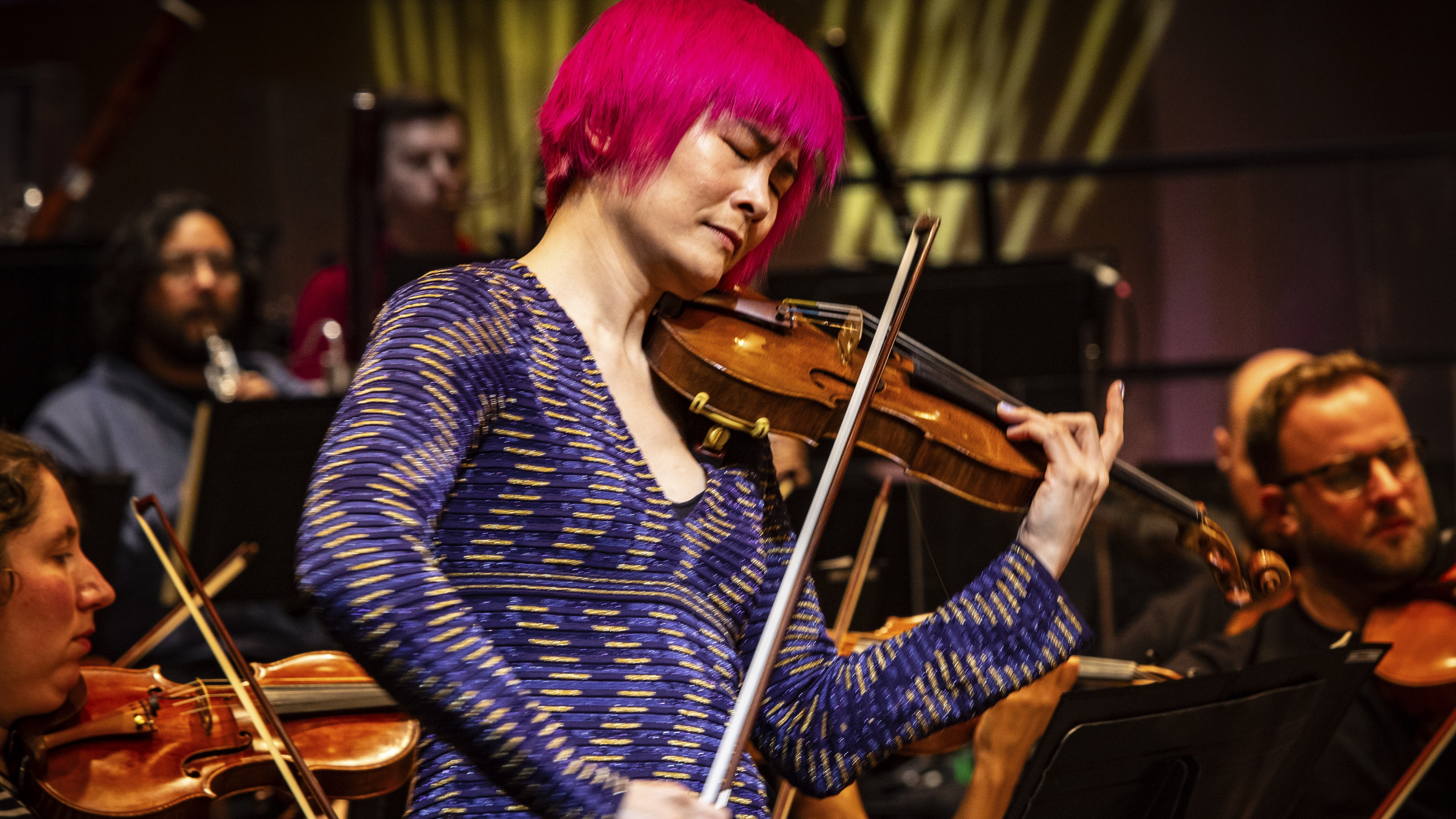
At her best, Jennifer Koh is an exciting, committed violinist. But her San Francisco Performances recital seemed drained of passion.
For the concert at Herbst Theatre on Friday, Feb. 20, Koh and collaborative pianist Thomas Sauer chose a program of French and French-adjacent works. While there was much to admire in her line and elegant use of vibrato, in the end Koh’s reserve approached remoteness and muted the emotional content of the music, despite Sauer’s warmth in accompaniment.
A famed interpreter of new and recent music, the highlights of Koh’s recital were the two newest works by Tania León and Kaija Saariaho, and three bonbons by Lili Boulanger that opened the concert.
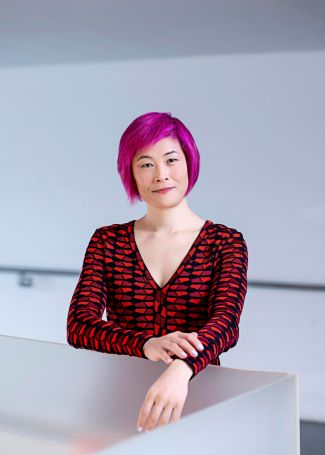
Boulanger died in 1918 at just 24, leaving a small body of exquisite vocal and instrumental music. D’un matin de printemps (Of a spring morning) and “Cortege,” the second of the composer’s Two Pieces for Violin and Piano, were vivacious and full of charm, with D’un matin having an exciting finish. In between, “Nocturne” was deliciously songful and yearning, with several sequences played with the violin muted.
León, the Pulitzer Prize-winning Cuban American composer, wrote Para Violin y Piano (For violin and piano) for Koh and Sauer, who premiered it in 2025. The 10-minute work unfolds over repeating arpeggiated figures that continually shift and evolve. Para Violin y Piano wanders harmonically, the violin and piano in dialogue, echoing each other and varying phrases. A warmly lush piano part contrasted with the violinist’s lines.
Koh had a long association with Kaija Saariaho, who died in 2023 just days before the San Francisco Symphony premiere of Adriana Mater, her second opera. Born and raised in Finland, Saariaho was heavily influenced by the French avant-garde and lived in Paris for most of her adult life.
Saariaho composed Tocar, Spanish for “to touch” or “to play,” for the 2010 International Jean Sibelius Violin Competition, where all of the semifinalists performed it. The piece conveys anxiety above all else, the piano restless under the more lyrical violin line.
In the keening opening, the violin plays harmonics, trills, and glissandos, seemingly in opposition to the piano. The pair meet up before separating again, as the music turns on itself and returns to a ghostly echo of where it began.
Sonatas by Maurice Ravel and Gabriel Fauré occupied most of the program. They had their moments of beauty and grace, but they both needed more from Koh — more color, passion, spontaneity, and depth. She had some breathtaking moments in the first movement of Ravel’s work, gauging her use of vibrato with precision and vitality, and Sauer brought beautiful colors to the piano part. But the bluesy slow movement was too introverted, and the fast-moving finale too careful and overly controlled.
Similarly, most of the heat in the first movement of Fauré’s first sonata came from Sauer, with Koh too emotionally reserved. In the second movement, Sauer opened with a deep, almost Schubertian, bleakness, and here Koh rose to the occasion. The third movement lacked its helter-skelter wildness while the finale sounded stiff where it should have flowed gracefully.
I first heard Koh in 2007, when she played Saariaho’s staggeringly difficult Graal théâtre at a Los Angeles Philharmonic Green Umbrella new music concert, and a few years later as the heroically fiddling Einstein figure in Philip Glass’s Einstein on the Beach. I wish that she had brought more of the excitement and freedom of those performances to this, her 14th San Francisco Performances appearance