Some music bludgeons its way into attention. Other music lures listeners in and gently rocks them in its embrace.
Canto Ostinato, a beautiful and meditative work by the late Dutch composer Simeon ten Holt, belongs to the latter category.
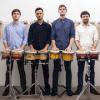
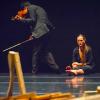
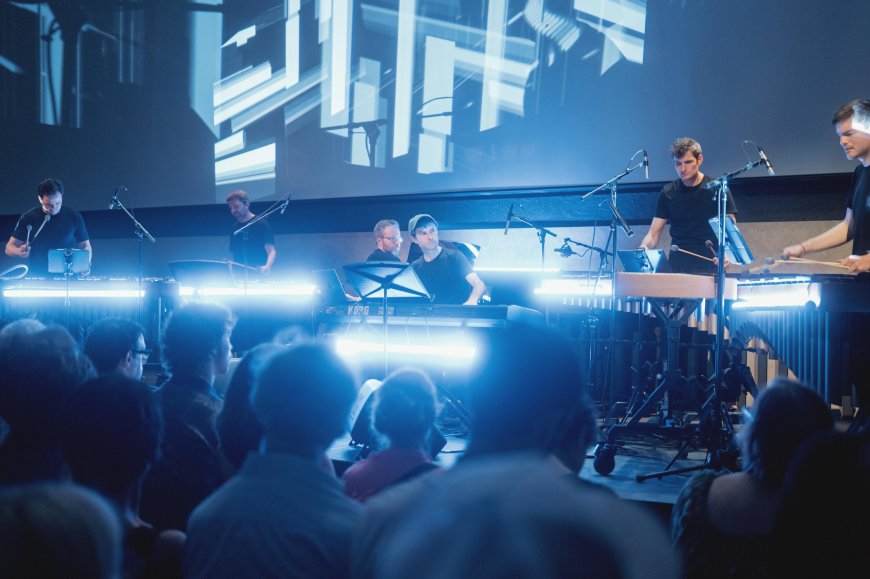
Sandbox Percussion and American Modern Opera Company, aka AMOC*, gave a spectacular performance of Canto Ostinato on Sunday, Feb. 22, under the auspices of Cal Performances at Zellerbach Playhouse in Berkeley. The program notes said the work “feels like a long-lost cousin” to certain American minimalist pieces like Steve Reich’s Music for 18 Musicians and Terry Riley’s In C, and that connection is unmistakable.
Composed in the 1970s, ten Holt’s score is carefully notated as 106 short sections. With the exception of certain bridges, each section may be played as many times as the performers wish, with any articulation and at any dynamic level desired.
I thought most often of composer Julius Eastman during this performance of Canto Ostinato — two years ago, the new music group Wild Up performed Eastman’s Femenine at Cal Performances. Eastman and ten Holt lived in different sound worlds, but their music shares great flexibility of instrumentation and performance choices.
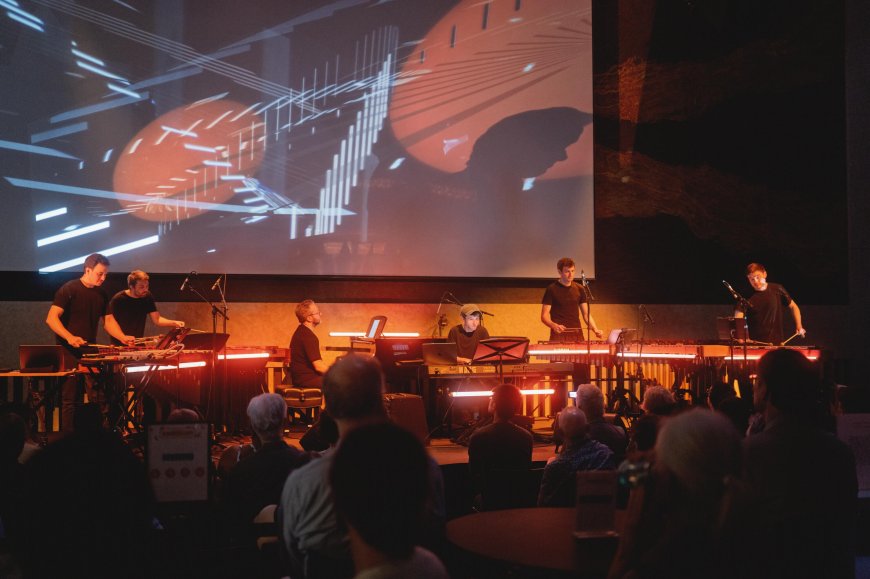
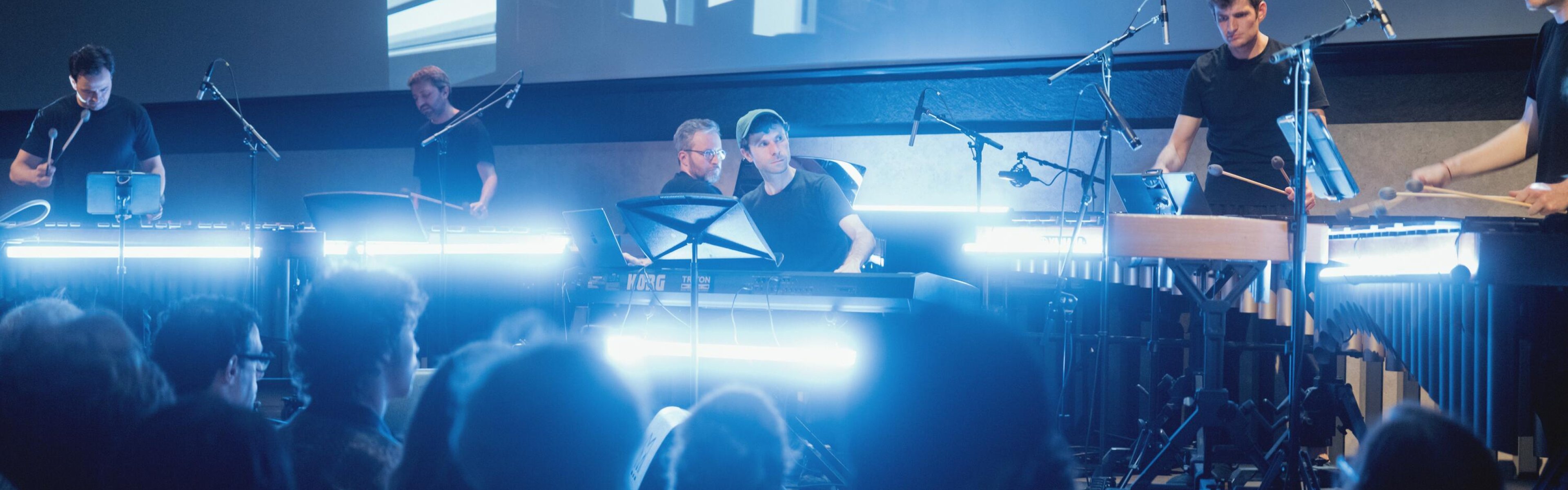
Canto Ostinato has primarily been played by groups of keyboard instruments, though solo instruments, mixed ensembles and string quartets have also performed the work. This version used two marimbas, two vibraphones, tuned metal pipes, a glockenspiel, piano and synthesizer.
It was a sonically magical combination. Percussion instruments they may be, but together they created a wash of sound that was, paradoxically, both exciting and soothing. The music demanded attention, even as it verged on the hypnotic.
An ostinato is a repeated musical pattern, often in the form of a bass line over which other instruments play variations. The last movement of Brahms’s Fourth Symphony is an example of this. Whether deliberately or by chance, such bass lines emerged during Sandbox Percussion and AMOC*’s performance and were central to the spell they cast.
Small fluctuations in the performance made an outsized impact. Crescendos and decrescendos took place over shorter or longer periods, like waves of different strengths, creating audible structure amid the repetition.
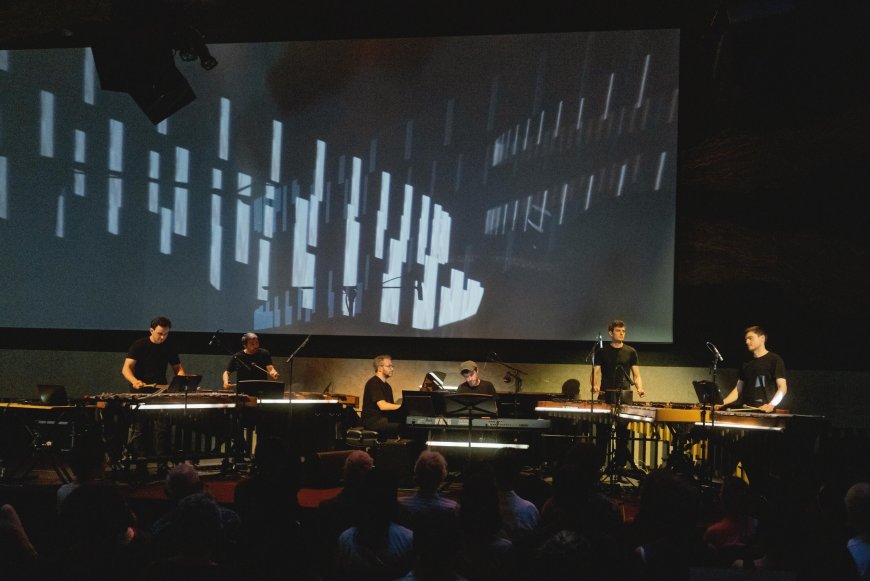
AMOC* member Conor Hanick’s piano lurked under the surface for much of the performance, eventually emerging to take a more prominent role. Matthew Aucoin did the same on synthesizer, and provided a few moments of startling intensity in the bass register.
The musical texture shifted from time to time, with instruments dropping out and coming back in. When all of the instruments played, the sound could pierce you, obliterating thought and leaving only sensation. Sometimes it felt like a great epic was being recited in the distance, the words incomprehensible.
Whether Canto Ostinato circled an inaudible, invisible center or moved in a straight line was impossible to say. But when the first ostinato returned and began to fade, the end was clearly near.
As Sandbox Percussion member Jonny Allen said before the musicians started playing, performances of Canto Ostinato can last up to six hours. As far as I was concerned, this magnificent account of the work could have continued far, far beyond its 75 minutes.
Lisa Hirsch is a freelance writer. This review has been provided in partnership with San Francisco Chronicle.