Over six years after the release of Wien, tenor Jonas Kaufmann journeys 540 miles from Berlin to Budapest in Magische Töne.
Joining forces with the Hungarian State Opera Orchestra, and conducted by Dirk Kaftan, Kaufmann dives heart first into the core repertoire of the two best known Hungarian operetta composers, Franz (Ferenc) Lehár and Emmerich (Imre) Kálmán. In addition to 11 selections from those two greats, Kaufmann bridges the language barrier between Austria and Hungary as he indulges in 11 more arias by composers whose charming music illumined the stages of the Austro-Hungarian Empire.
Facts, however, are not why one buys or streams a recording of operetta. It's the sentiment, the joy, and the period nostalgia we're after. That's where Kaufmann, Kaftan, and soprano Nikola Hillebrand (Kaufmann's perfect partner in six duets) have a ball.
Once any operetta lover hears the first two selections, Kálmán's "Auch ich war einst ein feiner Csárdaskavalier ... Komm, Zigány" (I too was once a fine csárdás knight ... Come, Gypsy) and "Ich bitte, nicht lachen ... Komm mit nach Varasdin" (Please don't laugh ... Come along to Varaždin) from Gräfin Mariza, it will be hard to stop listening.
True, there's only so much schmalz many of us can indulge in one sitting before bloat and medical complications disrupt our reverie. But for those who know how to pace themselves, this album is a treasure
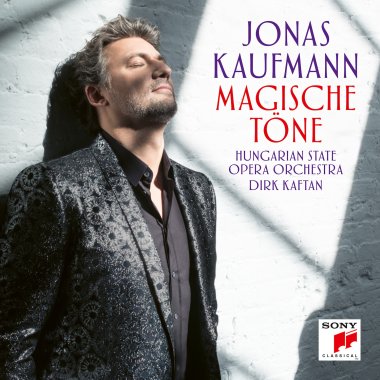
At 56, Kaufmann is a bit of a miracle. You just need to accept the many idiosyncrasies of his voice at this stage of his career: the slightly jarring boorish sounds in the lower midrange, the throatiness and occasional signs of wear, the delay of ping until higher in the range, and the limited ability to spin his sound on high (as Richard Tauber did so winningly in an era long past). You may also need to make peace with volume limiting by Sony's engineers that prevents Kaufmann's voice from naturally ringing out on high. But once you do, you can simply sit back and enjoy the innumerable joys in his full out embrace of this Hungarian repertoire.
One of this album's true wonders, which Sony slyly saves for last, is Kaufmann's rendition of Karl Goldmark's "Magische Töne, berauschender Duft" (Magical sounds, enchanting scent) from Die Königin von Saba (The Queen of Sheba). Here, Kaufmann one-ups classic recordings by Leo Slézak (1905) and Enrico Caruso (1909) by maintaining complete control over his surprisingly supple piano singing and meltingly soft high range. It's a recording that I expect you'll play over and over again. I certainly have.
You, too, may be captivated by the contrast between Kálmán's fluff and froth and Lehár's emotionally deeper music. Keep listening, and you'll discover the delicious jazz-inflected period accompaniment in Paul Abraham's "Vor meinen Haus am Silbersee ... Ein Paradies am Meeresstrand" (Outside my house on Silver Lake ... Paradise by the sea) from — seriously — Die Blume von Hawaii. You’ll also recognize the invocation of Fred Astaire in Abraham's equally irresistible "Pardon, hogy bocsánat ... Sing, sing” (Excuse me, sorry ... Sing, sing) from Julia.
And that's just a bit of all there is to discover and love on Jonas Kaufmann's wonderful album, Magische Töne.