The ultimate importance of Samuel Barber's first opera, Vanessa, may lie less in its music and subject matter than in its status as a major paradigm shifter.
When Vanessa premiered in 1958, it was the first full American opera that New York's Metropolitan Opera had produced in over 20 years. As such, it helped usher in the cultural shift away from European music and singers — a process that Beverly Sills accelerated during her term as General Manager of New York City Opera and as Chairwoman of the Board of the Met.
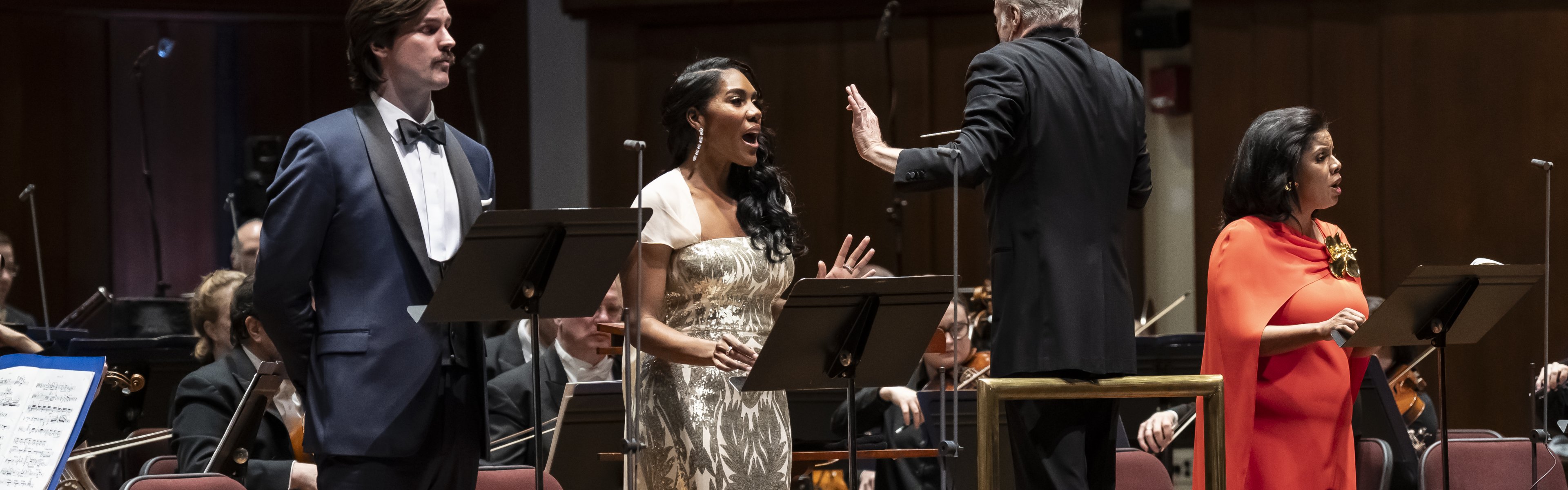
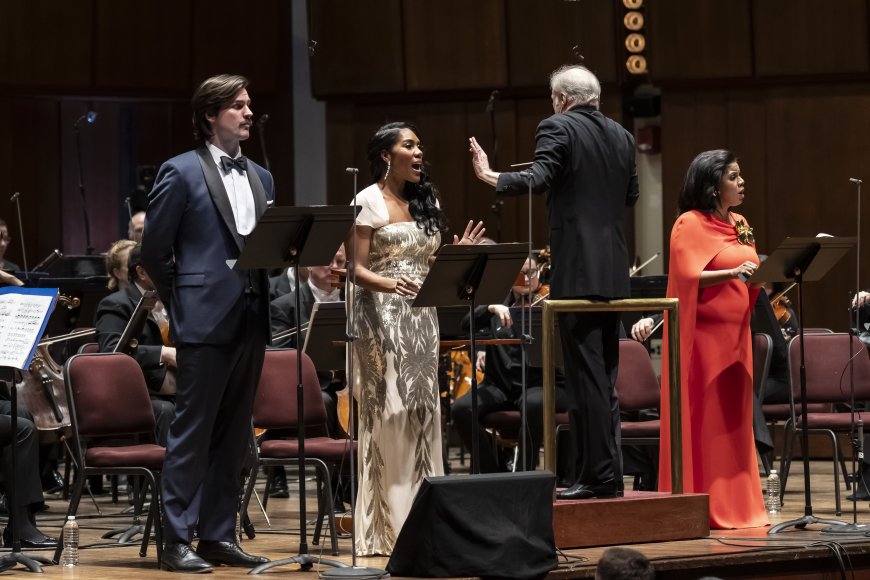
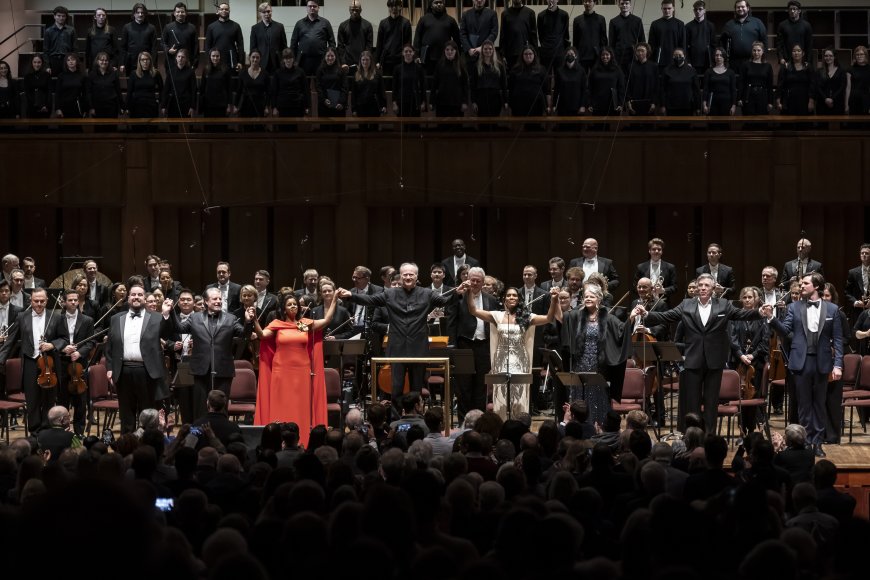
On May 29, the National Symphony Orchestra released a new recording of Vanessa using Barber’s 1964 revision of the score. Led by Gianandrea Noseda, a concert version of the opera was recorded live at NSO’s longtime home, the Kennedy Center, on Jan. 30 and Feb. 1, 2025.
With every note, NSO reminds us of the harm Trump has done to this wonderful orchestra's audience, sustainability, and reputation. The musicians, who are superbly recorded in high-resolution by Soundmirror and honored by two SACDs and multiple high-resolution formats, give the opera their all.
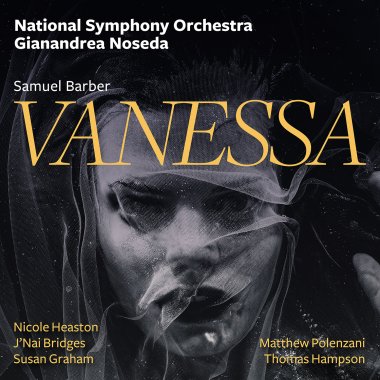
Subject-wise, Vanessa falls squarely into a European-derived category of melodramatic gothic thriller. The opera is set in a mansion in some unnamed "northern country" in 1905. Vanessa (Nicole Heaston), a wealthy, veiled woman in her late 30's, has walled herself off in her mansion with her somewhat naïve 20-year-old niece, Erika (J'Nai Bridges), The Old Baroness (Susan Graham), and a host of servants that include Nicholas, The Major-Domo (Jonathan Bryan), and the Footman (Samuel Weiser).
With all her pictures and mirrors covered, Vanessa spent over 20 years awaiting the return of her lover, Anatol (Matthew Polenzani). When Anatol finally arrives, Vanessa discovers he is not the man she longed for, but rather his son, also named Anatol.
Matters go downhill from there. The younger Anatol is, if anything, even a worse cad than his father. Simultaneously professing love for both Vanessa and Erika, he initially shields his identity from Vanessa, and then proceeds to get the sheltered niece pregnant before his bags are fully unpacked. Although it is hardly crystal clear in the libretto (written by Barber's lover, Gian Carlo Menotti), the possibility exists that Erika is actually the daughter of Vanessa and Anatol senior, and that the relationship between Erika and Anatol junior is incestuous.
As opera's end, after Erika miscarries during a failed suicide attempt, Anatol junior goes off with Vanessa (while still professing his love to Erika). Erika, with her face veiled, remains in the house with the Old Baroness. Mirrors are covered and guests are discouraged. The circle of tragic love remains unbroken.
Barber wrote two or three notable arias — Erika's "Must the winter come so soon?" Vanessa's sensational "He has come... Do not utter a word," and the Doctor's "For every love there is a last farewell." Late in the opera, there is also a splendid quintet, "To leave, to break." In between, Barber wallows in a lot of chromaticism, which is not as character-specific and revelatory as his "Knoxville, Summer of 1915." As atmospheric as the music may be, it ultimately tells us far less about Menotti's characters than Verdi, Wagner, Strauss, and Berg did with their best music.
Strangely, Bridges's well-sung Erika sounds, if anything, older than Heaston's equally accomplished Vanessa. Meanwhile, Polenzani's still youth-tinged sweetness and vocal purity seem at odds with Anatol's evil. Then again, some might argue that Polenzani's sweetness of voice perfectly disguises his duplicitous, money-grabbing motives. These vocal anomalies may have been true of the original cast as well.
Thomas Hampson's age-related wobble and tonal degradation are suited to his role of The Doctor. His mannerisms, to my sensibilities, have always lent a certain haughty snobbishness to his delivery. Graham, whose voice has aged gracefully and naturally, is well suited to the Old Baroness. Given that she once recorded the role of Erika, Graham is the most perfectly cast of the lot.
There are three other complete recordings of the opera available: The Met's original cast version, a Naxos version where Gil Rose strangely conducts the National Symphony Orchestra of Ukraine rather than the Boston Modern Orchestra Project; and a Chandos SACD where Leonard Slatkin and the BBC partner with the all-American trio of Susan Graham (Erika), Christine Brewer (Vanessa), William Burden (Anatol).
NSO’s new recording of Vanessa is a strong contender for Best of Place.