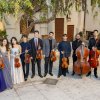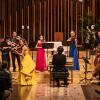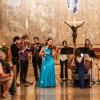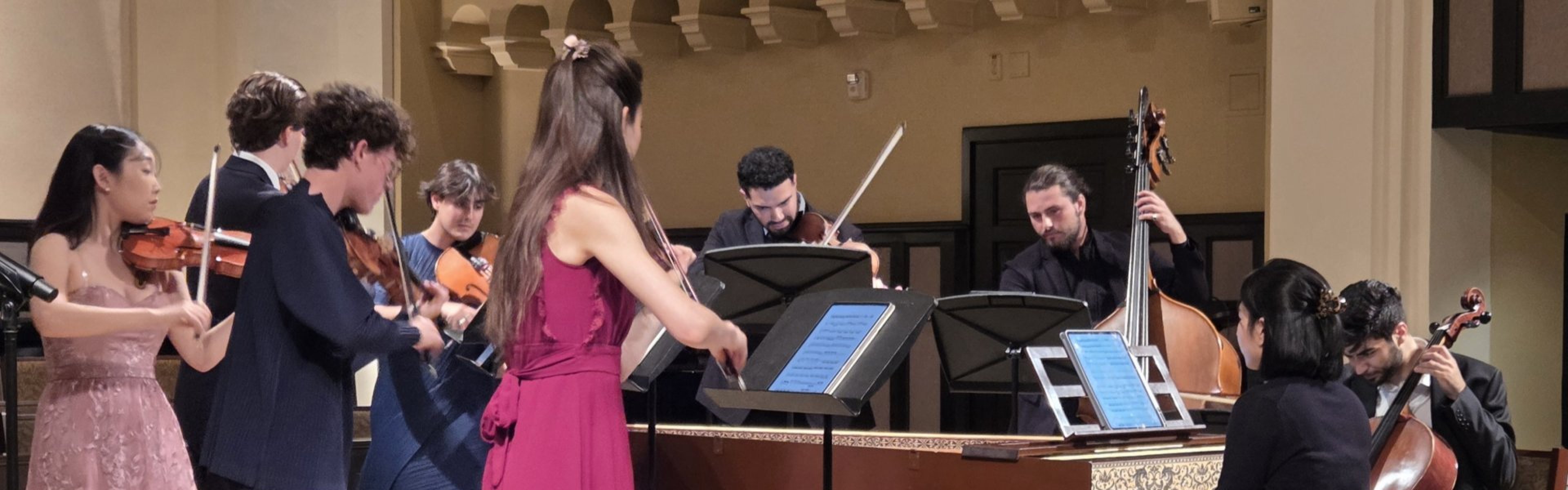
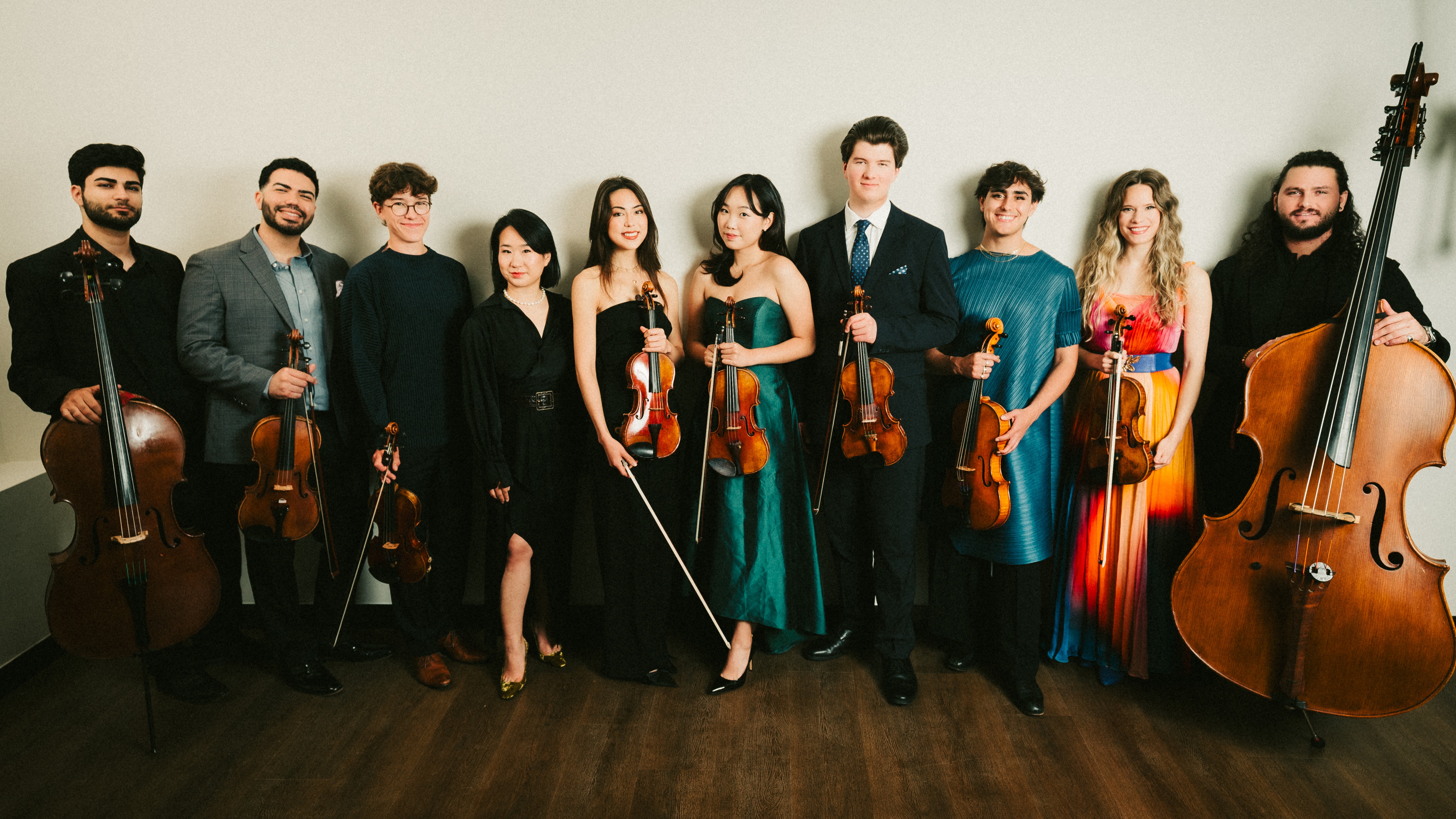
The freeway-flying chamber orchestra Kontrapunktus finished its 10th season with an equally broad concert that focused on the long influence of the Venetian Baroque concerto. The Friday, June 19 concert marked the orchestra’s return, after a year's absence, to Seventh Day Adventist Church in Culver City, where Kontrapunktus has been the resident ensemble since 2017. The group's new concertmaster (and Colburn School graduate) Wenlan Jackson was on hand as was its favorite violin soloist, Aubree Oliverson.
Jackson made her presence felt immediately leading a crisp performance of the six-movement Concerto in A Minor for Four Violins, Op.7, No. 11, published in 1710 by Giuseppe Valentini. The conversational nature of the violin parts and varied pacing were adroitly performed by soloists Jackson, Duncan McDougall, Eunice Lee, and Dawid Kasprzak. It was by turns bright, vibrant, and lyrical and was enhanced by the warm acoustics of the midcentury modern church's high vaulted architecture. The ensemble was led by Artistic Director and cellist Osheen Manukyan; Yuri Santos and Nicolas Valencia, violas; Nicholas Arredondo, double bass; and Hejun Yang, harpsichord.
The transition from Valentini's concerto, with its obvious debt to the Venetian superstar Arcangelo Corelli to the grace of Joseph Haydn's Violin Concerto No. 1 in C major was smooth but significant. This early work composed between 1761 and 1765, shows Haydn flexing his imagination under the patronage of the Esterházy family, inspired by the violinist Luigi Tomasini who became concertmaster of the small house orchestra.
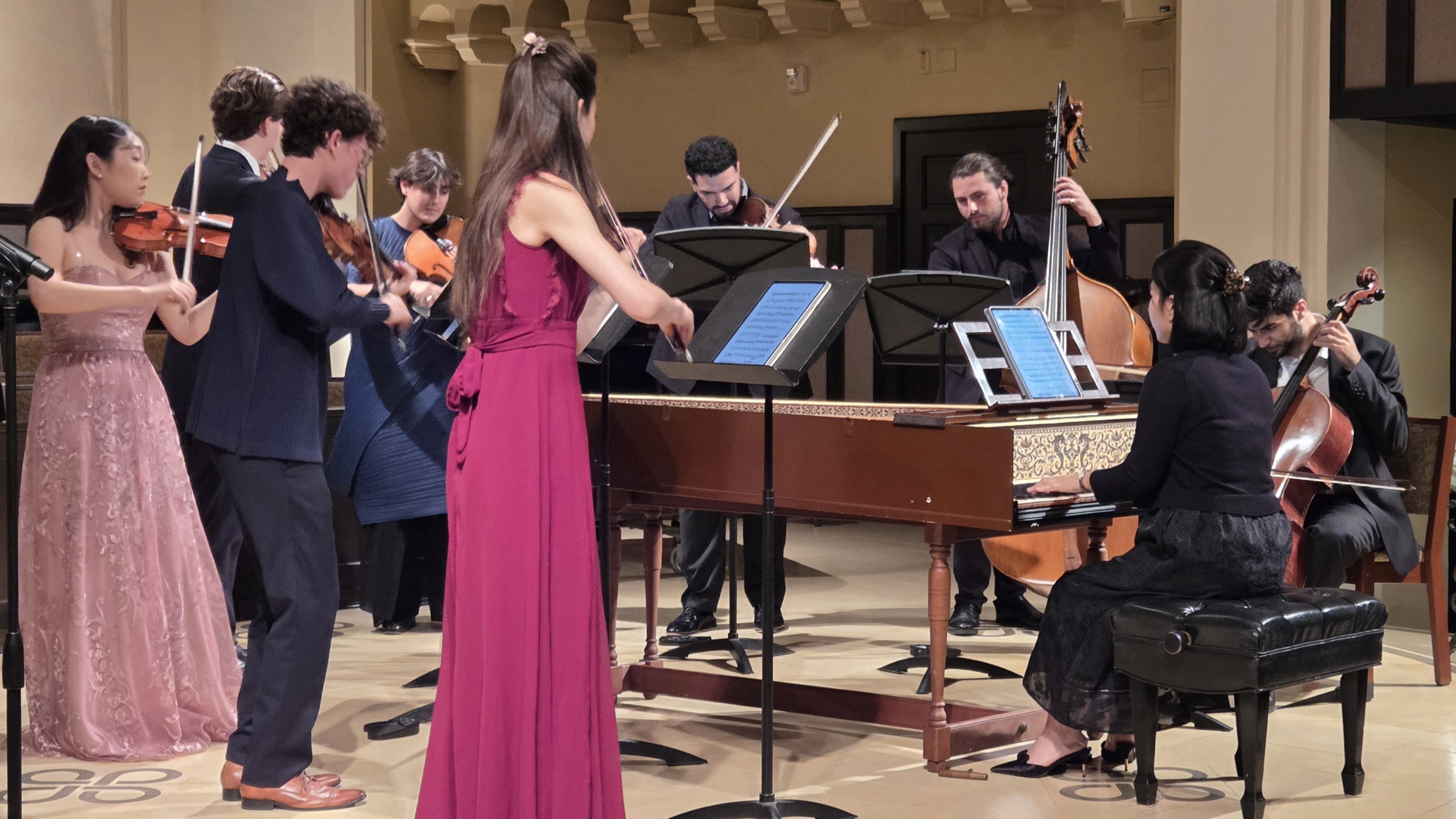
The concerto, Oliverson related in a brief introduction, was sadly lost following Haydn's death in 1809 and was not rediscovered until 1910. It became a favorite of Isaac Stern, who, Oliverson said, considered its central movement, Adagio, to be one of Haydn's supreme creations.
Her interpretation of the opening Allegro moderato was imbued with stately elegance, the tone of her superb instrument filling the hall with an abundance of elegant phrasing and the first of the three cadenzas she composed herself. But, as previewed, the aria of the second movement stood out. Oliverson turned poetic as she let Haydn's fragile melody float above the ensemble's pizzicato accompaniment.
She pulled out all the stops in her encore, a pyrotechnical transcription of the classic Brazilian samba tune "Tico, Tico" by Los Angeles-based cellist/composer Olivia Marckx. It rocked, it swayed, it was a lot of fun. Oliverson is definitely an ascendant star.
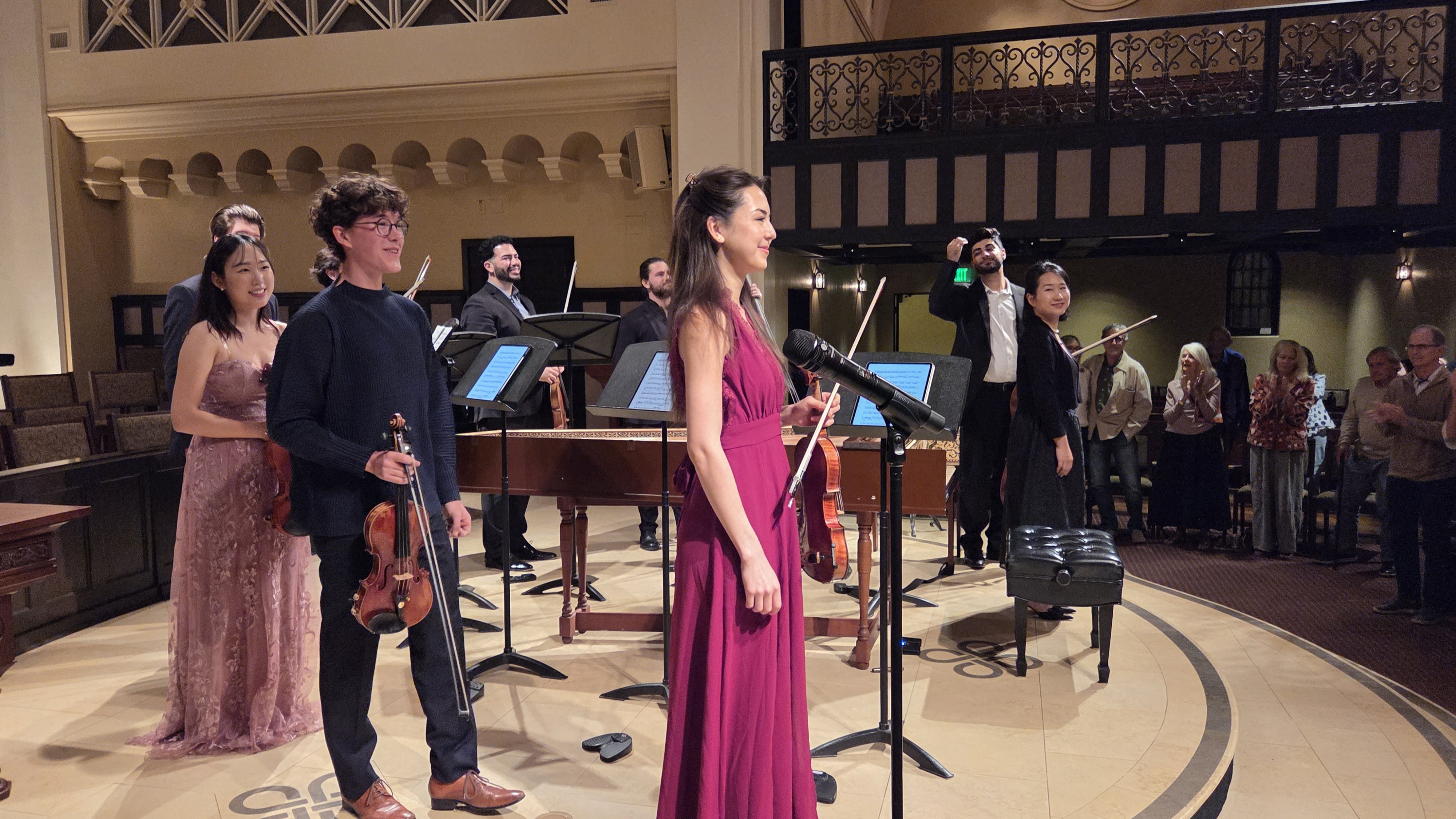
The tone of the concert changed dramatically after intermission with a buttery performance of Ottorino Respighi's Ancient Airs and Dances, Suite No. 3. Adapted from Renaissance lute melodies, Respighi composed the three suites with different orchestrations. The third suite consists of four movements scored entirely for strings. And while the ensemble's tone was abundantly rich, a bit of tartness would have enhanced the dances’ Renaissance roots. As always, the orchestra played with rhythmic vitality
Two composers that are Kontrapunktus favorites are Georg Philipp Telemann and Antonio Vivaldi. And the two concluding pieces on the program provided a superb spotlight with Jackson leading the gracefully intersecting melodic lines of Telemann's Sonata in D Major, TWV 44:1 followed by a rollicking rendition of Vivaldi's Concerto for Four Violins in B Minor, RV 580.
Kontrapunktus has a tradition that I find refreshing. Each work on the program is introduced by a different member of the ensemble. Together, they break the ice, creating a warm sense of camaraderie between the audience and the performers.