In a funny way, the best musicians have a raw deal. If a fine performance creates the illusion of ease, the audience just might take the performers’ efforts for granted. Then again, if those efforts are apparent, it’s probably not a good thing.
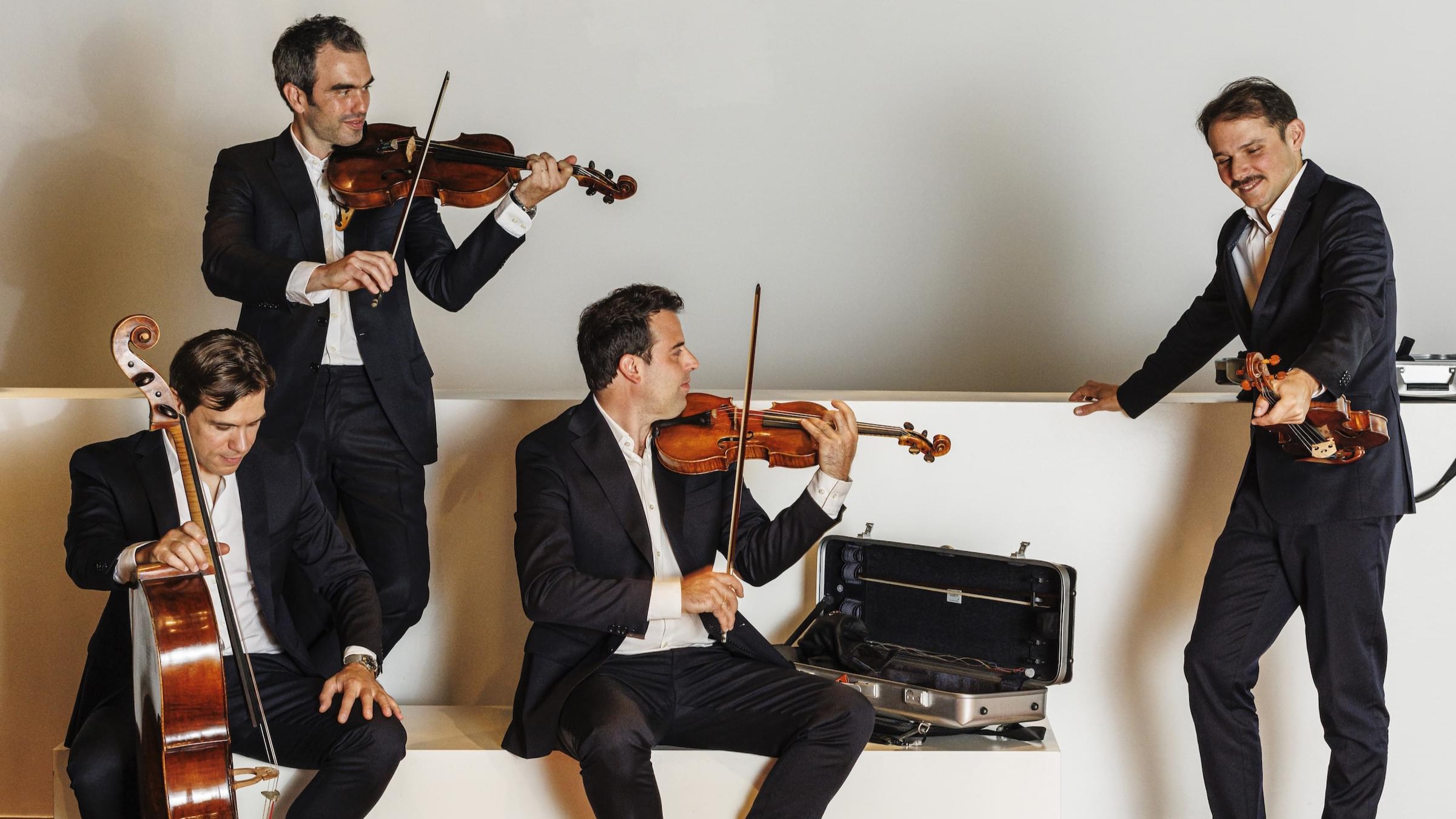
The Modigliani Quartet’s Nov. 14 concert for San Francisco Performances at the Herbst Theatre went both ways.
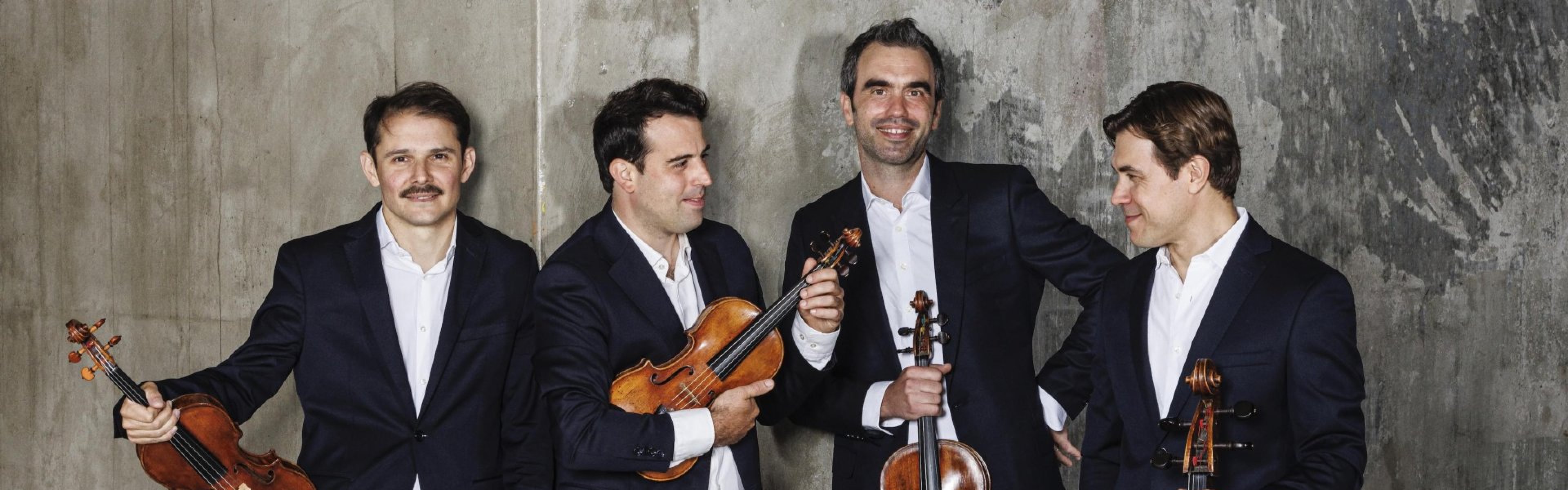
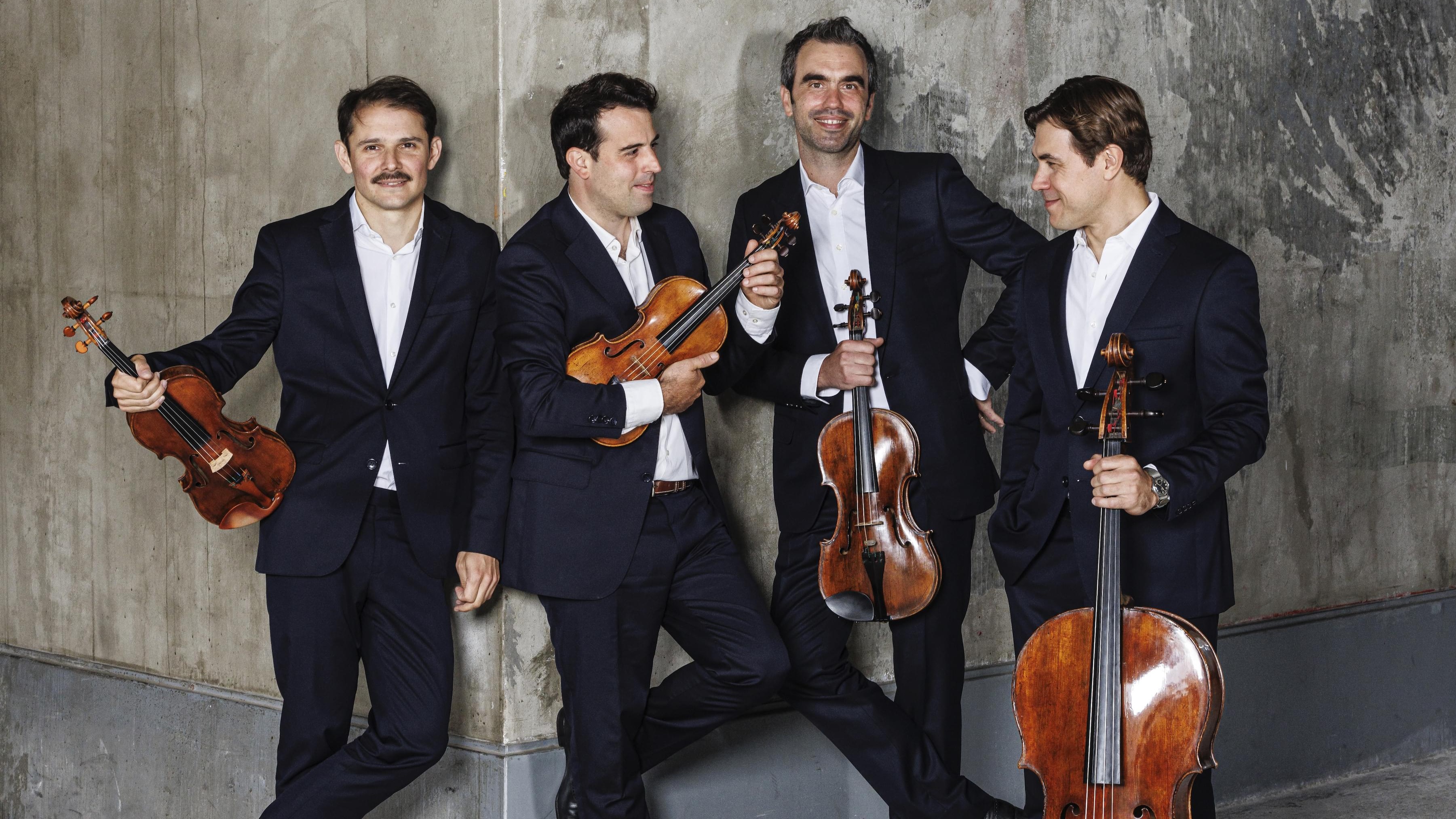
The Paris-based ensemble comprising violinists Amaury Coeytaux and Loïc Rio, violist Laurent Marfaing, and cellist François Kieffer set the bar sky-high in the first 40 minutes of their program. Their performances of music by Haydn and György Kurtág combined technical prowess with a rare depth of sound.
It was surprising that music by Beethoven, of all composers, sounded the weakest. Some choices in their rendition of the String Quartet in C Major, Op. 59 No. 3, were confusing. The first movement felt rhythmically unsettled, as if this happy-go-lucky music were trapped in the tense minor-key world of the second quartet of Op. 59. The slow movement’s melodies were deliberate to the point of abstraction. And there were mistakes — wrong entrances that, by this point in the program and in such familiar music, were uncharacteristic. The slow movement from the Quartet in F Major, Op. 18, No. 1 made a substantial encore.
The Kurtág cold opening, though — Hommage à Andràs Mihàly: Twelve Microludes — more than made up for any disappointment. It’s not impossible to come around to these taut movements through recordings, but the music came alive in this performance.
As is often the case with miniatures, Kurtág’s sound-world in his “microludes” is maximalist in the best way. Marbled cluster chords erupt in rude pizzicato. The viola cuckoos like a bird on speed. Often, the parts are in dialogue. At other times, they’re at odds.
Each successive movement uses a higher pitch as a kind of jumping-off point; the entire cycle comprises one scale. That’s not to say that these notes are always prominent, or even audibly present. At one point, the structure seems to fail.
But as steered by the Modigliani Quartet’s burnished sound, memorably in the quieter moments, the 1977 score always had a broader coherence. At the end of the fifth movement, whose dynamic is marked quadruple-piano, the viola’s line folded into the cello’s to form the interval of a minor second, the strongest of all dissonances. The bows hardly moved; you could barely tell who was playing what. It was a beautiful resolution.
Sensitive voicings again made magic in Haydn’s Quartet in F Major, Op. 77 No. 2. This is a first violinist’s quartet, and Coeytaux was a brilliant leader throughout. Part of Haydn’s genius, though, is that the other voices feel equally important — in this performance, nowhere more than in the slow movement, whose tender violin-cello duet bloomed into a chorale of utmost profundity.
Haydn didn’t know it, but he was on the brink of a rapid decline, and this 67th quartet would be his last. You’d never guess it from the polonaise finale, performed in a sprightly and charismatic manner on Friday, a hearty celebration of life.