

The new album from Ensemble for These Times is El Tiempo Latine — that last word a newfangled gender-neutral coinage in Spanish, a language that is usually gendered. The title wouldn’t matter much if the music spoke for itself, except that El Tiempo Latine, out May 8 on Aerocade Music, is ultimately neither a truly satisfying collection of music nor a faithful portrait of Latin American culture in the 21st century. Fortunately, it has variety, and there are a few exceptional, prize-winning composers among the nine represented, including Tania León (Pulitzer), Gabriela Ortiz (Grammy), and Gabriela Lena Frank (Heinz).

León’s Tumbao, the shortest single-movement composition here, is arguably also the best, reimagining the rhythms of Afro-Cuban music as a solo piano miniature. Margaret Halbig takes the tempo noticeably slower than in Adam Kent’s 2022 recording, but she still brings the score to life, as she does in Ortiz’s Su-Muy-Key (both pieces are from the early 2000s). Ortiz’s ear for unusual harmonic voicings, coupled with a sensitivity for subtlety and allusion, allows her to evoke salsa while keeping it at arm’s length, though in the second half she lets a hot-blooded salsa snippet spin out exuberantly. A little dab’ll do you.

Brennan Stokes’s The Unseen, a seven-part song cycle commissioned by Ensemble for These Times during the COVID pandemic, is presumably the centerpiece of the album, but it collapses under its own weight. Stokes, who is half Peruvian, gets the right harmonies and adequate musical gestures to depict Sara Teasdale’s vivid poetry, though it bears pointing out that the American Teasdale (1884–1933) is neither “Latine” nor from these times. Why not use a contemporary poem?

Stokes creates dark rumblings and mysterious oscillations where the text suggests images of that sort, in the context of sickness, isolation, and death. But he relies too much on the repetition of established harmonic patterns, usually spread out into arpeggiated chords. The poems seem consequently more important than the music — the last two songs of the 28-minute cycle feel nearly endless. Soprano Chelsea Hollow does her best, though the soaring high notes at the end of “Pain” and “If Death Is Kind” are contrived, and the occasional whimpers and gasps don’t add much.
For something different, try inti figgis-vizueta’s the motion between three worlds, for solo cello. It is a fully textural piece, consisting almost entirely of fast arpeggios and implicit melodies, exploring the full range of the cello, with artificial harmonics and techniques that are intentionally unidiomatic for the instrument. Cellist Megan Chartier tackles the challenges very well, although I was immediately reminded of Andrew Norman’s older Sabina (in versions for viola, cello, or violin), which seems to be cut from the same cloth.
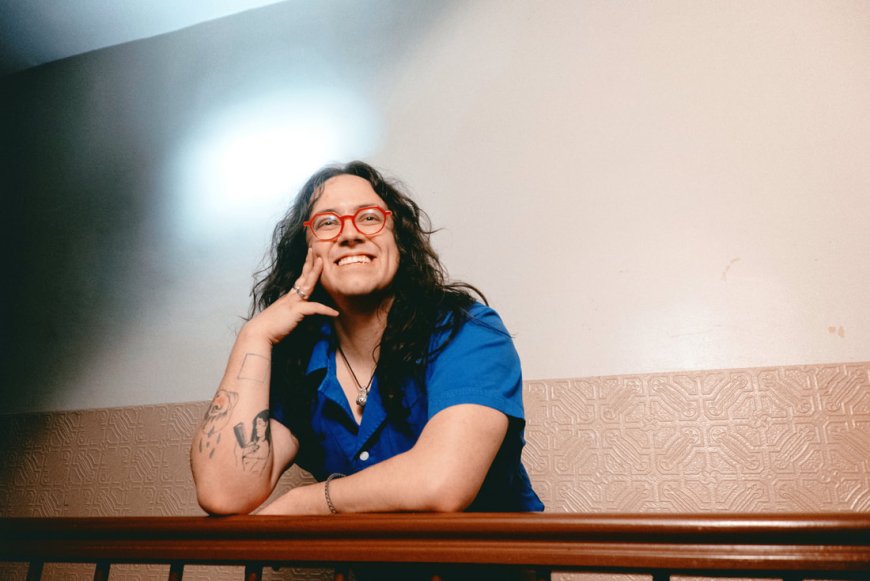
Manhattan Serenades, by Gabriela Lena Frank, is a throwback to swing and Tin Pan Alley. Chartier and Halbig negotiate the flowing rhythms, but, considering the angle, the piece is oddly removed from the much richer and more interesting music rooted in Latin American cultures that Frank is known for.
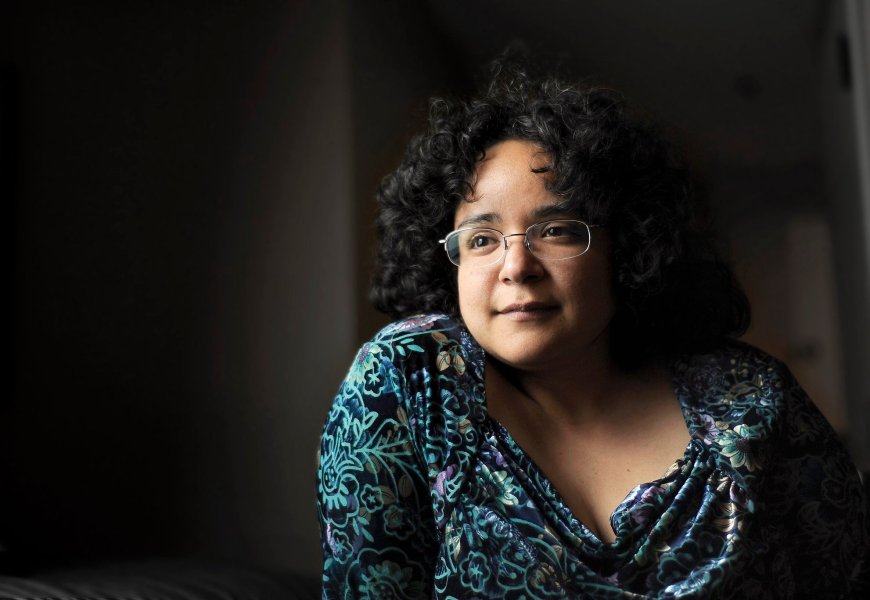
Hollow also sings “Sin vos,” a selection from Carla Lucero’s opera Juana (text by Alicia Gaspar de Alba, contemporary), while soprano Nanette McGuinness sings José Bragato’s Dos canciones argentinas (with text by one Salomón Carovich, essentially unknown). Unfortunately, neither soprano has good diction in sung Spanish — you can barely understand the words, which doesn’t do any favors for an album purporting to represent Latin American music with texts in Spanish. Why not tap a soprano fluent in Spanish, a Latine?