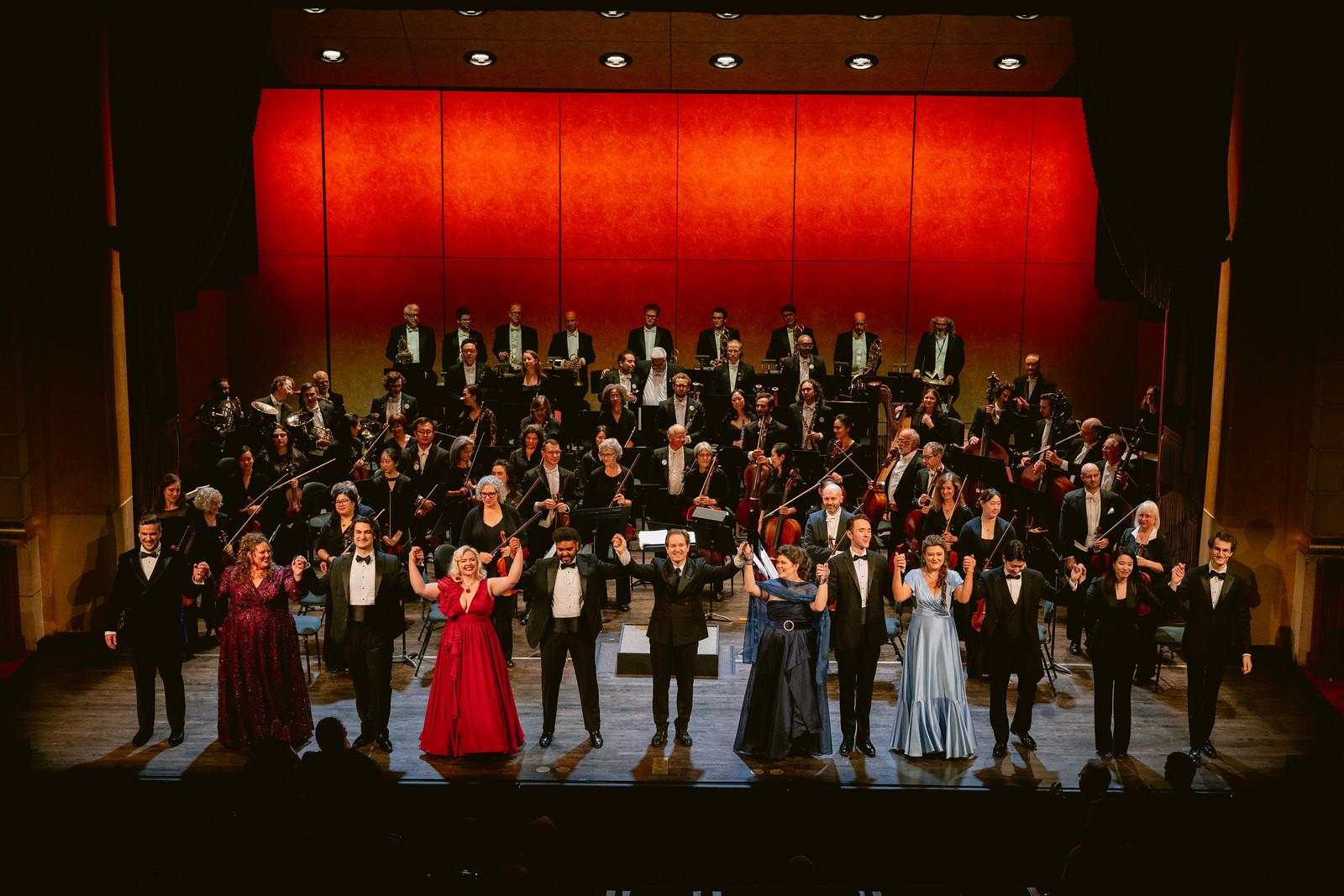
The San Francisco Opera Center’s Adler Fellows closed out the fall arts season with “The Future Is Now,” a concert showcasing the program’s breadth of emerging talent. But even amid the strong ensemble, one singer drew the greatest applause at Herbst Theater.
On Friday, Nov. 21, the young heroic tenor Thomas Kinch sang with spectacular power and dark-toned beauty in two difficult scenes. To both, he brought scrupulous musicality and a sense that he never approached his vocal limits.
As Verdi’s Otello — the most challenging of all Italian tenor roles — Kinch gave a gripping account of “Dio mi potevi,” an aria about the inner anguish of a warrior brought low by jealousy. As Wagner’s Siegmund, in the duet that closes Act 1 of Die Walküre, he embodied the joy of discovering the character’s identity and his passionate love for his long-lost sister Sieglinde.

Soprano Mary Hoskins made a fine partner opposite Kinch in that duet, her voice big, bright-toned and easily produced. On her own, she gave a radiant performance of “Es gibt ein Reich” (There is a kingdom), the title character’s great aria from Richard Strauss’s Ariadne auf Naxos.
Ramón Tebar conducted the San Francisco Opera Orchestra, opening with the fizzy overture to Johann Strauss II’s Die Fledermaus. He supported the young singers well throughout the concert of standard repertory arias and ensembles, which neatly balanced tragedy and comedy.
The Adlers sang nearly the entirety of Act 3 of Puccini’s evergreen La bohème, showcasing soprano Olivia Smith’s vibrant, gloriously sung, and moving Mimì. Tenor Samuel White’s Rodolfo was more stoic than charming, while baritone Samuel Kidd made a warmly sympathetic Marcello.
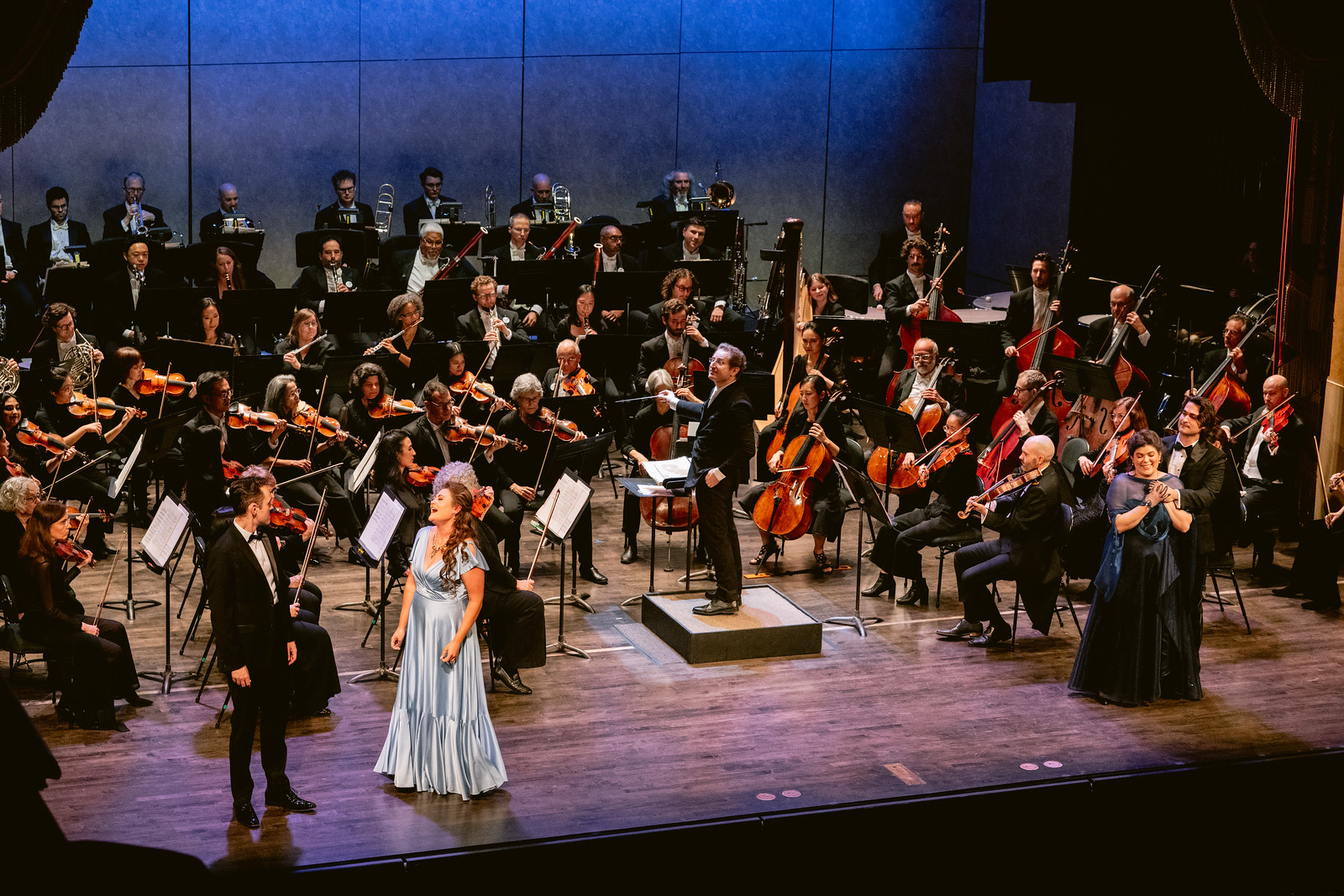
Kidd brought those same virtues to a touching performance of Billy Budd’s scene contemplating his impending death, from the eponymous Benjamin Britten opera. In the orchestra, Susan Kang played the piccolo accompaniment tenderly, earning a well-deserved solo bow.
Soprano Caroline Corrales couldn’t have been more urgent and rich-toned singing Manon’s aria “Sola, perduta, abbandonata” (Alone, lost, abandoned) from Puccini’s Manon Lescaut. White was her impassioned Des Grieux in the scene that follows. But in Violetta’s "Sempre libera" (Always free) from Act 1 of Verdi’s La traviata, Corrales sounded shallow and stressed at the top of her range.
Soprano Georgiana Adams was a hilarious and vocally sparkling Musetta in the Bohème excerpt, and Rosalinde in a trio from Die Fledermaus. Those are both high-flying excerpts, while Ellen Orford’s “Embroidery” aria from Britten’s Peter Grimes landed in her weaker low register. Jongwon Han was a sympathetic Captain Balstrode in that scene.
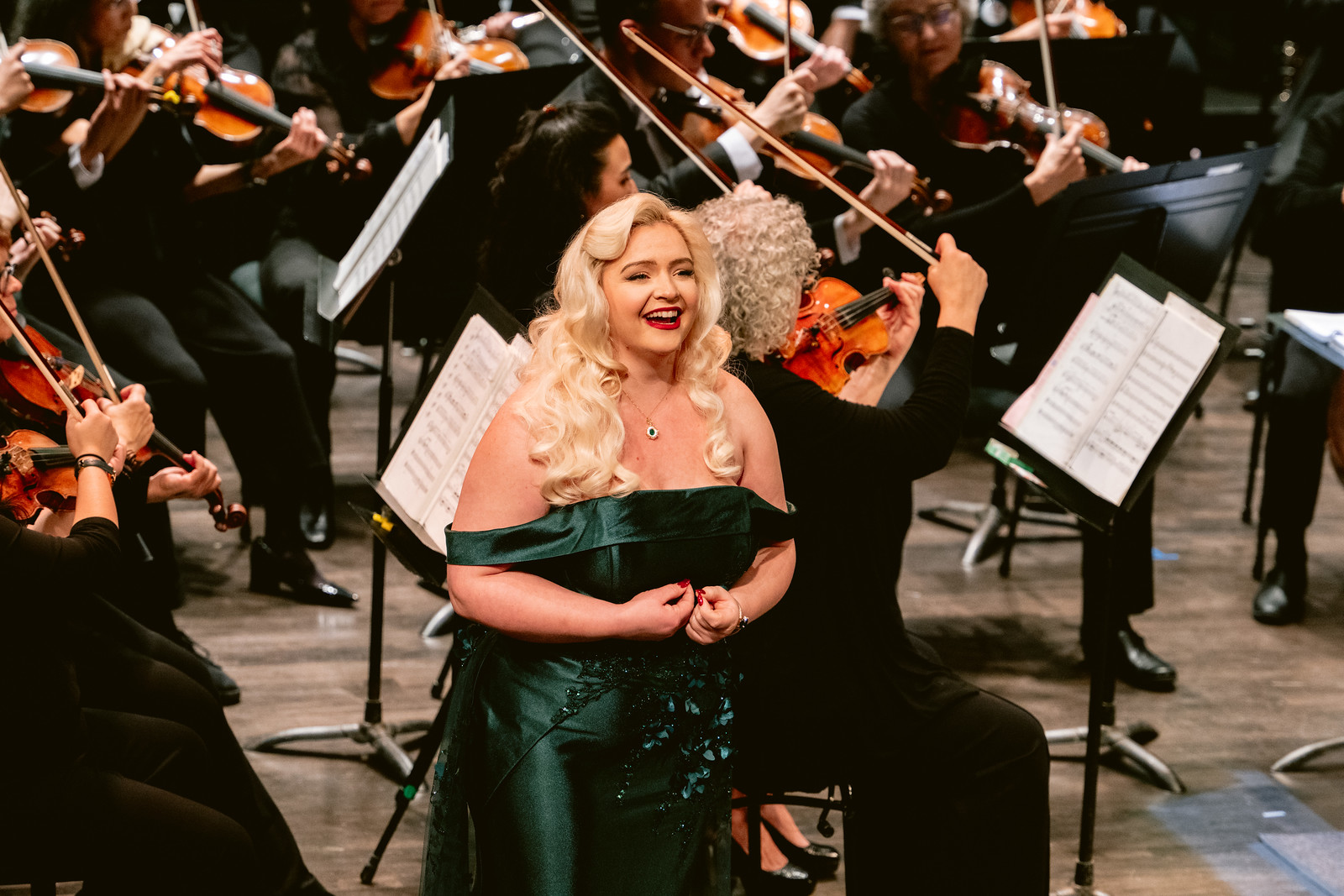
Han, a sonorous bass-baritone, also sang a spirited “Aprite un po’ quegli occhi” (Open your eyes) from Mozart’s The Marriage of Figaro, and a smoothly restrained “Vi ravviso, o luoghi ameni” (I see you again, oh lovely places), from Vincenzo Bellini’s La sonnambula.
In the Fledermaus trio, White and baritone Olivier Zerouali made strong impressions, with White sounding more comfortable singing in German than in Italian. Zerouali demonstrated scene-stealing charisma and a distinctively warm baritone in Figaro’s “Largo al factotum’ from Gioachino Rossini’s The Barber of Seville.
Adams, Corrales, Smith, White, Kidd, and Han all concluded their Adler fellowships with this concert and now start the next phase of their careers. Hoskins, Zerouali, and Kinch (a rare third-year fellow) will continue in the program, giving us much to look forward to in the 2026 concert.