Revenge is a dish best tasted cold, or so the saying goes. But Richard Strauss’ 1909 Elektra, a tale of intergenerational violence and bloody revenge, is anything but chilly — especially in San Francisco Opera’s devastating, cathartic revival of Keith Warner’s brilliant night-at-the-museum production.
Eun Sun Kim’s incendiary conducting and the Opera Orchestra’s magnificent playing drive this revival, which opened at the War Memorial Opera House on Sunday, June 7. Elektra also sports a superb cast, led by soprano Elena Pankratova, who makes her company debut in the punishing title role.
Strauss’ opera tells an old story, drawn from Greek drama. Agamemnon, king of Mycenae, sacrificed his daughter Iphigenia to propitiate a goddess. His wife, Queen Klytemnestra (mezzo-soprano Michaela Schuster), and her lover, Aegisth (tenor William Burden), murdered the king in retaliation.
Princess Elektra, one of the royal couple’s surviving children, is consumed by the desire to avenge her father’s death, with her sights set on killing her mother and Aegisth.
Warner’s production, first seen here in 2017, brings the opera into the present day and sets it in a museum, illuminating and augmenting Hugo von Hofmannsthal’s psychologically penetrating libretto.
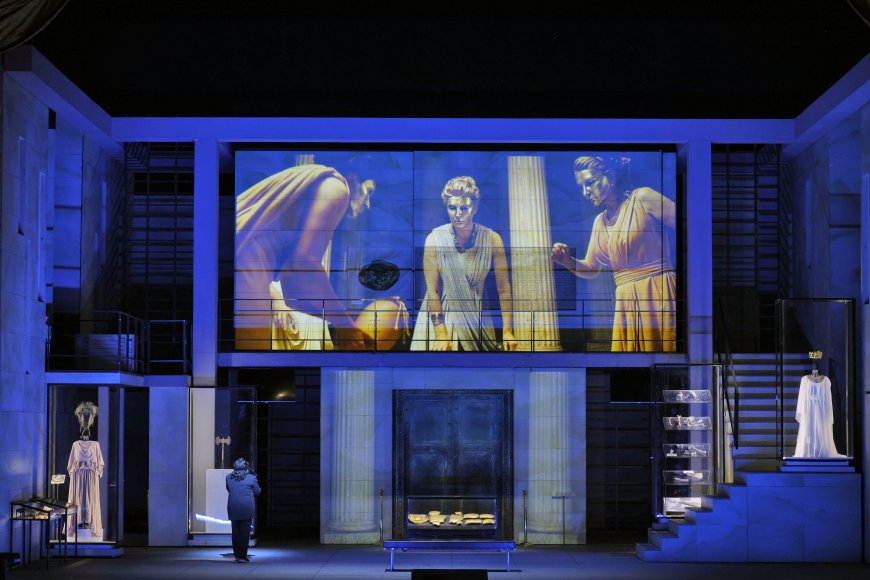
Before the music starts, museum visitors wander through an exhibition about the Elektra story, viewing videos and display cases of artifacts that foreshadow events to come. (Keep an eye on the videos — they do bear on the plot!) Boris Kudlicka’s handsome two-level set gradually reveals its surprises as the drama unfolds, while John Bishop’s marvelous lighting design is an object lesson in how to support a story.
One visitor remains behind when the museum closes and finds herself swept into the opera’s title role, adopting the storyline as her own.
The museum visitor becomes Elektra, singing about Agamemnon’s death and begging him to appear to her. Though not the subtlest actor, Pankratova shows off her vocal prowess in this monologue. Her performance spans everything from quiet intimacy to big, billowing high notes, while sustaining the stamina required to portray a character who is onstage for almost the entire opera.
The ancient and modern collide as the household’s maidservants, initially unseen, mock Elektra, who has been cast out of the family home. When they finally swarm on stage, in ancient garb, one maidservant (former Adler Fellow Caroline Corrales in a vivid role debut) defends her, earning punishment by the Overseer (soprano Alexandra Loutsion).
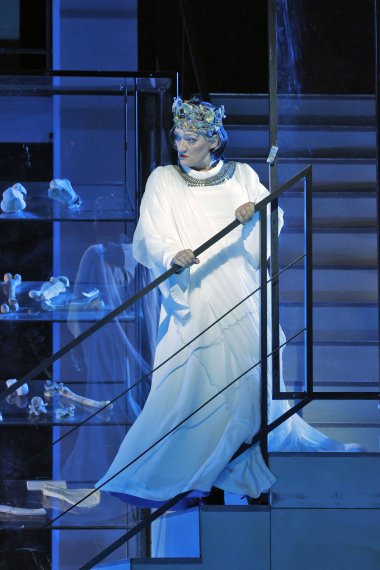
Elektra tries to recruit her sister Chrysothemis — the electrifying Elza van den Heever, whose enormous, brilliant soprano cuts right through the heaviest orchestration — to help her kill Klytemnestra and Aegisth. But Chrysothemis just wants a normal life and she’s horrified at the idea of murder.
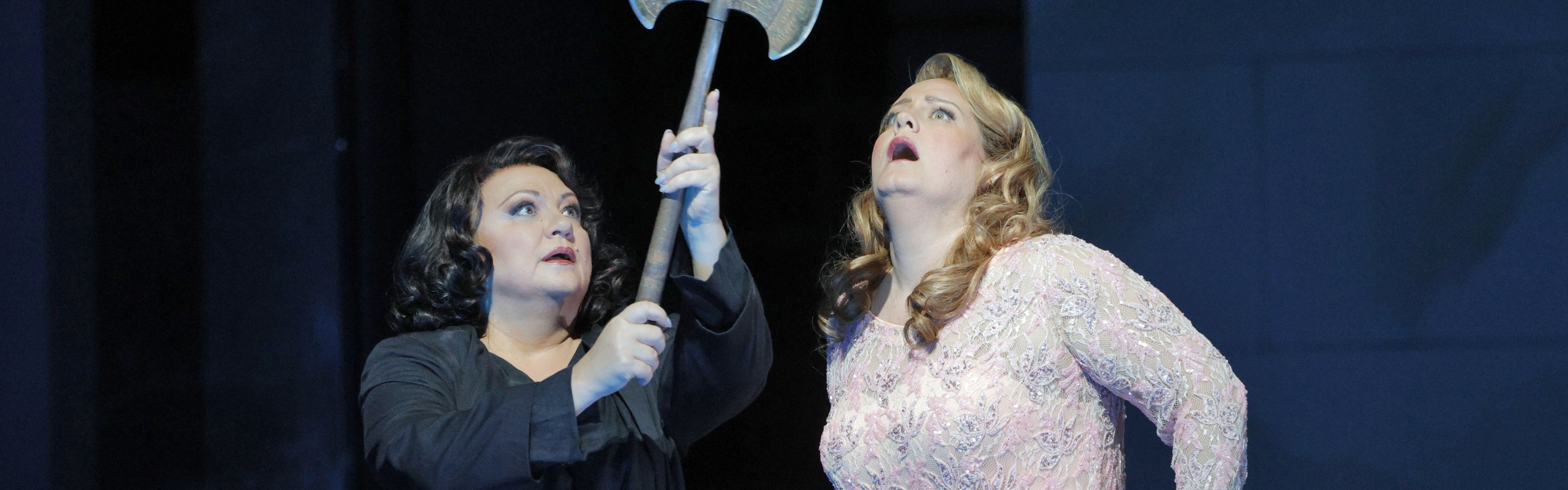
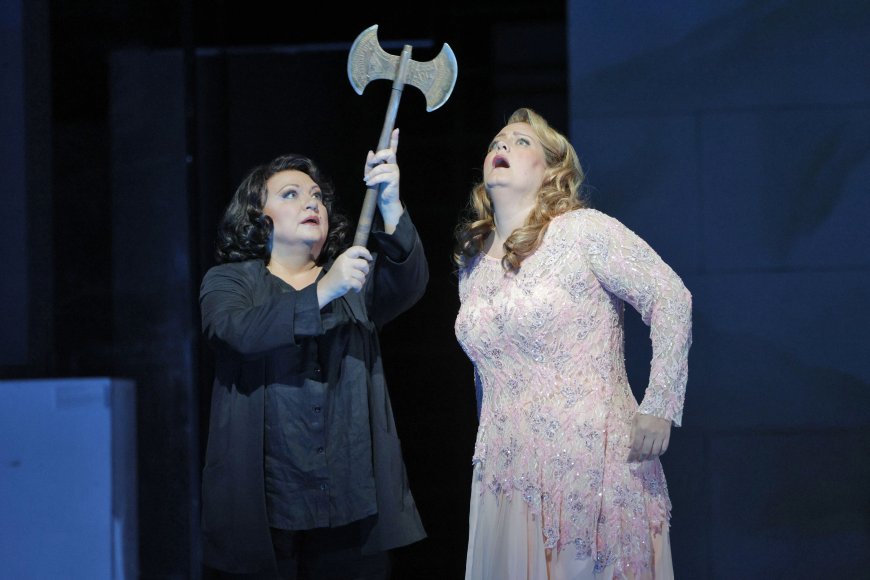
Meanwhile, Klytemnestra crumbles before our eyes. She drinks too much and recoils from Elektra with disgust. Schuster delivers a poisonous, threatening portrayal of a woman destroyed by her own actions yet incapable of acknowledging her culpability. Elektra hates her, but can’t bring herself to strike, despite the presence of a handy ax lurking in a nearby museum display case.
A solution to Elektra’s dilemma presents itself when her brother Orest (bass-baritone Kyle Ketelsen), thought to be dead, manages to slip, disguised, into the house. Pankratova sings with winning tenderness during and after their slow mutual recognition, the emotional heart of the opera.
Ketelsen’s implacable Orest wants revenge as much as Elektra does, but unlike her, he’s able to act. The horror-show aspects of the production elicited both gasps and appropriately nervous laughter from the audience.
As in 2017, the production is a triumph for all involved. It’s beautifully staged by revival director Anja Kühnhold. Kim leads with propulsion and breathtaking control over the immense orchestra — Strauss never met an instrument he couldn’t stuff into a score — and miraculously retains clarity even in the loudest passages, of which there are many.
Whether healing is possible for the traumatized survivors remains unknown. Elektra collapses at the overwhelming close, writhing, then going still, perhaps dead, perhaps living but catatonic.
It’s a haunting final image in a production that never loses sight of the human cost of violence.
Lisa Hirsch is a freelance writer. This review has been provided in partnership with San Francisco Chronicle.