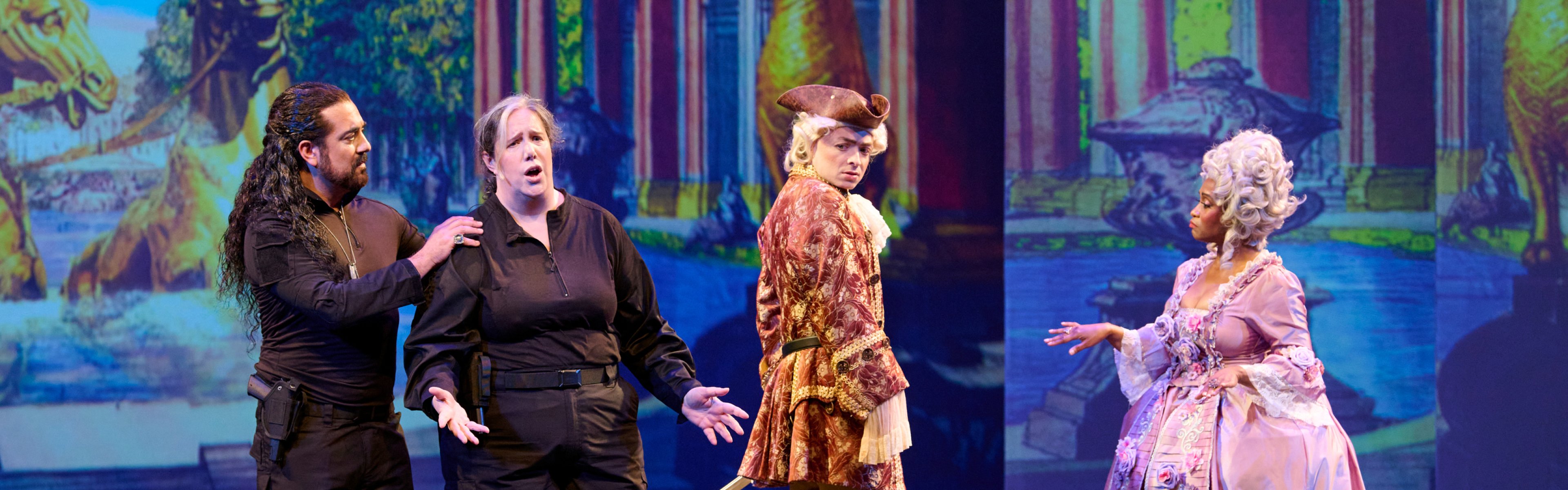
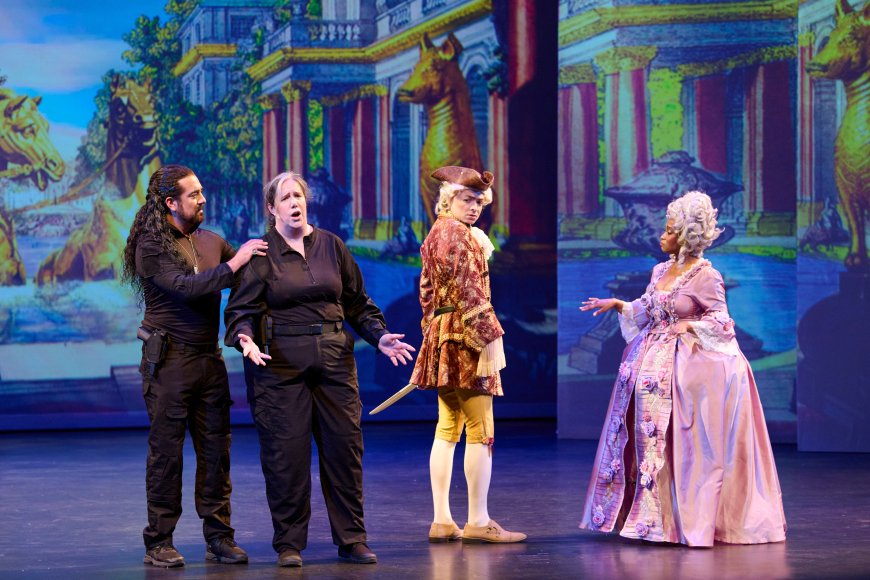
George Frideric Handel’s Alcina is one of those operas where you might have some difficulty keeping the characters and their relationships to one another straight. The Festival Opera’s production at the Lesher Center for the Arts, presented in cooperation with the San Francisco Early Music Society, was entertaining, well performed, and often very funny.
The opera is based on Ludovico Ariosto’s epic poem Orlando Furioso. Alcina, a sorceress, has a sister, Morgana, and a lover – well, current lover – the warrior Ruggiero. Ruggiero has a fiancée, Bradamante, who is in disguise as her own brother, Ricciardo, and whose gender is not clear to everyone in the opera. Morgana also has a lover, Oronte, but seemingly falls in love with “Ricciardo” at first sight, thinking Bradamante a man.
Complicating this further, Alcina has enchanted Ruggiero, as she does all her lovers, and he doesn’t remember Bradamante’s existence. When the curtain goes up, we’re with Bradamante and Ruggiero’s commander and mentor, Melisso. Bradamante and Melisso are searching for Ruggiero.
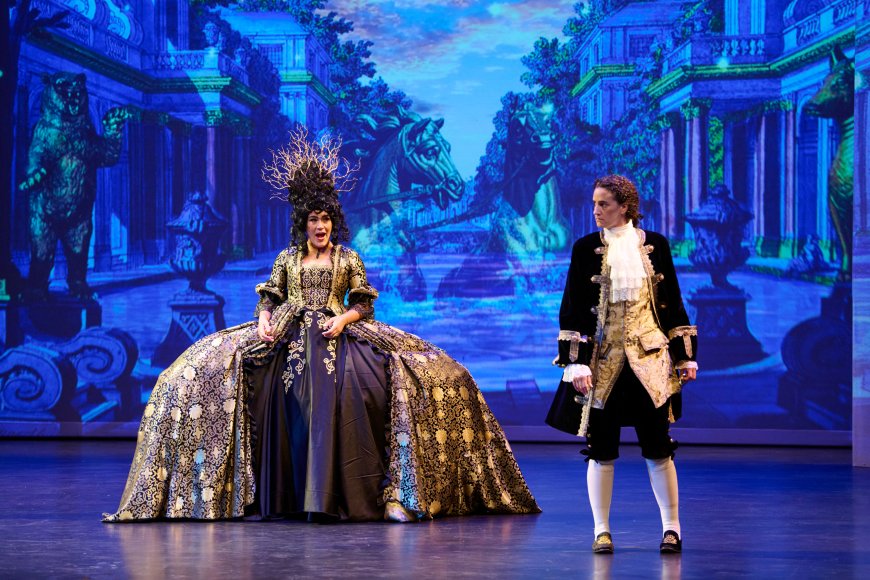
Of course, complications ensue. Though it is possible to perform the opera more seriously director Zachary Gordin emphasized the humor in the libretto.
Gordin took note, in brief remarks before the performance, of the gender-bending nature of Alcina, with women singing male roles and a woman falling in love with a woman disguised as a man. “Happy Pride!” he exclaimed, to applause from the audience.
Because of Handel’s florid vocal style, the first thing you need for successful productions of his operas is a cast that’s able to toss off their arias effortlessly and add ornaments in repeats. Festival Opera had this, starting with the powerhouse mezzo-soprano Nikola Printz (using they/them pronouns) in the title role.
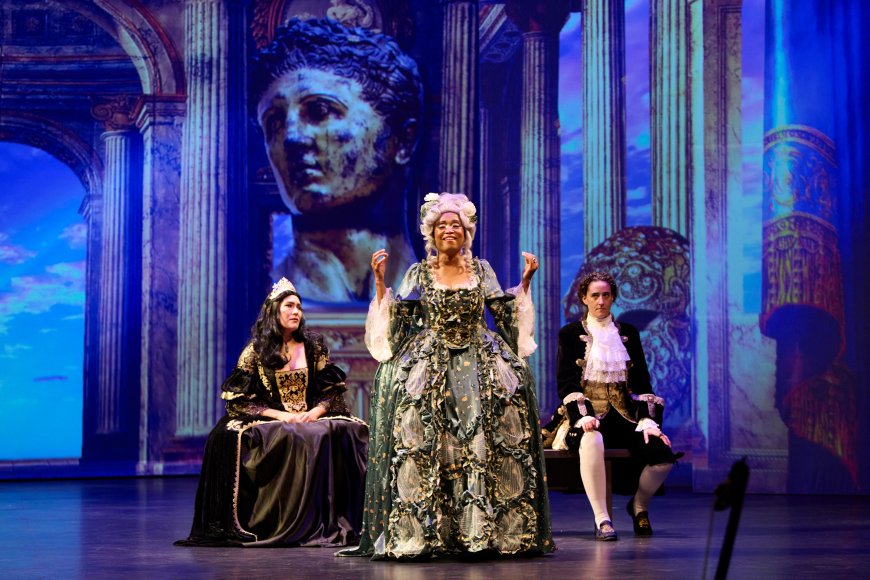
Printz has tremendous stage presence, whether glowering angrily or in the throes of love. They also have an enormous vocal range, with powerful, easy high notes – Alcina is usually sung by a soprano – and resonant low notes. They also wore their outfits, splendid gold and black gowns in a mid-18th-century style, with panache.
Matching Printz’s presence, mezzo-soprano Courtney Miller made a vocally resplendent Ruggiero. Previously seen in decidedly feminine roles — such as Elmire in Kirke Mechem’s Tartuffe — Miller brought an astonishingly masculine Ruggiero, from the sharp planes of her face to her posture and stride.
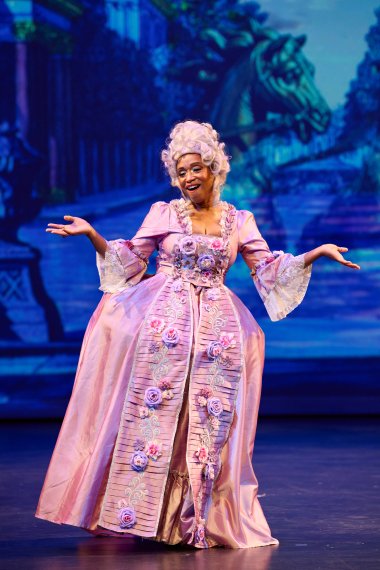
As Alcina’s sister Morgana, the veteran soprano Shawnette Sulker sounded somewhat vocally worn and occasionally had pitch problems, though her voice remains highly flexible. Nonetheless, her charm and comic timing as the foolish Morgana went a long way toward redeeming any vocal issues, which, given her prominence and many contributions to Bay Area opera, we can hope will prove to be transitory.
Her interactions with contralto Sara Couden’s Bradamante, for example, were flirtatiously endearing, even as Couden’s slightly horrified responses — clearly wanting to keep Sulker at a physical and emotional distance — made their own contribution to the humor. Couden, also a seasoned comic, gave a strongly voiced, warm performance as Bradamante.
Bass Isaiah Musik-Ayala, handsome and firm-voiced, was a fine foil to Couden as Melisso, Ruggiero’s commander. Like Sulker, tenor Spencer Greene provided a beautiful contrast to all the low voices in the cast, in the small role of Oronte. Mezzo-soprano Nina Jones was appealing as Oberto, a teenage boy whose father has been turned into an animal by Alcina, though the upper range of the role seemed outside Jones’s comfort zone.
Scenic designer Peter Crompton’s colorful projections brought Alcina’s island and various locations on it to brilliant life, from a palatial courtyard to a decayed interior that resembled a torture chamber. Marina Polakoff’s lavish 18th-century costumes for the inhabitants of Alcina’s island were perfect for Handel’s time, while Bradamante and Melisso were in modern clothing and brandished guns.
Derek Tam conducted briskly and, in the June 19 performance, played harpsichord as well. The small Festival Opera Chorus sang robustly, beyond their numbers, though there were pit-stage coordination problems during an exit.
Gordin’s directorial choices made sense – assuming the modern dress and guns were meant to separate Bradamante and Melisso from Alcina’s time and place – although it’s always challenging to figure out what to do with the others on stage when one character sings a long bravura aria. Do you invent a lot of action, which can be distracting, or leave the others mostly standing and watching, which is static? Gordin wisely took the less-distracting option.