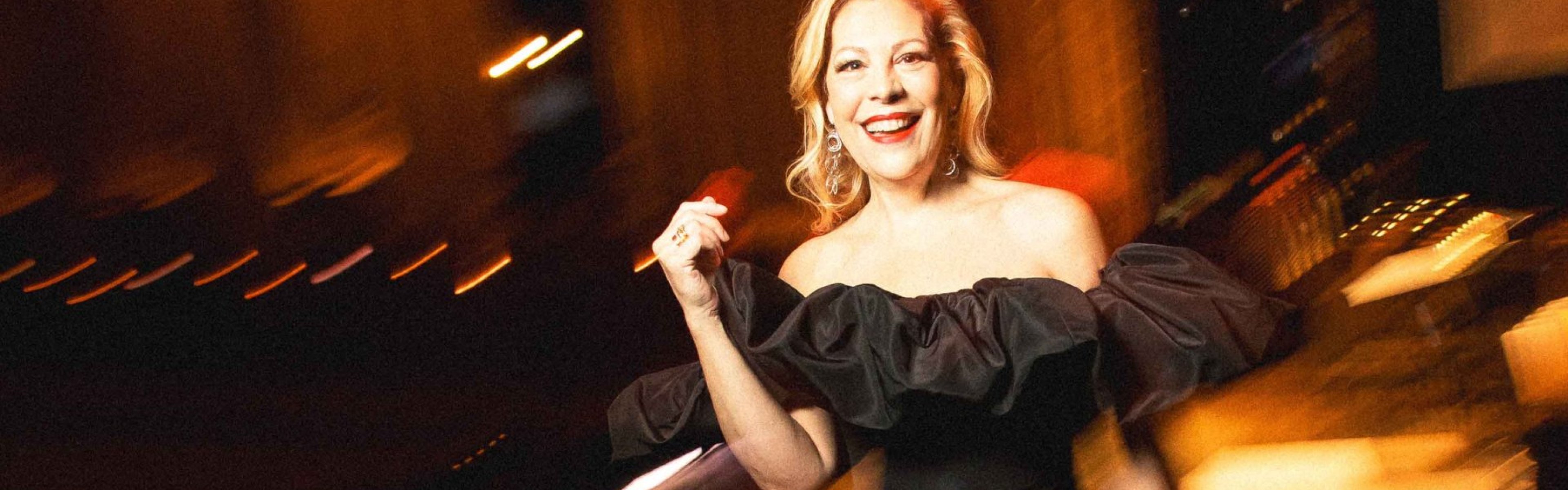
Twenty-three seasons after she debuted in the title role of Carlisle Floyd's definingly American opera, Susannah, at Lyric Opera of Chicago, soprano Sondra Radvanovsky returned to one of her favorite stages for a rapturously received all-Puccini recital. Titled “Puccini: Heroines,” Pentatone released a recording of the live concert.
Interspersing 12 core arias with five orchestral preludes, Radvanovsky assays the defining soprano arias in Le Villi, La bohème, Madama Butterfly, Tosca, Manon Lescaut, La Fanciulla del West, Suor Angelica, Edgar, La rondine, and Gianni Schicchi.
The good news is that, at age 56, Radvanovsky's instrument remains secure and strong throughout its range. Though there's clearly some limiting on the recording — note how the sound of the hall's air conditioning increases whenever the orchestra pauses — her high Bs and Cs sing out confidently with as much force as the engineering team will allow.
Right before her last showstopper, the near-obligatory "O mio babbino caro," she goes a bit rogue by switching guises from the tragically consumptive Mimì to the seductive Musetta. Judging from the audience's reaction to her shtick, she is more successful at lightening up the proceedings than the voice itself.
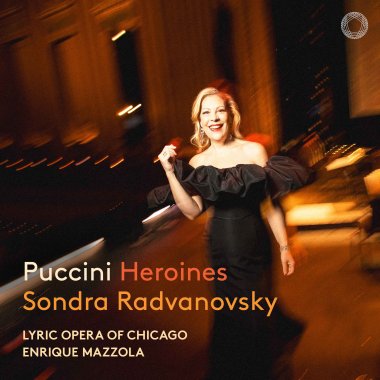
There is no pretending that this is the voice of a young woman. Hers is a mature instrument with an air of grandeur. In Turandot's great tour de force, "In questa reggia," it commands with imperious strength. In far lighter music, her Mimì lacks the innocence and vulnerability of a sweet young thing who, in less than 20 minutes, steals both Rodolfo and our hearts.
More creative accompaniment and forward momentum would have added to the recording's impact. Tosca's "Vissi d'arte" lacks drive; it sounds as if approached carefully rather than lived fully. Mazzola's accompaniment too often sounds pedantic and uninspired, as if he's waiting for cues rather than joining with Radvanovsky to sing and suffer as one.
Although Radvanovsky takes a while to warm up to peak form, she's totally in her element by the fifth aria, Manon Lescaut's "Sola, perduta, abbandonata." It's one of the most committed performances on the recital. Sister Angelica's "Senza mamma," by contrast, starts out too carefully. The swell on high is wonderful, as are the piano phrases throughout the recital. If only Radvanovsky phrased a bit more creatively, with more Italianate abandon, rather than defaulting into one dramatic posture for every aria.
Fans need not hesitate to listen to this recording. Others less familiar with Radvanovsky may prefer to stick with Muzio, Price, Tebaldi, Freni, Callas, Caballé, Scotto, and Olivero. And, lest I be hunted down in Port Townsend and burned at the stake, let's add Milanov, Giannini, and Arangi-Lombardi to the mix. Don't know them? Get thee to YouTube now!