Maybe a letdown — or at least a left turn — was inevitable.
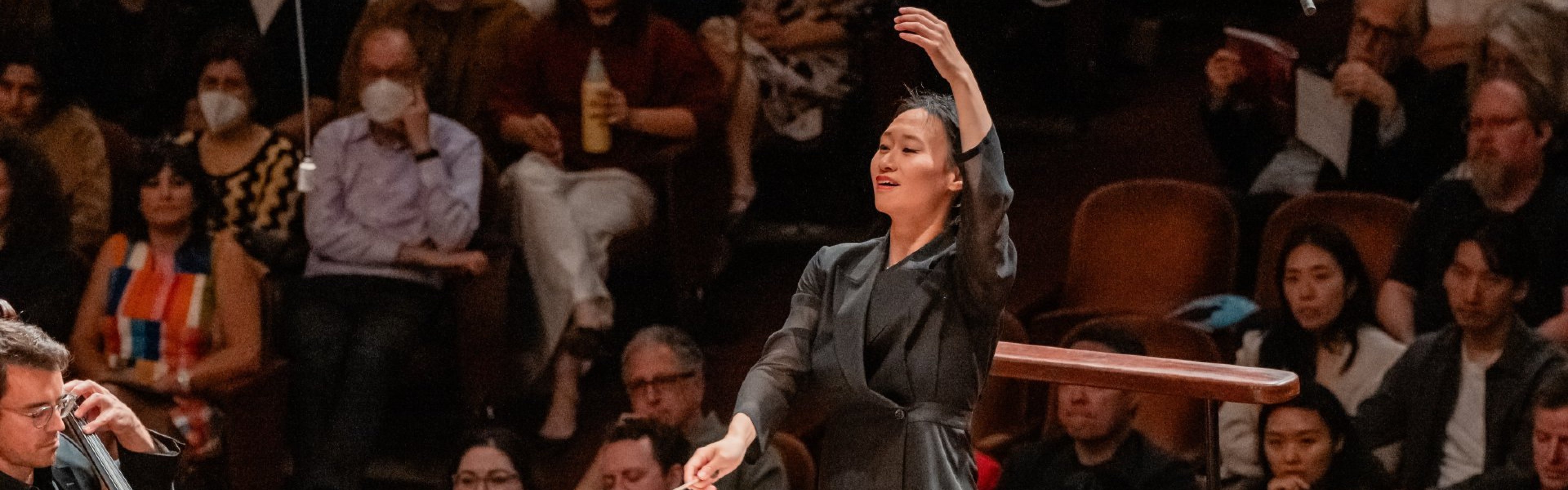
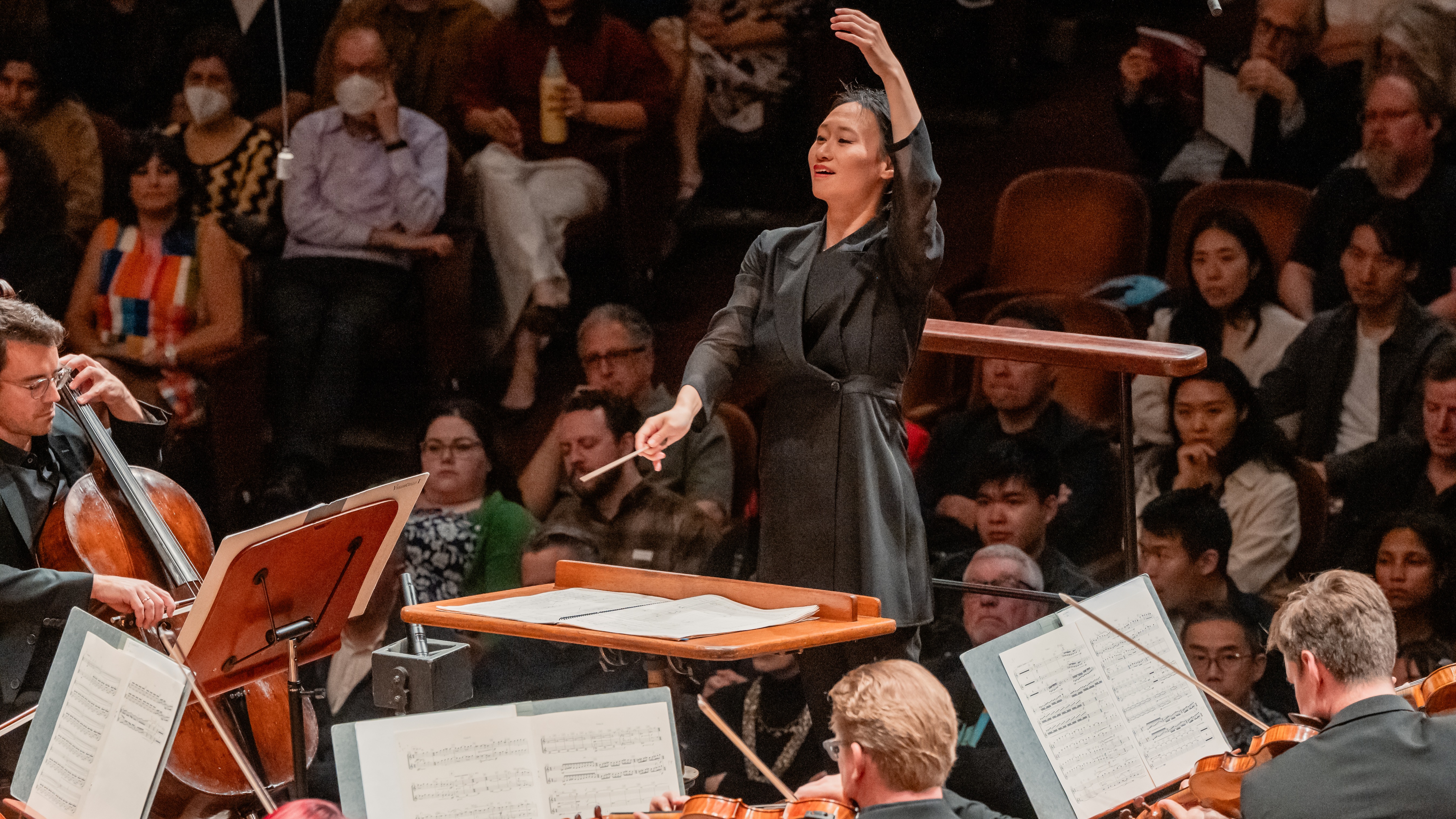
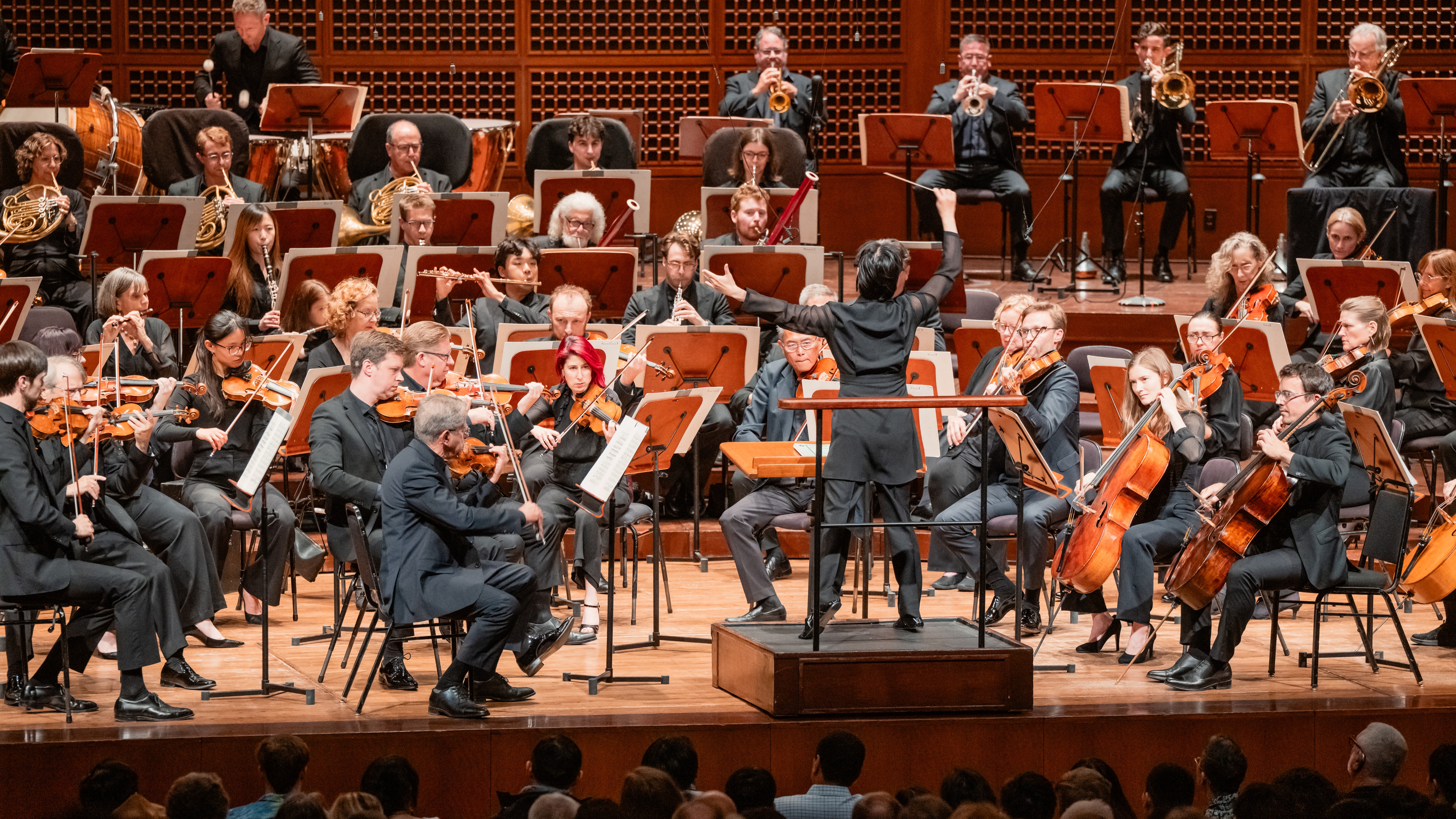
A week after Elim Chan made her high-impact debut as music director designate of the San Francisco Symphony, Chinese New Zealand guest conductor Tianyi Lu led an ill-conceived, overstuffed program at Davies Symphony Hall.
Despite stellar virtuosity from the dazzling Spanish violinist María Dueñas in Erich Wolfgang Korngold’s Violin Concerto, the Friday, June 12, concert labored under the paradoxical problem of calorie-rich backstories resulting in musical undernourishment.
Putting Austrian composer Erich Wolfgang Korngold’s cinematic concerto on the same bill with Russian composer Nikolai Rimsky-Korsakov’s programmatic flash-bang symphonic suite Scheherazade laid the showiness on thickly. By contrast, the opening piece, Iranian Canadian composer Iman Habibi’s Zhiân (2023), made a priori claim on the audience with its pointed political relevance.
Written in the wake of the 2022 anti-government protests sparked by the death of a Kurdish Iranian woman in police custody, the 13-minute work takes its title from the resistance slogan “Zhen, Zhiân, Âzâdi” — woman, life, freedom.
Lu, in brief remarks, from the stage, didn’t need to remind anyone about the current hair-trigger politics of Iran on the world stage.
Opening in glowering low strings joined by a thumping tuba and muttering trombones, Zhiân conjured a darkly brooding atmosphere. Soon enough, a swaying figure heard first in the woodwinds and then in the violins became the work’s defining, and limiting, material. Cloaked in various orchestral colors, modulated through different keys and harmonic structures, and punctuated by stark percussion outbursts (a whip and assorted drums), the figure nonetheless grew redundant, as the music dwelled on it.
It could be argued that protest-inspired music depends on insistent repetition to drive home its message. But arguments don’t persuade listeners, music does. Zhiân needed to be more dynamic and involving.
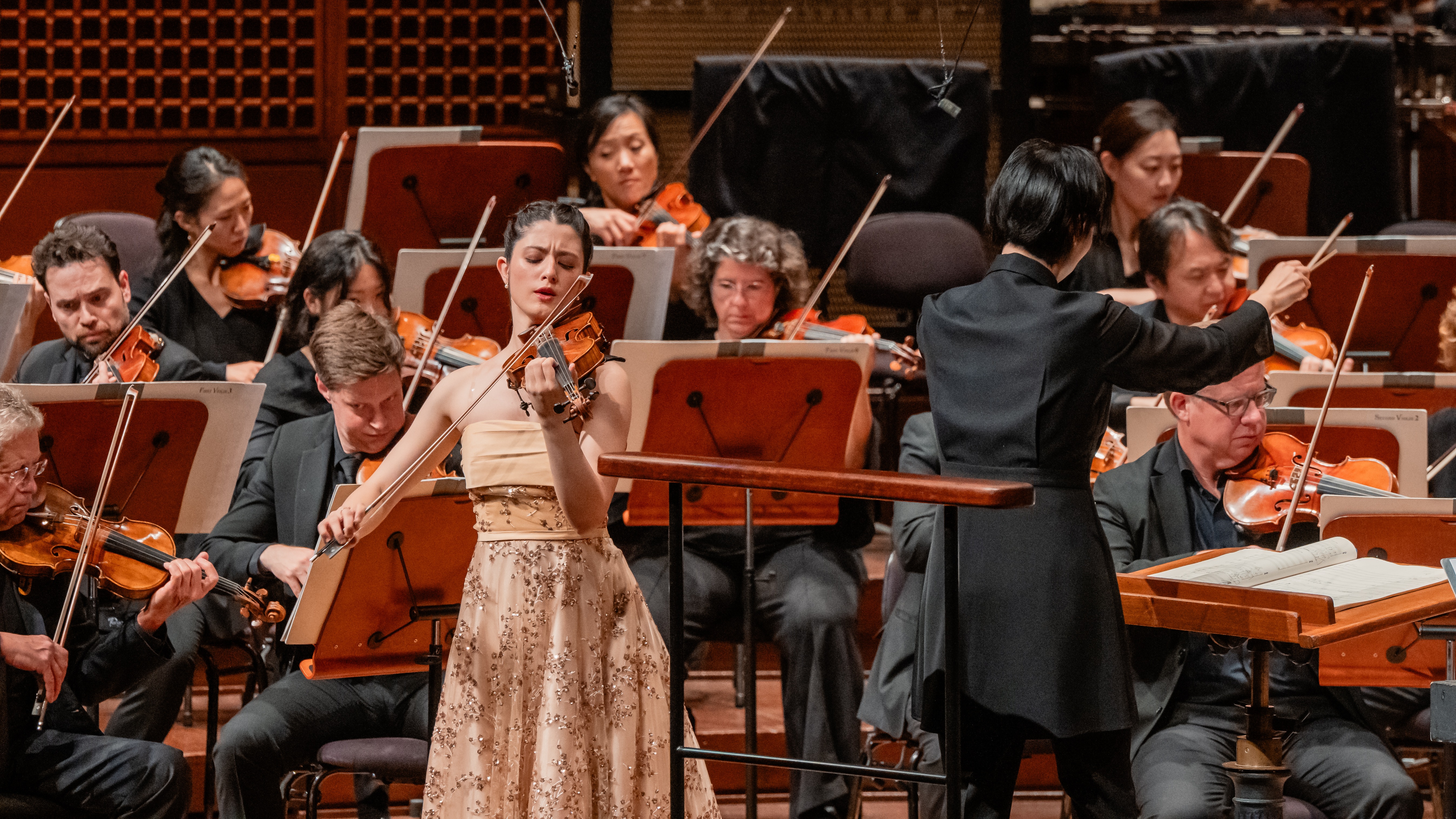
Best known as a composer of film scores, Korngold quoted from four of them, including Anthony Adverse (1936) and The Prince and the Pauper (1937), in his 1945 concerto. It’s a curious work, by turns so gushily Romantic that a movie screen seems poised to descend and as technically demanding as a Paganini caprice.
Dressed in an Oscar night-worthy spangled cream-colored gown, Dueñas sold it all with plush phrasing, blazing passagework, high-wire harmonics and an especially ripe lower register. Last performed here 20 years ago, the Korngold work is borderline kitsch that may not reward multiple exposures. But on this night, the soloist made it come across as best-in-show.
Her encore was a spare and mordant Valse triste by Ferenc Vecsey.
Lu, who was making her Symphony debut, got “Scheherazade” off to an uneven start, with some tentative entrances and phrase endings. But as this musical narrative of 1,001 tales took hold, the musicians excelled in solo and featured parts, urged on by Lu’s vibrant cues.
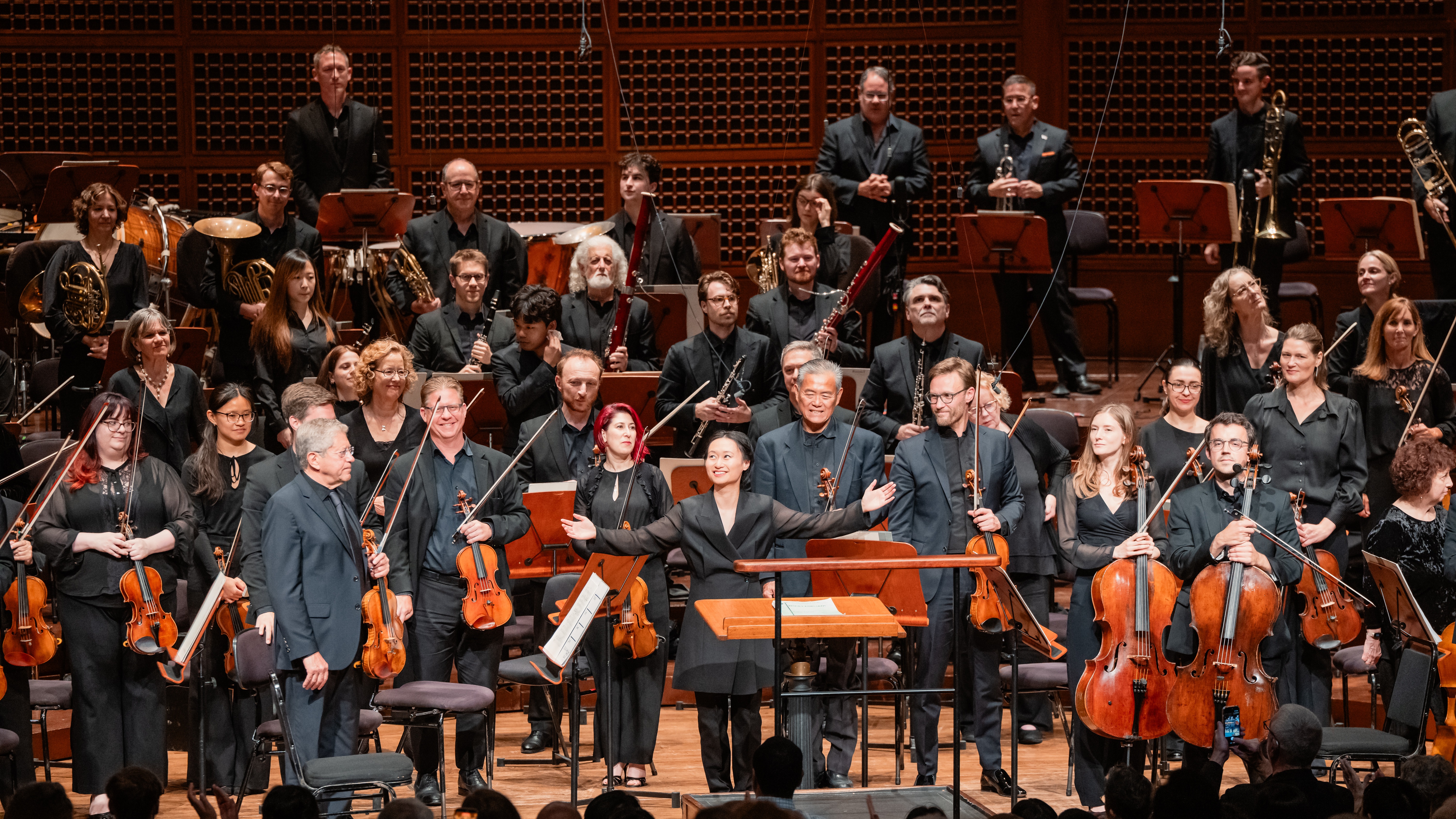
Concertmaster Alexander Barantschik brought a lightly tart sweetness to the title character’s role. Principal cellist Rainer Eudeikis, who even made a skein of simple arpeggios sound alluring, was the violinist’s responsive second. The brass thundered out the sultan’s demands for more and more narrative. The woodwinds, led by principal oboe Brooks Fisher, added their sinuous lines. Principal harpist Katherine Siochi, who was busy all evening, added shimmering light, while the percussion section pattered, clattered and jangled away.
At 45 minutes — longer than all but two of Beethoven’s symphonies — Rimsky-Korsakov’s suite yielded decreasing rewards at the end of the concert. Lu’s tempos were forceful but a bit rigid, without enough enlivening rubato. Still, as she drove home the big climaxes and a wistful fadeaway ending, Lu was in full command.
Here’s hoping that she returns to the Davies podium with a more propitious program.
This review is provided in partnership with the San Francisco Chronicle.