A Little Night Music can surprise you with the intensity of the feelings its characters vent. Not just Charlotte’s cry from the heart, “Every Day a Little Death,” but also “Later,” and, of course, “Send in the Clowns,” mercilessly expose the dry rot behind this comedy of manners.
We want to like the characters, but we also are exasperated by them. The performers must be brutally honest yet elegantly formal, best summed up in Desirée Armfeldt’s line after the young seminarian Henrik makes a scene at dinner: “Why don’t you just laugh at us, my dear? Wouldn’t that be a solution?”
In its season finale, the Redwood Symphony took on a concert performance of this challenging work using Jonathan Tunick’s expanded orchestration, created for a 2024 concert production at Lincoln Center. But the show’s success on Saturday, May 30 at Canada College’s Main Theater, rested on its cast, several of whom had played their roles in full productions before. Music Director Erik Kujawsky has also had a foot in the musical theater world for a while, and it showed.
The outstanding star of the performance was Annmarie Macry in the pivotal role of Desirée. She was completely submerged in the character, her perfect comic timing always appearing motivated by her readable thoughts and emotions. She sings extremely well, which emerged as a role requirement when “Send in the Clowns” became a worldwide hit. And she made everyone who interacted with her better.
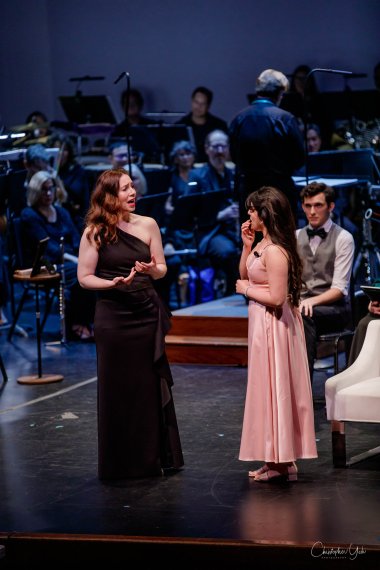
Mark P. Robinson as Fredrik Egerman, Desirée’s love interest, got the full benefit of her intensity. Though he was comfortable and believable in the part, his voice was a touch dry and reedy. His scenes with Macry, the emotional core of the role, were terrific.
Alice Teeter as Countess Charlotte and William Giammona as the “pinhead” Count Carl-Magnus also gave great performances, vocally and dramatically. Both are veterans in their parts.
Among the younger cast, Luna Lau as Anne Egerman was excellent, her chirrupy soprano just right for a character who is so unsettled. Some performers emphasize Anne’s growing maturity, but I think Lau’s interpretation is closer to what’s written in the script. Mark Wong as Henrik Egerman matched her volcanic vitality, deepening the sense of humor in the character’s moroseness. Brennah Kemmerly as Petra showed a rock-steady voice, grounding the Egerman household with a little honesty and openness. “The Miller’s Son” was a star turn.
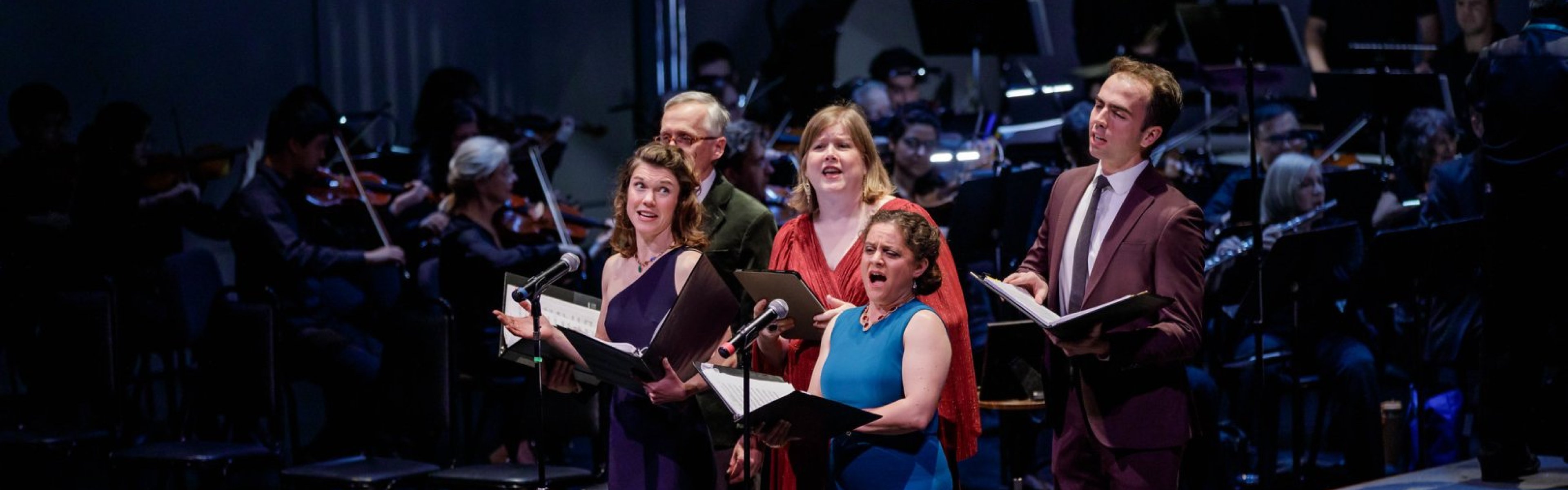
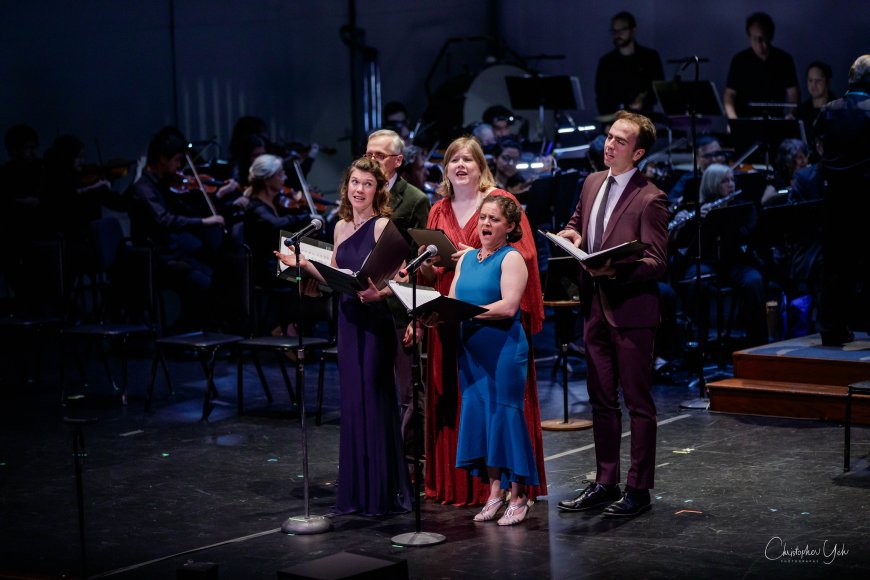
Debra Lambert dispensed Madame Armfeldt’s barbed wisdom with good humor and sang her golden solo, “Liaisons,” with satisfyingly ironic bite. The Armfeldt butler, Frid, was given back a song, “Silly People,” that was cut from the original show. Clayton Baldwin gave a reasonable performance without really selling it — not his fault, I think. The Liebeslieder singers had a couple of brilliant voices in Nicole Lopez-Hagan and Marie Finch, and the others were very good as well. And we mustn’t forget Malhar Nair Sankaren, who was funny and delightful as Fredrika Armfeldt.
You’d expect a professional orchestra to give a credible rendition of Witold Lutosławski’s Symphony No. 3 and then come back a month later and do justice to this score. Amazingly, Redwood Symphony pulled this off as an amateur group.
Performing Tunick’s lacework orchestrations for this show takes extra rehearsal just to get the coordination down. And the expanded version adds more woodwind fill and short licks that need to be smoothly traded off to other soloists, without calling attention away from the vocalists. A few pitch problems and mismatched accents aside, the orchestra did it all. This was a superior performance by a group that’s brimming with well-earned confidence.