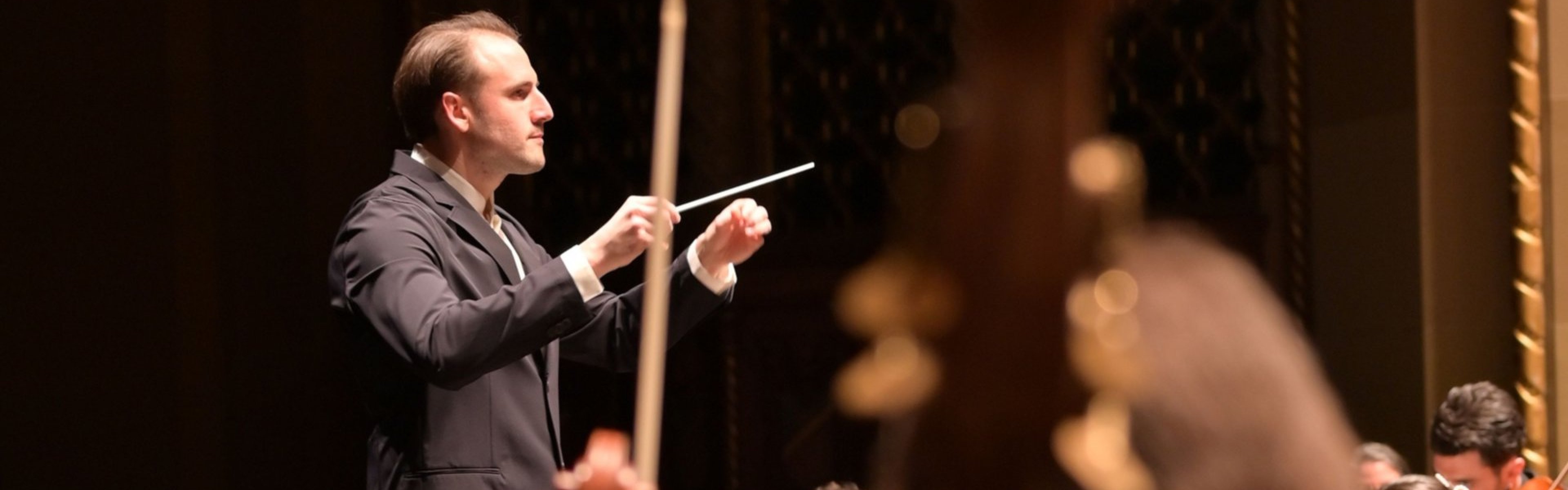
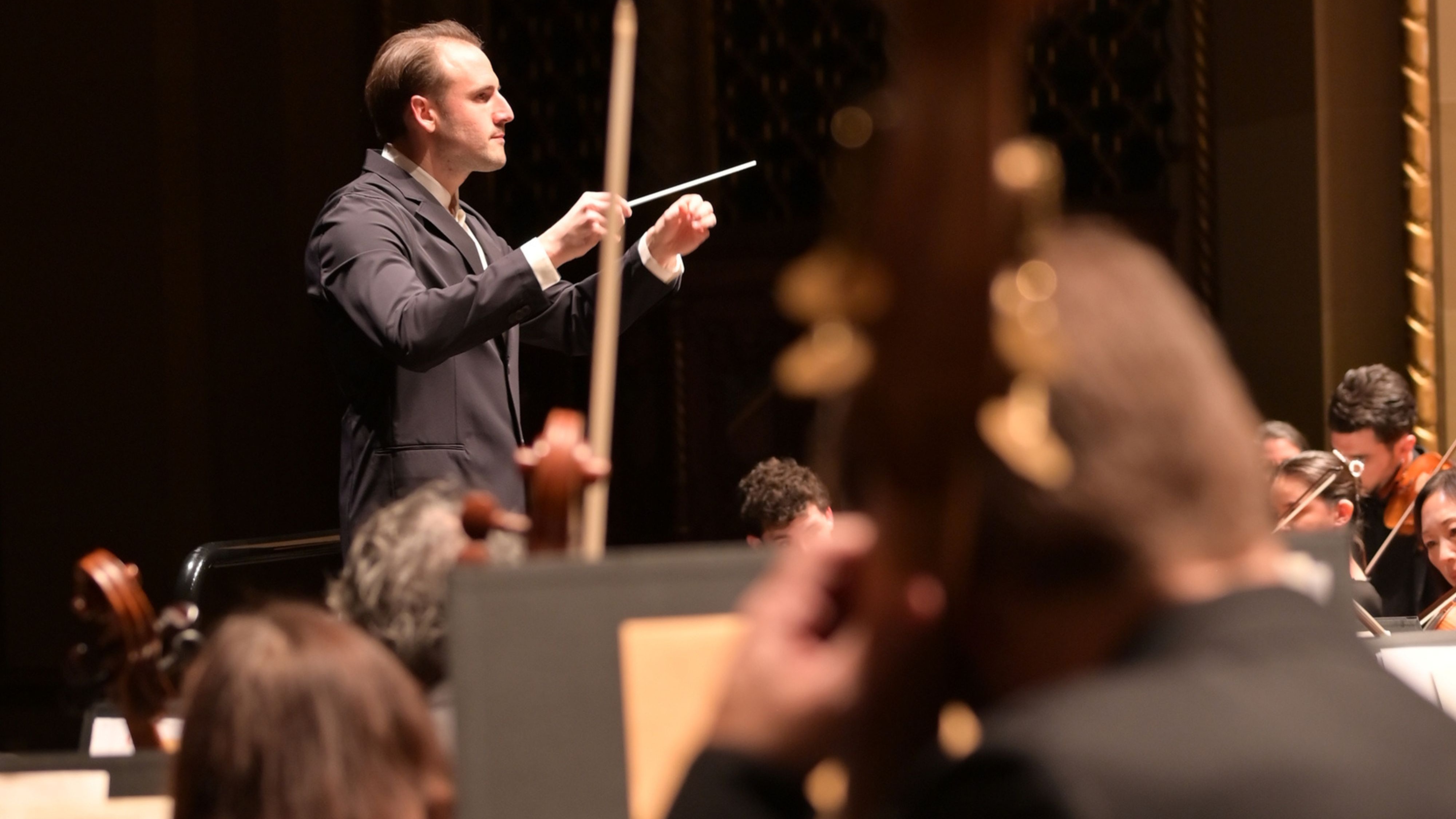
Symphony San Jose’s “Hopelessly Romantic,” presented at the California Theatre on Saturday night, paired violinist Geneva Lewis with conductor François López-Ferrer for works by Schubert, Sibelius, and Schumann. What emerged was an evening defined by an impressive clarity — of sound, intention, and interpretive vision.
Lewis joined the orchestra for Sibelius’s Violin Concerto in D minor, the second piece on the concert. With faultless technique and crystal clear sound, she displayed a profound intimacy with her instrument. Both graceful and formidably imposing, she made her 18th-century Guadagnini sing, executing masterful double stops and precision even at the extremes. Though genuinely bold, she was perfectly integrated with the rest of the orchestra — López-Ferrer exercised tight and impressive control of dynamics and pacing to let the soloist’s brilliance shine without disrupting the orchestral strings. In turn, Lewis herself was sensitive to the ensemble’s expression, especially in the second movement, resulting in a compelling tone color that made this well-known piece feel new again.
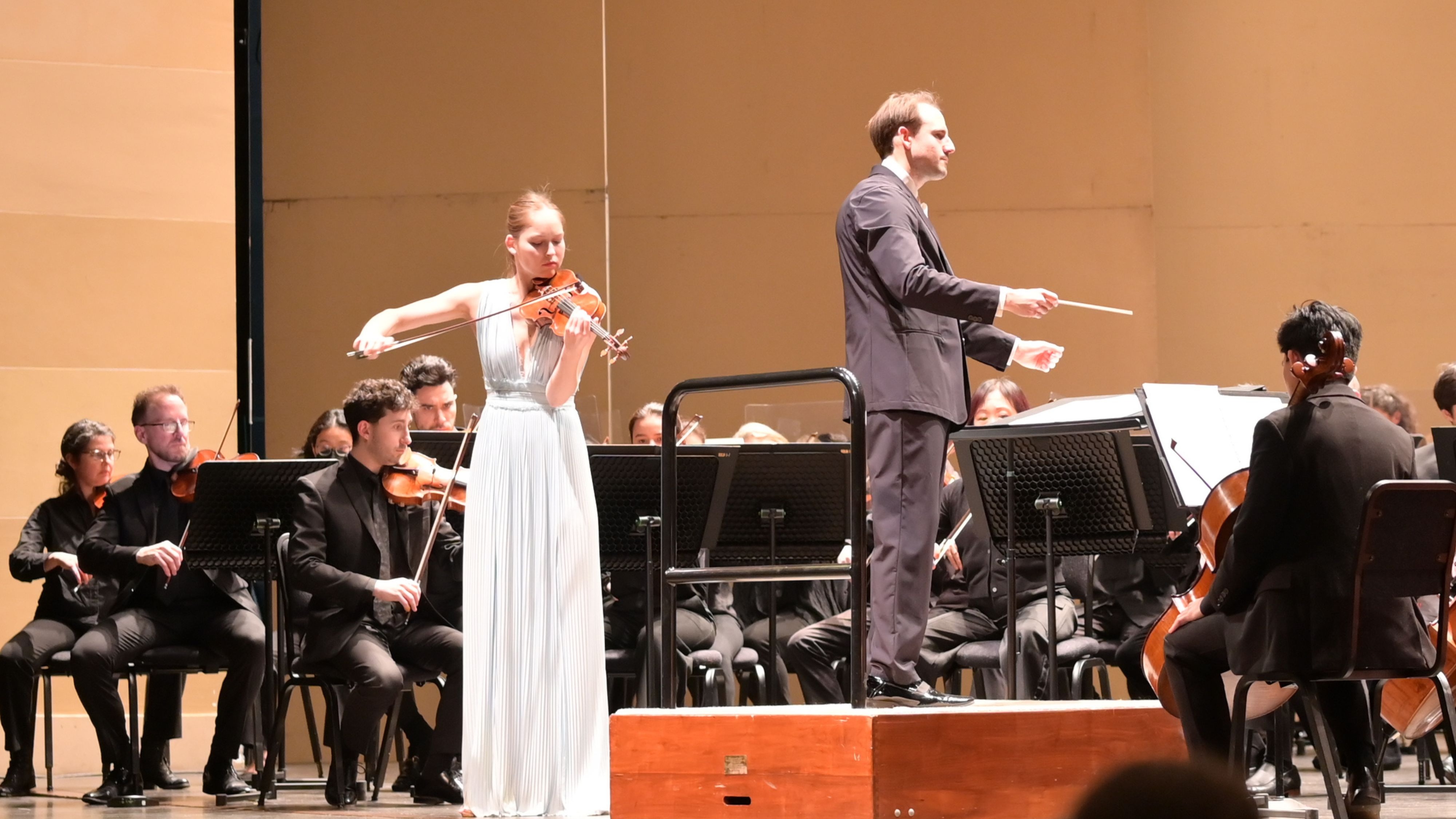
Opening the evening with Schubert’s Overture to Rosamunde, the strings set a theme (and expectation) for the rest of the evening: clarity. The performance was crisp and paced incredibly well. As the strings moved seamlessly from the cautious, thoughtful beginning to the charging insistence of the latter half, López-Ferrer’s quick and precise movements maintained a steady and intentional tempo, keeping everyone on track. The reeds had a rough start, with a slightly jarring lack of tonal clarity and assertiveness where they were prominent. Some bolstering from the brass helped alleviate the problem, and the reeds — especially the bassoons — seemed to find their footing in the Sibelius.
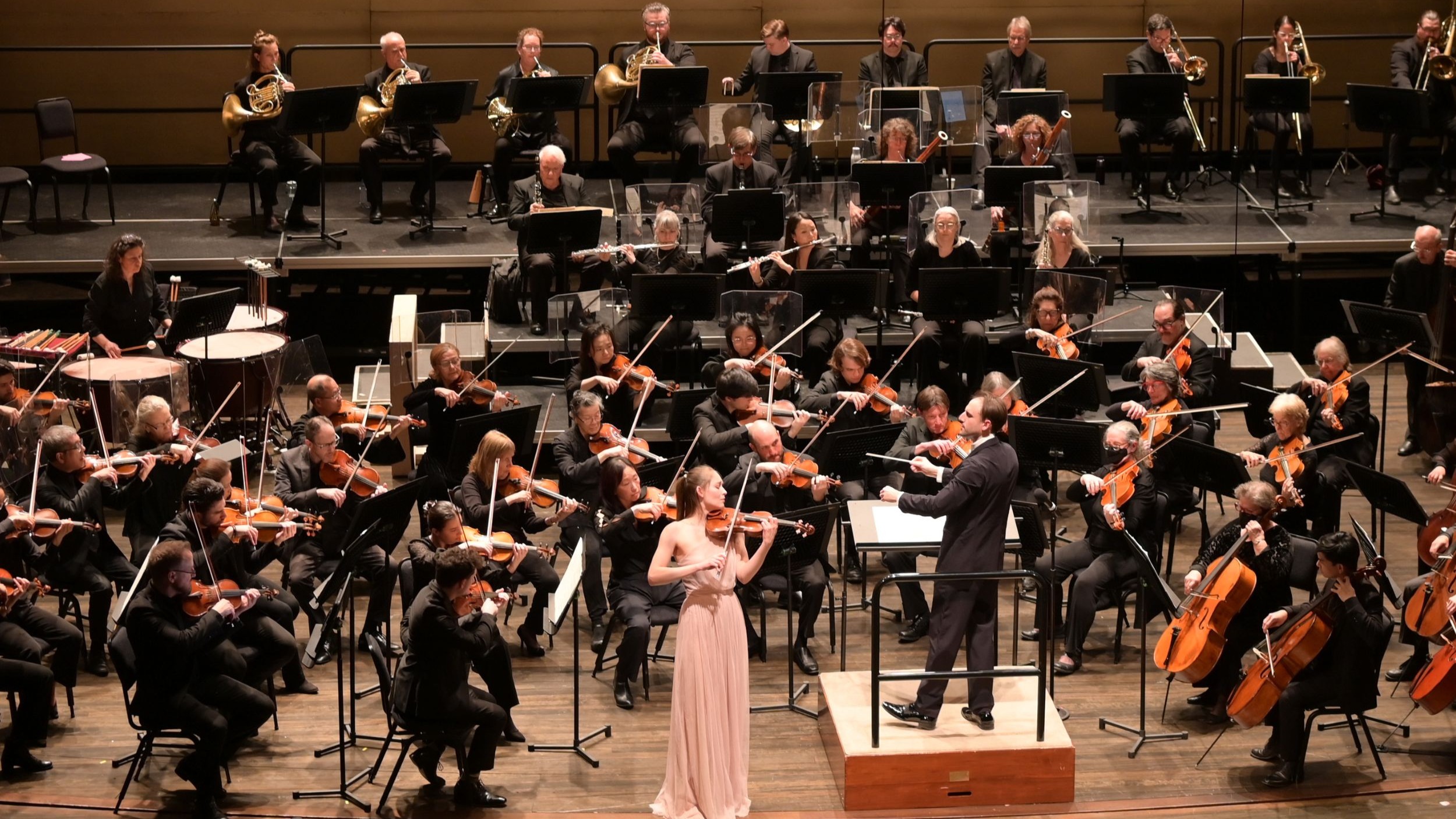
The orchestra’s cohesiveness was on full display in the final piece of the evening, Schumann’s Symphony No. 4 in D Minor. López-Ferrer captured the piece’s flowing arc while attending to its dynamic details, which came out wonderfully in the strings, brass, and percussion. This piece especially was a testament to López-Ferrer’s attentiveness as a conductor, moving briskly across the sections of the orchestra to ensure that practically every note from every musician played its role in the design. While the performance of Sibelius’s concerto was triumphant for the powerful impression it left, the traversal of Schumann’s symphony highlighted the orchestra’s ability to evoke artful intrigue. It was an evening that made a case for live performance as renewal — familiar works made vivid again through attentive, committed playing.