What Belongs to You is the most riveting, soul-shaking contemporary opera recording since the 2019 release of Ellen Reid's equally brilliant and award-winning chamber opera, Prism.
With music and libretto by David T. Little, What Belongs to You is fashioned after the novel of the same name by Garth Greenwell. This one-man chamber opera showcases tenor Karim Sulayman, Little's classmate at the Eastman School of Music, and the orchestral ensemble Alarm Will Sound, the opera’s co-commissioner conducted by Alan Pierson.
Over a year after What Belongs to You won the 2025 Music Critics Association of North America award for Best New Opera, a recording of the opera's September 2024 premiere at the University of Richmond's Modlin Center for the Arts (the opera's other co-commissioner) has been released on the Bright Shiny Things label. The recording is available as a 2-CD set or in various download and streaming formats, including 24/96 high resolution.
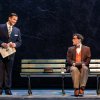
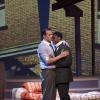
What Belongs to You is a realistic, graphic, yet ultimately non-pornographic opera that unapologetically examines the intersection of an American youth's innocent awakening to homosexual desire and love with his adult self's punishing merger of sex and love with death-courting violence, danger, and disease. Set in Bulgaria, the story moves between the grown man's attraction to street hustler Mitko and haunting memories of his love for and ugly rejection by his father.
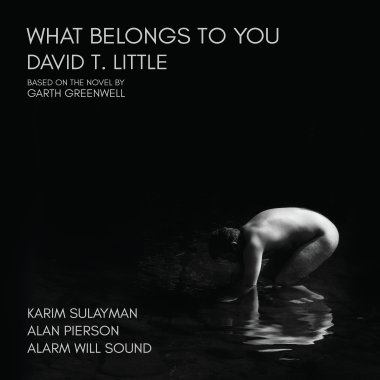
As much as the recording's press release truthfully describes the opera as a “universal story: the search for self and the desire to belong amid loneliness and enduring heartbreak,” it is also a tale which, in these increasingly repressive times, is virtually forbidden to tell.
Little's music is extraordinary: as expressive and moving as Britten’s in his operas Billy Budd, Peter Grimes, and Death in Venice, or Schubert's in his final song cycle Winterreise. But the naked sexuality of the story is something that neither the homosexual Britten, writing in the mid-20th century, nor the homosexual Schubert, writing in the early 19th century, would have possibly dared illumine with music.
The music is so expressive, imaginative, and gripping that it raises the operatic experience to a level that only great music can do. Even in the most lyrical, virtually pastoral portion of What Belongs to You, whose central aria can be found on YouTube, you can hear undercurrents of the danger and dread that explicitly surface throughout the tale.
Little sets the tone early on, with music shrouded in mystery and mourning. Within short order, his sound palette expands to encompass danger, sexual passion, disease, and obsessive fantasy. As much as his music frequently sets the listener on edge, it resonates with an inner logic that values truth and beauty in equal measure.
I, for one, found it impossible to consider pausing during the opera's 90 minutes. Not with so many extraordinary passages that convey the intersection of inner and outer realities with such poetic honesty.
Although Sulayman frequently sounds pinched as he approaches the top of his range, his tone is otherwise ideal for a role that marries child-like innocence and freshness with adult obsession, danger, and dread. His diction is superb, even in the highest reaches, and his occasional spoken passages are far more natural sounding than one might dread.
Alarm Will Sound, which specializes in contemporary fare, plays Little's music to manner born.
Not only is the recording definitive; it is essential.