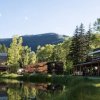
The Aspen Music Festival and School turns 77 this year. Perched high in the Colorado Rockies in a former silver-mining town at the breathtaking (literally) altitude of nearly 8,000 feet, AMFS has grown from humble beginnings in 1949 to become one of the world’s premier destinations for classical music performance and for training the next generation of elite musicians.
It isn’t easy to get to Aspen—a twisty four-hour drive from Denver or an often bumpy (even hair-raising) flight over the mountains to a short runway squeezed into a valley. But the magnificent scenery, small-town (if very upscale) atmosphere, and intense, varied musical environment compensate for the effort.
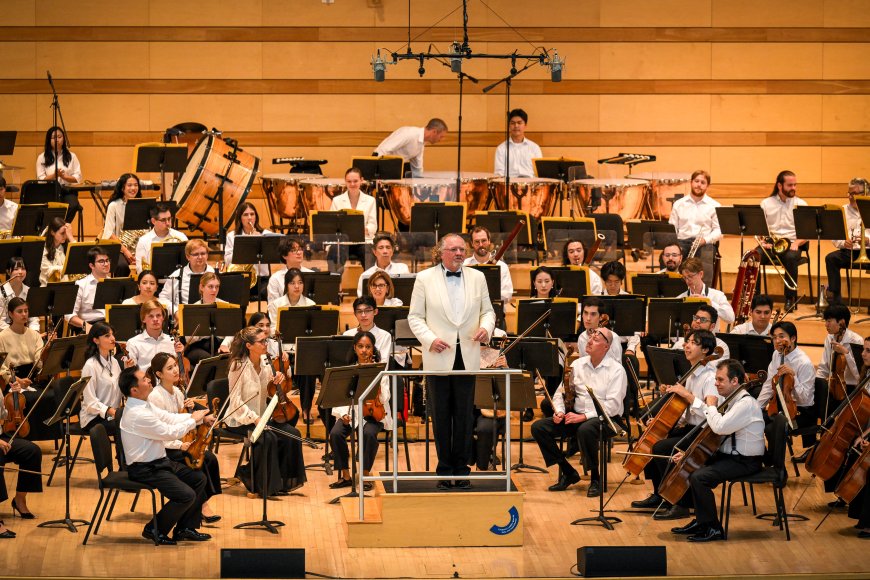
On a recent visit from August 6 to 9, the schedule pulsated with high-profile events featuring such stars as French conductor Stéphane Denève, South African cellist Abel Selaocoe, and Americans violinist Gil Shaham, conductor Leonard Slatkin, and composer Joan Tower. Music composed in the last five years occupied a prominent place, along with masterpieces of the past, including a spirited account of Antonín Dvořák’s “New World” Symphony. Each weekend climaxes on Sunday afternoon, when the Aspen Festival Orchestra takes the stage. On August 9, Denève led a bold program, which I was unable to attend: the Aspen premiere of Jessie Montgomery’s cello concerto These Righteous Paths, written for Selaocoe; Carlos Simon’s Fate Now Conquers; and Gustav Mahler’s First Symphony.
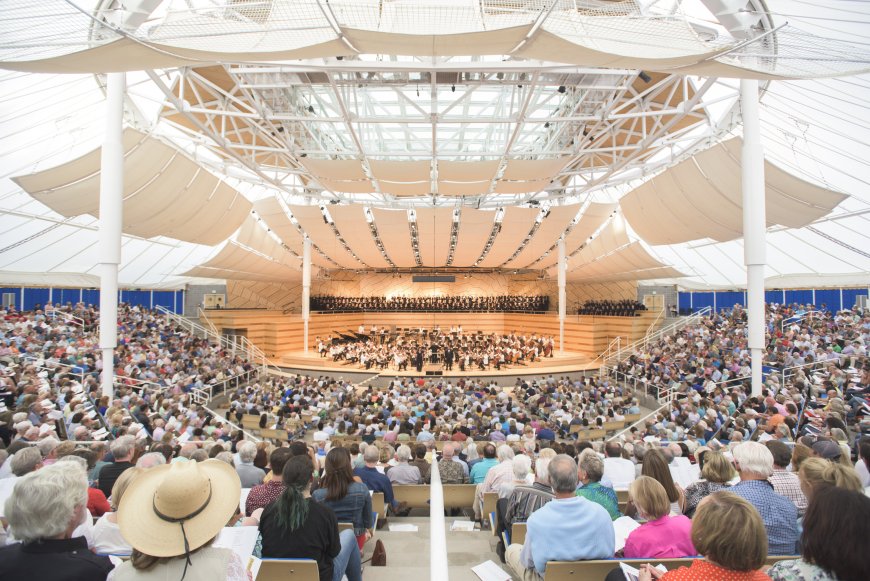
What makes AMFS special is that the two orchestras that perform each weekend of the eight-week festival—the Aspen Chamber Symphony and the Aspen Festival Orchestra—combine students spending the summer at the school with professionals from leading orchestras in America and abroad. If the resulting performances sometimes lack polish, they gain in energy, freshness, and enthusiasm from the youthful musicians, carefully selected from top music schools around the world.
Besides the two main orchestra concerts each weekend, held in the spacious Klein Music Tent on Friday and Sunday afternoons, numerous chamber music events take place in Harris Concert Hall, opened in 1993. Built deep underground at the request of Aspen city officials who wanted to preserve the mountain views, it boasts excellent acoustics and facilities for the musicians.
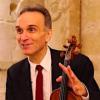
On August 6 and 8, violinist Gil Shaham, a frequent visitor to Aspen, drew a nearly capacity crowd for the opening two recitals in his rare and daunting complete survey of Beethoven’s ten violin sonatas. Accompanied by his longtime partner, award-winning Japanese pianist Akira Eguchi, he began the cycle with a demanding program of four sonatas: Nos. 1, 2, and 3 from Op. 12 in the first half and No. 9 (“Kreutzer”), Op. 47 in the second.
Brief and conventional in structure, the early sonatas, composed in Vienna during Beethoven’s late twenties, show a strong influence of Mozart and Haydn. Intended for amateur musicians, they nonetheless stretched the conventions of the genre, especially for the pianist. Composed five years later, the much longer, denser “Kreutzer” (the inspiration for Leo Tolstoy’s famous story about adultery) provided an almost shocking contrast, with its insistent pizzicato, grand scale, sustained double-stopping, and concerto-like piano part, especially in the second movement (Andante con variazioni).
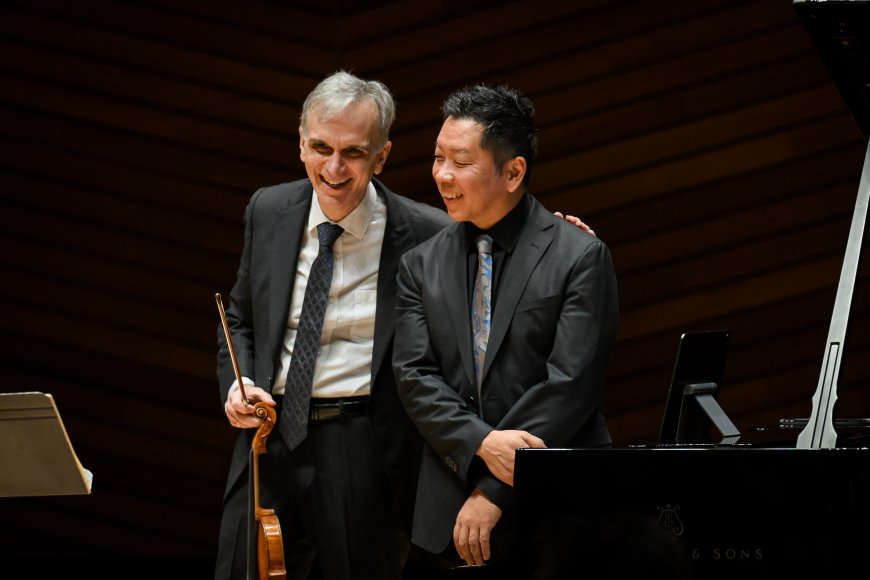
Playing an Antonio Stradivari (Cremona, c. 1719), Shaham displayed a clean, accurate tone without too much vibrato or prettiness, but brought out the operatic drama when called for, leaning close into the piano keyboard. His close creative connection with Eguchi, who played with flair and keen emotional intensity, was exciting to watch and hear.
On August 8, Shaham tackled Sonatas 4, 5, and 10, composed between 1800 and 1812. Sonatas 4 and 5 were originally published as a pair, and Shaham played them without pause in the first half. Of the two, No. 5 in F Major, Op. 24—the “Spring,” sunniest and most lyrical of all the sonatas—has enjoyed greater popularity than its more agitated partner in A Minor, Op. 23. Its joyful, song-like passages have tempted some violinists to tip over into romanticism; Shaham resisted, finding the right classical balance in both.
Three days later, on August 11, after my departure, Shaham and Eguchi completed their cycle with Sonatas 6, 7, and 8. Could a recording be in the future?
On an unusually hot late afternoon in the tent on Friday, Leonard Slatkin led the Aspen Chamber Symphony in a program tied to this season’s theme, “For All.” Borrowed from the closing words of the Pledge of Allegiance in honor of America’s 250th anniversary, the theme has pushed the summer’s repertoire toward American music and music inspired by America, with numerous premieres and commissions.
On this occasion, two recent works by living Americans—Leonard Slatkin himself and the indomitable Joan Tower, who was also present—took up the first half.
For Slatkin, who has been coming to Aspen since 1964, first as a student and later as a faculty member and conductor, this was a special occasion. “I finally get to play a piece by me!” he told the audience with a laugh.
In Slatkin’s homage to Franz Schubert, Schubertiade: An Orchestral Fantasy (2025), excerpts from Schubert’s famous Piano Sonata in B-flat Major, D. 960, played offstage by Shih-Man Weng, serve as a recurring unifying theme. Snippets of the “Unfinished” Symphony and a piano impromptu join in later, rendered in different orchestral styles, including Philip Glass-style minimalism. The result—what Slatkin calls a “mash-up of harmonic and rhythmic glee”—incorporates several more Schubert compositions before returning to the original offstage sonata.
Slatkin clearly enjoyed conducting what he called “a fun piece,” and the orchestra responded with the necessary humor and high spirits.
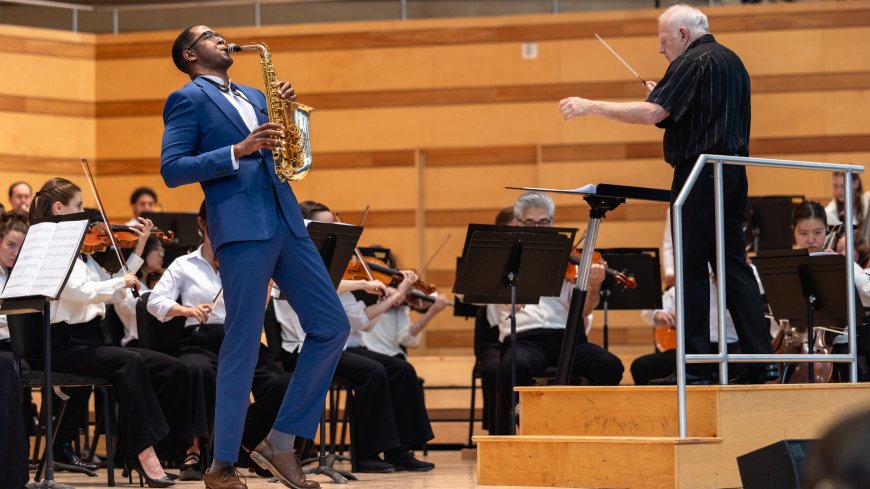
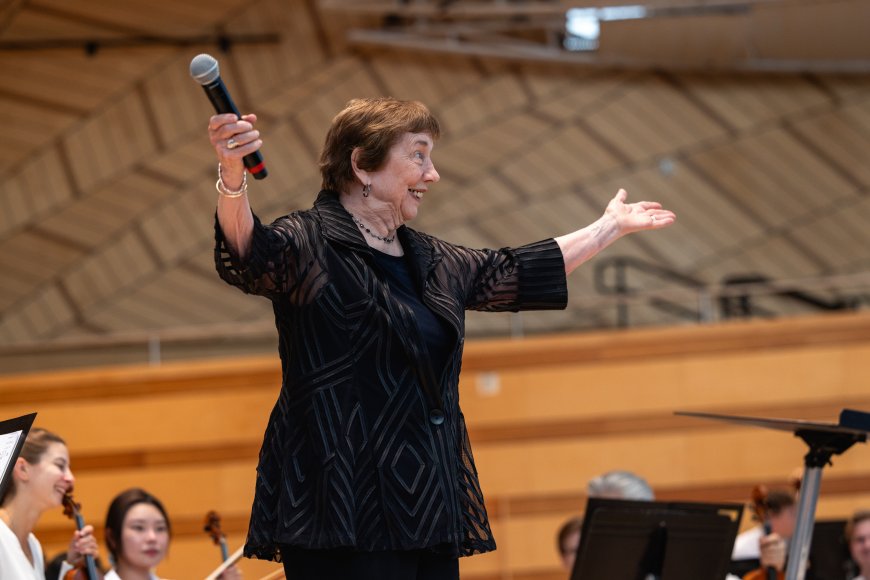
Joan Tower’s Love Returns was another kind of tribute, to her recently departed husband of fifty years, Jeff Litfin. A longtime Aspen visitor herself, Tower, still going strong at age 88, introduced the piece on stage, advising the audience to notice the repeated rising theme that represents their enduring love, taken from her earlier work for piano solo, Love Letter.
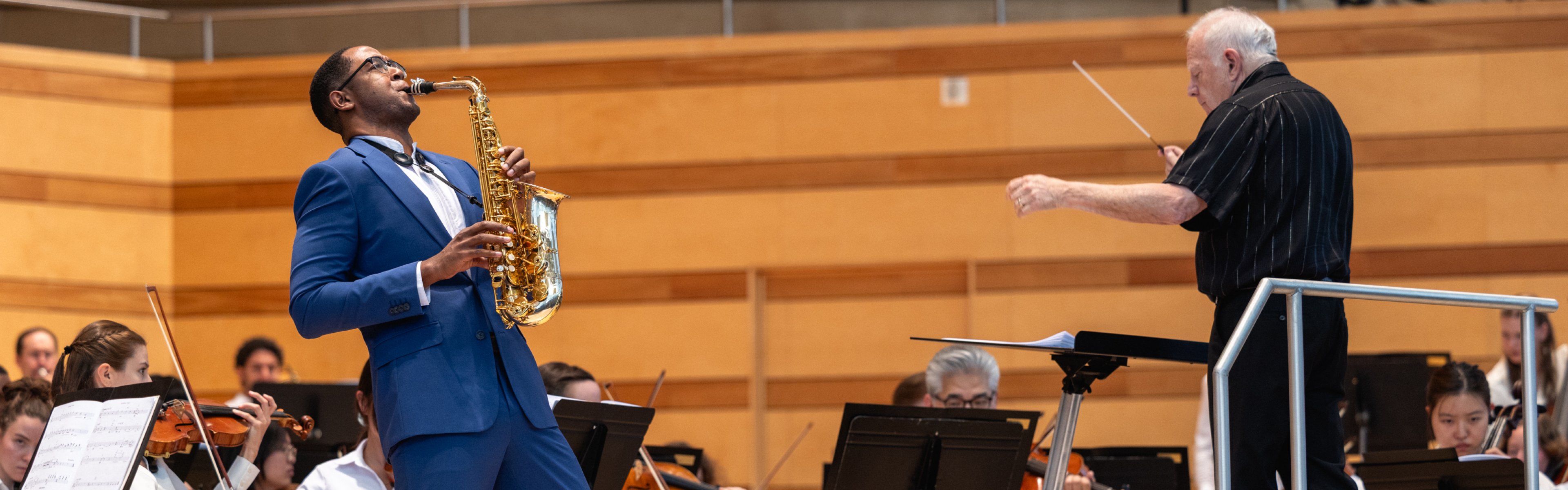
In six sections, Love Returns resembles a concerto for alto saxophone, played here with rhapsodic crooning by Steven Banks, to whom the piece is dedicated. Accessible, romantic, and nostalgic, at times blue and jazzy, with passing references to Igor Stravinsky and Hollywood, this heartfelt look back on a long partnership presents the basic theme in various guises. In the penultimate movement, the saxophone gets a luminous cadenza, followed by a reprise of the theme, rising optimistically and crowned with a heavenly comment from the celeste doubling the piano.
First performed at the Colorado Music Festival in July 2025, and co-commissioned by AMFS, Love Returns seems destined to find a place in the orchestral repertoire. Slatkin and his band gave it a loving and radiant performance.
After intermission, we heard a much-loved tribute to the spirit of the American heartland by a renowned foreign visitor: the “New World” Symphony (No. 9, Op. 95) by Antonín Dvořák, an honorary American if ever there was one. A keystone of the summer’s America-centric programming, it celebrates the values of freedom and the beauty of America’s “national” music, including what Dvořák called “Negro melodies”—a description that continues to stimulate heated debate. First performed by the New York Philharmonic in 1893, this last and most famous of Dvořák’s symphonies unfolds on an epic scale, expressing the composer’s wonder at the sheer expanse and variety of America’s lands and people.
Slatkin conducted with care and passion, although the student brass and woodwind players did not always hit the mark, and some transitions wobbled. But beautiful playing from principal flutist Christina Smith (especially in the second movement Largo) and others brought out the emotional pathos and idealism that have made this symphony so beloved.
Chamber music concerts, often with unusual repertoire, take place in Harris Hall on Saturday afternoons. On August 8, pianist Aram Arakelyan and violist Stephen Wyrczynski (principal violist of the Aspen Festival Orchestra) presented their new arrangement of Stravinsky’s Rite of Spring.
Shrinking Stravinsky’s rich, innovative orchestration to fit a duo may be a thankless task, and the result—despite careful study of Stravinsky’s own piano-duet arrangements of the Rite—did not justify the effort. The sameness of sound grew wearing; the viola cannot convey the score’s range of expression.
More successful was the second item on the program: the Sonata for Violin and Cello, Op. 148, by Mario Castelnuovo-Tedesco (1895–1968), performed with intense conviction by violinist Adele Anthony and cellist Brinton Averil Smith. Having fled fascist Italy for the United States in 1939, Castelnuovo-Tedesco became a prolific Hollywood film composer, working on some 200 movies.
Composed in 1950 but only premiered in 2017 by Anthony and Smith, the sonata is one of his many overlooked “serious” works. Spiky, vigorous, and agitated, it employs stylistic elements reminiscent of Bartók and Stravinsky, with rapidly shifting rhythms and a concluding tarantella. The instruments toss themes back and forth in heated dialogues that Anthony and Smith brought vividly to life.