A little over ten years ago, Cincinnati Opera premiered Gregory Spears and Greg Pierce’s opera Fellow Travelers, based on Thomas Mallon’s 2007 novel of the same name. With a prescience its authors would surely rather have lacked, it told the fictional tale of two male lovers amidst the very real Lavender Scare — the persecution of gay government employees in McCarthyite Washington.
When the opera embarked on its tenth anniversary national tour in Seattle this February, its premise had gained an eerily unwelcome relevance in Trump Redux’s Executive Order 14173. The order revoked anti-discrimination protections for about 14,000 transgender federal employees, echoing the discriminatory intent of Eisenhower’s 1953 EO 10450 against “sexual perversion” that forms this opera's political backdrop.
Aptly, the third stop of the Fellow Travelers tour was San Diego, a town with a sizable LGBTQ population. This was the work’s first-ever Southern California performance.
Opening night on July 10 at Balboa Theatre was packed with meaning. In addition to the stellar Fellow Travelers touring cast, the evening included the opera’s gifted composer, the novel’s author, and stage director Kevin Newbury, whose credentials include co-founding — with Jecca Barry (also in attendance) — the Up Until Now Collective, producer of this tour.
The company gave this musically and textually smart opera the production it deserved, but production’s heart and soul was its bravura cast.
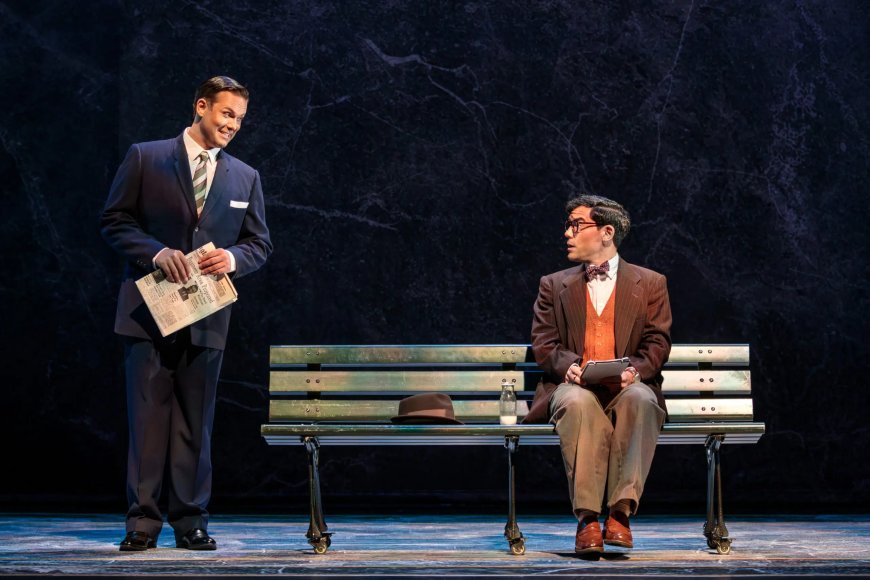
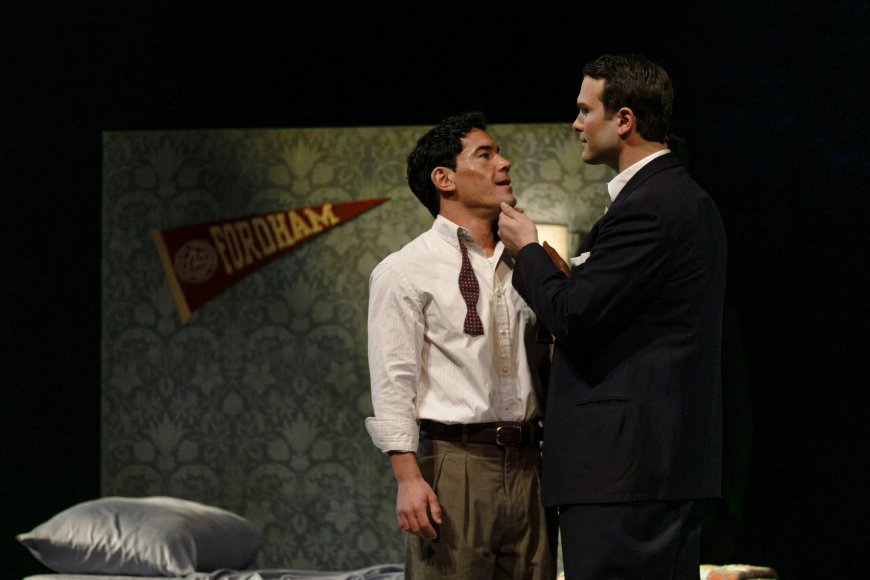
As Timothy Laughlin, the naive young speechwriter, San Diegan Andy Acosta used his bright tenor and guileless stage persona to embody the open-hearted innocence that seals his character’s fate. If his overly bushy-tailed portrayal early on seemed to oversimplify Timothy’s complexity (a Catholic sympathetic to McCarthy who’s nevertheless aware of his sexuality), his evolving depiction of Timothy’s unguarded love for Hawkins Fuller deftly dramatized the young man's transformation into a scarred and chastened survivor who, nevertheless, still loves Hawk.
As Hawkins, Timothy’s charming but cruelly domineering lover, baritone Joseph Lattanzi (also Hawkins in the 2016 premiere) gave his character the needed blend of cynical charisma and likability (“a certain kind of wonderful,” as Hawk’s State Department assistant describes him). For all his depredations – treating Timothy as his toyboy, multiple previous relationships with government employees, marrying heterosexually for a professional cover, and betraying Timothy to State Department security – Lattanzi delivered his after-a-fashion love aria (“There are things we can be for each other, Skippy") with convincing emotional power.
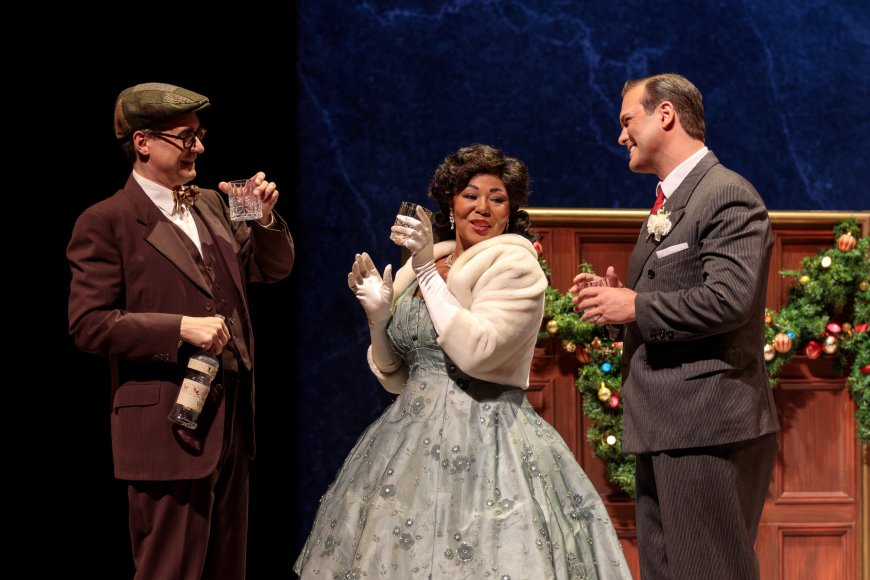
As Mary, Hawk’s assistant and the opera’s moral center, Amber Monroe — the only person who knows about Timothy and Hawk’s relationship and cares for both — justly earned special applause.
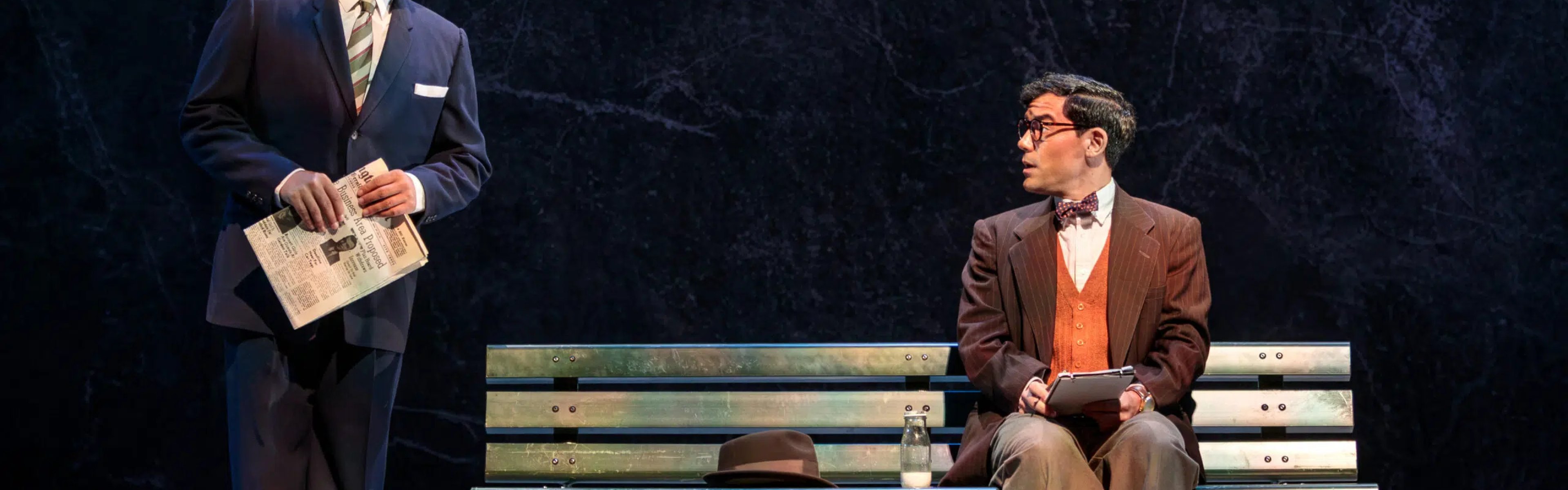
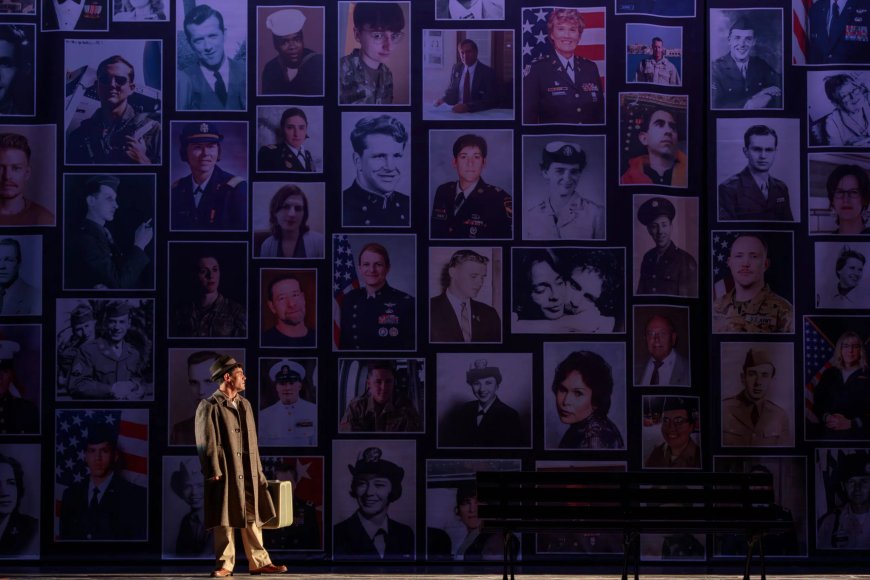
There were no weak performances. Everyone stepped up to Greg Pierce’s allusive libretto (which Mallon praised as “just a miracle of concision”). To anchor a fictional (if plausible) plot, the libretto’s savvy use of historical realities created an effective verisimilitude. Vita Tzykun’s spare and functional scene design conjured the gray-flannel Fifties, supported by Paul Carey’s period-perfect costuming.
Lighting designer Thomas Hase enhanced the sense of McCarthyesque paranoia by using noirish spotlighting effects. This proved especially resonant in key moments like the close of Act 1, when the supporting ensemble is illuminated menacingly, and in Act 2 when the outed Timothy, spotlit in interrogation style, is cold-shouldered by his government colleagues.
Director Newbury let the cast and music shine, but amplified the opera’s unconventional plot with theatrical enhancements, not least Acosta’s full rear nudity during Timothy and Hawk’s first intimate moment. Less daringly, Newbury created visual interest through the subtle use of motion – filing cabinets wheeled off and on to convey bureaucratic menace, for example — and splitting the stage into distinct sections with simultaneous singing.
It’s not hard to imagine a different Fellow Travelers where Romantic musical effects are laid on thick to convince us that gay men deserve grand opera love stories just as affecting as Rodolfo and Mimi’s. Wisely, Spears’s accomplished and innovative score instead manages to both illuminate and sustain the opera’s emotional energy while simultaneously injecting an air of the otherworldly into the work, as if to underline the weirdness of the world’s most powerful government hypocritically hounding its own for their private behavior.
Conductor Bruce Stasyna led the musicians of the San Diego Symphony in an evocative, assured performance of this sophisticated score.