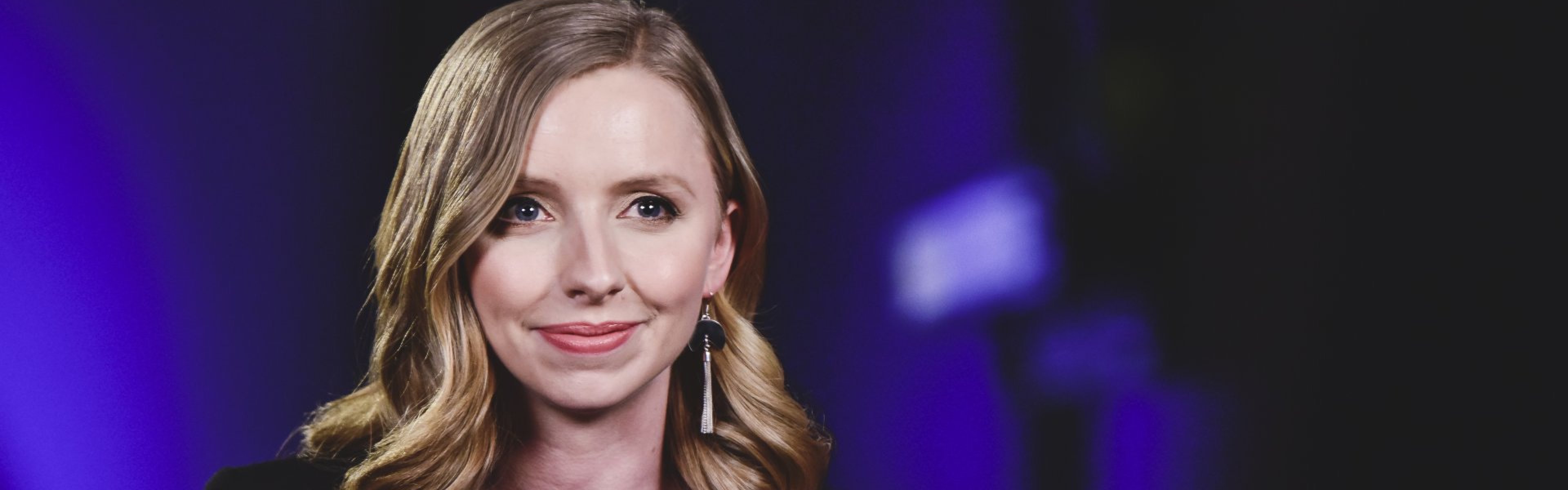
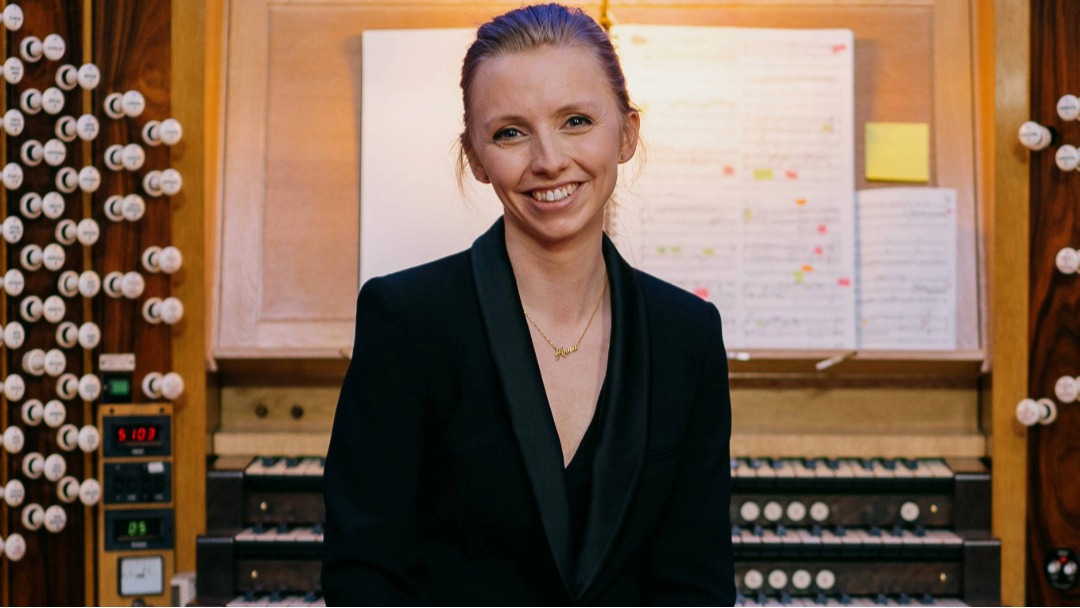
Anna Lapwood is decidedly a pop star … of the organ. Indeed, with a combined three million followers on Instagram and TikTok, this 30-year-old English-born phenom has taken the classical world by storm, with the New York Times’ Alex Marshall describing her as, “the world’s most visible organist.” Having played Walt Disney Concert Hall in 2024 in a recital mixing movie music and modern works, Lapwood takes to the console again on May 3 in a similar program.
As the official organist of the Royal Albert Hall, she has broken down genre boundaries and introduced a vast new audience to the organ. Graduating from Oxford University, where she was the first female Organ Scholar in Magdalen College’s 560-year history, Lapwood also became the director of music at Pembroke College, Cambridge. The youngest person ever to be appointed in that role at an “Oxbridge” college, she remained there until 2025.
While at Pembroke, Lapwood not only commissioned works from leading choral composers, but also founded a highly acclaimed girls’ choir, as well as spearheading the release of five records, including All Things Are Quite Silent (2020). During that time, she also performed at the BBC Proms, conducting the College Chapel Choir as part of an all-night concert that also featured, among others, cellist Anastasia Kobekina and pianist Hayato Sumino.
As a recitalist, Lapwood continues to perform film and orchestral music alongside more traditional organ repertory. Works written for the musician include Max Richter’s Cosmology for organ, chorus and orchestra, and Olivia Belli’s Limina Luminis for solo organ. The latter is featured on Firedove, her latest solo recording that was released last year on Sony Classical and reached No. 1 on the Official Classical Artist Albums Chart.
SF Classical Voice recently spoke with Lapwood over Zoom. Topics ranged from her upcoming Disney Hall Concert and how the perception of the organ is changing, to her huge social media presence.
Was there music in your family, and why the organ, which you only took up as a teen?
My parents actually met in a church choir, so they were always singing, and there was always music playing at home when I was growing up. I was about 14 or 15 when I started the organ, but I’d started music much earlier than that.
I took up the piano from the age of about four and then loved taking up as many different instruments as I could. I played violin, viola, and clarinet, [but] the harp was my main instrument as a teenager, and I actually thought I was going to be a harpist. That was my goal until I found the organ.
Let’s talk about your Disney Hall concert. Among the movie-based works you’re playing are Hans Zimmer’s “Chevaliers de Sangreal” from The Da Vinci Code, his Suite from Pirates of the Caribbean, Alan Menken’s “The Bells of Notre Dame from The Hunchback of Notre Dame and Howard Shore’s The Lord of the Rings Organ Symphony. What is the narrative arc you want audiences to experience, and how did you decide on the program?
I tend to think of different mini-narratives that build to one bigger one. I changed my program a bit [from my 2024 concert], because I wanted to incorporate the newest transcription I've written, which is this organ symphony from The Lord of the Rings. It's [about] 40 minutes long and is the biggest project I've ever worked on.
I looked at the way Howard developed the leitmotifs [and] wanted to make sure that the organ version did that justice, and it needed time to do that. I also wanted to include a piece that I did in my [last] Disney Hall concert, The Hunchback of Notre Dame, because I found that organ and that building so inspiring.
So, I completely rethought how I played that transcription [at Disney Hall]. Because that organ has all these bells, I did this improvised bell introduction. I really do think that that last performance opened the floodgates of my brain, [and I said to myself], “Oh, my gosh, think about what we could do with this instrument!”
And since Disney Hall’s organ is visually and sonically iconic, I’m wondering what excites you most about performing on the console, which was once dubbed “Hurricane Mama,” by composer Terry Riley?
The thing that I really love is that there is so much clarity in that organ, but also so much warmth. Often, I think you get one or the other. So, if you have a really clear organ sound, often you do lose the warmth, and similarly, if you have a really warm organ sound, often you lose the clarity. And in this organ, we have both.
I think that is so perfect for all the orchestral transcriptions, because it means that you can hear the detail without it being overwhelming. I also love all the special effects on that organ — the bells, the birds — all sorts of fun little things which can help bring character to pieces of music. I always think that is a lovely thing to be able to include in a concert.
You’re known for championing contemporary composers and underrepresented voices. Where does that love come from?
To me, it's the music which speaks to me, which I feel I have something to say about. I love working with composers, having conversations with them and bringing their vision to life — to discuss what their vision is and how I can achieve that. I think that’s a really satisfying process.
I also love how it can push me as a player, to try new things, to achieve what they want, particularly if the person writing isn't an organist. I think you then automatically end up trying new things and experimenting to achieve what they've set out to write. I also think that everyone deserves the chance to work on their creative voice, [and] I love getting to be just a small part of that process.
As a driver of so-called organ über-visibility, you must feel that the perception of the instrument is changing. In addition to your emergence on the scene, what else has been driving that shift?
I think it's definitely changing. The thing I give the most credit to is [Hans Zimmer’s 2014] score to Interstellar. He worked with this fantastic organist from the U.K., Roger Sayer. I think the two of them together completely changed the public perception of the organ, because obviously the organ is front and center through that whole score, but not necessarily in the traditional way.
You hear the variety of sounds the organ can produce, and now, because of that score, a whole generation knows [those] sounds of the organ. I love it and find it really exciting, and that has set us up nicely for this little organ renaissance.
I also think social media plays a huge part. And the number of organists now — I was going to say young organists, but actually, organists of all ages — who are using social media to answer those questions about the organ, bring the instrument to a wider audience. It's a really exciting time.
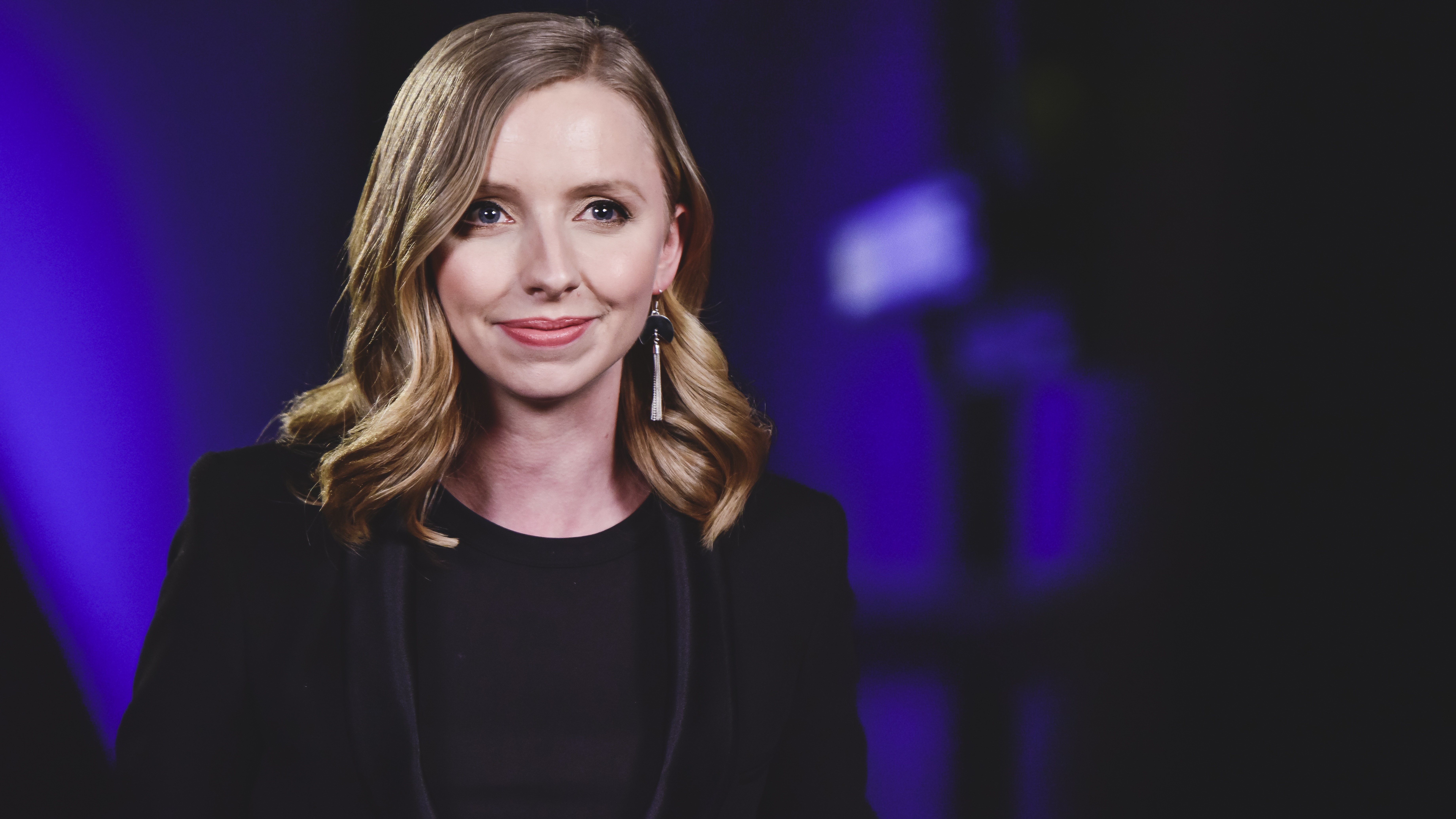
That brings me to your insanely huge social media presence. How did you get 1.5 million followers, and what do you think resonates most with younger listeners/viewers?
In terms of how I got there, I have no idea! I’ve just been posting what feels right to me, and it seems to be something that people enjoy. I think there is something about the organ [being] an unusual instrument, so there's a kind of fascination with it. And they like to have their questions answered.
There's also something about people loving seeing the human interactions that come with being an organist, like when you're doing an overnight rehearsal and one of the security guys comes over and has a chat — little things like that, the human side of being a musician.
You probably film a lot of your playing, so how do you decide what to share?
Yeah, I film a lot. Basically, I have a phone with a lot of storage, and the way I do it, is that I leave my phone recording the whole time while I'm rehearsing, so that I don't have to think about it and I can concentrate. And then if there's something I know that I like, I’m like, “Oh, that would be nice for a video.”
Then, when I have the time, I go through and edit and post them. It can be difficult when I'm on the road, because sometimes I'll end up with so many videos from one place, but not enough time to post them all. Then I'd move on to the next place and it's no longer relevant. So, I do have a backlog of videos that I've never posted, but I try and do whatever feels right at the time. I try not to let it take up too much of my time, because I want the focus to be the music, not the social media. But the social media is a fun part.
What’s something about you that would surprise people?
I’m shy! No one ever believes me, but I really am a massive introvert. I find social interactions very tiring. But I become an extrovert when I’m onstage, and it’s quite liberating, because the part of my brain that is analyzing situations switches off when I’m onstage, and I can just sort of flow in the music. And that’s a nice thing.