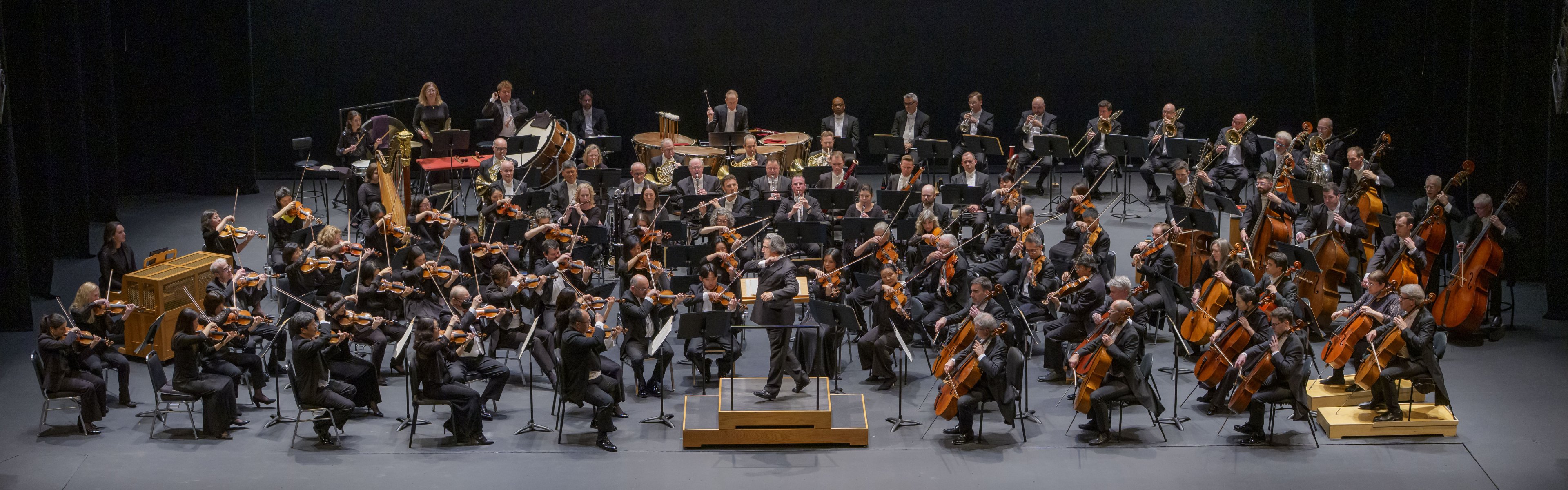
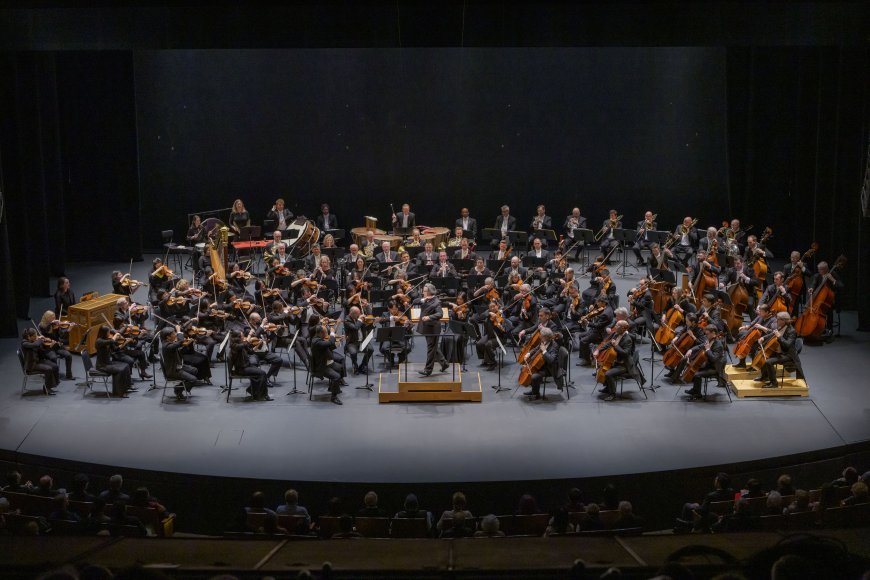
Amid an uninspiring and ragtag season over at Davies Symphony Hall — and especially now that the San Francisco Opera’s incredible fall season is over — music lovers must turn elsewhere to get their kicks. Fortunately, Cal Performances offered just the remedy on Jan. 17 at Zellerbach Hall. Legendary conductor Riccardo Muti and the Chicago Symphony Orchestra performed a program that spanned from a Igor Stravinsky’s technicolor ballet suite, The Fairy’s Kiss, to Brahms’ Fourth Symphony.
If you want to see what an orchestra can do, The Fairy’s Kiss is the unexpectedly ideal choice. Its neoclassical, fairytale style is far from the earthy, jagged intensity of his ballets The Firebird and The Rite of Spring. Yet what The Fairy’s Kiss lacks in power, it more than makes up for in color and energy. The Chicago Symphony Orchestra performed the ballet’s abbreviated suite, racing without pause through several of its episodes. The original story — a tale from Hans Christian Anderson — is irrelevant here; this suite is powered by wit and imagination.
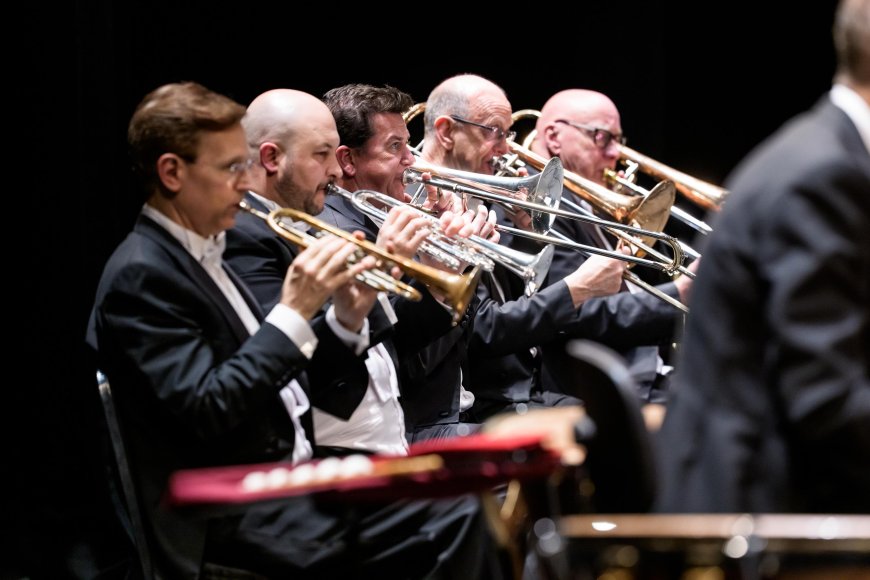
The Chicago Symphony Orchestra may have a reputation for its brilliant, thundering brass section, but in this concert the wind instruments shone. This score was a gift to the Chicago Symphony Orchestra, whose soloists brought indelible character to even the smallest solos. Nowhere was this clearer than at the start of the pas de deux, in which harp, clarinet, and cello combined in an effortless trio. It was one of those concert moments you wish would never end, yet it passed by all too briefly.
Though Stravinsky’s score, a parade of characters and colors, may lack coherence, Muti’s energetic account clarified it. He leaned into the surprises and frictions of the score, gleefully highlighting its angular rhythms and exaggerating its dynamic contrasts. That the orchestra excelled in this piece should not surprise; the Chicago Symphony Orchestra’s music director in the 1950s–1960s, Fritz Reiner, was a champion of the piece and gave us its benchmark 1958 recording with this very ensemble.
In theory, Brahms’ Fourth Symphony is built similarly, in that it requires an orchestra to balance expressivity with rigid, contrapuntal rhythms. But the Fourth Symphony lacks Stravinsky’s colors, and derives its energy from Brahms’ continuous development of musical themes — it is a complex machine in which every melody and harmonic event can be related to one another. This is evident only when led by a far-sighted conductor capable of balancing moment-to-moment detail with the symphony’s longer narrative.
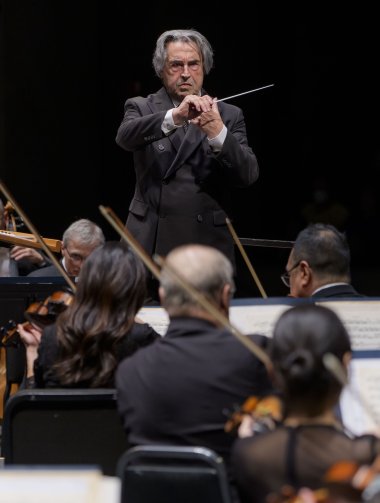
The Chicago Symphony Orchestra achieved real brilliance in the details. Multi flexed his forensic attention to rhythm, particularly in the thorny counterpoint of the first movement, and the shockingly light touch final movement.
But expressive power doesn’t guarantee coherence, and Muti’s take was too often straightforward, too consistently mezzo forte, to draw out the fine contrasts in tone and shape that lend the symphony its existential pathos.
Though Zellerbach Hall’s Meyer Sound Constellation sound system has improved the venue’s acoustics significantly, not even this high-tech system could effectively balance the symphony’s huge sound. Those of us in orchestra seats were often confronted with an overwhelming wave of violins and little of the lower registers. I’d bet that this same performance would have a significantly better balance and contrast in a larger, more resonant hall.
For years, the San Francisco Symphony has regularly invited guest conductors to perform, treating us to different takes on familiar repertoire. But bringing in a touring orchestra is something different entirely. Even with warhorses like Brahms’ Fourth Symphony, a new orchestra can show us details we never knew we were missing. In this case, it was the Chicago Symphony Orchestra’s vibrant sound, wielded with an experienced fierceness you find only in someone like Muti.
And if this sound had a lesson for us, it was the grim reminder that no technique or program can take the place of creative, careful leadership.