
What does Romanticism sound like to modern audiences? When performed by pianist Zee Zee (Zhang Zuo), it emerges not as a historical style but as an emotional landscape.
Her recital this Sunday, Feb. 22 at Bing Concert Hall will take a narrative approach, reimagining the music of Franz Liszt and Maurice Ravel through Zee Zee’s own emotions, imagination, and memory. This structure reflects Zee Zee’s evolving ideas about recitals.
Having performed internationally from a young age, she describes solo concerts as both demanding and personal. “Piano is a very lonely instrument,” she said. “It’s very different from playing with an orchestra or an ensemble. But the good side is, I can speak my own story and my own musical language.”
Within the arc of a 90-minute recital, Zee Zee is able to use her identity and personal experiences to guide her choice of repertory, her presentation, and her performance. Then, as an interpreter, Zee Zee seeks to reimagine the composer’s voice Rather than creating something entirely new, Zee Zee seeks to reimagine the composer’s voice via interpretations that stay true to herself.
“I am storytelling, but through second-hand expression,” she explained. “The composer’s interpretation and voice always come first. I feel like an actress recreating the art through my own emotions and understanding.”
Younger listeners often are introduced to classical music through playlists, film scores, and short-form videos rather than by researching specific composers or works. Zee Zee welcomes that shift. To help listeners connect to her performances and better understand the music, Zee Zee has begun speaking briefly during recitals.
“Good music is good music,” she said, comparing memorable classical melodies to the appeal of songs by pop artists like Taylor Swift. She even commented about pop songs that often sample classical excerpts, such as Niccolò Paganini’s La Campanella in Blackpink’s “Shut Down.”
When Zee Zee breathes new life into Liszt and Ravel’s at Stanford Live, she will invite audiences to connect with the music by reaching their own understanding and interpretation of the works.
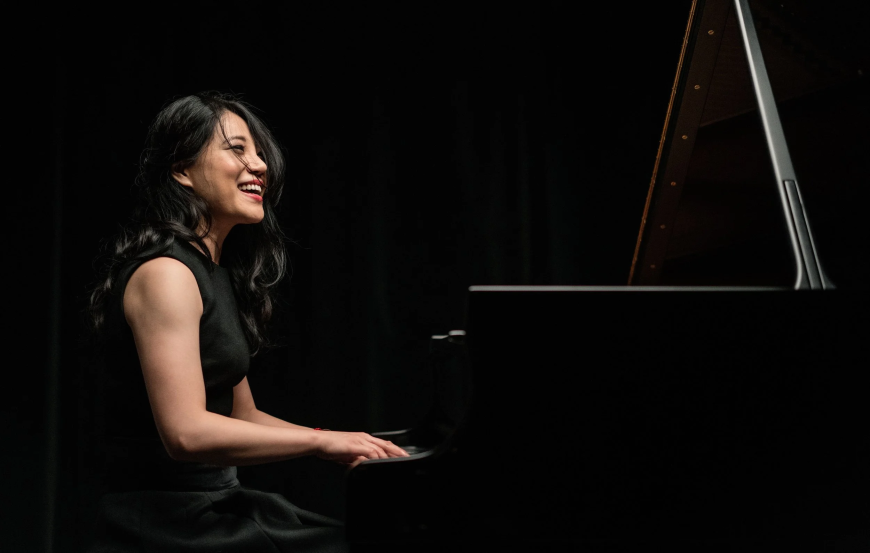
Liszt was a piano virtuoso who performed difficult pieces from memory and toured across Europe. Journey, as a theme, is most apparent in Liszt’s Années de pèlerinage (“Years of Pilgrimage”), a series of pieces that Zee Zee says trace the composer’s artistic development. Zee Zee’s program highlights music across Liszt’s different stages of life, from early works filled with passion, storm, and questioning to later compositions filled with reflection and spirituality.
“At the beginning you can hear very strong emotions, when he felt the world was so unfair and he desperately wanted to prove himself,” she explained. “Later on, he’s more settled and refined. I hope I can show that wonderful contrast of Liszt to the audience.”
If Liszt’s music portrays an inward pilgrimage, then Ravel’s Gaspard de la nuit (Gaspard, of the night) showcases color and imagination in a completely different way. A central figure of impressionism, Zee Zee noted Ravel is known for meticulous precision, leaving performers clear instructions on the page. “For me, I just need to do whatever he writes, and the music speaks for itself.”
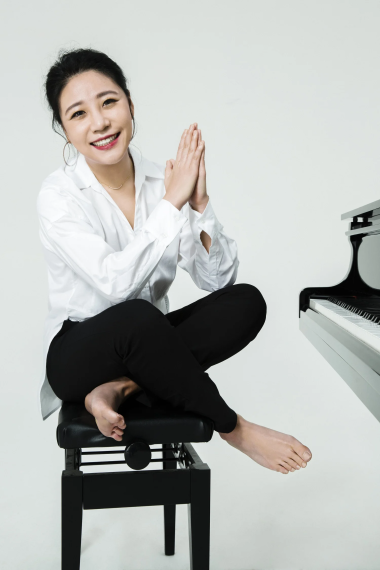
Many of Ravel’s works written for solo piano were later transcribed for orchestra and vice versa, with tremendous potential to evoke various moods and sensations. “Even if I am performing the same piece,” she said, “playing on different pianos, different concert halls, and receiving different reactions from the audience is a journey on its own.”
Ultimately, Zee Zee hopes that her recital will feel welcoming, especially for first-time listeners. “I hope they think this is really fascinating, and will want to go to more piano recitals in the future.”