Where to begin? All three items on the Los Angeles Philharmonic’s Feb. 12 program and through the weekend were newsmakers in their own, diverse ways.
Might as well start with the attendance. Three of the four performances were sold out in advance, with only limited seats (and ticket prices ranging from $197 to $324.50) available for the Friday morning performance.
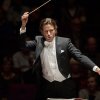
Several factors could be responsible for the turnout: Valentine’s Day weekend; the presence of Oscar-winning actress Cate Blanchett narrating a new, defiantly up-to-the-minute text for Beethoven’s incidental music to Johann Wolfgang von Goethe’s play Egmont; whiz-kid pianist Yunchan Lim’s fanbase showing up in droves; the desire to catch conductor Gustavo Dudamel midway through his final season as LA Phil music and artistic director; and, of course, simply the lasting appeal of Beethoven on his own.
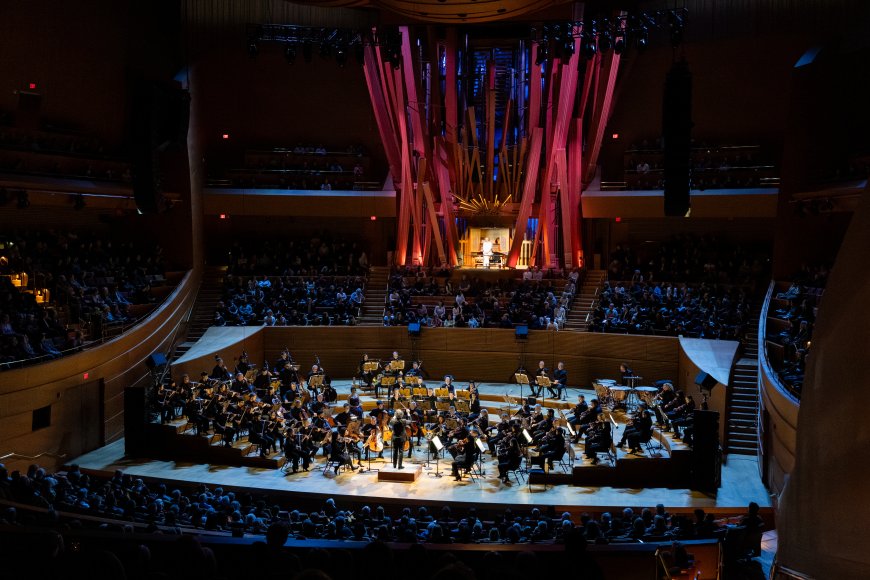
Beethoven’s mighty Egmont Overture is a favorite curtain-raiser — Carlo Maria Giulini chose the piece for his inaugural concerts as music director with the LA Phil in 1978. Though the rest of the Egmont music isn’t as well known, the work underpins a noble theme that Beethoven harped on periodically: freeing mankind from tyranny – in this case, the Protestant Dutch from their occupying Catholic Spanish overlords in the 16th century. Goethe changed the story somewhat, giving the Dutch hero Egmont a martyred mistress, Klärchen, and there were further revisions by others later on.
So, this precedent would seem to give Dudamel and the LA Phil carte blanche to do with it whatever they pleased. And they ran with it. Playwright Jeremy O. Harris — Tony Award-nominated for Slave Play in 2018 — fashioned an almost entirely new script for the narrative portions that sounded as if it had been written two weeks ago.
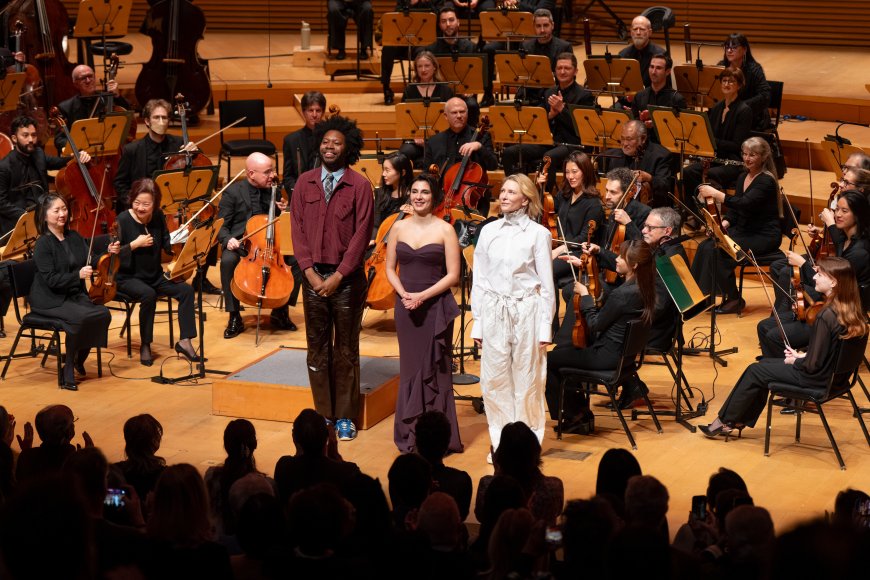
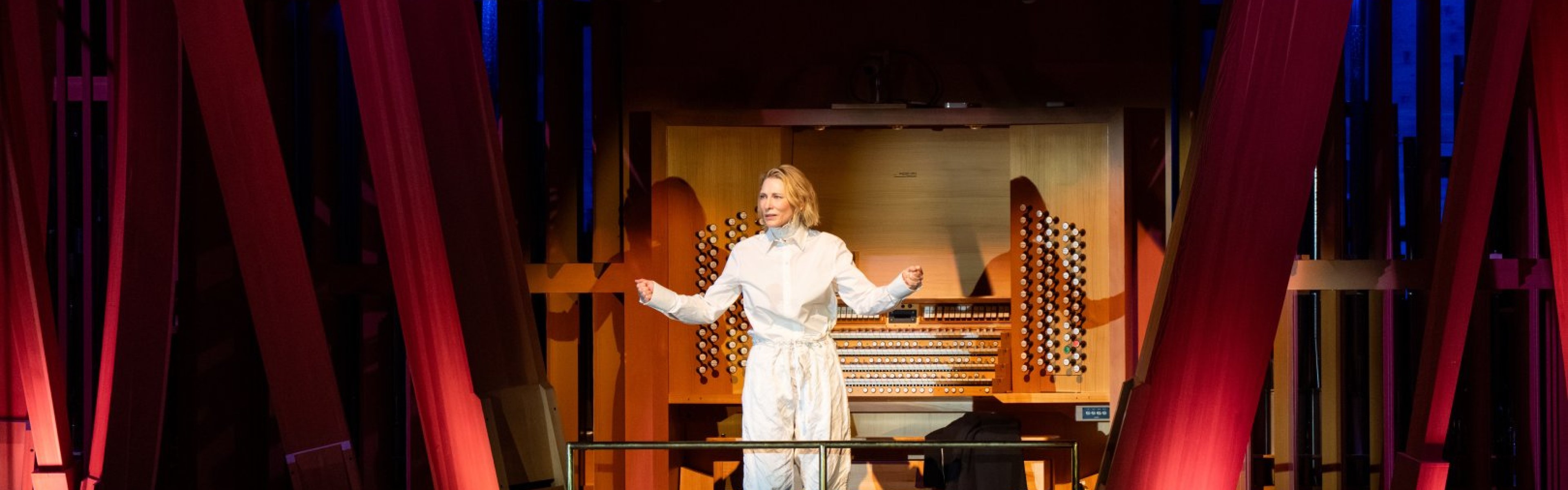
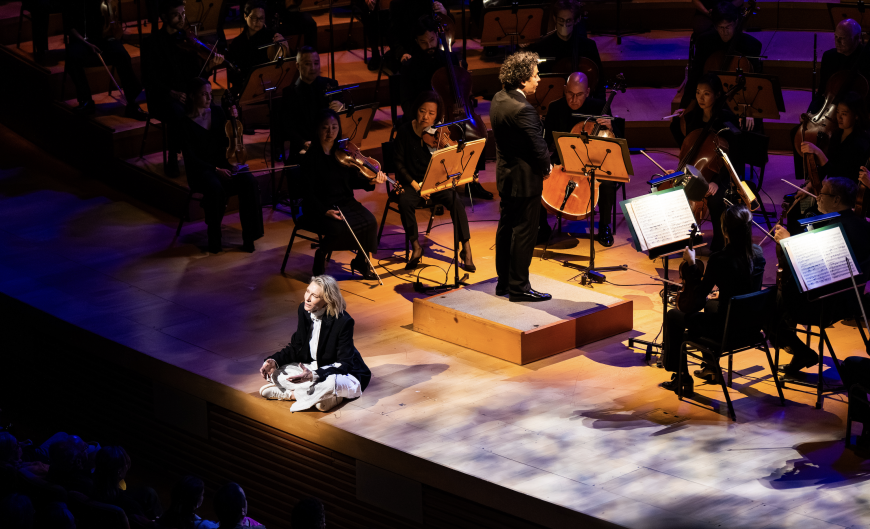
After Dudamel and the Phil delivered a scorching rendition of the Overture, a spotlight fell upon actress Blanchett as she name-checked some flash points of present-day tyranny — like Tehran, Minneapolis, and Charlotte – and paraphrased the warnings from pastor Martin Niemöller’s “First They Came.” (“First they came for the Socialists, and I did not speak out,” etc.). She also quoted Renee Good’s last words and the epithets spoken by the ICE agent who killed her.
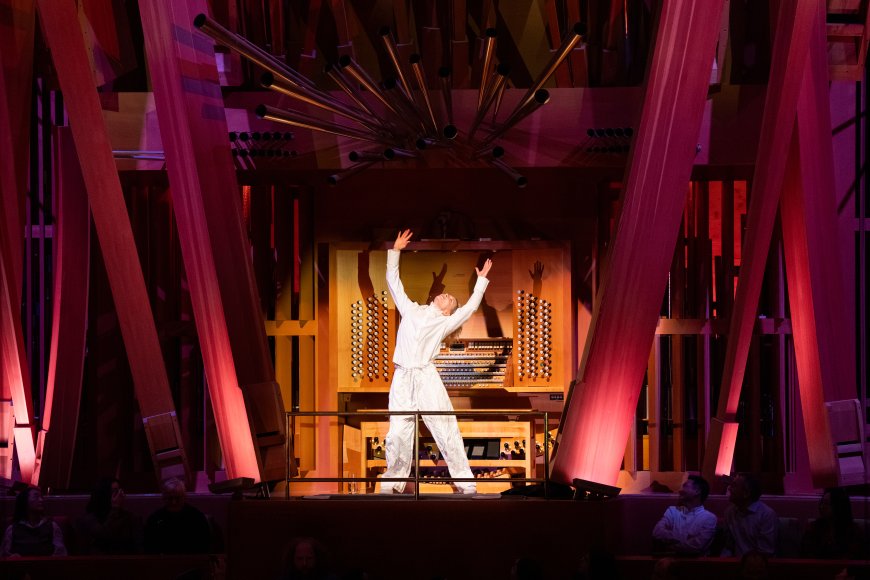
Blanchett delivered her text in a clear, dramatic tone from different outposts on the Disney Hall stage, finally ending up in the organ loft urging the Dutch – and by implication, us – to rise up “so inquisitions are no more,” dancing wildly as the reprise of the Overture’s last minute blazed. “Guaranteed this will not be presented at the Kennedy Center,” I heard myself saying afterwards.
The revolutionary fervor that seized Dudamel made the remaining Entr’actes sound more substantial than how they normally come off — alternately more fiery and classically graceful. The two lieder, “Die Trommei gerühret” and “Freudvoll und leidvoll,” were sung in a warbling timbre by Cuban American soprano Elena Villalón from a position between the cellos and clarinets.
Overwrought? Maybe. Relevant to the practices of the Trump administration and authoritarian regimes elsewhere? Undoubtedly. Faithful to what Beethoven, the freedom fighter, meant? I think so.
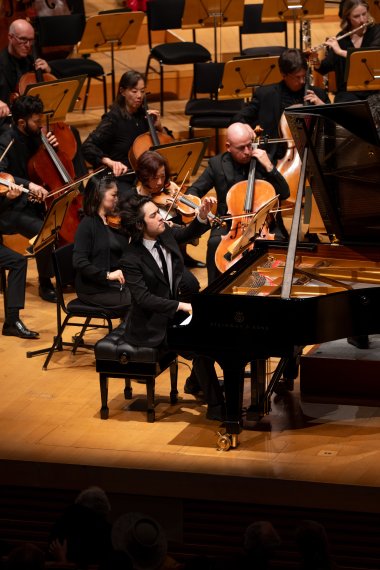
In Robert Schumann’s Piano Concerto, Lim turned on the thunder at the piano — with hair flying — when needed, but it mostly was a ruminative rendition, crystal-clear in texture yet filled with sweet rubatos in the outer movements and gently singing tunes in the Intermezzo. At certain points, when the volume level peaked, his octaves and chords tended to smear. In contrast to Lim’s elastic Romanticisms, Gustavo kept things on track without excess dawdling.
On his own, Lim added a very slow and pulled-about performance of Chopin’s Waltz in A minor, Op. 34, No. 2. He’s an exceptionally gifted pianist who just needs a little more taste in determining how far tempos can fluctuate.
The program opened with the world premiere of “Humboldt’s Nature,” a lavishly-orchestrated, half-hour, five-movement tone poem by Venezuelan composer Ricardo Lorenz (now the professor and chair of music composition at Michigan State University). It is based on a 1799 fact-finding trip through Venezuela by the German scientist/explorer/geographer/botanist Alexander von Humboldt that contributed to his transfiguration into a humanist and abolitionist.
The piece starts with a percussive sparkle. The luminous textures that follow lay down a bed for syncopated brass with a decidedly Latin American flavor. A tambourine and other percussion instruments hiss like poisonous snakes, a seven-note motif is tossed around the sections, and drumsticks tap out insistent rhythms on the sides of drums.
There is a relatively delicate intermezzo, after which Lorenz stirs up some hijinks in the finale, chaotically rambling along in a manner that evokes Heitor Villa-Lobos plunging through the interior jungles of South America. A surprise ending – natural and electronic sounds from surrounding loudspeakers – followed what I thought was going to be a concluding grand chorale.
Dudamel couldn’t have been more at home in this showpiece, happily bouncing up and down to the beat and controlling the finale’s sometimes jumbled clashes. “Humboldt’s Nature” is yet another example of Dudamel’s most significant musical contribution during his tenure in L.A.: punching more irresistible Latin American concert music into the repertoire.