Elim Chan’s first concert with the San Francisco Symphony since her breathtaking appointment as its next music director felt like a coronation.
It happened without a whisper of pomp and circumstance on Friday, June 5. From the standing ovation and torrent of applause that greeted Chan when she entered the stage, to the tidal wave she and the orchestra unleashed in Debussy’s La Mer, the atmosphere in Davies Symphony Hall was freshly energized, ebullient, and engaged.
When her six-year term begins in the 2027-2028 season, Chan will be the first woman at the helm in the orchestra’s 115-year history.
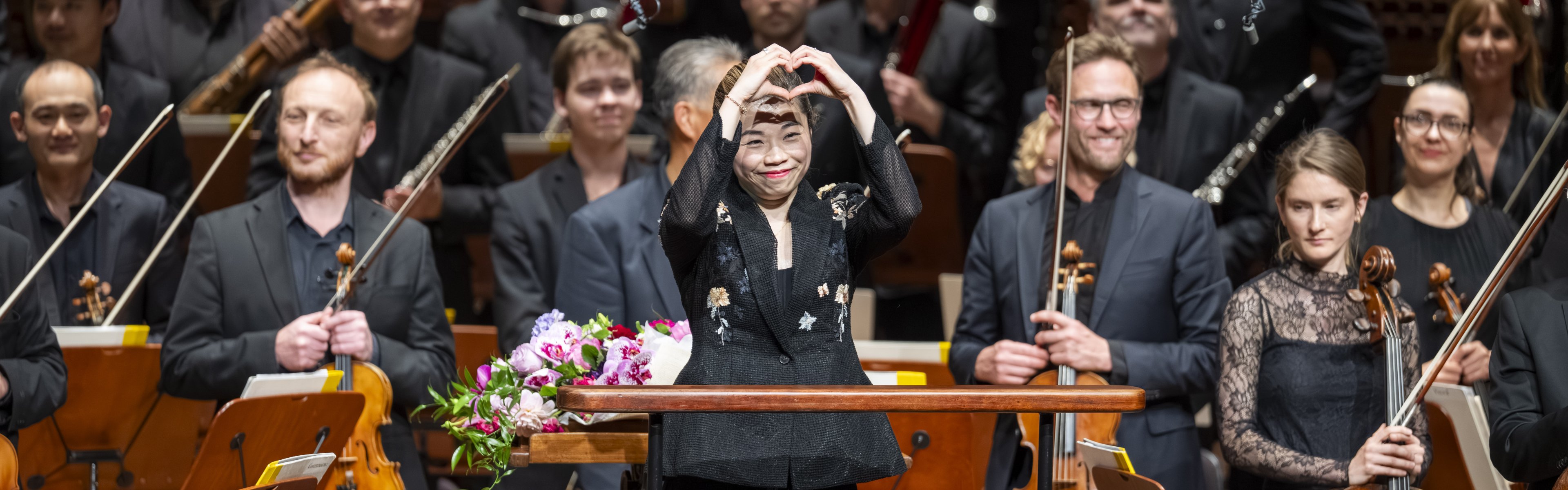
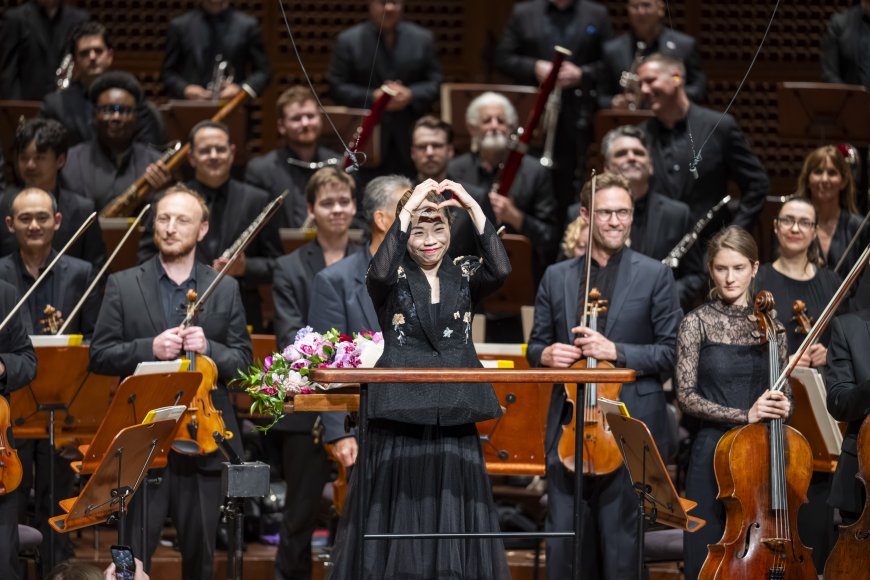
The 39-year-old Hong Kong native was in a groove from the beginning. Before a note was played, she flashed a hand hard around the hall and declared, “I’m definitely feeling a lot of love.”
She one-upped herself after intermission. With her arms flung wide, she told the packed-house, “I just hope I can give you a big hug in my arms.”
The audience felt her embrace in ways both boisterous and distinctly personal.
Joanna Garaventa, a violinist with the Diablo Symphony Orchestra, hadn’t attended an SFS concert in years. Chan’s appearance brought her back. Garaventa said that being led by a woman conductor, as she is with Matilda Hofman at Diablo, creates “a different connection with the orchestra. It’s more intimate.”
Chris Eden, who was attending his first-ever SF Symphony concert, said at intermission he was “overwhelmed with emotions. At first I was watching the conductor. Then I closed my eyes and let the music immerse me.”
Pianist Anne Rainwater remarked on Chan’s “expressiveness” on the podium. “Her moves are so fluid and beautiful.”
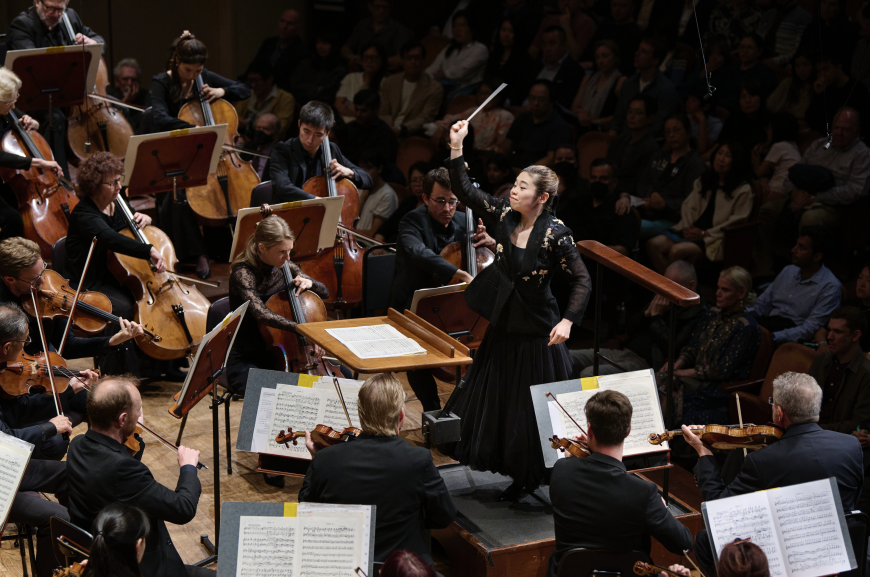
Chan’s conducting presence reads big without being excessively demonstrative or showy. Most everything she does looks and feels purposeful and efficient, from her clear beats, to hand-pinched cutoffs and supple cues. When the moment demands it — a big surge, brass payoff or concussive climax — she delivers it with full-body force.
Dressed in a smartly embroidered fitted jacket and black dress, Chan conveyed both elegance and dynamism, in her bouncy knee bends and way of leaning over the musicians as if to summon and shape every note and measure.
The concert opened with Wagner’s "Prelude and Liebestod” from Tristan und Isolde. Chan’s early tempos were dramatically poised, with hushed phrase endings and a subliminal, almost repressed lushness. It was gorgeously delicate, recalling her sensitive reading of Elizabeth Ogonek’s Moondog here in 2023. The Wagner grew a bit unruly later on, with some balance issues and momentum swerves that righted themselves for a movingly rendered finish.
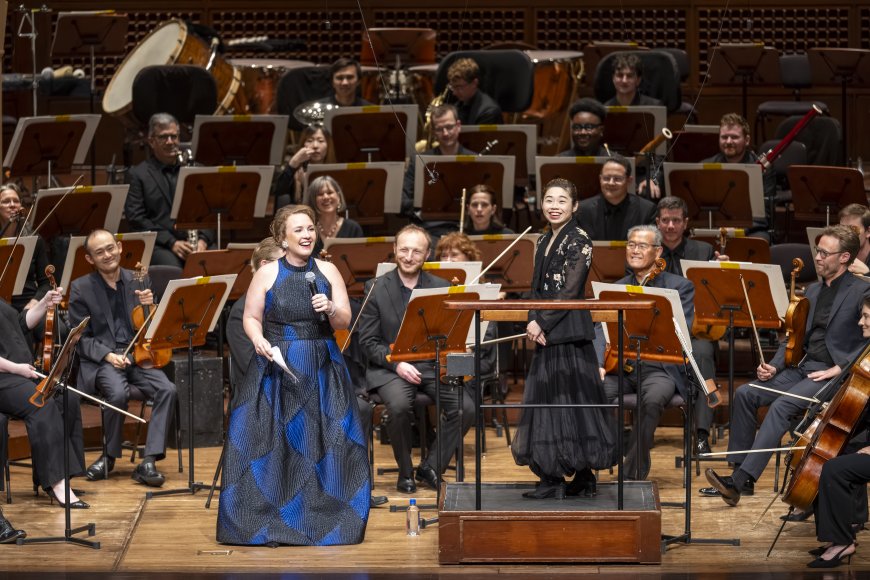
With the sublime mezzo soprano Sasha Cooke as soloist, Berlioz’s Les Nuits d’eté (Summer nights) came next. Through its six emotional songs, Chan and the orchestra partnered exquisitely with the singer. The ensemble was by turns glossy or pulsing, lamenting or vigorous, as the moods of Théophile Gautier’s poems unfolded.
When it was through, Cooke took the microphone to recall the late Michael Tilson Thomas kissing the hem of her skirt after a performance of these Berlioz songs. Cooke then leaned down and kissed Chan’s skirt. This metaphorical passing of the baton was touching. So was Cooke’s quietly plangent encore of MTT’s setting of the Rainer Maria Rilke’s poem “Widening Circle.”
In three movements, Debussy’s La Mer portrays the complex interplay of the ocean’s movement, power, depth, and shimmering play of waves and light. Chan led a powerfully charged performance that favored high impact over painterly subtleties. It may not have been the most finely-hued account of the piece, but on a high voltage night like this one, a power surge was a fitting climax. It also echoed the brilliant, galactic shine she brought to Gustav Holst’s The Planets here in 2023.
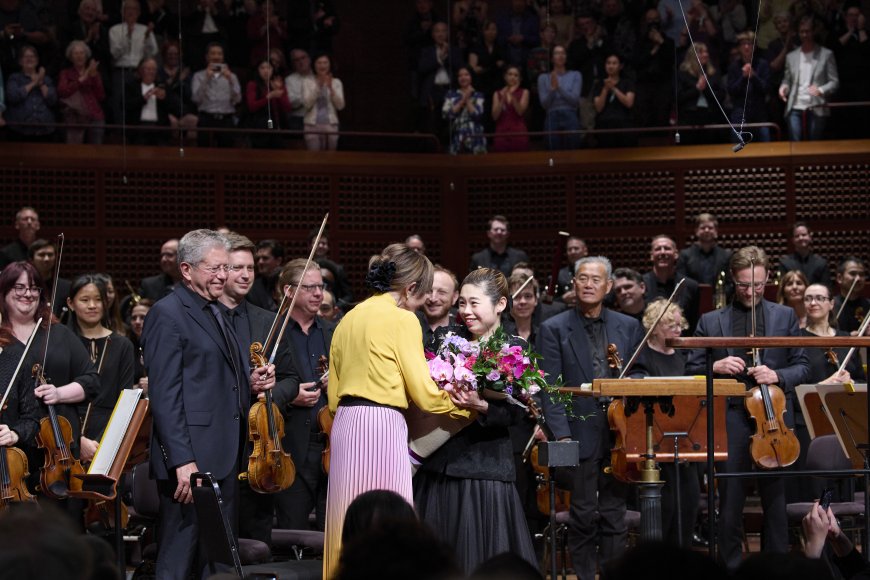
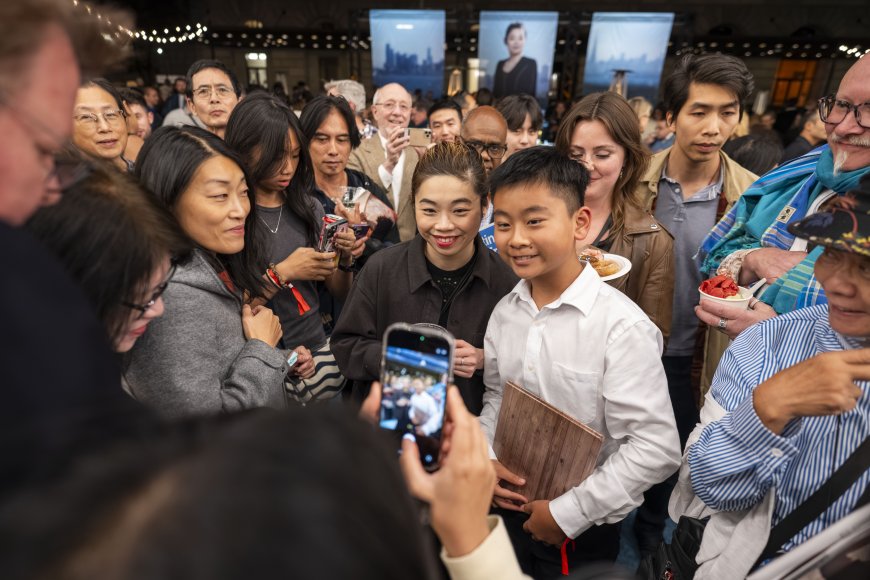
Chan’s spirit kept going after the music was through. Presented with a large bouquet, she plucked out blossoms and handed them around to section leaders. Fifteen minutes later, when she made her way out to a party on a closed-off block of Grove Street, the first group she encountered was a family with two awe-struck children, who shyly asked for her autograph. Chan obliged and spent time chatting and listening to the girls before posing for pictures.
After her May 22 press conference at City Hall, an orchestra member said “she’s so normal” in admiration of Chan.
David Landis, Symphony’s public relations director from 1980-1987, made a larger point about what Chan’s ascension represents. “They’re taking a risk on a young new talent instead of going for something familiar,” Landis said.
“San Francisco is changing. It’s a new world, and this meets the moment.”
Steven Winn is a freelance writer. This story has been provided in partnership with San Francisco Chronicle.