Few organizations in Los Angeles have done more to stretch the definition of opera than The Industry. Since its founding, the company has built a reputation for reimagining where opera can happen and what it can be.
The Industry’s latest offering: a listening party at Monk Space last Friday centered around the vocal work of composer Christopher Cerrone. Part performance, part conversation, the evening eschewed formality for something warmer and more communal, with the crowd talkative and congenial.
Cerrone first entered The Industry’s orbit with Invisible Cities, his Pulitzer-finalist opera staged throughout Union Station in 2013. The composer has since become known for music that merges literary sensitivity with a refined ear for timbre, resonance, and electronics. At the listening party, he proved disarmingly candid and gently humorous, offering a window into his thoughts and process.
Three very different works — excerpts from In a Grove, Beaufort Scales, and Canto Selah — revealed remarkably consistent preoccupations with memory, perspective, and reflection.
In a Grove, Cerrone’s opera based on Ryūnosuke Akutagawa’s story of conflicting testimony, maintained an intensity that cut through the room, establishing both dramatic and psychological tension — a result of the characters’ inner turmoil and conflicting perspectives.
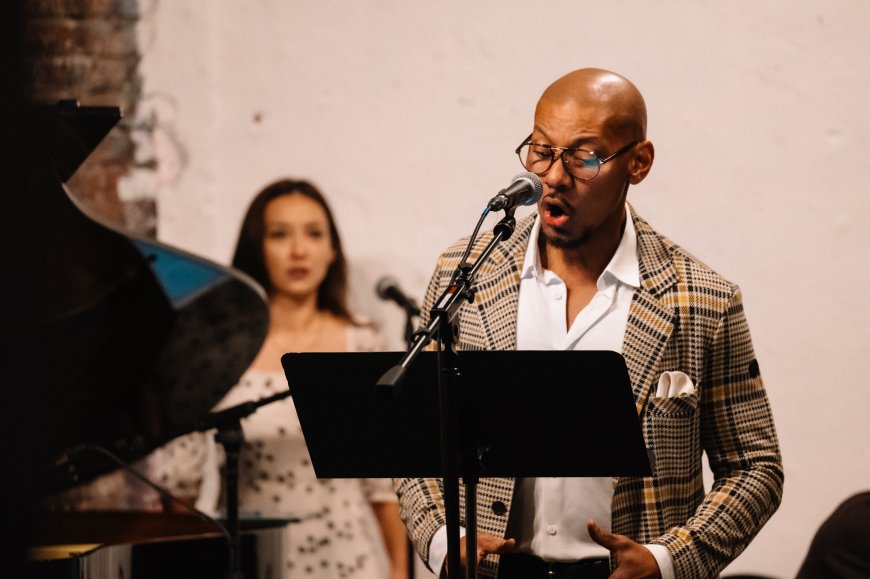
Questions of perspective soon migrated to the examination of sound itself: Beaufort Scales, named after the meteorological system for measuring wind intensity, translated rain and storm into shifting sonic atmospheres. Silver-toned melodies emerged as echoes of spoken text while voices electronically merged with recordings of flowing water.
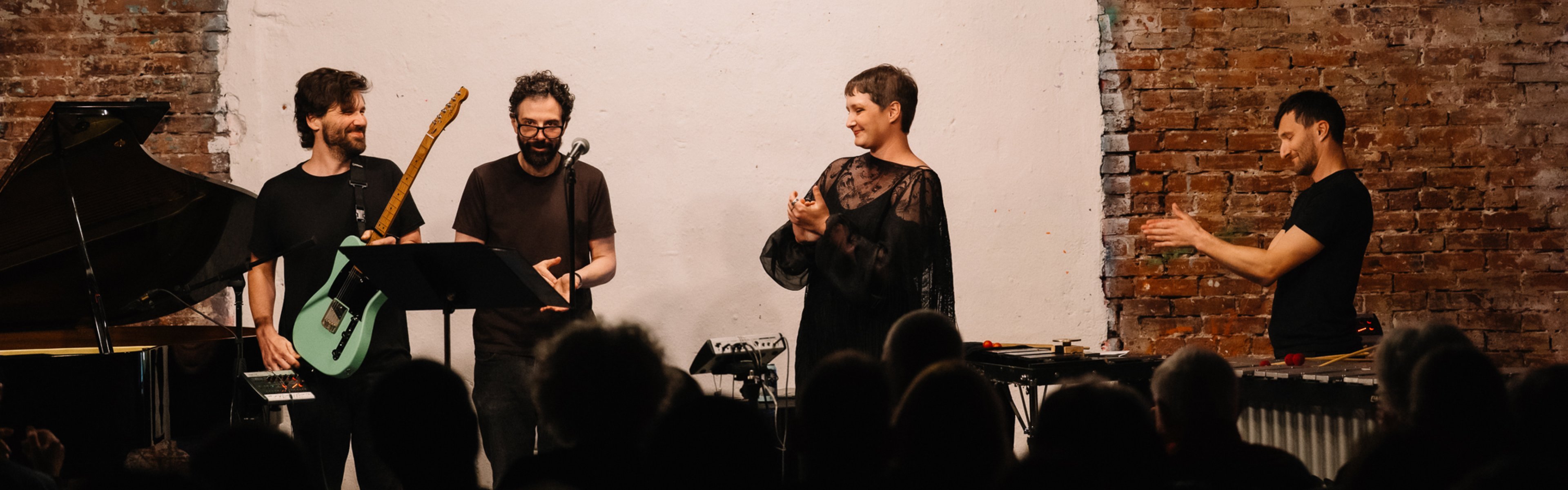
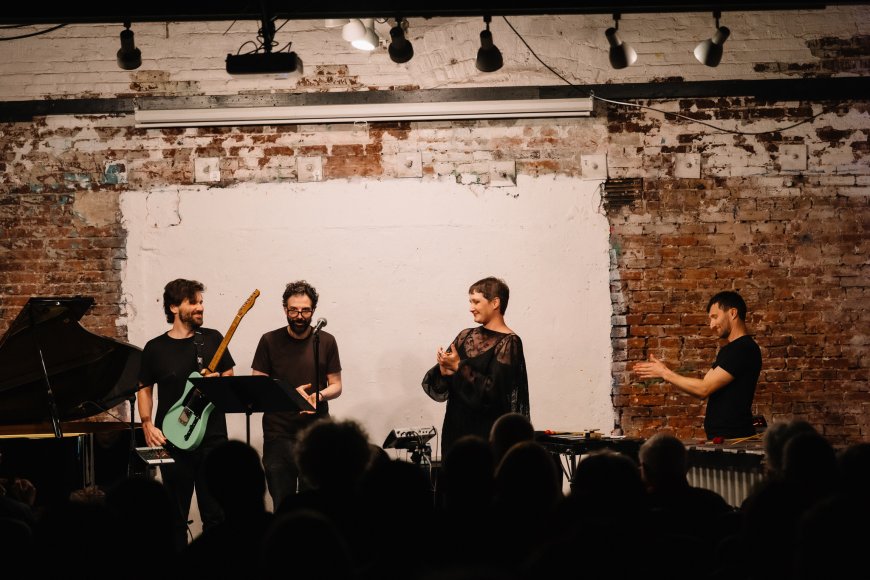
Canto Selah made these concerns perhaps most explicit. Written for voice, electric guitar, percussion, electronics, and a host of prerecorded vocal tracks, the work transformed a singer’s interactions with ghostly reflections of her own prerecorded voice into something deeply, compellingly human. It was a haunting meditation on self-reflection and generational trauma.
Throughout the evening, electronics were an integral part of the dramatic vocabulary of the music. At times, prerecorded audio and live processing merged so naturally with the acoustic performers that distinctions between them nearly disappeared. Melodies conversed and danced with electronics that, in turn, revealed something about the inner lives of the characters being presented. Rough distortion suggested darker undercurrents of thought. Echoes became fixations and haunting memories. Halo-like resonance created a sense of depth and mystery, as if the audience were witnessing these characters’ interior worlds through a kind of narrative fog.

Cerrone’s music centers the voice and often privileges unfolding over arrival, always remarkably spare and economical. He masterfully foregrounds simple compositional ideas — scales, intervals, repetition, layering — in ways that create music of remarkable patience and clarity. The effect resembles origami: simple gestures repeatedly folded (or unfolded) into more complex forms.
Cerrone is generous with time, giving each gesture and relationship space to be heard and understood. Even in more tumultuous passages there remained a curious sense of the suspension of time’s progress. Like an opera aria interrupting dramatic action to reveal a character’s internal life, Cerrone’s music manipulates time to give listeners space to inhabit those interior worlds. Much of the beauty lies in details: slight changes in timbre, subtle shifts in relationships among musical materials, tiny alterations that draw in the listener, making it easy to lose oneself in the sound world.
At one point during the listening party, Cerrone remarked that “the mundane can be so powerful.” The strength of his music seems to lie precisely there: in its ability to elevate the mundane into something uncanny and quietly magical.
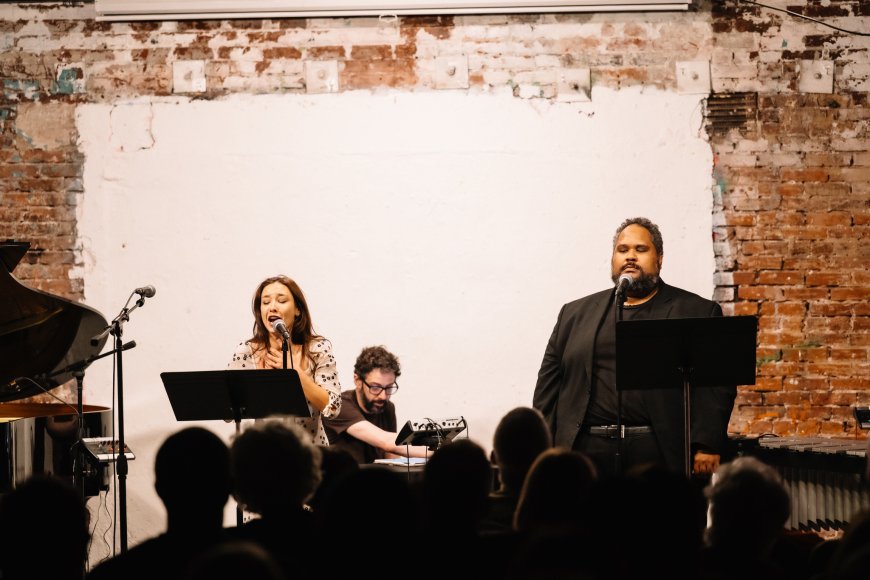
In a Grove returns to Los Angeles soon in a full production by The Industry. If the excerpts heard at Monk Space — and the obvious artistic synergy between Cerrone and the company — are any indication, audiences will have another opportunity to step more fully into an interior landscape that this all-too-brief listening party began to suggest.
The listening party featured the following artists:
Kelci Hahn, soprano
Ashley Faatoalia, tenor
Cedric Berry, baritone
Lucy Yates, collaborative piano
Tanner Porter, voice
The Living Earth Show (Travis Andrews, guitar, and Andy Meyerson, percussion)