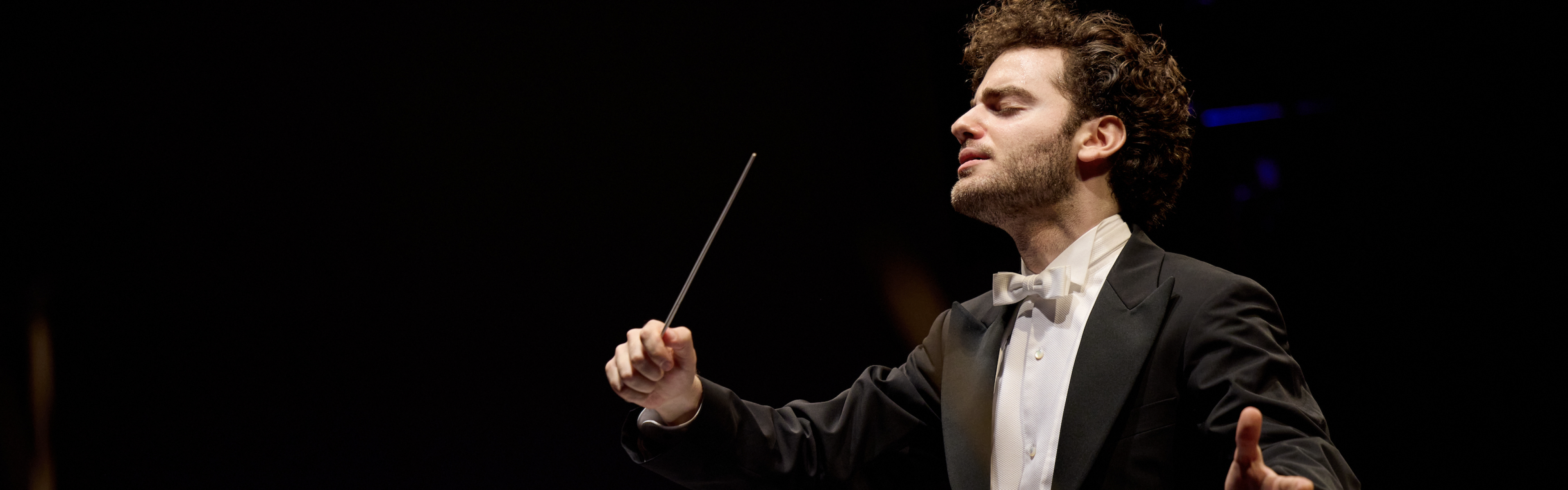
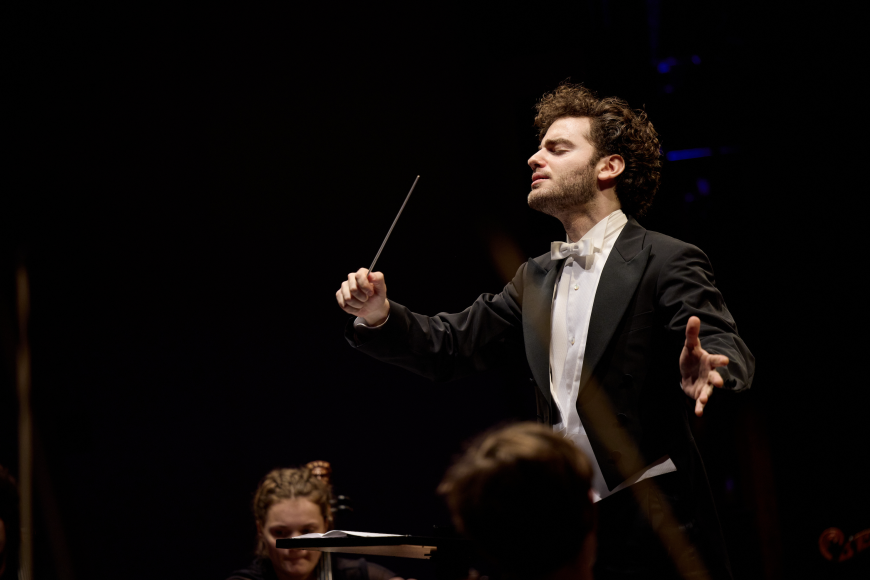
Russians and Armenians have not always been friendly neighbors, but on July 30 at the Hollywood Bowl, they made congenial musical companions in a spirited program of works by Armenian Aram Khachaturian and Russians Pyotr Tchaikovsky and Modest Mussorgsky. Rising 31-year-old Austrian-Armenian conductor Emmanuel Tjeknavorian, currently music director of the Orchestra Sinfonica di Milano, was on the podium, making an auspicious and well-received debut with the Los Angeles Philharmonic. Cellist Zlatomir Fung was also making his first appearance with the orchestra.
The evening opened with Tjeknavorian's own arrangement of excerpts from the three orchestral suites Khachaturian fashioned from his 1942 ballet Gayane, a folksy tale of love and duty set in a Soviet collective farm village in Armenia. The ballet revolves around Gayane's attempt to free herself from a drunken husband who neglects his work and shames the family. Its score shimmers with the Armenian color and rhythms for which Khachaturian's music became celebrated at home and abroad.
First up was the "Sabre Dance," which to the composer's dismay became his single most famous and recognizable piece, overshadowing his more serious compositions and recycled endlessly in film and television. Scored for a large battery of percussion, with prominent timpani, xylophone, and sliding trombones, it throbs with a sensual energy and physicality. Tjeknavorian did a little dancing himself on the podium, and led with brio, without overdoing the Broadway-style schmaltz.
The remaining numbers exhibited different colors and moods of Khachaturian’s Caucasian sound world: nationalistic pride in the “Dance of Young Kurds,” innocent beauty in the “Dance of the Rose Maidens,” and sexual awakening in the “Awakening and Dance of Aisha,” where the piccolo symbolizes her virginal innocence. In the "Lezginka," a warrior's dance native to the Caucasus, various kinds of drums pounded out a call to arms.
The numbers Tjeknavorian assembled provided a well-paced panorama of one of the most frequently performed ballets in the USSR — though the libretto was repeatedly revised through the late 1940s and '50s to conform to changing ideological demands. (Not surprisingly, Gayane’s drunken husband was eventually eliminated as a socially undesirable element for Soviet audiences.)
Tchaikovsky’s coolly classical Variations on a Rococo Theme followed, sending us back to the era of Mozart, the “sunny genius” whose music, wrote Tchaikovsky, “moves me to tears.” The Rococo theme was not in fact borrowed but the composer's own, expertly fashioned in Mozartian classical style for cello soloist and small orchestra.
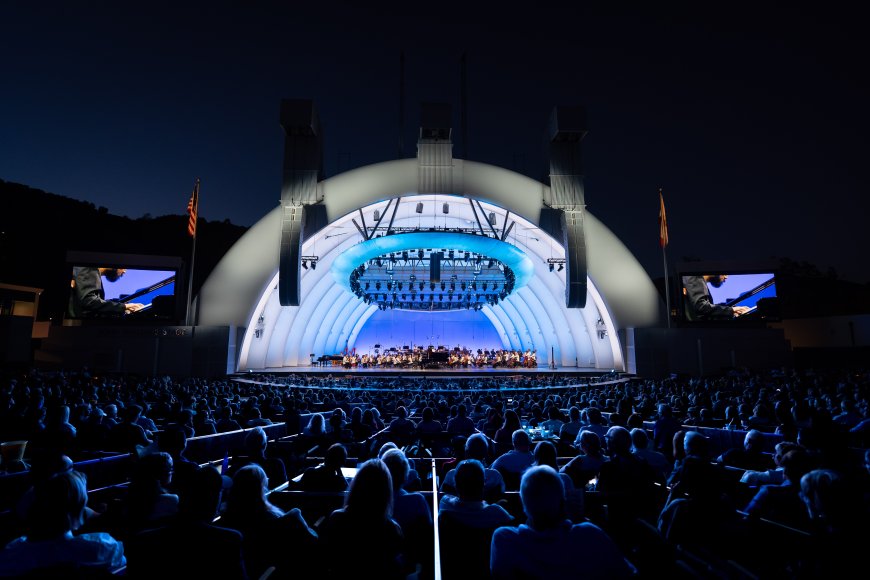
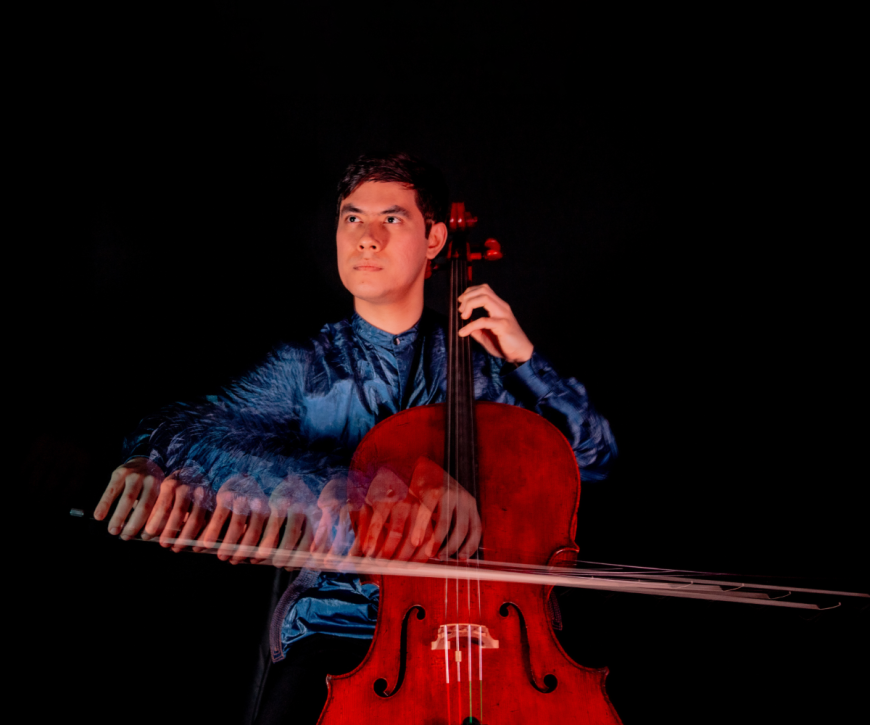
One of the most beloved pieces in the cello repertoire, the Rococo Variations requires a special combination of virtuosity, delicacy, and lyricism. Zlatomir Fung, the first American in four decades to win First Prize in the cello division of the International Tchaikovsky Competition, clearly knows this work and its style intimately, and gave a light, youthful performance that suited the decorative Rococo spirit. The Bowl’s newly enhanced amplification system brought Fung’s softest notes and harmonics to the farthest reaches of the canyon. At times the sound seemed strangely disembodied from the performer, as though coming from some other source than the cello.
Maurice Ravel’s plush orchestral arrangement of Modest Mussorgsky’s Pictures at an Exhibition, originally written for piano solo, has been a favorite of the LA Phil since the earliest days of the Hollywood Bowl. Big and dramatic, it meets the arena’s sonic demands — even without amplification.
Originally commissioned by Serge Koussevitzky in Paris in 1922, Ravel's arrangement applies a thick coat of impressionistic color to the spare portraits created by Mussorgsky (1839–1881), inspired by a group of watercolors, drawings and designs by his friend the artist Viktor Hartmann. A “Promenade” that depicts a museum-goer strolling between the paintings appears at regular intervals, characteristically Russian in its circular rhythms and modal harmonies.
Various soloists took the spotlight for different pictures — English horn in "The Old Castle," tuba in "Bydło" (The oxcart), anxious trumpets in "Samuel Goldenberg and Schmuÿle." This is a score with which the members of the LA Phil are perhaps overly familiar, but the performance under Tjeknavorian’s athletic and graceful direction sounded anything but routine. The magnificent chimes punctuating the concluding "The Great Gate of Kiev" (a triumphal arch intended to convey Russian imperial power in Ukraine, but never actually built) brought the evening to a satisfying climax.