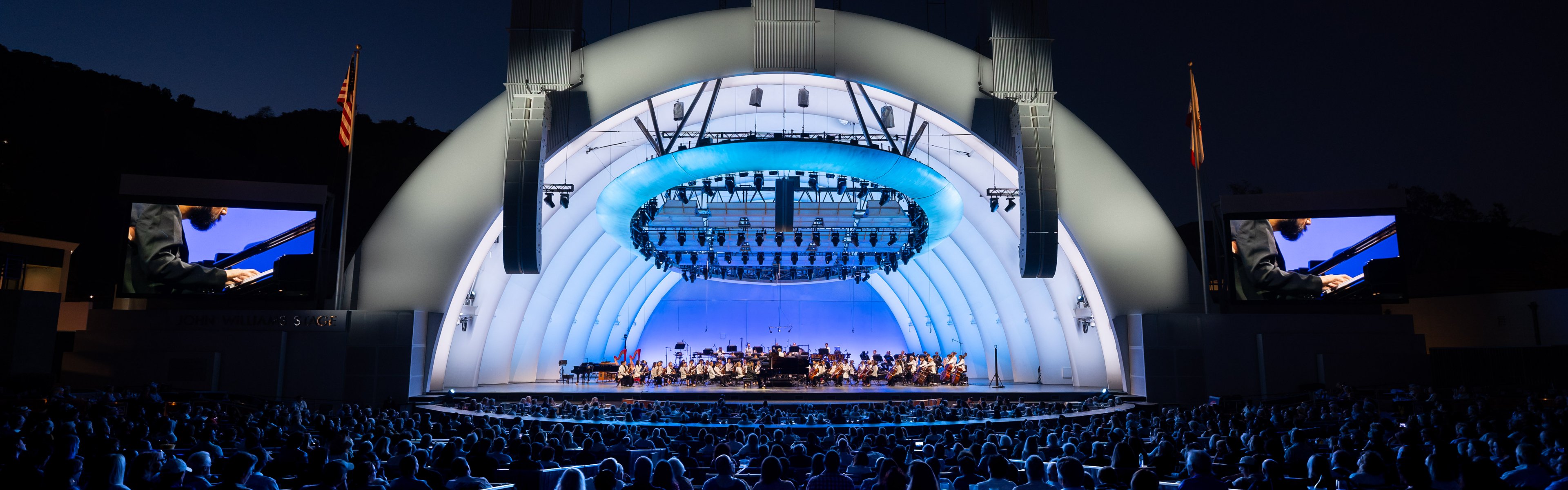
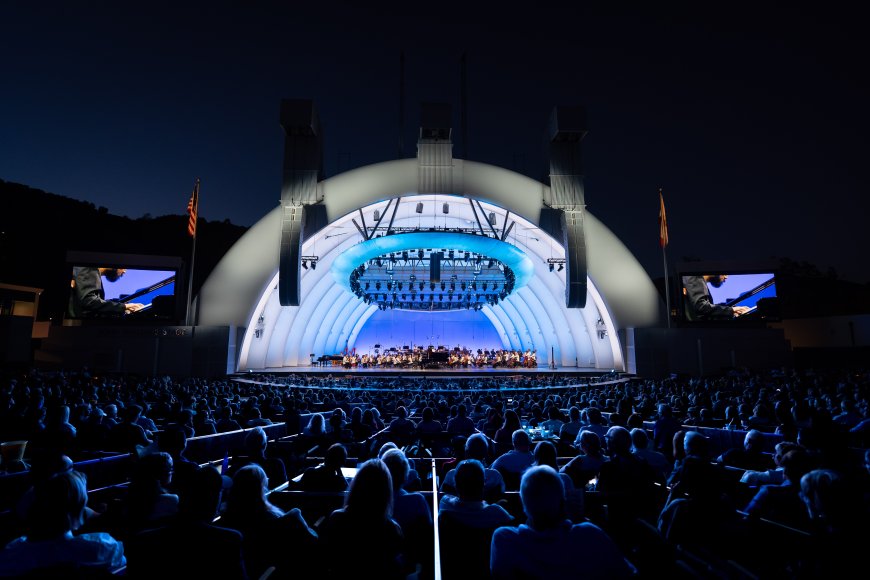
89 years after its historic Leningrad premiere, Dmitri Shostakovich’s Fifth Symphony still casts a spell. At the Hollywood Bowl on July 28, a sizable audience listened with hushed engagement as the Los Angeles Philharmonic, conducted with quiet passion by Marin Alsop, plumbed the emotional depths of this intensely personal and iconic work, by turns serene and violent.
Composed at a crucial point in Shostakovich’s career, soon after he had been raked over the coals by the Soviet culture police for the alleged obscenity and “muddle” of his opera Lady Macbeth of the Mtsensk District, the Fifth Symphony restored him to official favor and literally saved his life during Stalin’s vicious purges. Carrying obvious references to Beethoven, another master of the form, the Fifth has taken its place as one of the most admired and frequently performed symphonies of the 20th century.
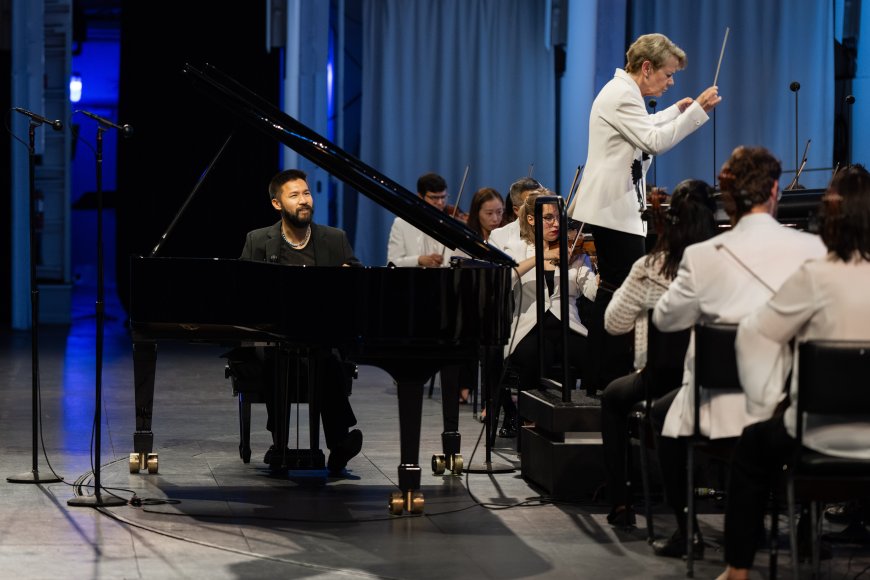
The other major work on the evening’s program, George Gershwin’s smile-inducing Rhapsody in Blue, given a splashy and vibrant performance by trendy piano soloist Conrad Tao, might have seemed like an odd companion. And yet Gershwin and Shostakovich had a lot in common.
Although born in the United States, Gershwin (1898-1937) was the son of parents who immigrated from the pre-revolutionary Russian empire seeking religious and political freedom. Gershwin and Shostakovich (1906-1975) were also both drawn to the new free-wheeling American style of 1920s jazz. Early in his career, Shostakovich produced several works inspired by jazz, but later had to abandon that interest because jazz became regarded as a decadent foreign influence in Stalin’s insular USSR.
That Gershwin died (too early and unexpectedly) in the year of the Fifth Symphony’s premiere (1937) gave the pairing an added poignancy.
Conrad Tao, who has appeared frequently with the LA Phil, approached Rhapsody in Blue like a dear and treasured old friend. It helped, of course, that his nimble fingers could be seen close-up, caressing the ivories on huge screens to the right and left of the stage.
The Bowl’s vastly improved amplification system brought out the bright, ringing resonance of the piano. Every instrument in the orchestra had its own small microphone, so all the jazzy details emerged with almost startling clarity.
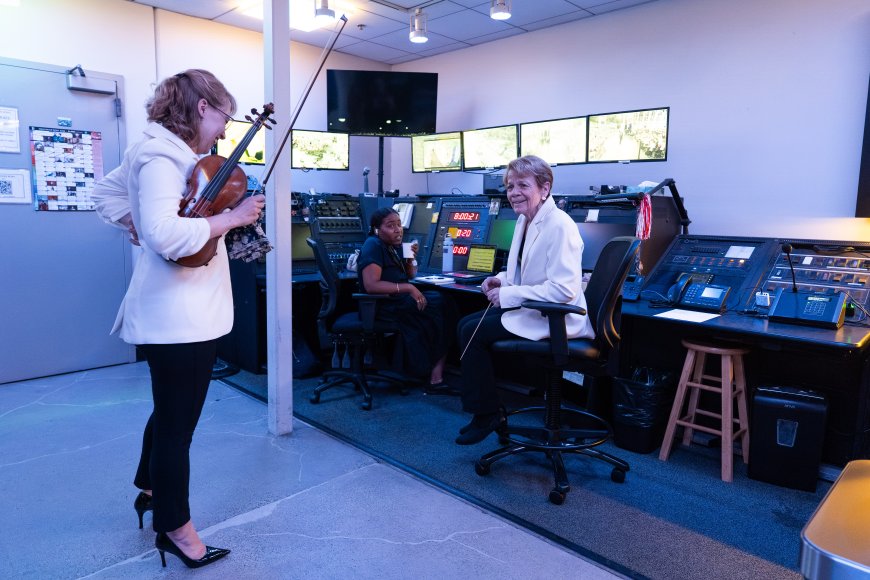
Indeed, those attending a concert at the Bowl these days find their eyes almost constantly drawn to the screens rather than to the stage, which seems small and far away. The conductor’s role seems minimized, and that of the sound engineers and mixers considerably increased. Yet the live sound of the LA Phil still brings an urgency and vitality to the proceedings that cannot be matched by recordings.
In Tao’s hands, Rhapsody in Blue sounded very blue indeed, with an improvisational flair and immediacy. The LA Phil’s peerless clarinetist Boris Allakhverdyan set the scene perfectly with the slippery ascending scale that opens the piece. Alsop gave Tao all the rhythmic and interpretative freedom he needed, bringing out the quirky details of the accompanying orchestration (made by Ferde Grofé, expanded from a version for jazz band).
In response to an ovation, Tao encored with his own virtuosic arrangement of Art Tatum’s “Over the Rainbow,” as a tribute to Judy Garland, whose photo was hanging in his dressing room.
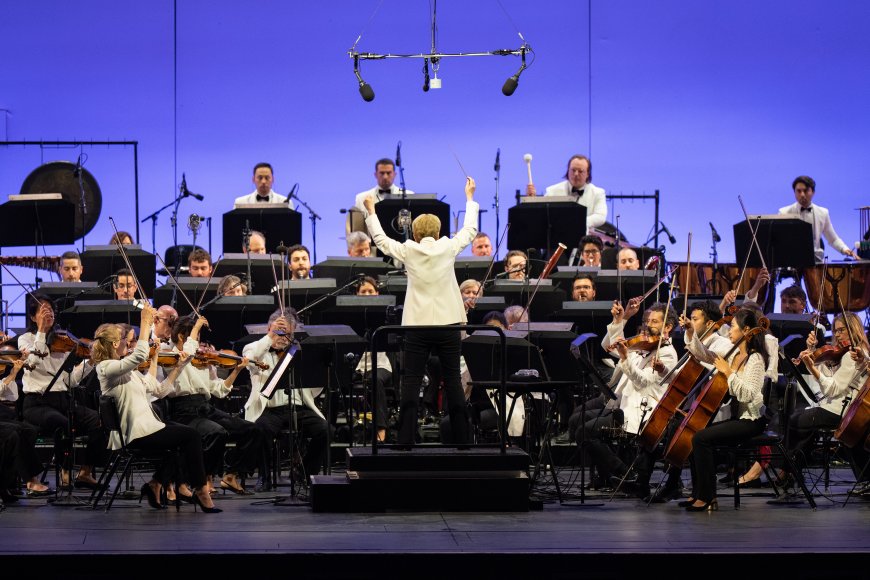
Shostakovich’s Fifth took up the second half. It was a cool and clean performance that showed off the Symphony’s elegant structure and logic, but at times lacked gravitas. Alsop took the ironic second movement Allegretto at an unusually slow tempo that dragged at times. There was fine playing from many members of the LA Phil, especially the bassoons, oboes, and harps, in the magical moments at the end of the third slow movement.
The finale proceeded with admirable restraint, countering the hysteria of some interpretations. The violins pounded out the final measures with impressive stamina.