What makes Czech music Czech?
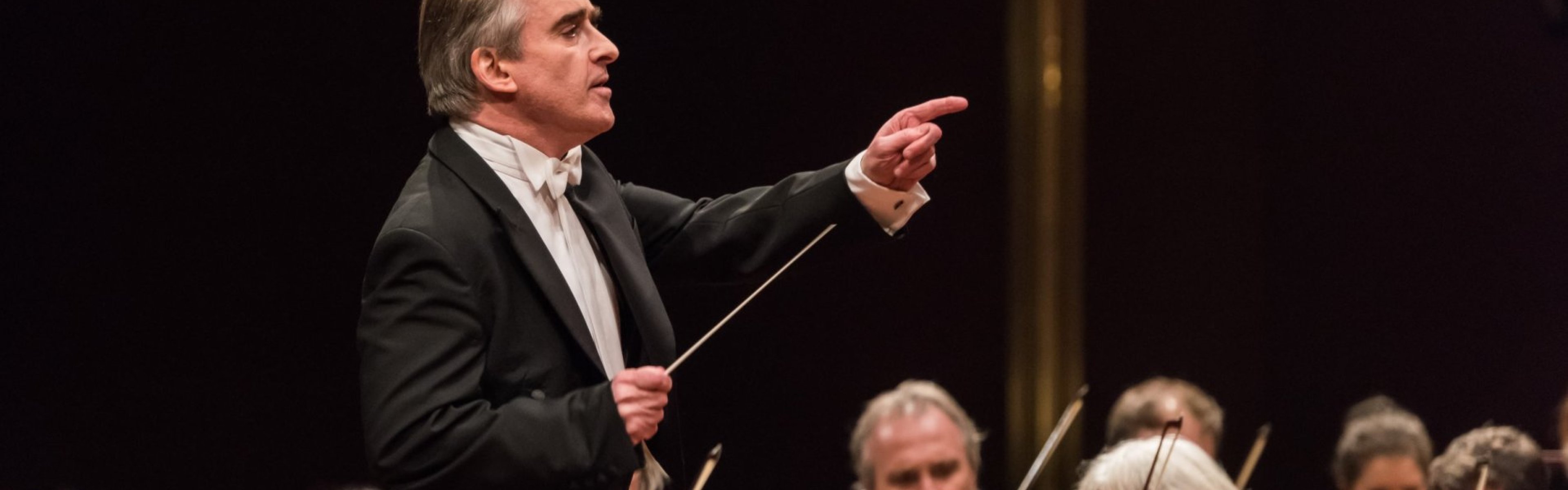
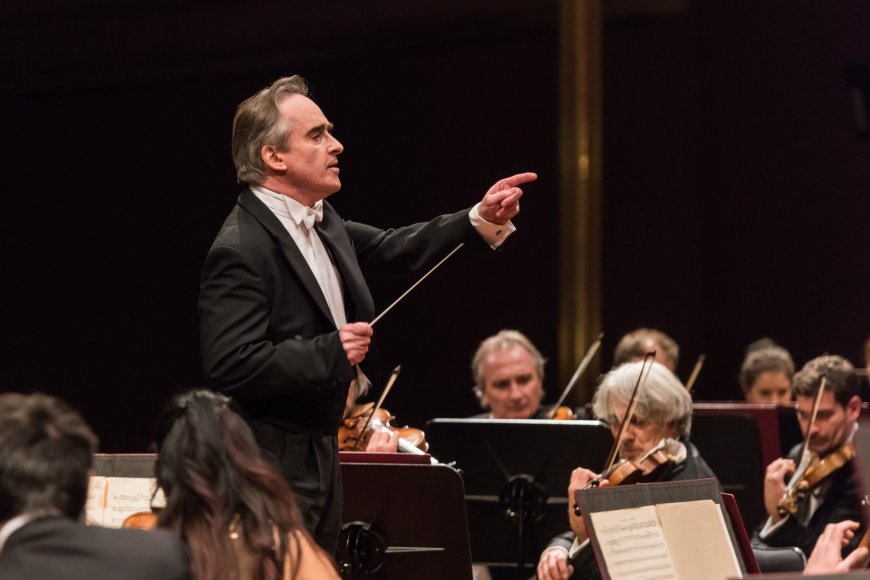
Conductor James Conlon explored this question in another installment of his always illuminating “Music Restored” series at Colburn Conservatory’s Zipper Hall on March 7. Under Conlon’s paternal baton, the Music Restored Ensemble provided some answers with passionate and engaged performances of works by Antonín Dvořák, Vítězslava Kaprálová, and Bohuslav Martinů.
Conlon highlighted that Czech music has thrived despite political turmoil and oppression — perhaps even because of them. In 1883, Dvořák wrote his enchanting Nocturne in B Major as a subject of the Austro-Hungarian Empire, ruled from Vienna, which sought to marginalize Czech language and culture. He did not live to see the collapse of that empire in 1918, and the creation of an independent Czechoslovakia.
But that republic was short-lived. By the late 1930s, when Kaprálová finished her thorny neoclassical Partita for Piano and Strings, and Martinů finished his ferocious Double Concerto for Two String Orchestras, Piano, and Timpani, war threatened, and both composers had sought refuge in France. After World War II, Soviet forces took over, forcing Martinů and many other artistic leaders into continued exile.
Given its small size, Czechia has always boasted a surprisingly diverse musical culture, absorbing influences from its European neighbors. Many of Dvořák’s compositions owe a considerable debt to the Viennese Romantic tradition, especially to his friend Johannes Brahms.
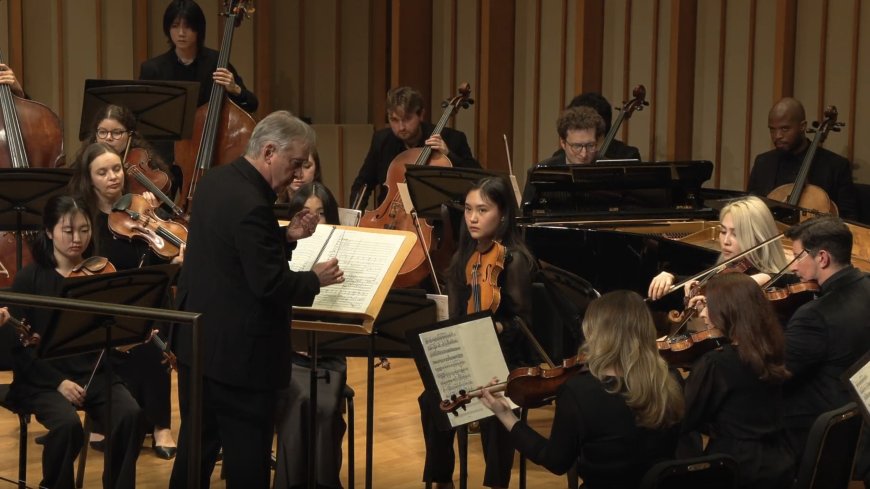
And yet Dvořák added something new, infusing his music with the spirit of Bohemian and Moravian folk music. Written for string orchestra, the Nocturne does not explicitly quote from folk sources, but its rustic and mesmerizing atmosphere evokes images of Bohemia’s meadows and ponds, hushed in the moonlight. Shimmering and rippling triplets provide gentle propulsion, recalling lush orchestral passages in his operatic fairytale masterwork, Rusalka.
Conlon conducted delicately, allowing the music to breathe and swell, and coaxing solid unison playing from the lower strings.
Vítězslava Kaprálová (1915–1940) was a native of Brno, capital of Moravia, which had a lively and important music scene of its own. She was the first female graduate of the conservatory there, following in the footsteps of its distinguished professor and scholar of folk music, Leoš Janáček (1854–1928). Her remarkable and self-assured Partita fuses neoclassical style a la Stravinsky with jarring, jabbing metrical invention, plus a melting sweetness that is also encountered in many of Janáček’s works.
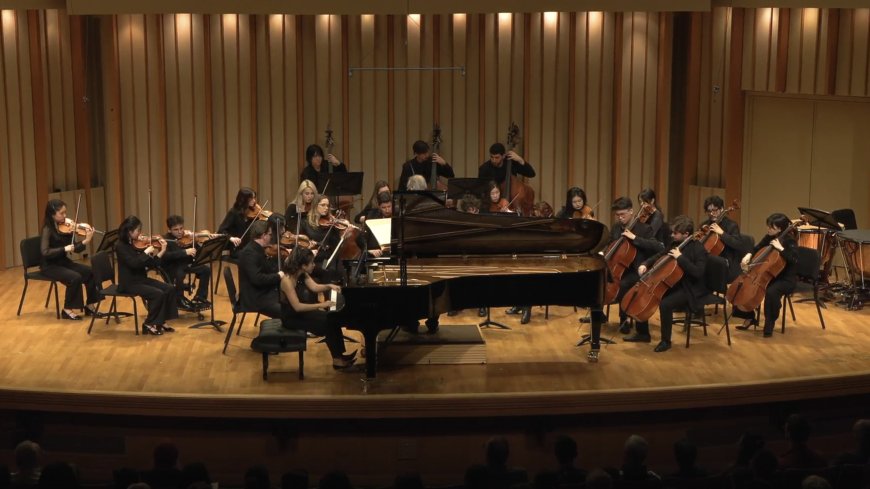
Chi-Jo Lee went to town on the percussive, dancing piano part, bringing out its baroque detail and knotty elegance. Kaprálová’s music has been showing up with increasing frequency on programs in recent years and deserves to be better known. Sadly, her promising career, which took her to Paris in the 1930s, ended abruptly with her death, possibly from typhoid fever, at age 25.
When she died, her mentor Bohuslav Martinů said, “Why had destiny given her so much energy, so many precious gifts, and yet denied her the opportunity to realize her full potential? This question, I think, will forever remain unanswered.”
Martinů also migrated to the Parisian musical scene between the wars, but eventually sought refugee status in the United States, where he developed a very active career with the help of such conductors as Charles Munch, music director of the Boston Symphony. His dense and dark Double Concerto, completed in 1938 on the eve of the Nazi takeover of Czechoslovakia, seethes and screams in anguish. The two string ensembles engage in dissonant combat, anchored by a percussive piano and the timpani, pounding out a funeral march.
In a brief introduction, Conlon noted the influence of Béla Bartók, and the inventive use of the Baroque concerto grosso form, with the piano replacing the harpsichord or cembalo. The result, he said, is “like sticking your finger in an electric socket.”
No argument here. The Colburn students gave a gripping, no-holds-barred performance, with precise and driving contributions from pianist Rodolfo Leone and timpanist Tennison Watts.