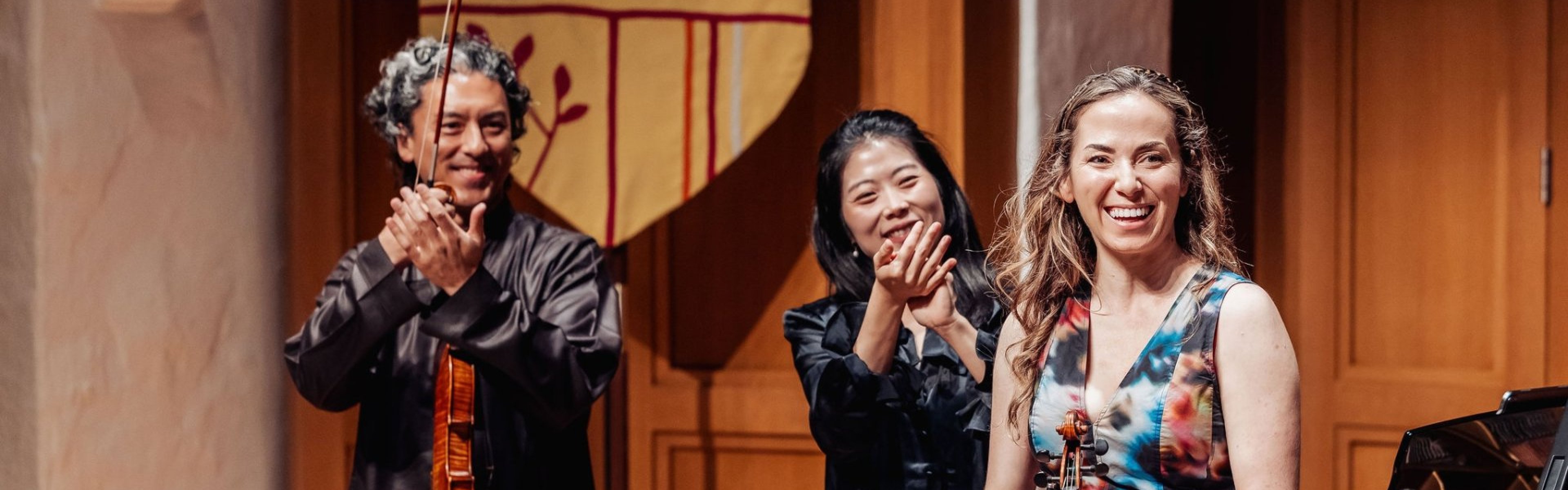
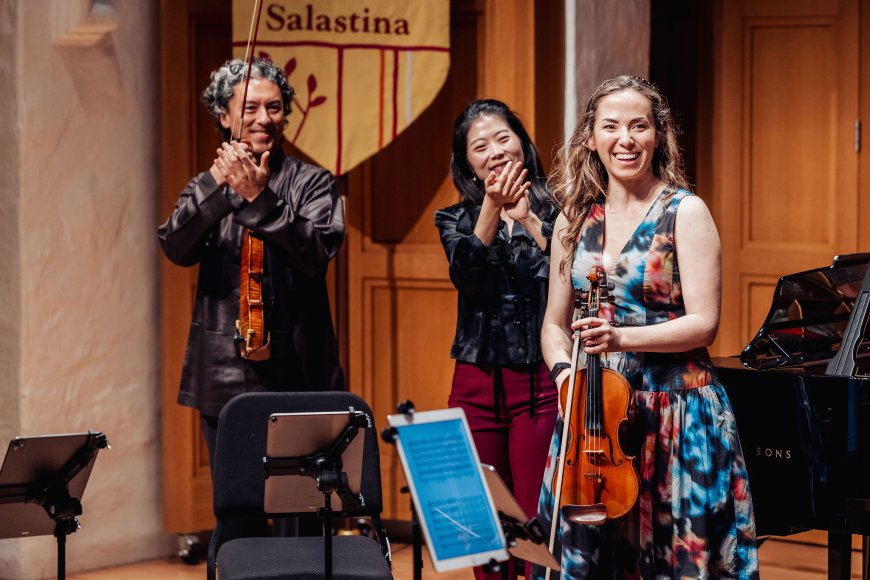
The enterprising chamber ensemble Salastina advertised its concert of three piano quintets at Pasadena Conservatory of Music on April 25 as a mixture of “the familiar, the forgotten and the brand-new.”
Julius Röntgen’s Piano Quintet No. 2, Op. 100, definitely counted as forgotten; Robert Schumann’s beloved Piano Quintet filled the familiar slot; and the world premiere of Currents, by millennial Nicholas Edwards, gave us something spanking new.
A distant relative of the discoverer of X-rays, Julius Röntgen (1855–1932) composed music instead of pursuing innovation. A total of 600 works flowed from his prolific pen during his long and distinguished career. Based mostly in the Netherlands and Denmark, he figured prominently in the region’s musical life as composer and conductor.
But because critics and audiences found Röntgen’s easy-listening, congenial, and late-Romantic style somewhat passé, his music has attracted little attention. A friend of Franz Liszt, Johannes Brahms, and Edvard Grieg, he followed their well-worn path well into the 20th century, when such heart-on-sleeve and resolutely tonal writing had become distinctly unfashionable.
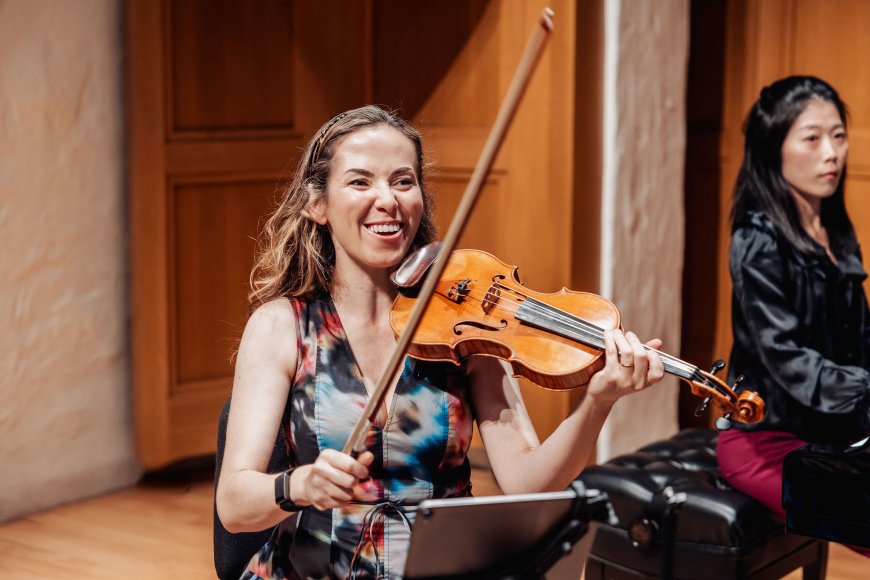
Salastina made a strong case, however, for taking a second look. Overflowing with lush melodies spun out in long solos and duets, his Second Piano Quintet showed the hand of a master craftsman. Kevin Kumar and Maia Jasper White, Salastina’s co-artistic directors and resident violinists, reveled in the warmth of the thick Brahmsian texture.
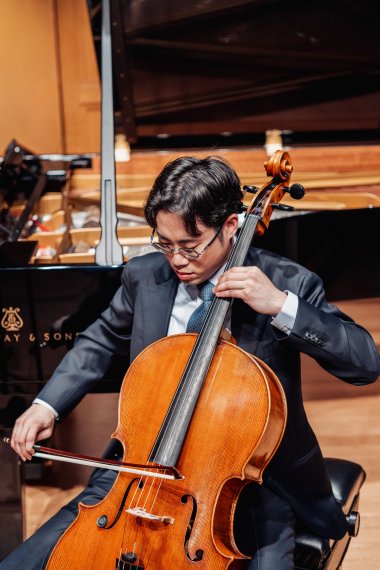
Here and throughout the program, cellist Yoshika Masuda produced a mellow, full tone. Although Röntgen was also a pianist, he made the piano a supporting actor in this piece, subordinate to the strings. At the keyboard, HyeJin Kim fulfilled that role with subtle restraint.
A nervous, repeating figure first heard in the viola part (played with delicate understatement by Meredith Crawford) occurs throughout the four movements as a unifying gesture. Yes, at moments the music sounds more suitable for a 1920s Berlin café or a film score, but it bears a passing and appealing resemblance to another belated Romantic, Richard Strauss, who can hardly be considered forgotten.
Salastina runs several programs to encourage and support young composers, and Nicholas Edwards wrote his new piece Currents as part of its Sounds Promising program in 2024–2025. Nature inspires most of Edwards’s music. His training as an ecological biologist gives him a special insight into natural processes and settings.
Edwards wrote Currents after a trip to the Channel Islands. Rather than a precise representation of what he saw there, his first attempt at a quintet reflects the changing moods of the scene and his own emotional response.
Three movements titled “Froth,” “Tide,” and “Roil” employ sliding figures in the strings to imitate the cries of seagulls and other birds. Other episodes record the sensation of moving through fog and traveling home on the ferry on a choppy ocean. While Currents often feels stylistically disjointed and in search of a strong narrative voice, it is the work of a serious artist with a special story to tell.
Schumann’s Piano Quintet brought the concert to a brilliant finish. The granddaddy of piano quintets, it was composed in five feverish days in 1842 and dedicated to Schumann’s wife, pianist Clara Wieck Schumann. Here, the piano stepped forth into the spotlight, and Kim took full control from the opening measures.
With Maia Jasper White taking over the first-violin seat, the ensemble played with passion and total confidence, displaying an affectionate musical camaraderie developed over a long period of performing together. Full of the joy, exuberance, and youthful enthusiasm that Schumann poured into one of his greatest chamber works, Salastina’s performance gave the Quintet an orchestral richness and depth.
The numerous fugal passages began with incisive attacks and proceeded with beautiful clarity of line. Familiar the music might have been, but it sounded new and fresh.