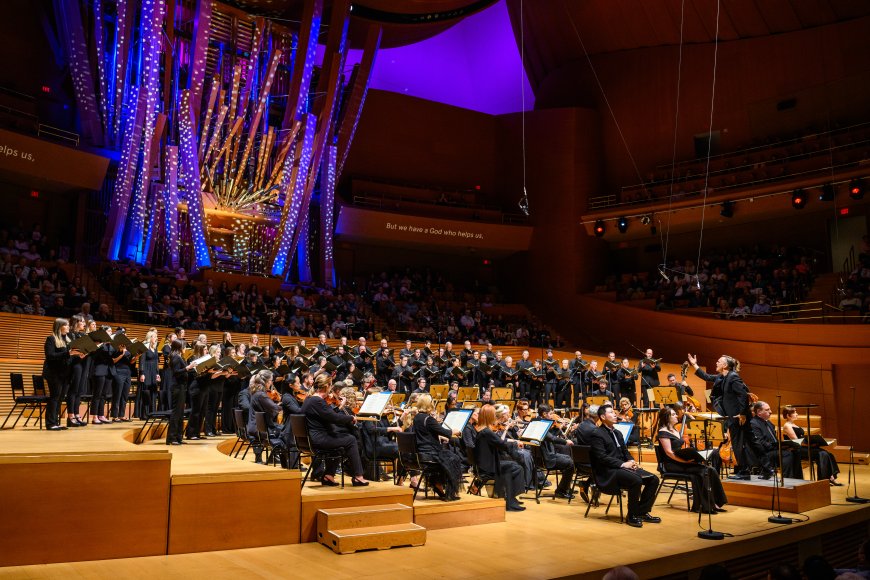
Mozart’s oft-heard Requiem might have received top billing at Los Angeles Master Chorale’s concert last Sunday. But what packed Disney Hall was the west coast premiere of Fanny Mendelssohn Hensel’s oratorio, Scenes from the Bible.
More affectionately known as the “Cholera Cantata,” this long-forgotten work, composed nearly 200 years ago, has found new life and relevance in the post-COVID era.
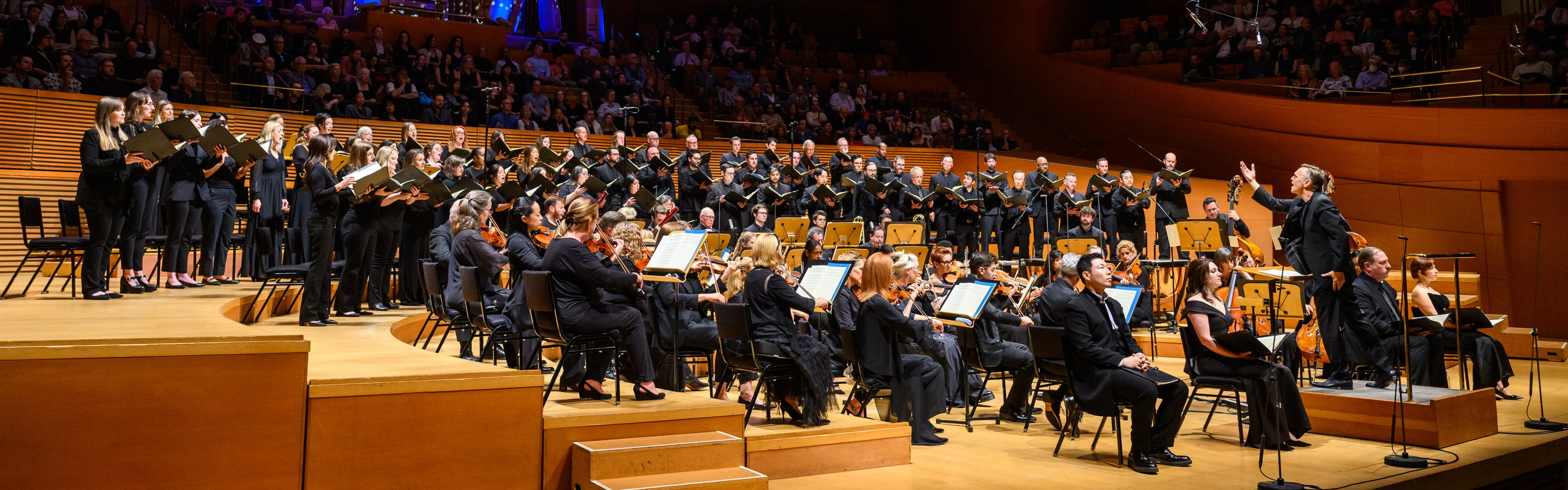
Under the direction of its savvy Artistic Director Grant Gershon, the Chorale’s large forces gave this surprisingly cheerful work a polished, musically astute, idiomatic, and engaging performance — the type for which the group has become justly celebrated. The LA Master Chorale Orchestra and four vocal soloists (soprano Addy Sterrett, mezzo Jessie Shulman, tenor Kyuyoung Lee, and bass Steve Pence) contributed to the evening.
Scored for a classical chamber ensemble, with the addition of three trombones, the Cantata shows a strong influence of the music of J.S. Bach in its emotional restraint and structure. The orchestration never overwhelms the voices, and Gershon was careful to maintain a harmonious balance. Brief recitatives and ariosos alternate with choral episodes.
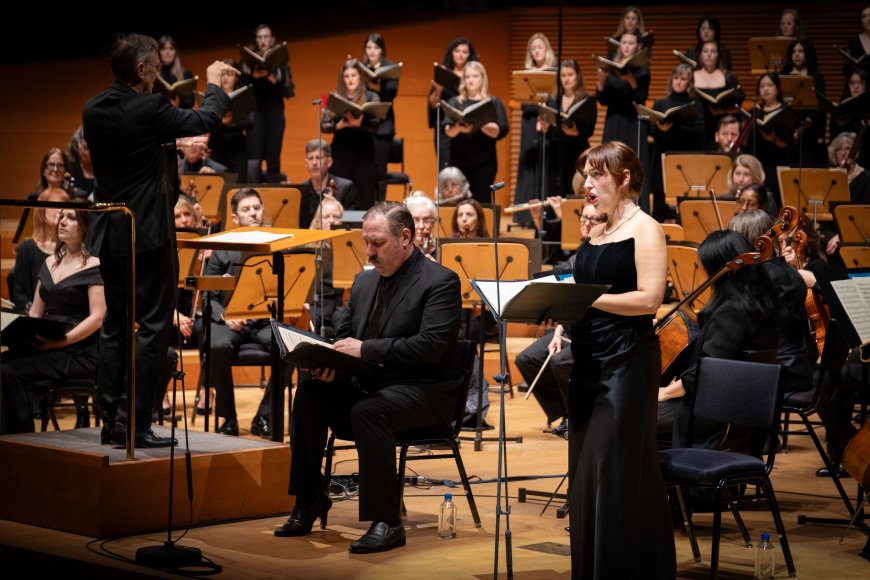
Mendelssohn gave the tenor the only real aria, and Kyuyoung Lee, a member of the LA Master Chorale, made the most of it, employing clear diction and a pure tone. Soprano Addy Sterrett was the evening’s star, clearly at home with the style, her voice shimmering with only the slightest vibrato that heightened the emotional impact. Despite its large size, the chorus sang with remarkable focus, each section sounding as one flowing voice, perfect in intonation and tone.
The Cantata’s message focuses on compassion and rejoicing in God’s love rather than on the immediate misery of illness and misfortune. Only in the “Mourning Chorus” do feelings of grief emerge, immediately answered by the healing “Chorus of the Blessed.” The final chorus moves into the affirmative C-major, providing hope and affirmation.
Fanny Mendelssohn (1805-1847) had the misfortune (as a composer, at least) to be born as the older sister to her much more famous brother, Felix. Like him, she composed prolifically, but because of her gender, her father supported Felix while belittling Fanny’s “musical occupations” as “an ornament” for domestic consumption. Felix also dismissed her ambitions as inappropriate for a young woman of her station. However, Fanny’s husband, Wilhelm Hensel, was a painter and actively supported her creative work.
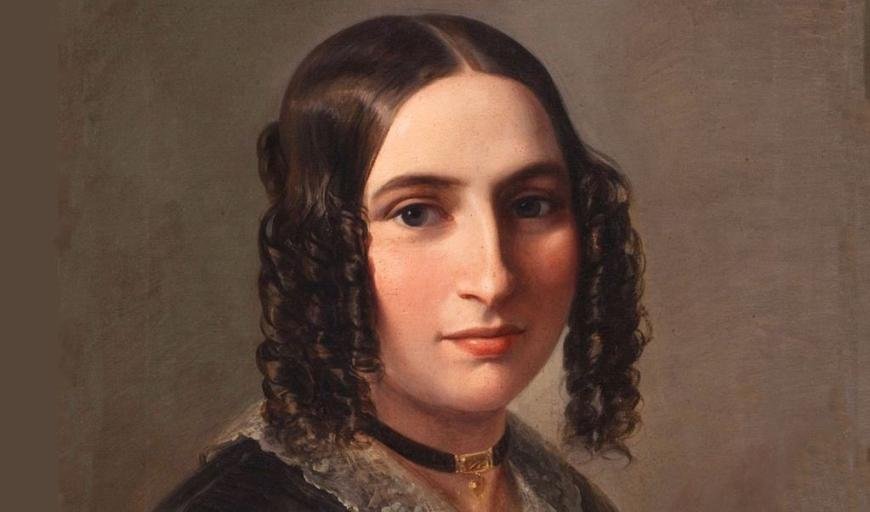
When a cholera epidemic engulfed her hometown of Berlin in 1831, Fanny bravely organized a series of private house concerts at which several of her own choral works were performed. The most substantial of these was Scenes from the Bible (Oratorium nach Bildern der Bibel), a setting for chorus, vocal quartet, and orchestra of biblical texts taken from the Psalms, Isaiah, Job, 2 Maccabees, 2 Timothy, and Revelation.
This score was not published or publicly performed in her lifetime, or long after. Only in the 1980s did it resurface in a Berlin archive. A few years later, Fanny’s diary was published, in which she refers to her “Choleramusik” which put all the pieces together.
COVID only further stimulated interest in this major work by a major — and long underestimated — nineteenth century composer.
In-performance, following a cantata about a pandemic with a requiem may seem ghoulish, but it proved a wise programming choice on April 19. Saying something new about Mozart’s work, one of the most familiar and perhaps over-exposed items in the choral repertoire, is no easy task. But Gershon made it sound fresh in an assuring and moving performance.
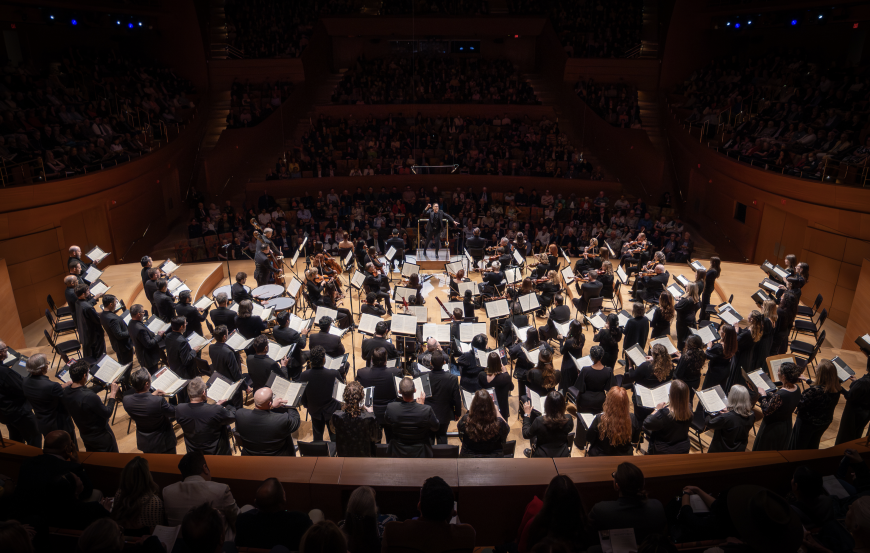
Gershon also made some small tweaks to the score, reducing some orchestral doublings of the solo quartet and removing some of the harmonic passages introduced by Franz Xaver Süssmayr into the sections Mozart left unfinished before his death.
As Gershon commented from the podium, the Requiem could have been “the first piece of Mozart’s middle period,” and it shows us how far he might have gone had he lived beyond the tender age of 35. He and Fanny Mendelssohn — who passed away at age 41 — left us too soon.