Handel’s Messiah is an annual ritual during the holiday season. Like buses, if you miss one, there will always be another coming down the road.
There may have been no special reason for a critic to drop in on the Los Angeles Master Chorale’s annual Messiah at Walt Disney Concert Hall on Sunday evening, Dec. 21, just to take its temperature, but this is a tremendous ensemble and I can report all is well. Very well.
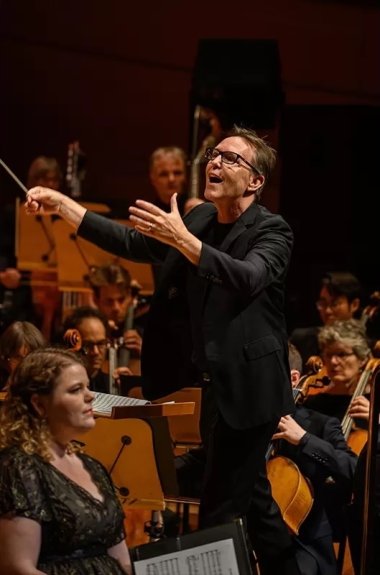
Working without a score — you can bet he knows it cold after so many Messiahs — conductor Grant Gershon sent the opening Sinfonia barreling along at a comfortable tempo and directed everything after that with a combination of exhilaration, grace, and calm assurance. The most daring thing that Gershon tried was taking the final “Amen” chorus at an unusually slow tempo, creating more of a state of contemplation than exaltation at the close.
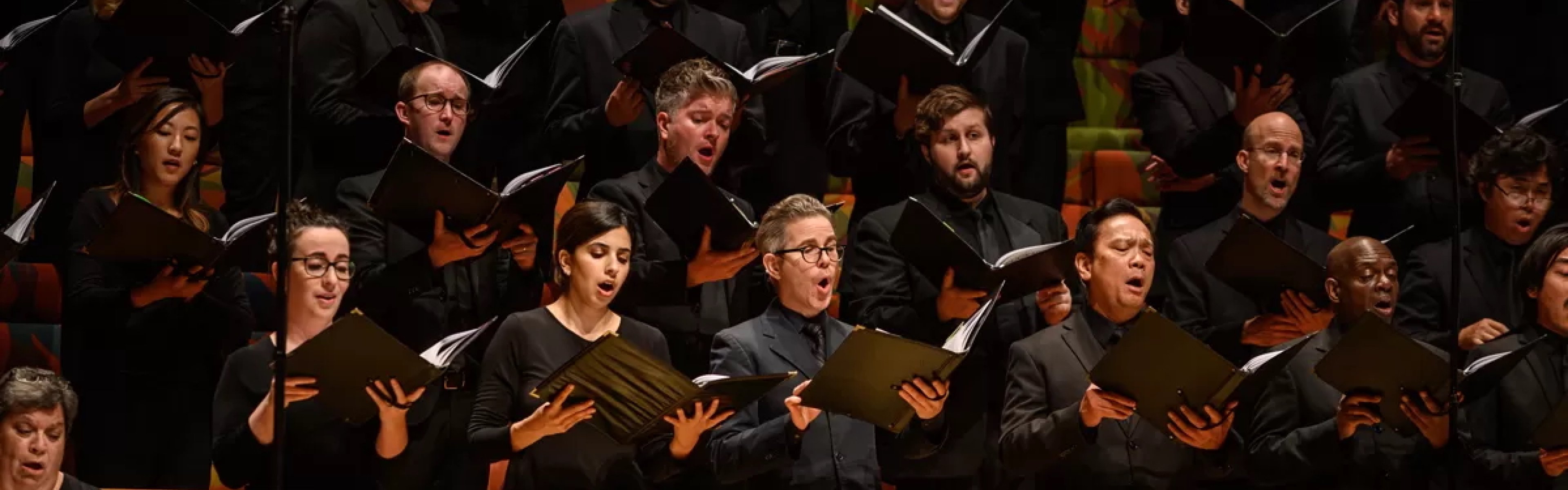
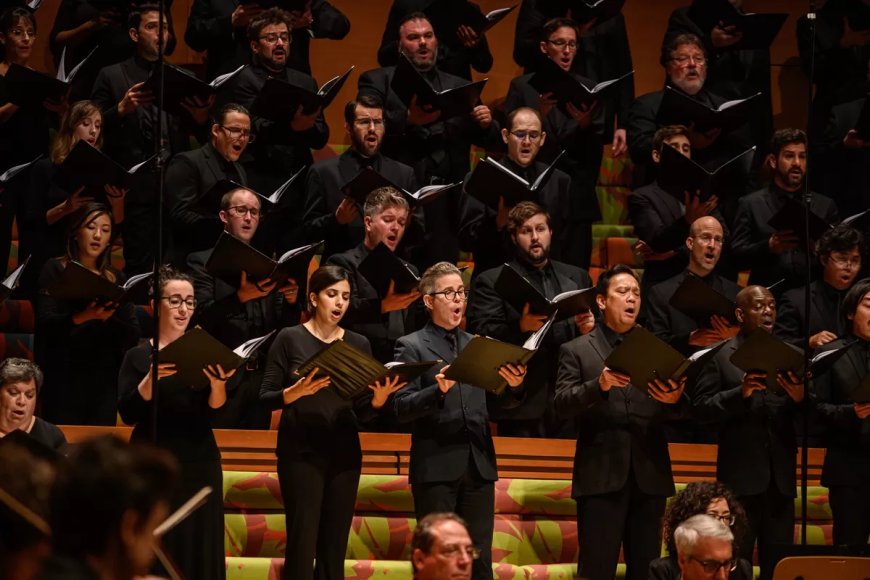
The forces in play straddled the middle ground in numbers between period-performance small ensembles and huge Victorian behemoth forces — 29 players in the orchestra and 39 singers from the Master Chorale – a very satisfying compromise. For those who care, the performance used a somewhat compressed edition of the score with cuts in sections 34 through 39 in Part Two and sections 49 through 52 in Part Three. Nothing unusual there; Messiahs have come in all sorts of sequences over the centuries, and these were traditional cuts.
There were no supertitles or provided texts, and none were needed, so clear was the English diction of every vocal soloist and every singer in the Chorale. Impeccable diction is a hallmark of the Master Chorale and the ends of phrases in numbers like “All we like sheep” and “He trusted in God” were clipped, which made for even greater intelligibility. The Master Chorale seemed specially attuned to the acoustics of Disney Hall, which equally illuminated and projected their bright, cheerful singing in “And the glory of the Lord” and their light, fluffy, gentle delivery of “For unto us a child is born.”
The ever-versatile soprano Anna Schubert, often heard in contemporary opera in this region, offered a bright, gleaming timbre in this setting, with a solid grip on the florid passages. Lindsay Patterson Abdou displayed a light, sweetly colored mezzo-soprano voice that could sometimes be mistaken for that of a soprano, plaintively intoning the words to “He was despised.” Tenor Jon Lee Keenan also displayed a light-colored tone with plenty of amplitude in “Ev’ry valley shall be exalted.” Bass Chung Uk Lee’s voice shook mightily and clearly in “Thus saith the Lord” while hanging on tight through the typically speedy pace of “Why do the nations so furiously rage together” As a group, the soloists were well-balanced.
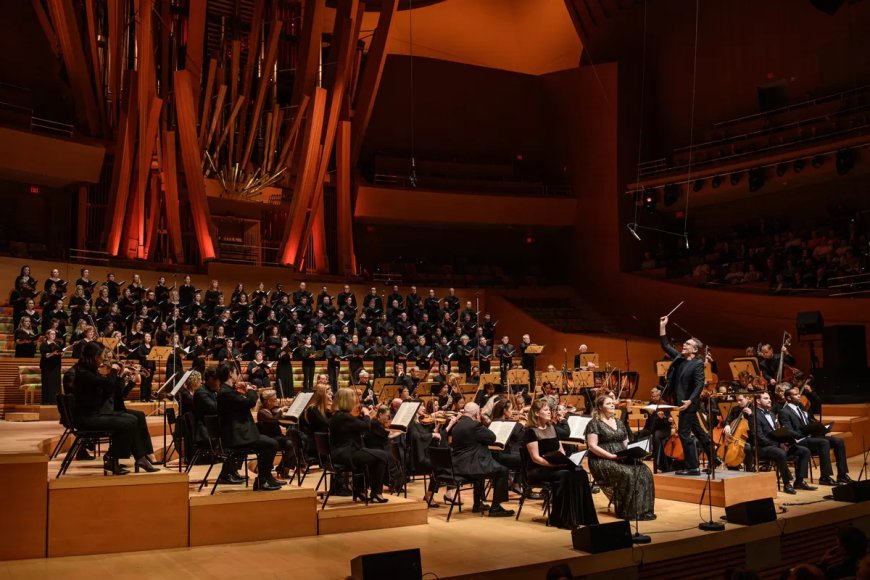
As always, the listener-interactive role in Messiah was observed as the run-up to the close of Part Two — a string of musical pearls beginning with “Why do the nations” — was capped with the audience rising to its feet in the “Hallelujah” Chorus. Given its placement in Messiah nearly three-quarters of the way through, it occurred to me that this is the equivalent of the seventh-inning stretch in a baseball game. A handful of listeners, perhaps impatiently anticipating the 43rd annual Messiah Sing-Along that would occur at Disney Hall the following evening, raised their voices quietly before hanging back.
If something has to be repeated in December, year after year, you could do a lot worse than this indisputable masterpiece, done to a state-of-the-choral-art turn by the brilliant Master Chorale.