

These days, “pastiche” is a dirty word. It has come to suggest laziness; imitation stripped of historical context and ethical stakes. But for composer Osvaldo Golijov, nothing could be further from the truth. On Ever Yours, his new album out Jan. 16 from Phenotypic Recordings, pastiche becomes essential to the music’s aims, an homage serving as a framework to explore ideas about familial ties, musical and cultural inheritance, memory, and faith.
The resulting music is both accessible and emotionally resonant, rewarding repeated listening. Golijov does not reference the past as a signifier; he breathes contemporary life into the aesthetics that have shaped Western art music for centuries. In this, he is extending a tradition embraced by Benjamin Britten, Igor Stravinsky, Johannes Brahms, and Ludwig van Beethoven — composers who understood composition as an ongoing correspondence with the past.
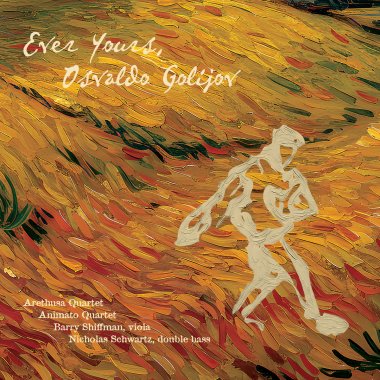
The album’s opener, “Ever Yours,” was written in memory of violinist Geoff Nuttall. It is both an elegy and a celebration. Simultaneously, the piece gives a nod to Joseph Haydn’s String Quartet in D minor, Op. 76, No. 2. Golijov uses Haydn’s musical language as the foundation for “Ever Yours,” influencing how phrases unfold, harmonies accumulate, and the piece moves forward. The music feels familiar yet unmistakably personal in Golijov’s own voice.
He encourages the listener to experience memory as part of the piece’s elegiac heart. The final moments of the piece arrive abruptly, leaving the listener suspended between satisfaction and breathlessness. Keeping in mind the work’s dedication, the unresolved close is an effective choice: The music ends because the conversation cannot continue.
Throughout the album, a balance of inheritance and immediacy remains intact even as Golijov draws from a wide range of sources. In “Tintype,” for instance, Golijov treats his materials with gravity and restraint, allowing a traditional Hebrew melody to emerge from a haze before briefly coming into full focus, then receding again. His harmonic language shifts fluidly. He draws on traditional harmony when it serves the narrative, abandoning it when it does not.
“Tintype” evokes the emotional gravity of late Romantic lyricism, yet it remains unmistakably contemporary, a series of expertly wrought vignettes. “K’vakarat,” taken from the Yom Kippur liturgy, offers a solid counterbalance to earlier moments with its slower, more timeless invocation. Its refrain culminates in what Golijov describes as a wrestling with the meaning of the prayer itself. “Esperanza” is the album’s closing work. It distills the previous hour of music into a single gesture, centering melody and simplicity, offering hope and quiet resolution.
What stands out over the course of Ever Yours is the degree of care that permeates every aspect of the album. Golijov is remarkably consistent in creating music that feels expansive without excess. The music on this album often sounds larger than its forces might suggest, the result of a finely honed ear for depth, texture, and proportion. Even at its most complex, the music remains approachable, inviting the listener into its emotional terrain. Technique is everywhere present and serves the music’s larger expressive aims, allowing moments of joy, gravity, and reflection to coexist without strain. Ever Yours is a single, sustained meditation that feels both grounded in tradition and fully alive in the present.