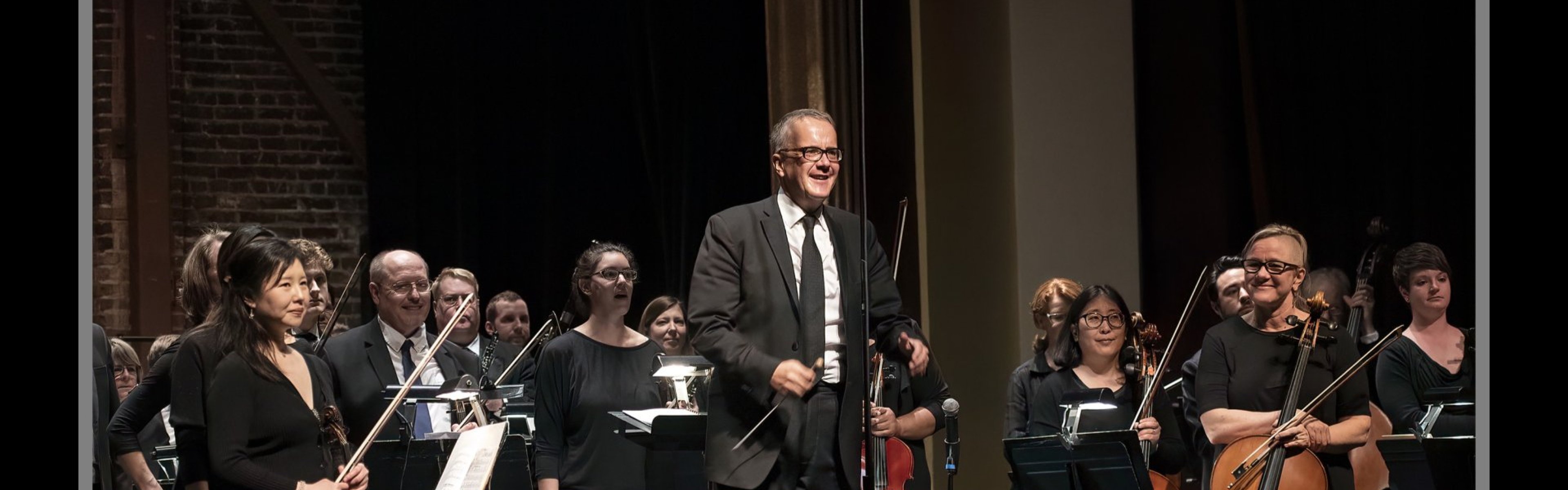
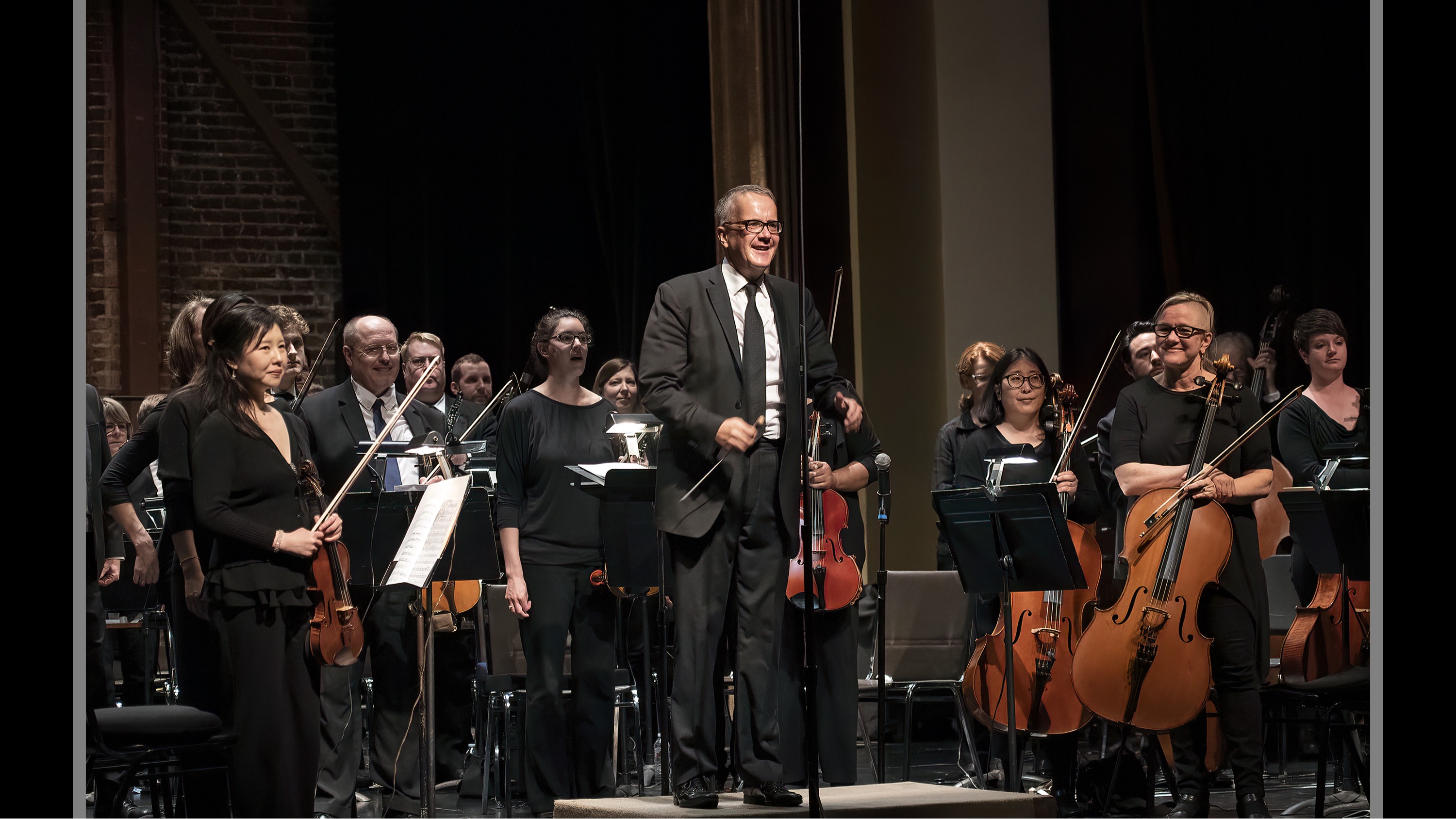
Hornist Jesse Clevenger proved he is a force to be reckoned with as soloist with the Vallejo Symphony this past Sunday at the Empress Theatre. Clevenger served as soloist for two pieces on the program: Benjamin Britten’s Serenade for Tenor, Horn, and Strings and the world premiere of a concert work by the film composer John Williams, Serenade for Horn and Strings.
The story of how the Vallejo Symphony came to premiere a work by the 93-year-old Williams merits retelling. Clevenger, who spent two years with the San Francisco Symphony, is himself the son of two horn players. His father, Dale Clevenger, served as principal horn of the Chicago Symphony Orchestra until 2013, and his mother, Alice Anne Render, often played as a ringer with the same orchestra. Back when Williams conducted annual concerts of his music with the CSO, the family formed a lasting friendship with the composer. After Render’s passing in 2011, Williams composed Serenade in her memory for her husband, Dale Clevenger. The elder Clevenger, however, never premiered the piece — a fact that Jesse attributes to the emotional toll of the loss. When the younger Clevenger agreed to serve as soloist for the Britten, conductor Marc Taddei was excited to program the Williams premiere (almost 15 years in the making) alongside it.
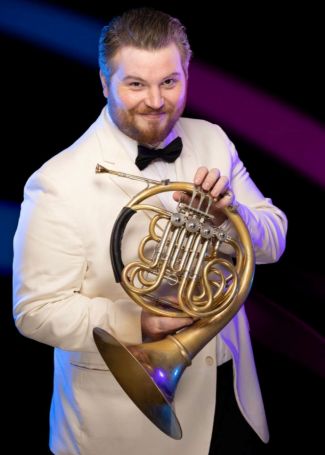
Less an elegy than a condolence, Williams’s work begins with chorale-like strings slowly building to a series of prolonged, bittersweet appoggiaturas. Above this tender harmony enters the lyrical horn solo, delivered with balanced grace and sincerity by Clevenger, whose personal connection to the composition was evident throughout the performance. As if his film scores had not already so exquisitely demonstrated this, the subtleties in Serenade evinced yet again the degree to which Williams possesses a particularly intimate knowledge of the horn. Had it been a longer work, the persistent warm and sentimental affect might have become monotonous. Because the pieces lasted less than 10 minutes, and given the circumstances of its composition, these aspects seemed rather to express the state of suspension that grief can often bring about.
It was in Britten’s Serenade, however, that Clevenger’s virtuosity came into full view alongside tenor soloist Salvatore Atti. Any tenor who sings Britten does so in the domineering shadow of Peter Pears, the composer’s partner and longtime collaborator. But Atti held his own, bringing a clear and unique vision. Particularly striking was the impassioned sensitivity with which he sang the seventh movement, a sonnet by John Keats. Yet Atti’s artistry was at its strongest in partnership with Clevenger, notably in the interplay of tenor coloratura and horn filigree in the sixth movement.
Though his valveless natural horn calls that open and close the cycle left little to be desired, for Clevenger’s part, it was in the fourth movement, an elegy by William Blake, that he truly left his mark. His somber tone stood in poignant relief against the cold, pale strings that open the song. This deeply affecting moment was intensified with Clevenger’s chilling execution of the end of the song: the horn sounds its round, open tone in harmony with the strings before the hornist pushed his hand into the bell, creating a sneering, nasal tone as the harmony darkens from major to minor. Clevenger understands the narrative implications of Britten integrating this essentially Mahlerian gesture, emphasizing the grotesque character in his performance of this bleak song.
In the subsequent movement of the Britten, the strings succumbed to what would plague them for the entire afternoon. While their legato, drawn bow strokes were consistently polished, the short, bouncing bow movements (i.e. “off-the-string” playing) repeatedly revealed deficiencies in intonation and rhythmic accuracy as a section. Sadly, this was the first impression of an otherwise enjoyable concert, since the opening piece was C.P.E. Bach’s Symphony in D Major, which begins with tutti off-the-string arpeggios in (what should have been) unison. Similar problems beset the final work on the program, Haydn's Symphony No. 96, “Miracle,” but to a lesser extent.
Both 18th-century symphonies would have otherwise benefited from the “old” string layout, with first violins on the left and second violins on the right. But the acoustics of the converted movie theater wholly swallowed up the second violins, unfortunately leaving the stereo effects of Bach and Haydn to the imagination. Still, by maintaining the rhetorical drive behind the works, Taddei’s enthusiasm was enough to overcome these sonic troubles. He skillfully emphasized the rhythmic vitality and drama of Bach’s Sturm und Drang tropes, to the greatest effect in the third movement. Most impressive was his ability to draw out the juxtapositions of genre in the Haydn Minuet. In the trio, a folksy coarseness was set against old-style Baroque rigor, all in contrast to the high-Classical style of the main minuet theme, which truly danced. There are plenty of full-time period-instrument ensembles that would not play a minuet as “historically informed” as Taddei and the Vallejo Symphony did.