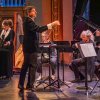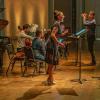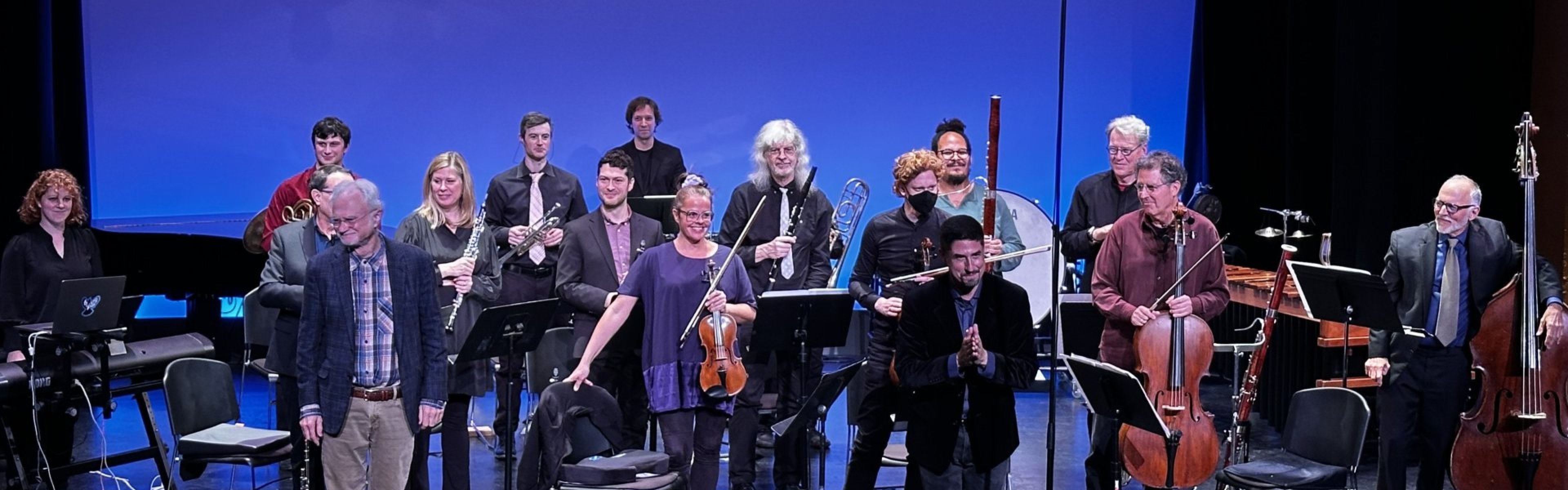
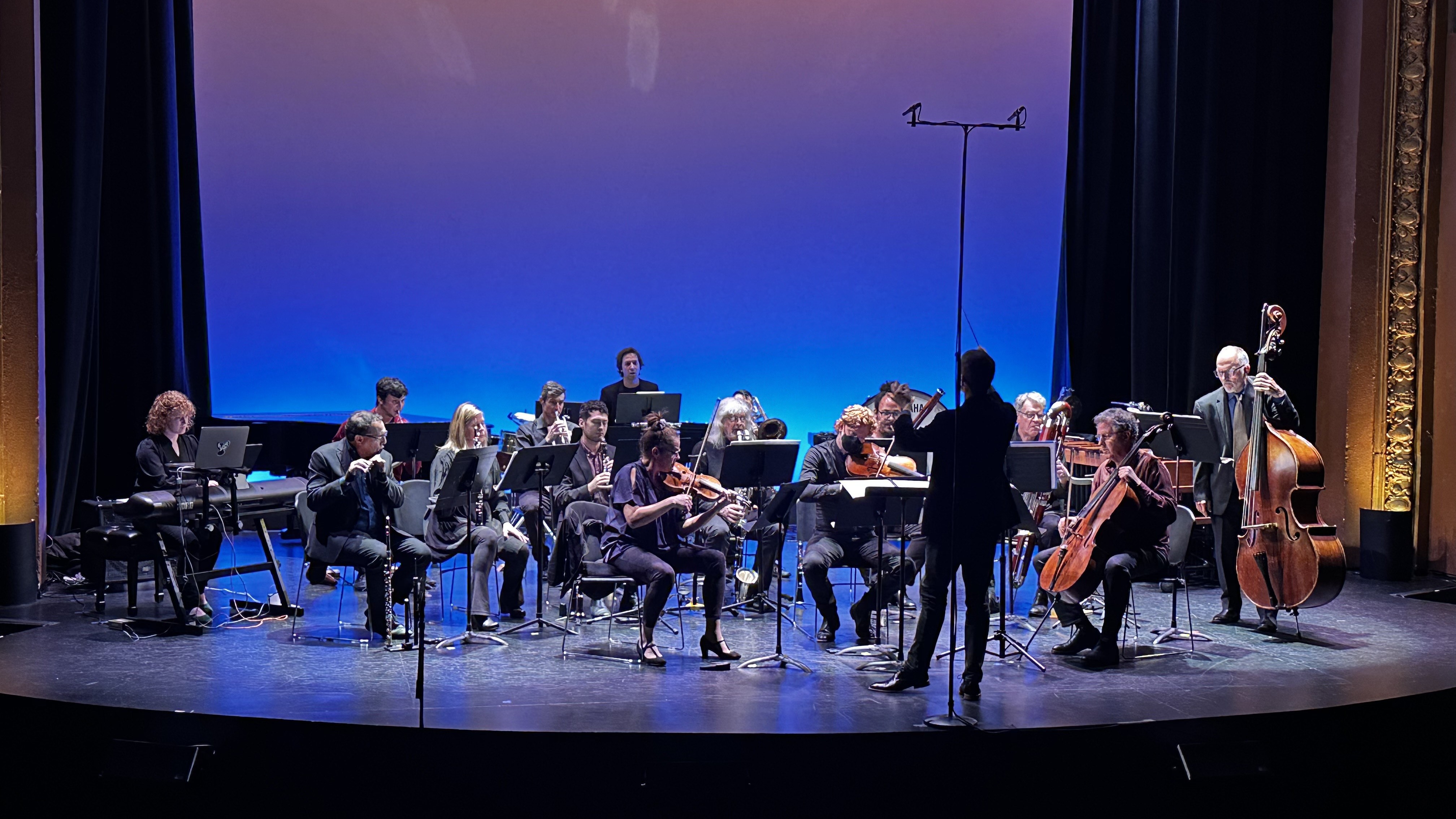
With Samuel Adams having gone into his father John Adams’s line of work, the two have shared more than one concert program. That happened again in San Francisco Contemporary Music Players’ season opening concert on Sunday at the Brava Theater.
Only one piece fully lived up to the “Exuberance” program title: John Adams's Chamber Symphony. Love it or hate it for its brashness, kitsch, and eccentricity, the work is a concert staple for good reason. SFCMP offered a crisp, wonderfully raucous interpretation of the energetic, cartoonish outer movements. Although the ensemble could have pushed the work’s riotousness even further, a handful of soloists were able to shine — most notably violinist Hrabba Atladottir, who brought both intensity and subtlety to her playing. Clarinetist Clayton Luckadoo similarly stood out on the high E-flat clarinet, his tone perfectly towing the line between the instrument’s “toy-like” characteristics and ability to be a mature musical force.
The central movement of the piece — one of Adams’s more surreal conceptions — is challenging to balance and give a sense of direction. That was the case this evening as well. Many of the woodwind doublings ala Ravel's Boléro weren’t in-sync enough for the intended “organ sound” to land, contributing to an overall muddiness. Had the group given more shape to the dramatic arc of the movement, these minor grievances would have been less bothersome.
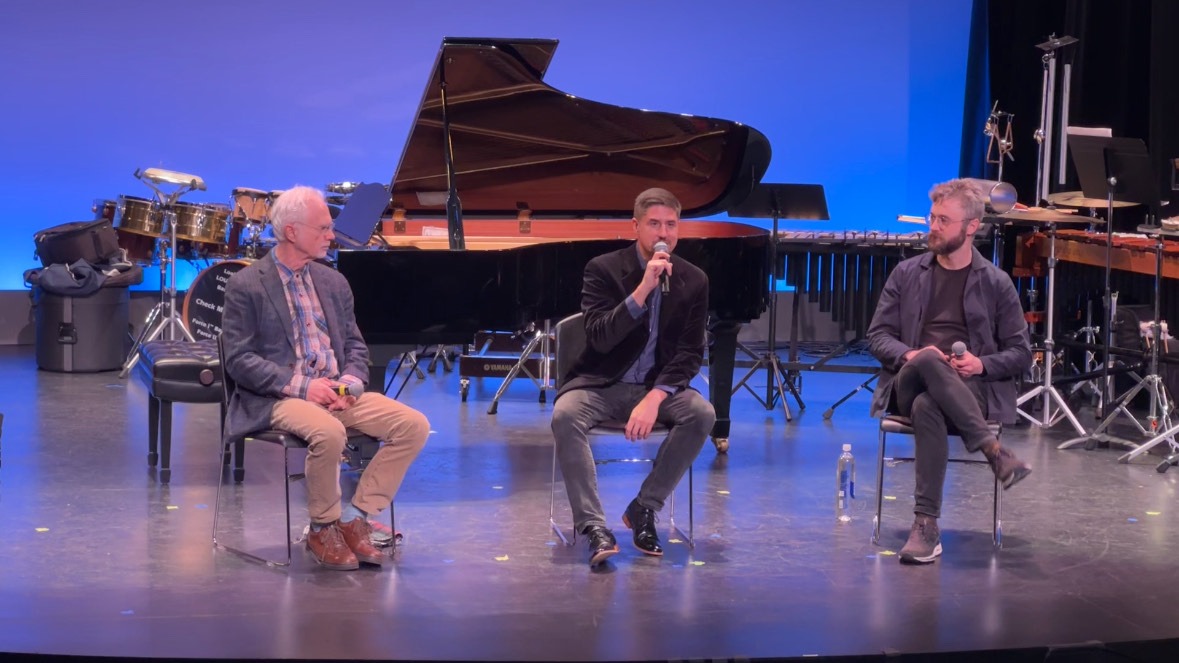
Before the concert, the elder Adams spoke to the audience about the difficulty of maintaining the dynamic balance between synthesizers and live instruments in concert settings. Here, the balance between the two was perfect, to wonderful effect in the middle movement.
However, Adams’s remark felt eerily prophetic for Terry Rileys Dias de los Muertos, performed by guitarist David Tanenbaum and percussionist James Beauton. The combination of classical guitar and percussion is troubled from the start, given the guitar’s soft nylon strings and the percussion’s nearly unlimited dynamic range. In this performance, the guitar was amplified to compensate for the disparity, but the effect was simply too strong — string noises and shifting hand positions became far too audible, and ordinary playing drowned out the mellow marimba tones. In moments of rhythmic back and forth, Riley’s ideas came through, but much of the superimposed polyphony was lost.
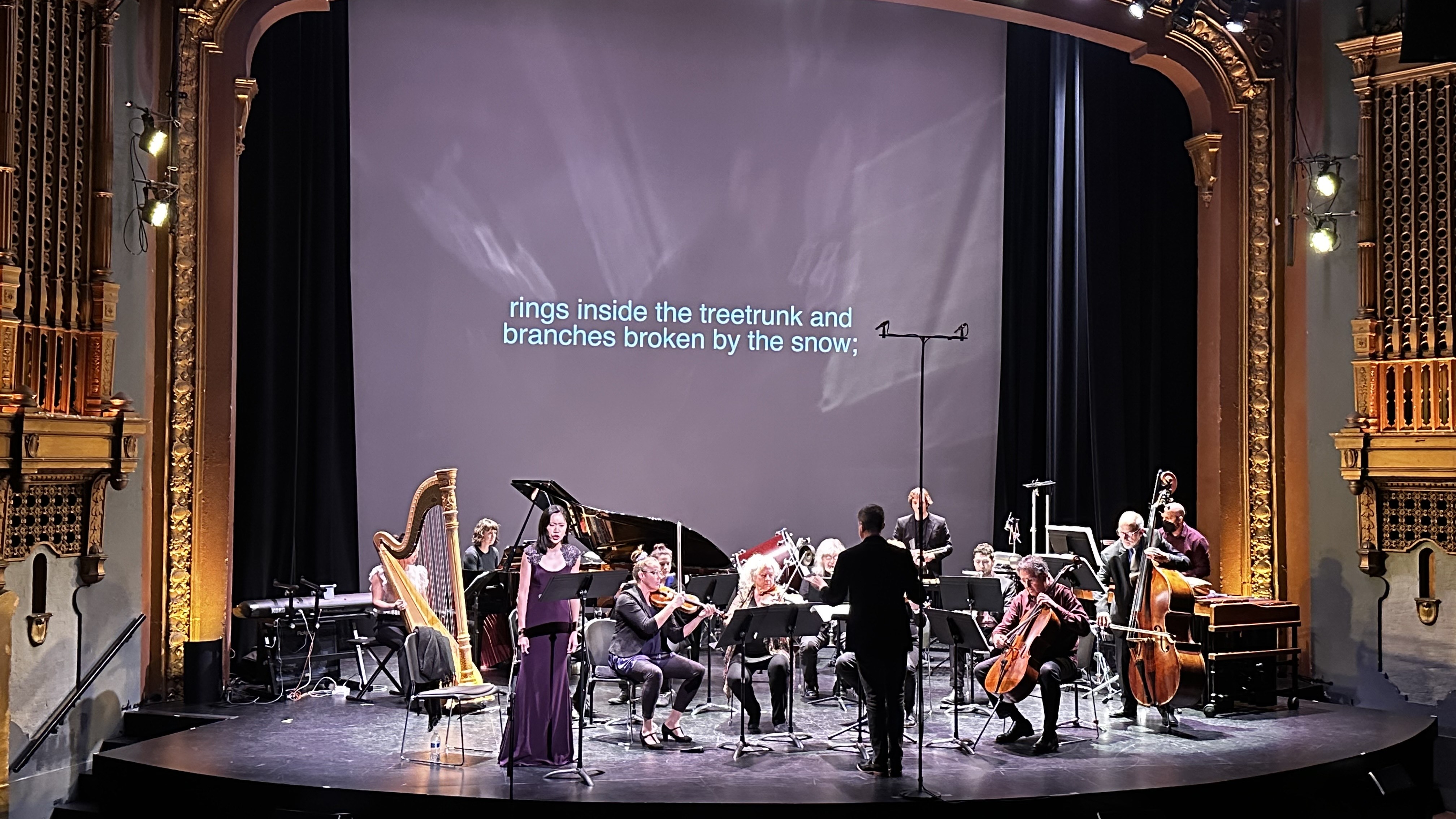
The first half of the program featured the west coast premiere of Samuel Adams’s First Work, the composer’s first major composition for solo voice. The piece is cleanly orchestrated, filled with engaging textures, sensuous lines, and shimmering ensemble timbres. But the piece does read as a first work for voice. The voice part sounds “instrument-like,” centering the singer’s tones more than expressivity. The younger Adams doesn’t seem to trust that the solo voice will hold its own in the musical discourse — as the music began to burgeon, the ensemble often drops to almost nothing in order to make room for the voice.
Still, these transitions were artfully shaped by director Eric Dudley and soprano Winnie Nieh’s performance left little to be desired, with a lush tone, nuanced expression, and clear diction across the three songs. Nieh perfectly floated over the frequent doubling of her vocal line by the ensemble, balancing blend and lucidity. While the piece was filled with many special, almost sublime moments, they failed to congeal into a distinctive whole.
While Samuel Adams’s father struck gold with his first major vocal work, Nixon in China, John Adams is the first to admit his own vocal writing has matured significantly since then. Although First Work is no Nixon in China, it is a promising entrée to vocal writing for the younger Adams. If the lessons learned here make his vocal writing as dynamic and clever as his instrumental music, count me as excited to hear “Second Work.”