Minimalism comes in many flavors. The stylistic movement is as varied as the composers who’ve shaped it over the last 60-plus years.
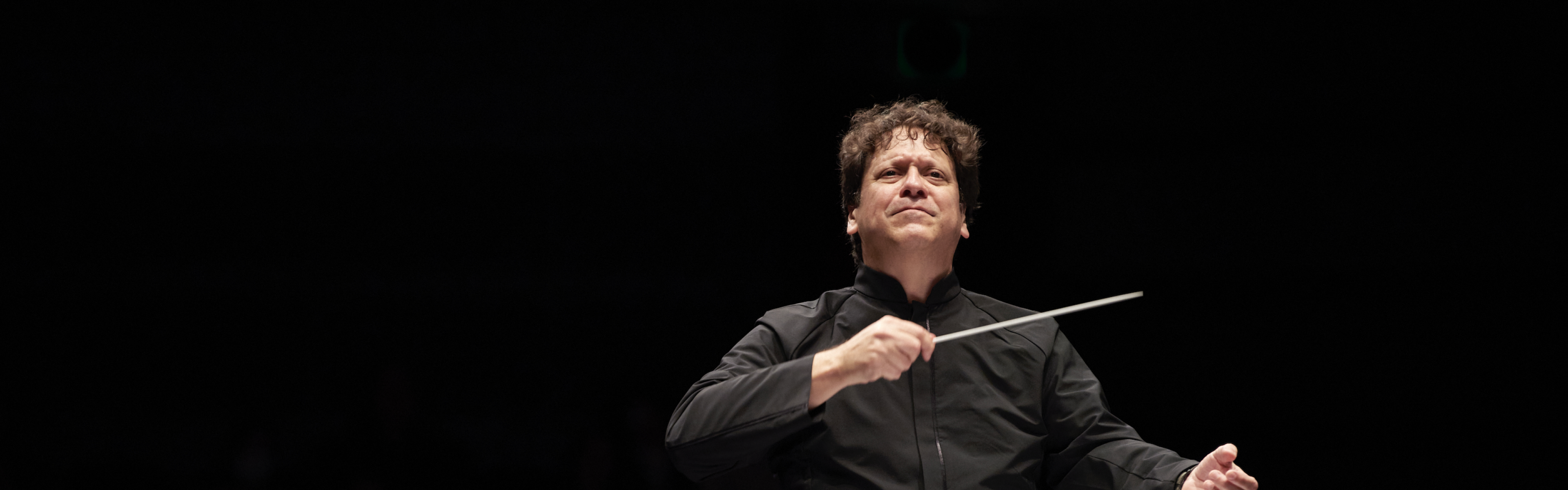
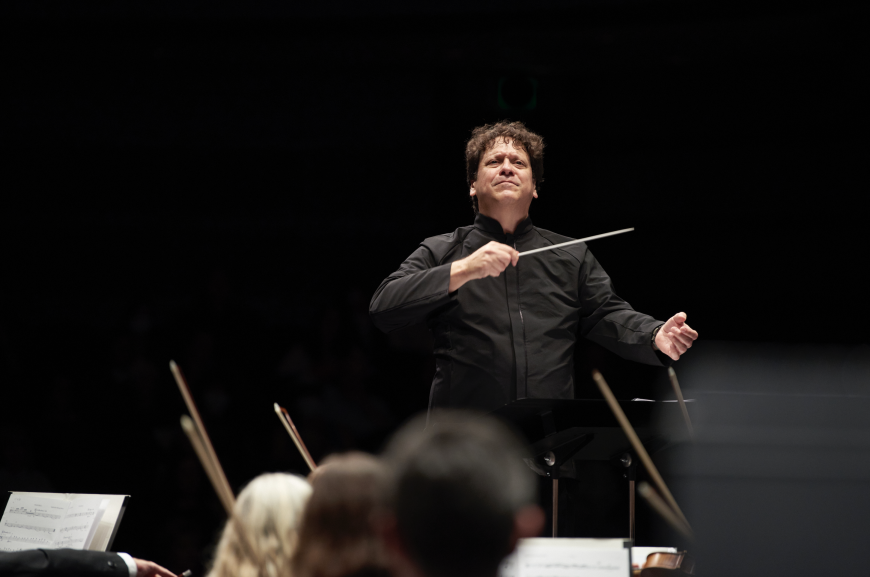
For the California Symphony’s “Northern Lights” program, presented at The Lesher Center for the Arts on March 21, Artistic and Music Director Donato Cabrera included works by Estonian composer Arvo Pärt and Ukrainian composer Valentin Silvestrov.
Pärt is unquestionably a minimalist composer, and he’s sometimes grouped with John Tavener and Sofia Gubaidulina as a “holy minimalist.” Silvestrov’s quiet, self-effacing Stille Musik (Quiet Music), written for a small string orchestra and just ten minutes long, might also qualify as minimalist.
The first movement, “Walzer des Augenblicks” (Waltz of the moment) is a strangely off-kilter waltz, an effect Silvestrov achieves through changing the tempo in nearly every phrase. Its mood is deeply nostalgic, conjuring up visions of women in long dresses and Viennese ballrooms.
That mood pervades the second movement, “Abendserenade” (Evening serenade), as well. Its main theme bears some melodic and rhythmic resemblance to that of the first-movement waltz. It’s off-kilter because it’s predominantly in 3/8, but each phrase includes a 4/8 measure.
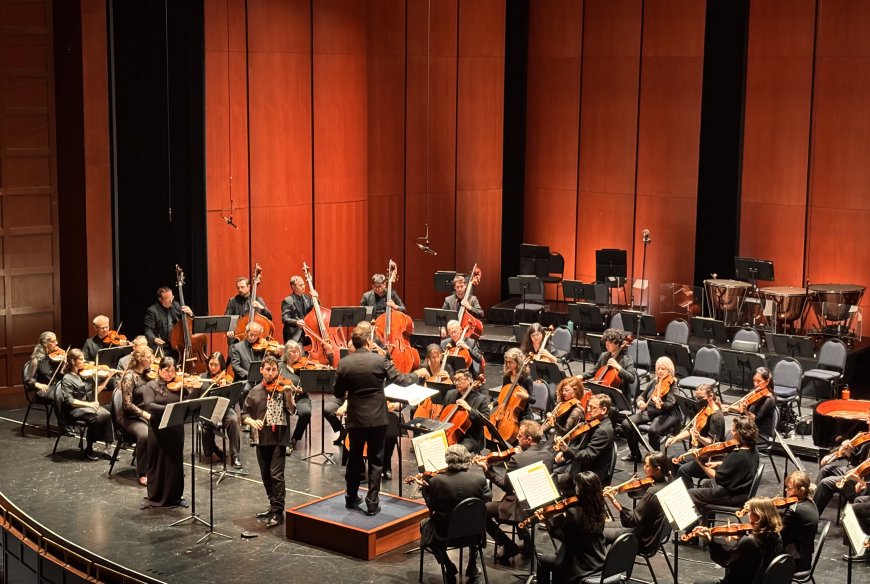
The final movement “Augenblick der Serenade” (Moment of the serenade) is in much the same mood and style. Silvestrov intentionally makes it sound exhausted, putting the brakes on any momentum through the markings in the score. Cabrera and his small band gave the work a fine performance.
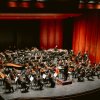
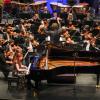
Pärt’s Tabula Rasa, featuring two solo violins, prepared piano, and a large string orchestra, is written on a different scale from “Stille Musik.” Running about 25 minutes in two movements, it’s one of those works that suspends time for its audience.
In the first movement, “Ludus – Cadenza,” the solo violins, wonderfully played by concertmaster Jennifer Cho and associate concertmaster Sam Weiser, are often in opposition to each other, one playing an accompanying figure while the other flies more freely.
At points, they play in close counterpoint. Sometimes one will play in the violin’s highest or lowest register; other times it’s difficult to tell whether you’re hearing harmonics or just very, very high pitches. Sometimes they’re moving in contrary motion to each other. The thematic material expands and contracts; the movement is a set of variations.
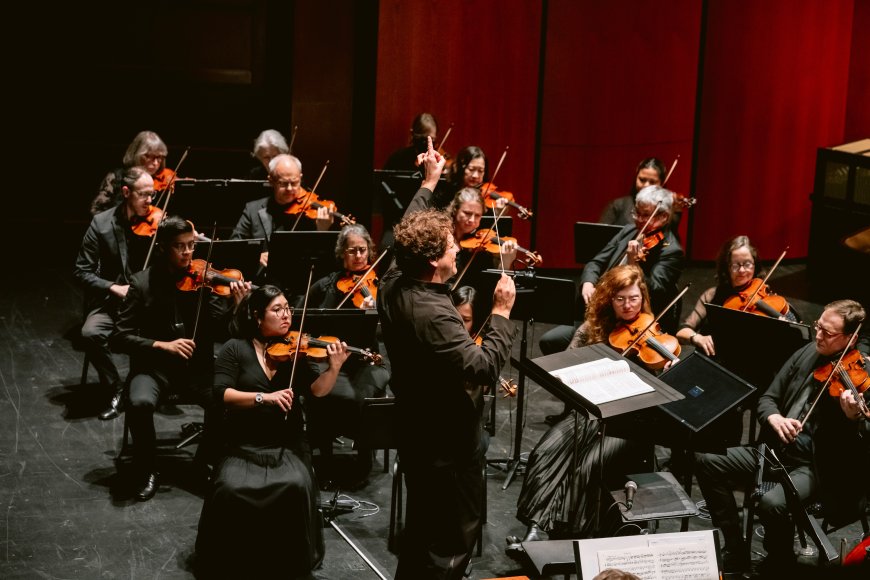
Meanwhile, the string orchestra plays metronomically in repeating rhythmic and melodic patterns, like the constant ticking of a clock. The piano — prepared with screws between the strings, giving it a surprisingly muffled, yet bell-like timbre — interjects brief, rumbling arpeggios or chords with a seemingly random intermittency. Like many of Philip Glass’s works, there’s often an undertone of dread, like that of inexplicable mysteries under a serene surface.
Toward the end, there’s a grand flurry of activity: the cadenza of the movement title, in which the two violins battle it out in wild arpeggios before settling into parallel motion for some time. The movement also includes a grand pause where the entire musical mechanism comes to a complete halt. The silence itself is shocking.
The second movement, “Silentium,” is an exercise in quietude, again with ticking accompaniment and excursions into the highest possible registers of the solo violins. Toward the conclusion, most of the orchestra goes silent, leaving only the two soloists and a single viola, cello, and contrabass. They gradually drop out as well, and the movement ends with several bars of notated silence.
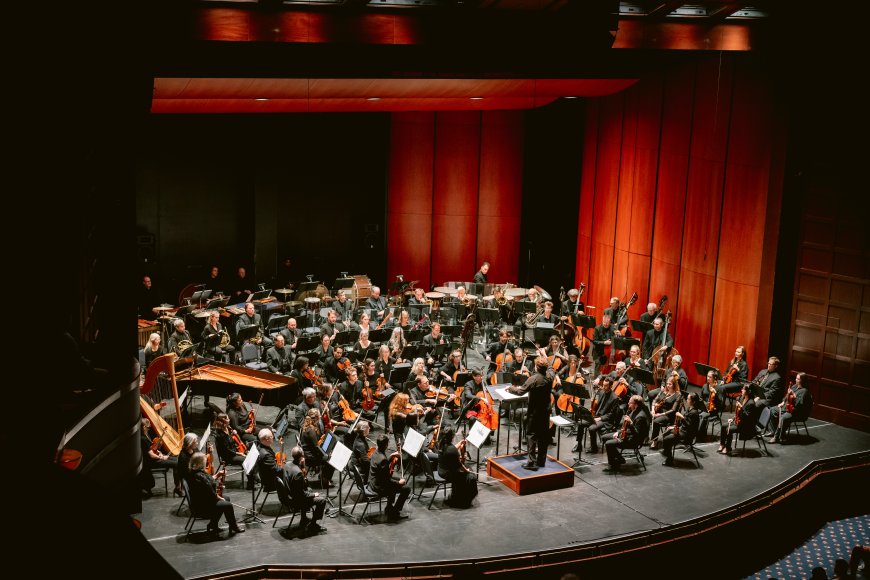
The audience reacted with the greatest possible enthusiasm, with Cabrera leading European-style rhythmic clapping. As an encore, Cho and Weiser played Aleksey Igudesman’s clever “The Soloist’s Ultimate Happy Birthday.” Cho announced beforehand that there’s a secret hidden in the work, but she didn’t reveal it afterward. The trick is, of course, that the work conceals the tune “Happy Birthday” in its rapid rotation of 13 concertos in under three minutes.
The program closed with a rousing performance of Sibelius’s Symphony No. 2 in D major, the most performed of the composer’s seven symphonies. It’s anything but minimalist, spanning over 45 minutes and written for an orchestra that has double winds and a large brass section. And its presence on the concert showed that the hidden theme was music from countries formerly under the thumb of Russia or the Soviet Union: Finland was a Russian duchy before 1917.
Cabrera brought breadth and majesty to the performance, building each movement coherently through Sibelius’s many tempo changes and shifts of mood. The dryish acoustics of the Hofmann Theatre allowed every instrument, and the interplay among the winds, especially, to be clearly audible.
The conductor’s long experience in the hall has given him an admirable ability to bring out the colors of the orchestra and create that warmth in a space with limited resonance. Highlights included the plangent opening of the second movement and its emotional trajectory from consoling to threatening to sheer desolation. The third-movement scherzo bustled excitingly, in contrast to the warmth of the trio. The brass played with a marvelous blend of power and beauty throughout.