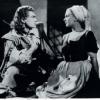
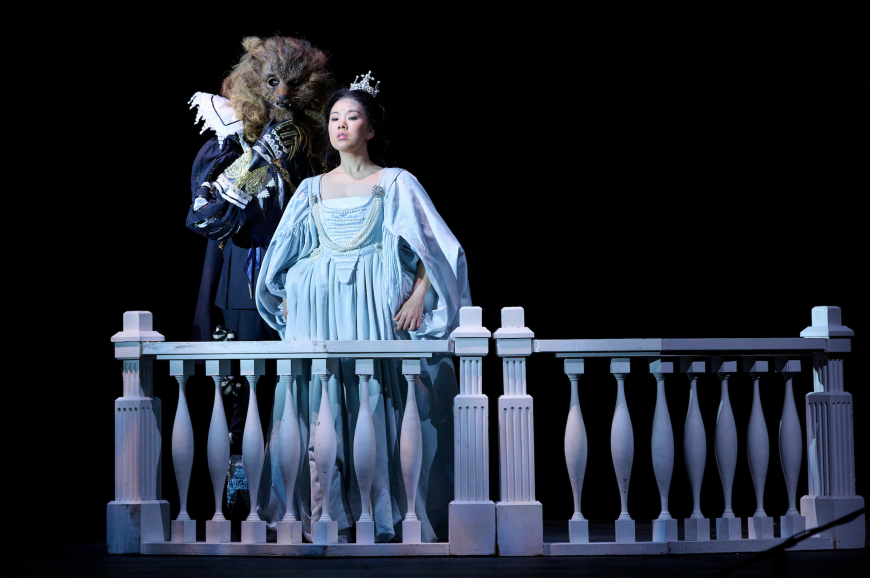
Jean Cocteau’s 1946 La Belle et la Bête is a cinematic classic.
Based on the 18th-century French fairy tale, the shadowy, mysterious, and extraordinarily beautiful film is full of magical effects: stone faces with eyes that move, a disembodied arm pouring wine from a flagon, candles that light themselves, gates that open without being touched, a statue that comes alive, a talking door, and more.
To adapt this great film might seem the height of audacity, and yet Philip Glass’s 1994 operatic score preserves all that makes the film special while heightening its emotional intensity. For Glass’s version of the film, the entire soundtrack is removed — including Georges Auric’s original score, any sound effects, and the spoken dialogue — and substitutes it with Glass’s musical setting of the dialogue.
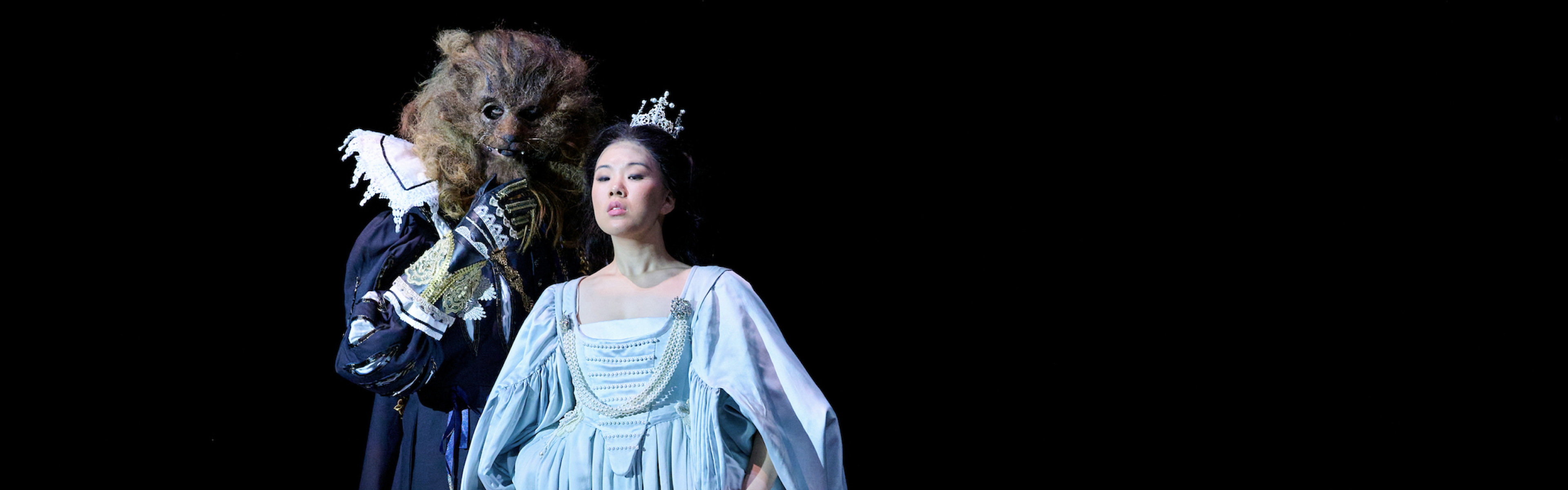
In 2022, Opera Parallèle produced an even more audacious version of Glass’s opera conceived by the company’s creative director, Brian Staufenbiel. The production incorporates live action (Glass originally intended the singers to remain invisible, joining the instrumentalists in the pit) and film segments using the company’s singers, with the new and old films running in parallel.
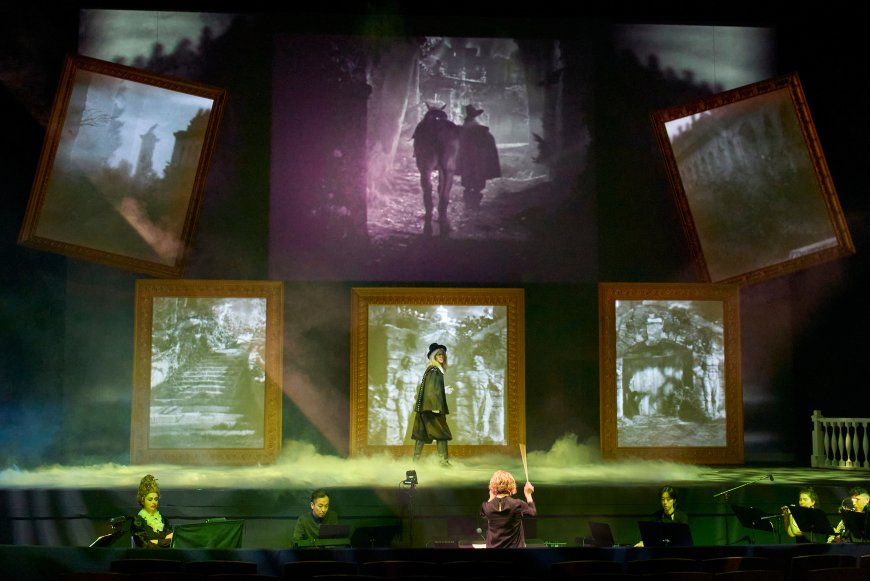
Last weekend, the company revived that production for two performances under the auspices of Cal Performances, and on Friday, March 13, it retained all the splendor of the initial run. At Zellerbach Hall, which seats nearly 2,000, you felt the quiet grandeur of the film, the black-and-white photography of which sways you out of our time.
The sense of immersion came from visual saturation: the film was projected on a large central screen surrounded by five subsidiary screens, where shifting elements of the film were displayed. The combination of live and filmed performers deepened the saturation.
Glass’s beautiful and mesmerizing score furthers that sense of being lifted to a different plane. Within his well-known style of minimalism, he found a kaleidoscopic range of color, mood, and rhythm to match the emotional breadth of the film. I would go so far as to say that Glass’s opera represents an improvement on the original.
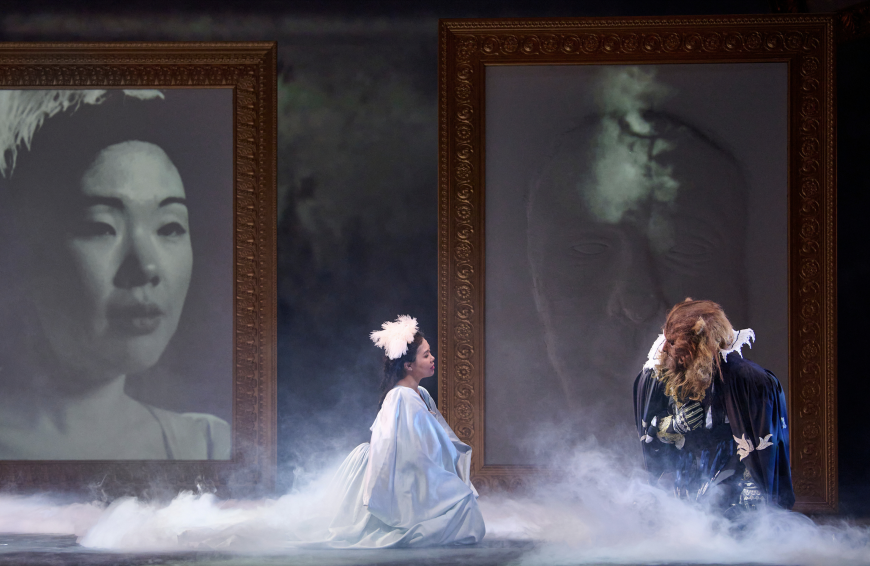
When text is sung, it’s almost always at a much slower pace than spoken text, yet Glass’s quicksilver setting does keep pace with what you see in the film. It flows naturally with the rhythms of the French language – and the score is perfectly synchronized with the film.
La Belle et la Bête is a challenging score to perform, and the need to synchronize live action with the film adds to the challenges. At the first performance, everyone met the challenges magnificently.
Baritone Hadleigh Adams, magnetically handsome physically and vocally, returned as the Beast, the Prince, friend of the family Avenant, and an officer. Soprano Chea Kang brought steadfast nobility and quiet yearning to Belle, her voice both warm and crystalline.
Sophie Delphis, mezzo-soprano, sang both of Belle’s selfish, querulous sisters with appropriately pointed tone (yes, the story does have certain overtones of King Lear). Baritone Aurelien Mangwa sang well but could have characterized the Father, brother Ludovic, and the moneylender more sharply.
Opera Parallèle artistic director Nicole Paiement conducted with all the precision and drive that the score requires, keeping the orchestra, singers, and film coordinated throughout. The instrumentalists – three wind players, three keyboards, and a percussionist — were on fire and sounded gorgeous.