In a San Francisco Symphony concert anchored by two 19th-century staples, speed ruled.
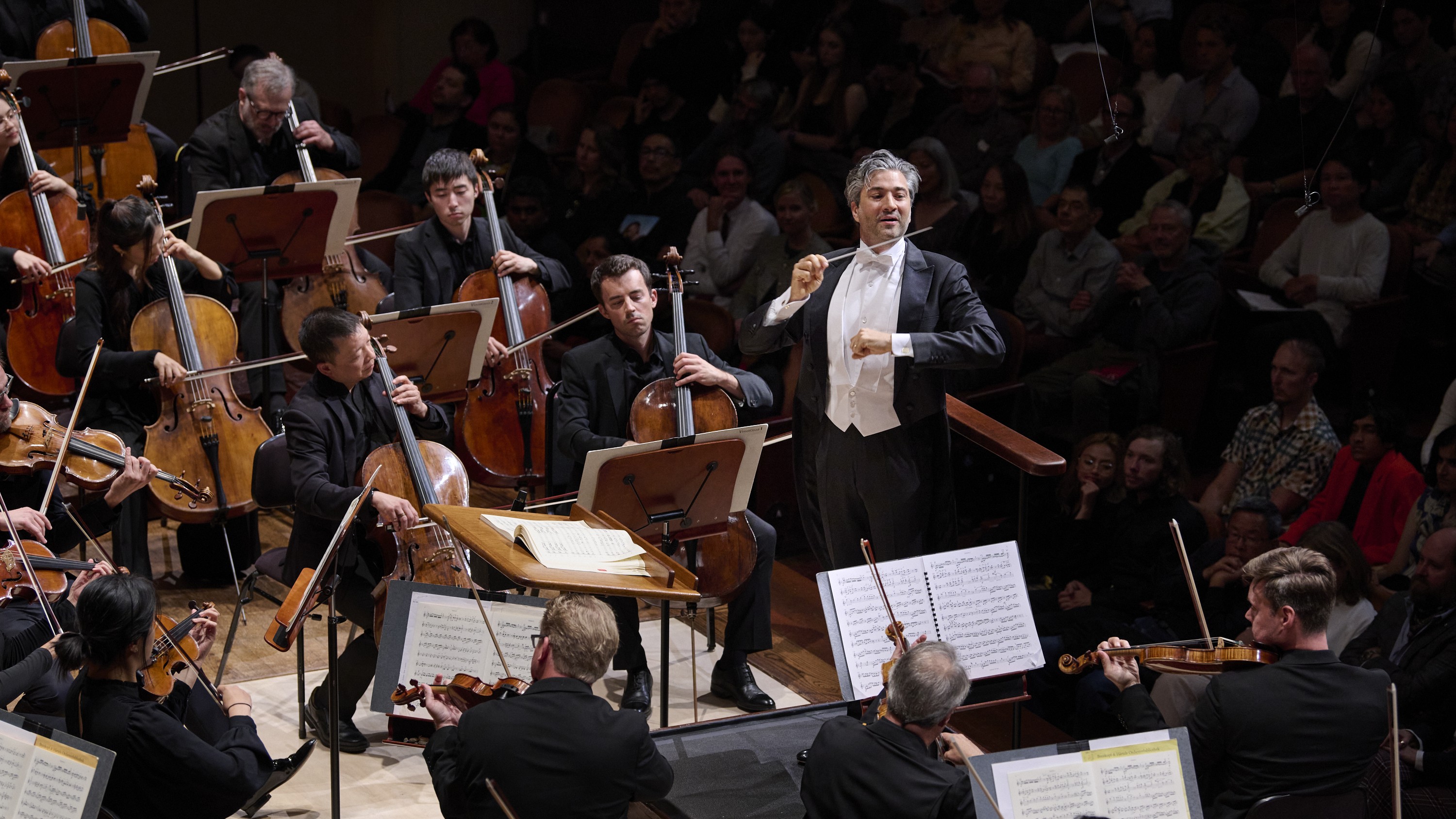
Guest conductor David Afkham didn’t leave enough time for reflection, on Friday, Sept. 18 at Davies Symphony Hall, leading performances that, for all their excitement, lacked musical depth.

Instead, it was the newest piece on a bill, featuring works by Schumann and Brahms, that got the high-velocity program going. Clocking in at a mere six minutes, Unsuk Chin’s 2020 “subito con forza” (“suddenly with power”) wasted no time living up to that tempo-marking title. Clipped allusions to Beethoven’s works were intercut with concussive percussion blasts and an exhilarating high anxiety took hold. Where, one wondered, might this kinetic piece go next?
High strings swarmed like killer bees over a determined low figure in the cellos and double basses. A xylophone and vibraphone pattered at each other. Chimes rang out. The piano checked in with a speedy run. Muted trumpets added their strangled voices to the tightly marshaled pandemonium.
Finally, in a stroke of musical irony, Chin brought the piece to a close with a soft minor chord that faded slowly, swallowing all the turbulence that had come before. The musicians played with rhythmic drive and precision.
In brief remarks from the podium, Afkham noted that the evening’s two main events — Schumann ’s Symphony No. 4 and the Brahms Piano Concerto No. 1 — were both written in the “tragic” key of D minor. Right away, in the Schumann work, Afkham dug into the emotional thicket with swift tempos and an overall sense of tensile strength in the opening movement.
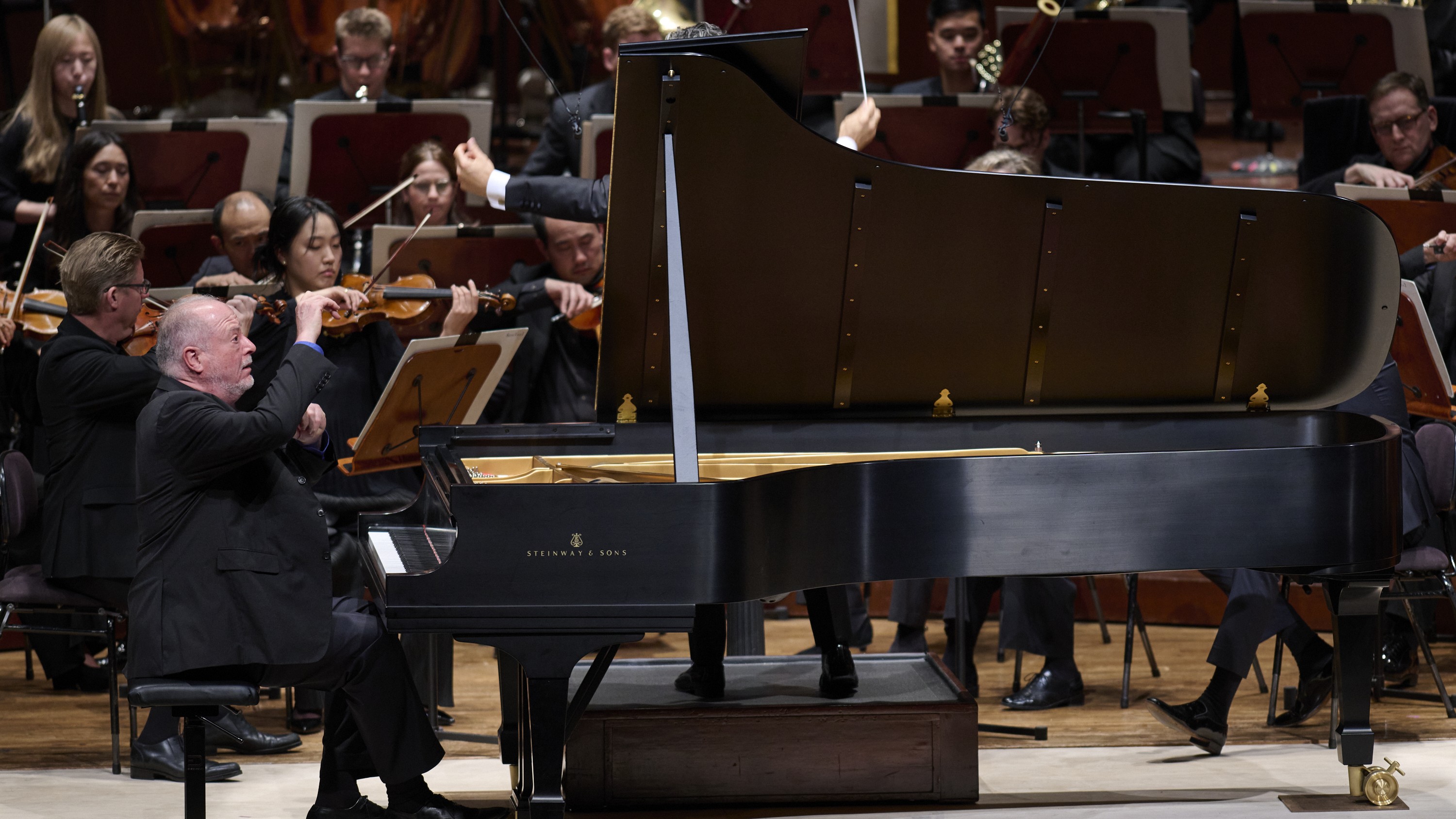
Played without pauses between the movements, as the composer intended, the symphony continued in that lean manner that too often felt underconsidered. The Romanze turned pallid, with an undernourished violin solo. The Scherzo fared better, with crisp attacks, lyrical touches and dynamic phrases. The movement’s two trio sections, unfortunately, paled in comparison.
Afkham, the former chief conductor and artistic director of the Spanish National Orchestra, did some of his most persuasive work in the final movement, building a wonderful sense of rising anticipation with the horns and brasses leading the way. Here, the tautness paid off in a muscular finale.
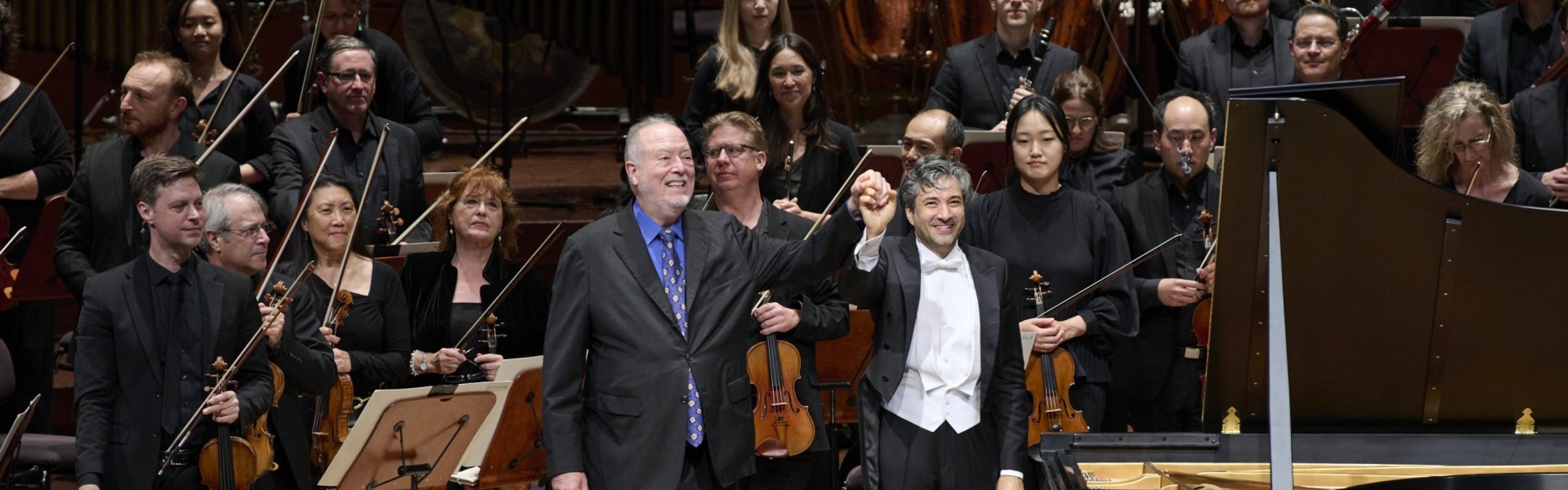
With Garrick Ohlsson as soloist, Brahms’ Concerto occupied the second half of the program. From his first straightforward passage, the pianist played with a declarative directness. The statement and development of the opening movement’s themes were suave, even self-effacing, before turning clamorous and ferocious.
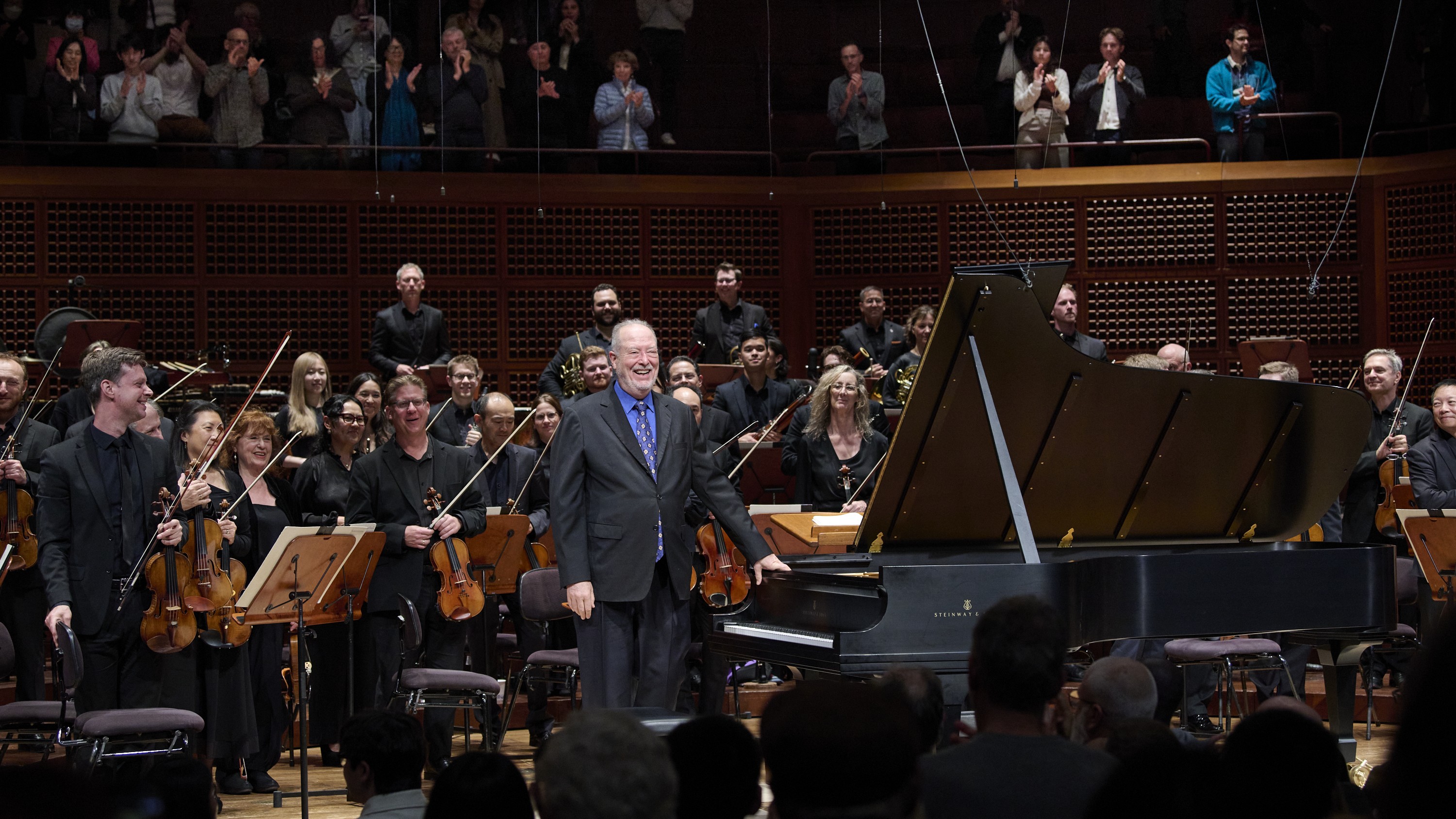
His double-octave forays up and down the keyboard hit their mark. Tremolos clattered like fire alarms. Filigreed light runs floated airily. At 78, the tall, stolid Ohlsson hasn’t lost a step.
The technical mastery continued in the slow movement, with a descending run of Brahms’ beautiful, melting harmonies. The Rondo got off to an energizing start, marked by Ohlsson’s scintillating runs and purposeful momentum. The orchestra, which had occasionally swamped the soloist, was in full accord.
But for all its virtues, the performance missed some of the concerto’s musing inner voices, the plangency and warmth that come from thoughtfully shaped and conjoined phrases. It was most notable in the Adagio middle movement but was felt here and there throughout. The orchestra, while too loud and unruly at times, played a piece it knows well with assurance.
Grinning broadly at the ovations, Ohlsson offered one encore, an enchanting account of Chopin’s aptly named “Grande valse brillante.” Looking more relaxed and mobile on the bench than he had throughout the concerto, Ohlsson made a small feast of the piece, his tempos elastic and playful, the runs whirring lightly, and the waltz gait spry. For once, the brilliance was exactly where the title promised it would be.
This story was first published in Datebook in partnership with the San Francisco Chronicle.