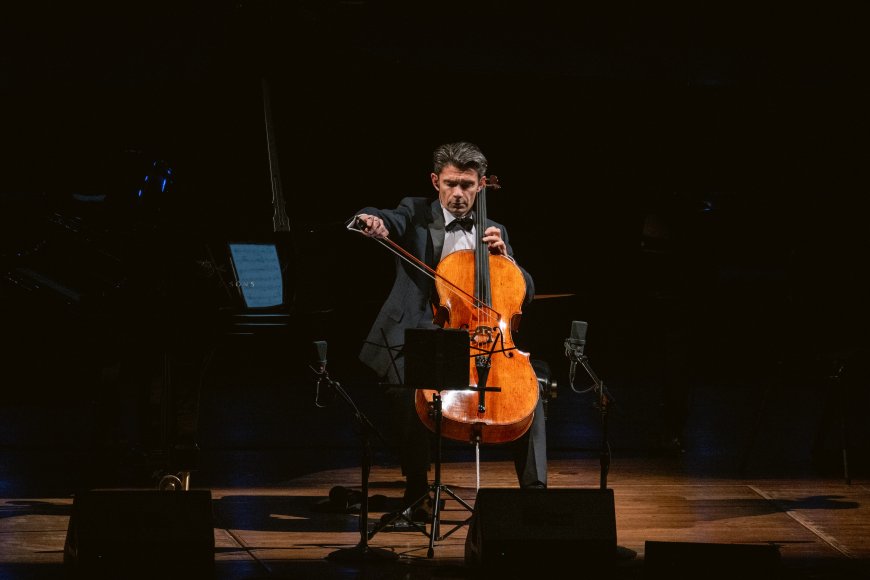
It’s difficult to imagine the San Francisco Symphony without Gautier Capuçon.
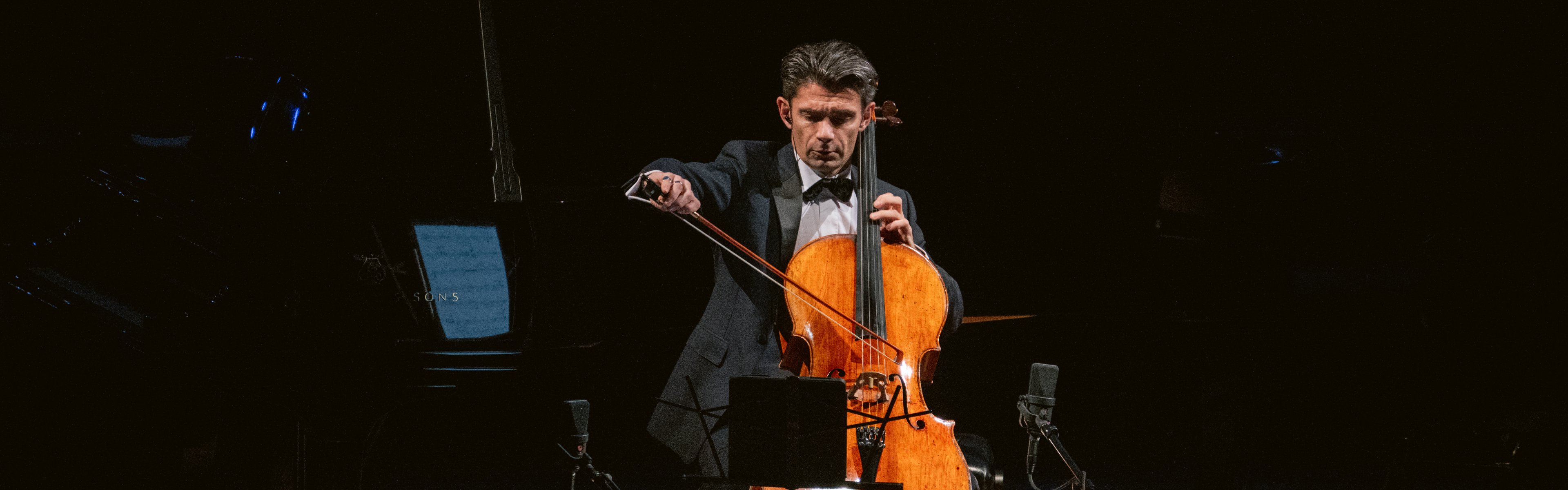
The French cellist has made many appearances at Davies Symphony Hall since his debut 16 years ago, and his technical skill and charisma are all but expected at this point. Yet the massive program on Sunday, Nov. 16, titled Gaïa, offered a new perspective: Capuçon as impresario, designing and making possible a new kind of performance.
The concept for Gaïa was formed before the pandemic, when Capuçon was inspired to bring together composers from all corners of the world around a single organizing principle. Years later, audiences on Sunday got to hear the remarkable result: 16 new works by 16 composers, centering cello, all painting visions of Earth.
Since Symphony programs typically consist of only a few composers, and rarely living ones, the fact that Gaïa came together is a feat. And when it manages to include notable composers like Joe Hisaishi, Missy Mazzoli, Gabriela Montero, Nico Muhly and Max Richter, the achievement is even more impressive. Hearing the pieces side by side revealed a through-line of minimalist, cinematic style — effective, even thrilling, but quickly draining.
Richter emblemized the highs and lows of this style in the opening piece, “Sequence for Gaïa.” Capuçon played a repeating sequence of arpeggios that grew in intensity, with pianist Jérôme Ducros joining to pound out the harmonies. This is classic Richter: repetition of a harmonic sequence through an unrelenting rhythmic motif where the increase in dynamics and resonance (not melodic development) is the main event.
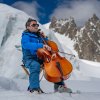
The performance was accompanied by a video of Capuçon scaling Mont Blanc with a massive cello case strapped to his back, playing Richter’s piece in the snow, then playing cello while hanging from a zipline. The mountain footage impressively synchronized with Capuçon’s onstage performance. But if Richter’s piece aimed for seriousness — as all his music does — these images sparked the audience’s laughter. The combined media made for an entertaining experience, despite an opaque message at odds with Capuçon’s warnings about Earth’s future.
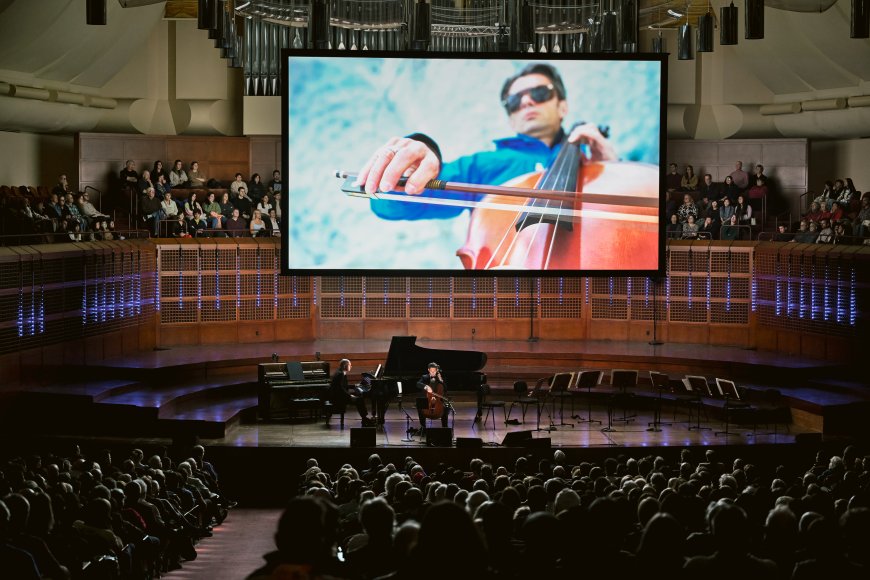
Pieces by Armand Amar, Olivia Belli, Hisaishi, Ludovico Einaudi, Muhly and Bryce Dessner each seemed drawn from the same template as Richter, characterized by ostinato-like pulsation, looping of one short motif and limited harmonic sequences. If the minimalist old guard (like Philip Glass, Steve Reich and John Adams) used these techniques to foreground subtle change over time, these composers seem to aim at the opposite, creating static “mood” music that rejects development or contrast. In this sense, it’s not surprising that many of them are successful composers of film music.
A pair of pieces by Montero and Mazzoli provided the first welcome antidote to these stretches of sameness. Montero’s “Sur le lac du Bourget” gave Capuçon virtuosic rein. In just a few minutes, the duet for cello and piano packed urgent and lyrical writing with hints of blues. Mazzoli’s piece, “The Usual Illusion,” was similarly inventive, contrasting breathless sequences with a meditative middle section that pushed Capuçon to his expressive limits.
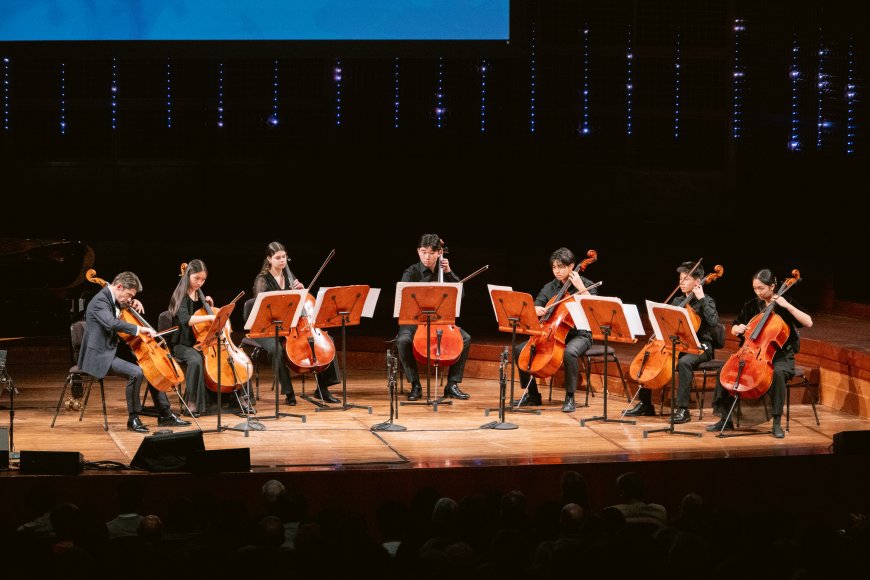
Also impressive were the pieces, particularly those by JB Dunckel and Jasmine Barnes, in which Capuçon was joined by six cellists from the San Francisco Symphony Youth Orchestra, resulting in concerto-like arrangements that stretched the register and textures of the instrument. Such a huge program is bound to be uneven, but inventive pieces like these — especially in Capuçon’s able hands — were colorful rejoinders.
Yet the most dissonant moment of all came before Capuçon even took the stage. Just minutes before he spoke of the melting French glacier Mer de Glace and the threats of global warming, the auditorium speakers announced the concert’s darkly ironic tagline: “Sponsored by Chevron.” Amid the concert’s many imaginative depictions of our world’s beauty, those words were a stark reminder of our grim reality.
Collin Ziegler is a freelance writer. This article has been provided in partnership with San Francisco Chronicle.