When the curtain rises on the opening piece of William Forsythe’s The Blake Works, two San Francisco Ballet dancers — the eerily compelling Joseph Walsh and Ángel García Molinero on opening night — are locked in place on the War Memorial Opera House stage. Gradually, in stuttered, animatronic moves, the pair come stirring, herky-jerky, to more fluid life.
An hour and a half later, as this short but abundant program ends, the curtain slowly descends with a dancer still in motion. It’s as if dance itself, which struggles to commence at the outset, could now go on and on, unconstrained by the arbitrary measure of time. How The Blake Works gets from that first image to the last is what gives the program, which opened Friday, Feb. 27, its imaginative arc.
The haunting and sometimes hammering electronic music, by the two-time Grammy-winning composer James Blake, whose collaborators have included Frank Ocean, Kendrick Lamar, and Beyoncé, plays an essential role. In “Prologue,” a number is halting, breathily sung, and punctuated by becalmed silences, with the lyrics barely discernible. The show’s last song, “F.O.R.E.V.E.R.,” is lucidly rapturous. As Sasha De Sola and Max Cauthorn swooned into each other’s arms in their pas de deux, the lyrics pour forth: “How wonderful you are.”
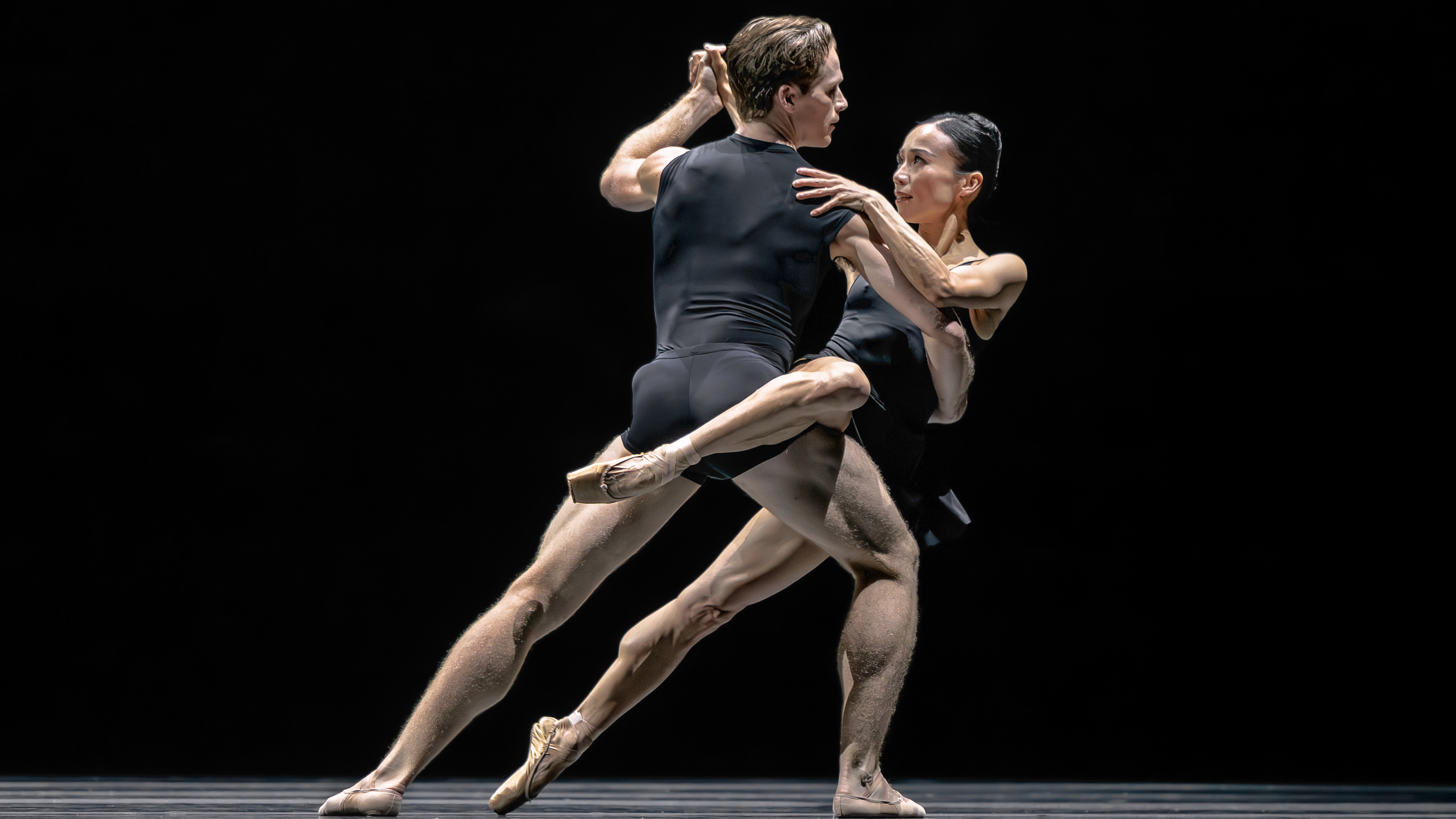
Just as the score travels from shrouded to explicit, so does the form and content of the choreography expand and grow. Forsythe, a revered figure in contemporary ballet at 76, embeds it in every step and in his visionary command of the stage space.
It begins when he titrates five more dancers into “Prologue,” and they both team up and go their own ways. In a number entitled “Buzzard & Kestrel,” the hunching port de bras serves notice that dancers can suggest even menacing birds with the slightest touch. A dancer enters from the wing, scrabbling backward, as if every move might be wound back, broken down, and refined.
Then suddenly, the scrutiny zeros in, with a short film that focuses on the disembodied hands of a dancer gripping and re-gripping a rehearsal studio barre. When the hands are doubled, tripled, and overlapped, there’s the hallucinatory sense of seeing a dancer’s fundamental physicality and discipline through a magnified kaleidoscope.
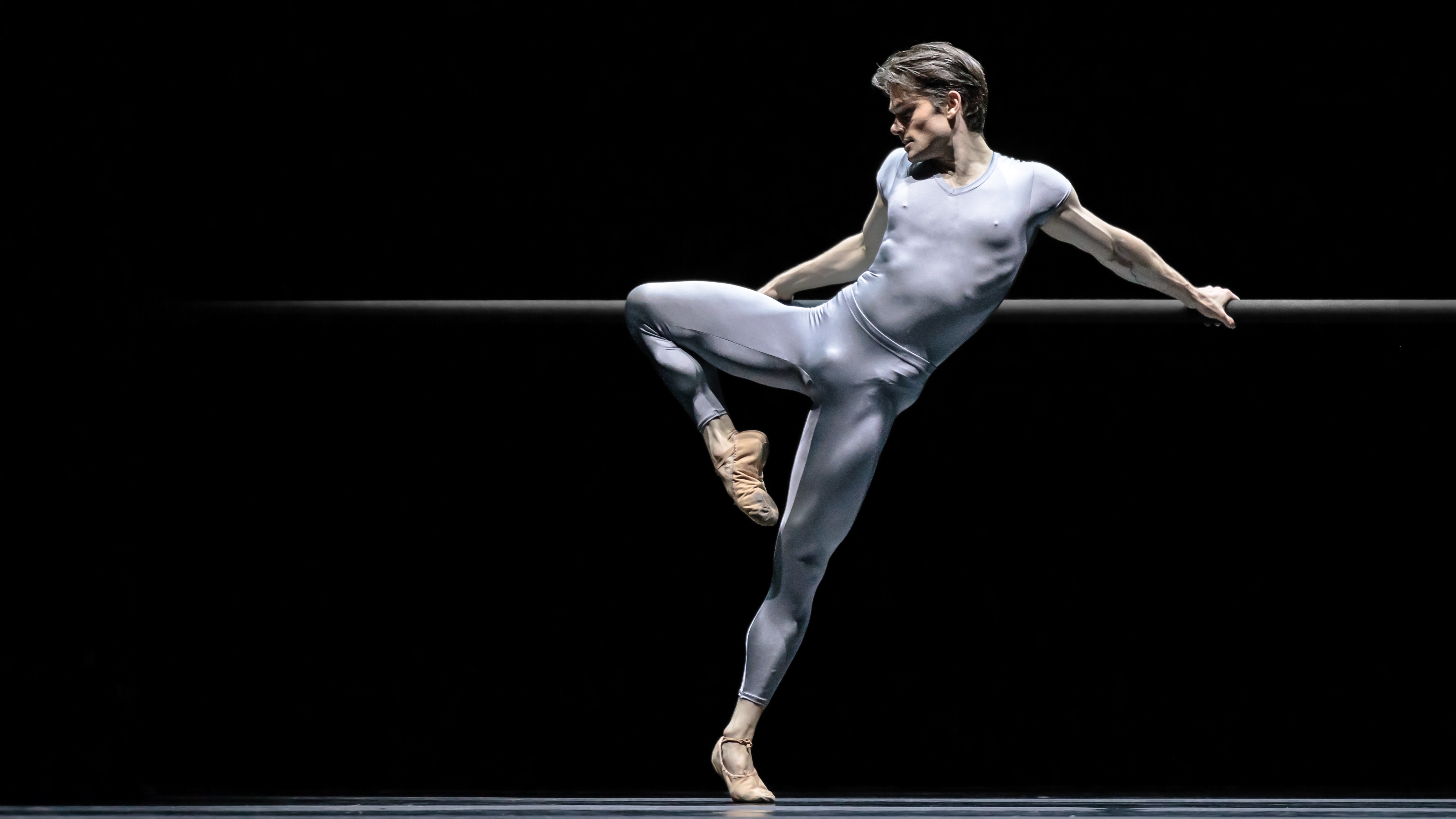
In “The Barre Project,” Forsythe gives us the real thing to up the ante. One by one at an upstage barre, the dancers take their turns running through an amped-up flow of steps before spinning out to dance on their own. It’s telling that the dancers never gather at the barre, as they might in a class, and that there’s very little touching in the ensemble passages. Forsythe made this piece (and the film) during the pandemic, when isolation was especially painful for dancers, who draw so much of their strength and meaning from each other.
“Prologue” and “The Barre Project” are SF Ballet premieres. Forsythe’s costumes — black torso-hugging outfits that leave the arms and legs bare — are just right for the calculus of steps deconstructed and recombined.
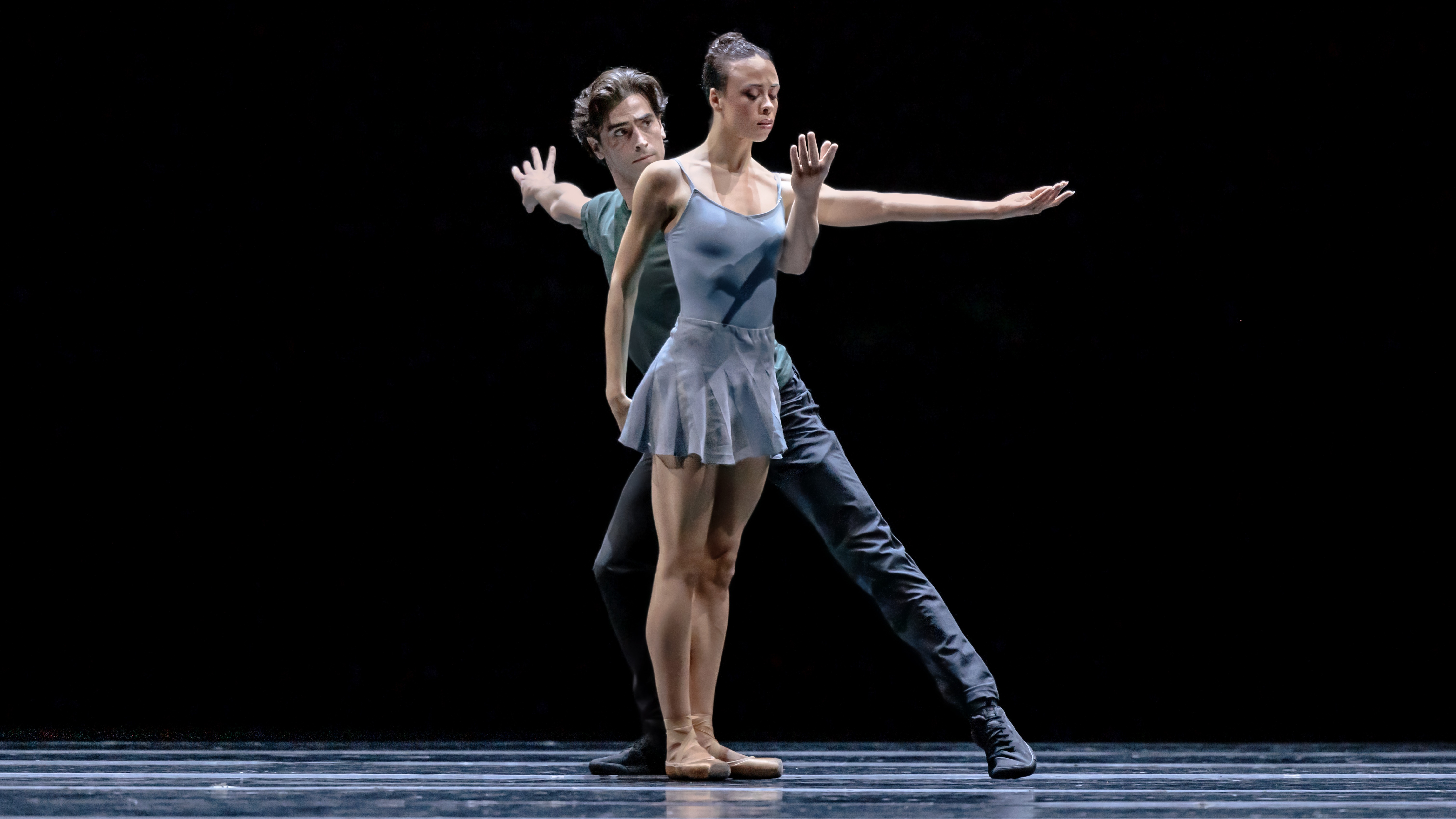
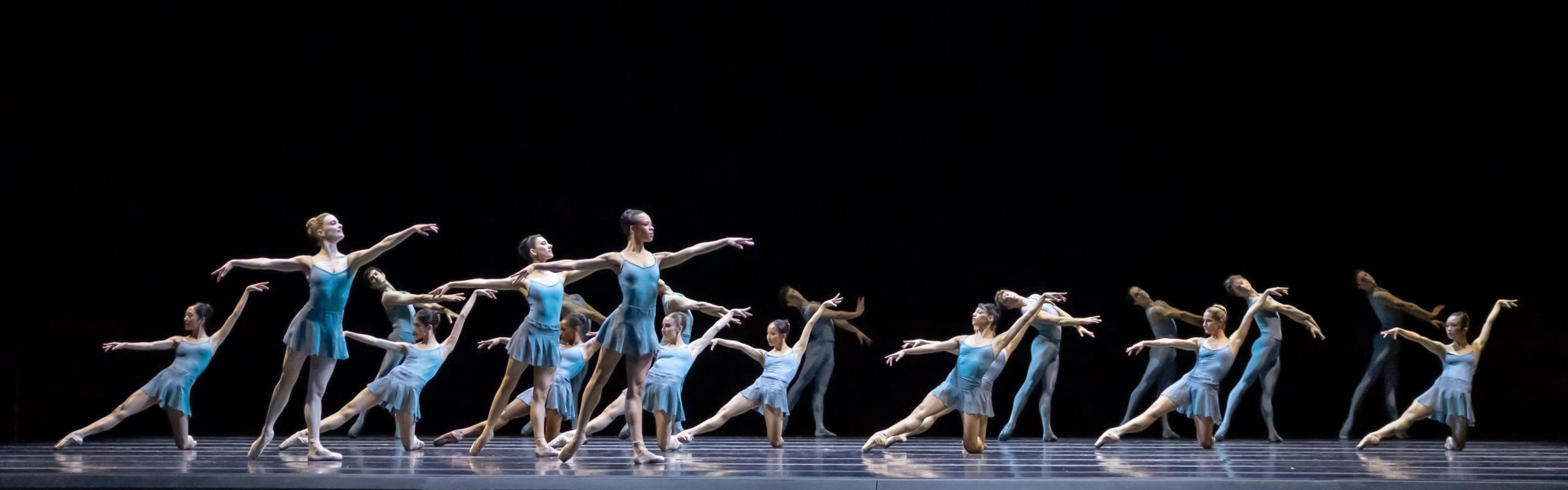
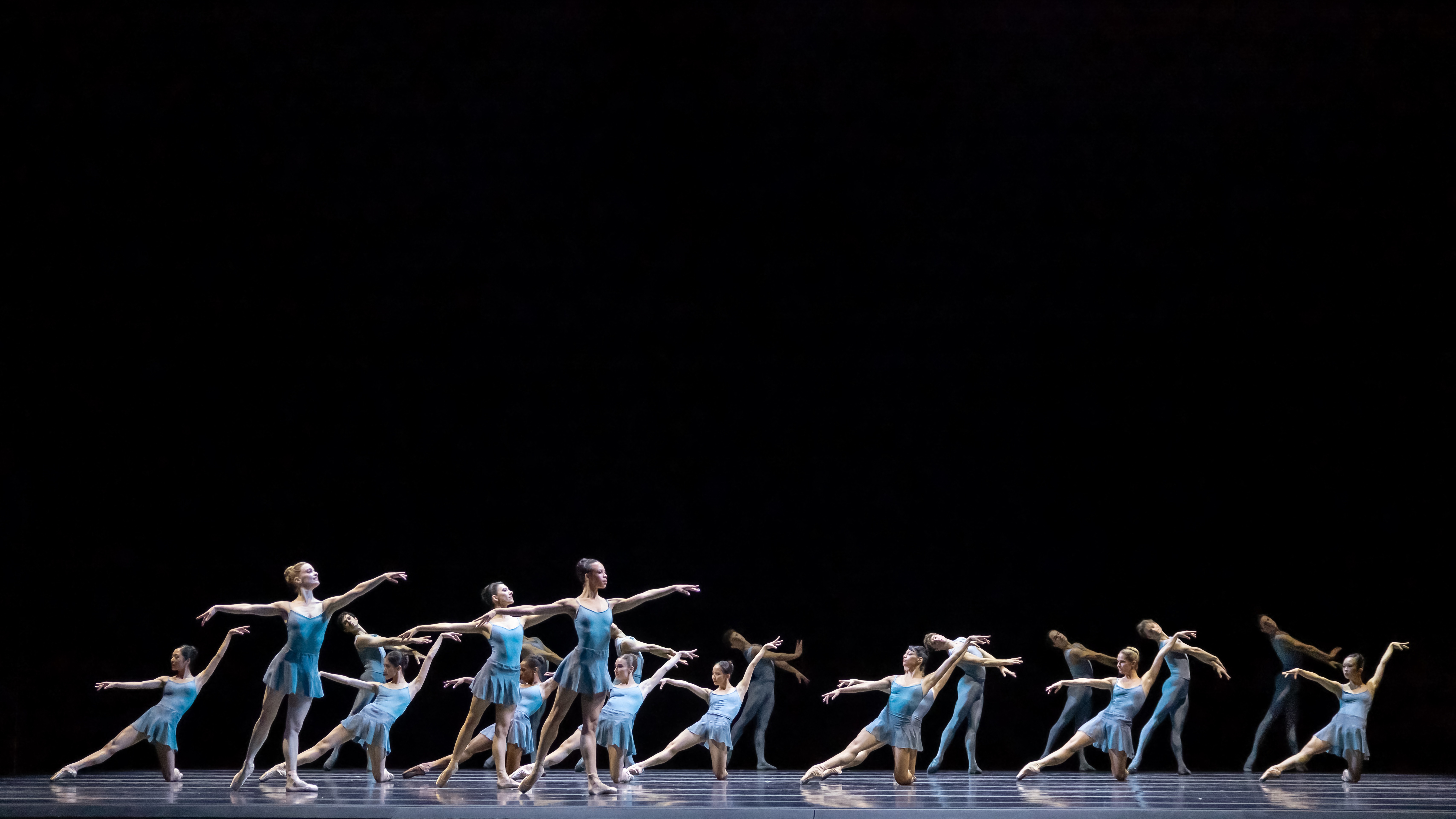
A looser, more lyrical feel prevails in the second half of the bill: “Blake Works I.” Seen here in 2022, the ballet is set to seven of the composer’s lovely, yearning songs that flow together. So does the choreography, as dancers seem to come and go from a deeper, wider space. They dart in and out of wings and emerge from shadowy upstage depths (lighting by Tanja Ruehl). The costumes, too, are lighter, with pastel colors and kicky pleated skirts for the women.
Just when the dancing feels a little repetitive, especially in the ensemble passages, something joyful or surprising comes along — a volley of athletic jumps, the women’s floating pointe work. Walsh and Nikisha Fogo’s pas de deux was especially choice, an intimate fusing of arms and legs that wasn’t so much erotic as sweetly grave, their hands gently exploring each other’s torsos as if they were reading Braille.
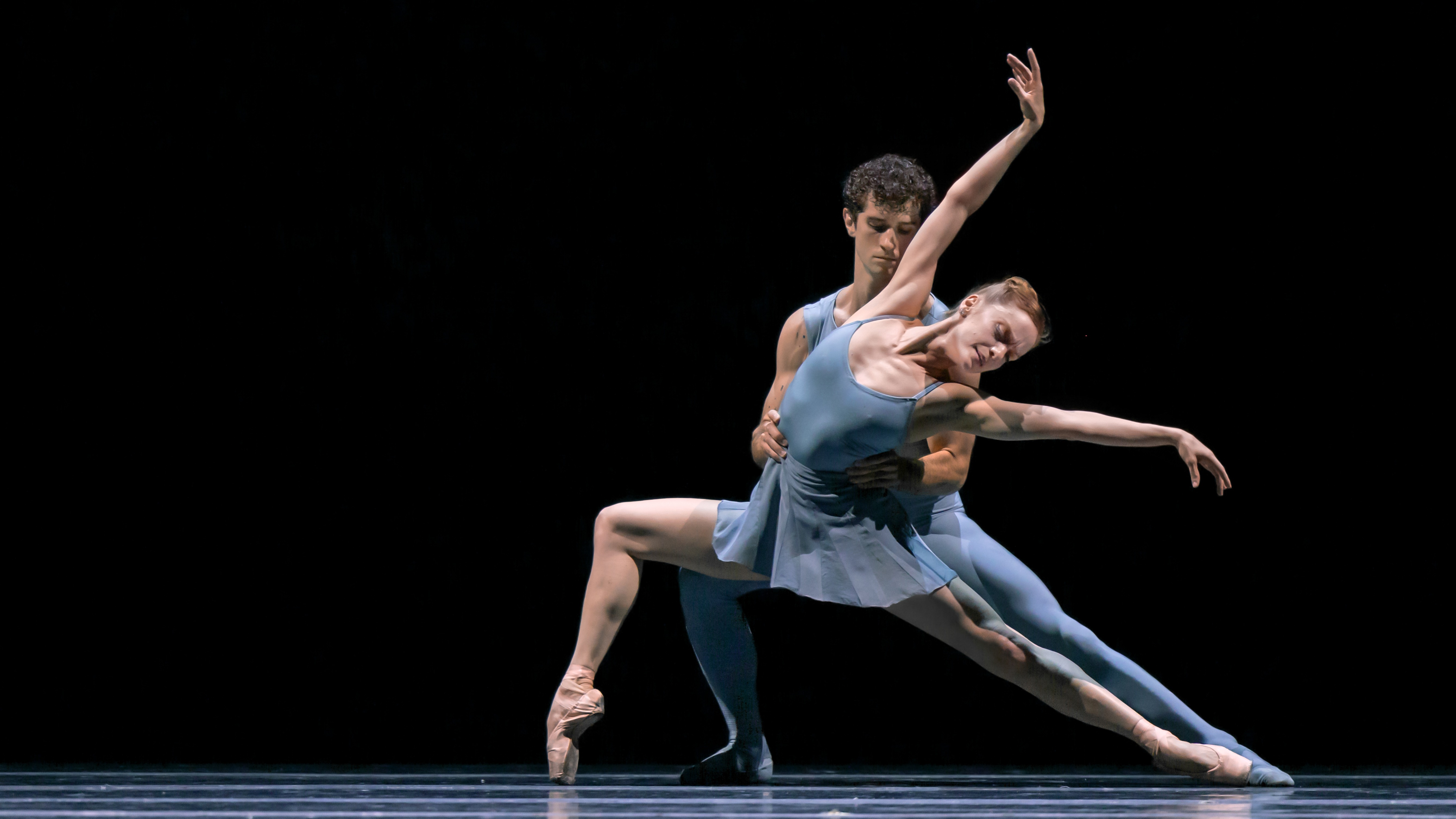
Forsythe blends classical ballet discipline with swingy jazz moves, saucy hip thrusts, and winsome trots around the stage. In an ensemble passage near the end, it all seems to be happening at once, a group of dancers moving laterally while another group flows through contrasting steps — a ballet bonanza that overwhelms the senses.
That curtain-closing end that doesn’t seem to end is just right. There’s lots more Forsythe choreography waiting in the wings.