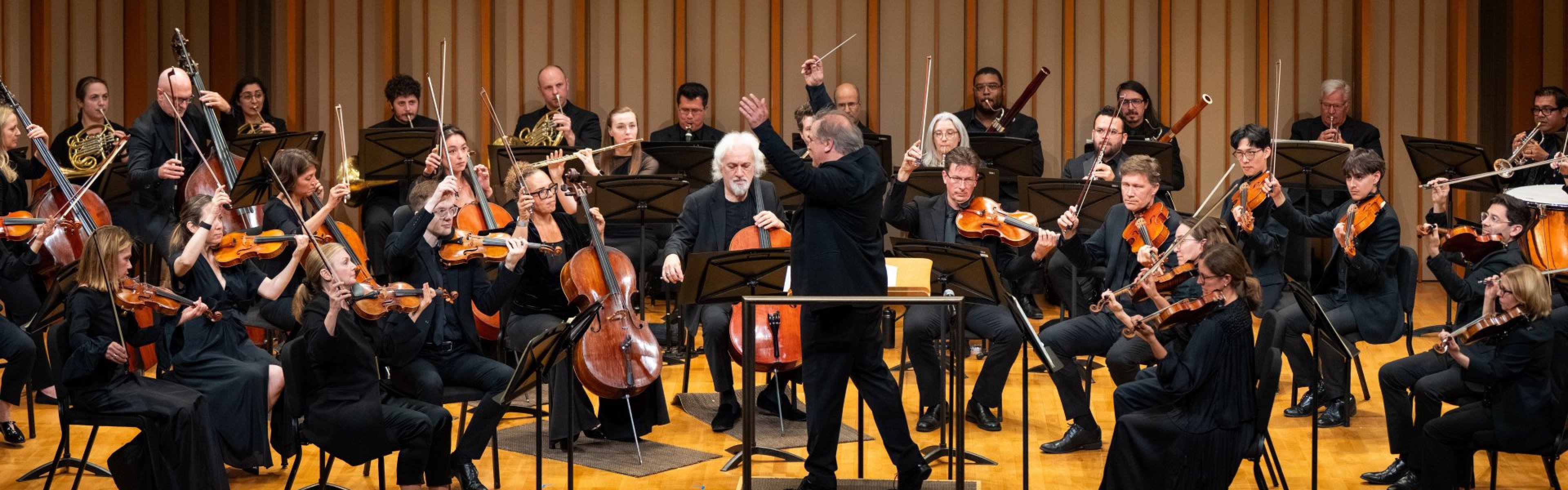
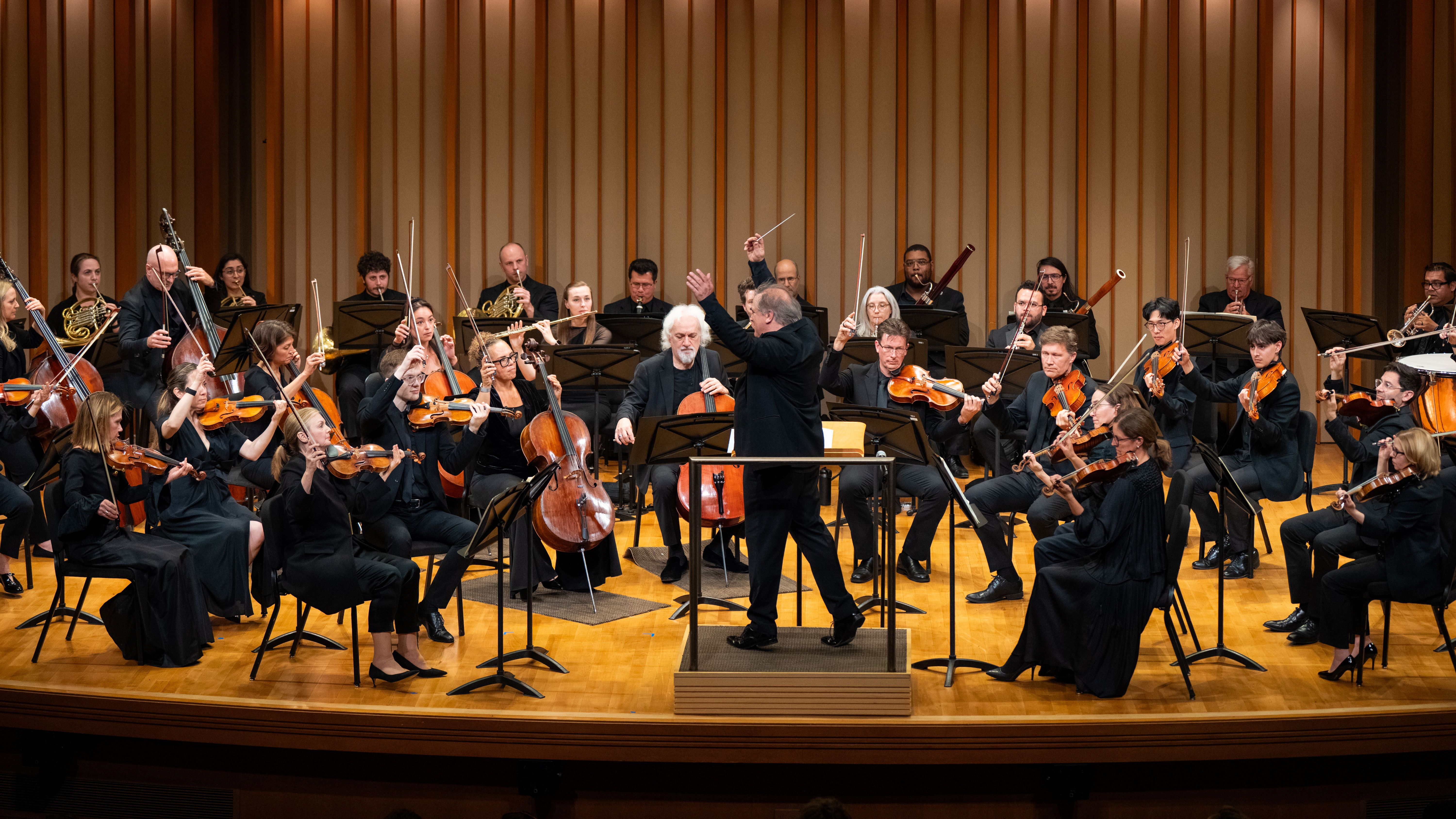
Last week, the Los Angeles Chamber Orchestra explored “memory, reinvention, and reflection.” Music Director Jaime Martin, always loquacious and energetic, presided over the dense but expertly executed performance at Colburn Conservatory’s Zipper Hall on May 15.
An oldie but goodie, Mozart’s snappy Symphony No. 35, “Haffner” (1782) opened the proceedings and Tchaikovsky’s Orchestral Suite No. 4, “Mozartiana” (1887), which borrows four pieces by Mozart and refracts them through a late romantic lens, occupied the second half.
In between came a provocative and ambitious world premiere by American composer Christopher Cerrone (born 1984). His Selah, a thorny concerto for violin, cello, and chamber orchestra, received a stunning performance, with the dynamic duo of Anthony Marwood (violin) and Coleman Itzkoff (cello) taking full command of a shimmering, technically demanding score.
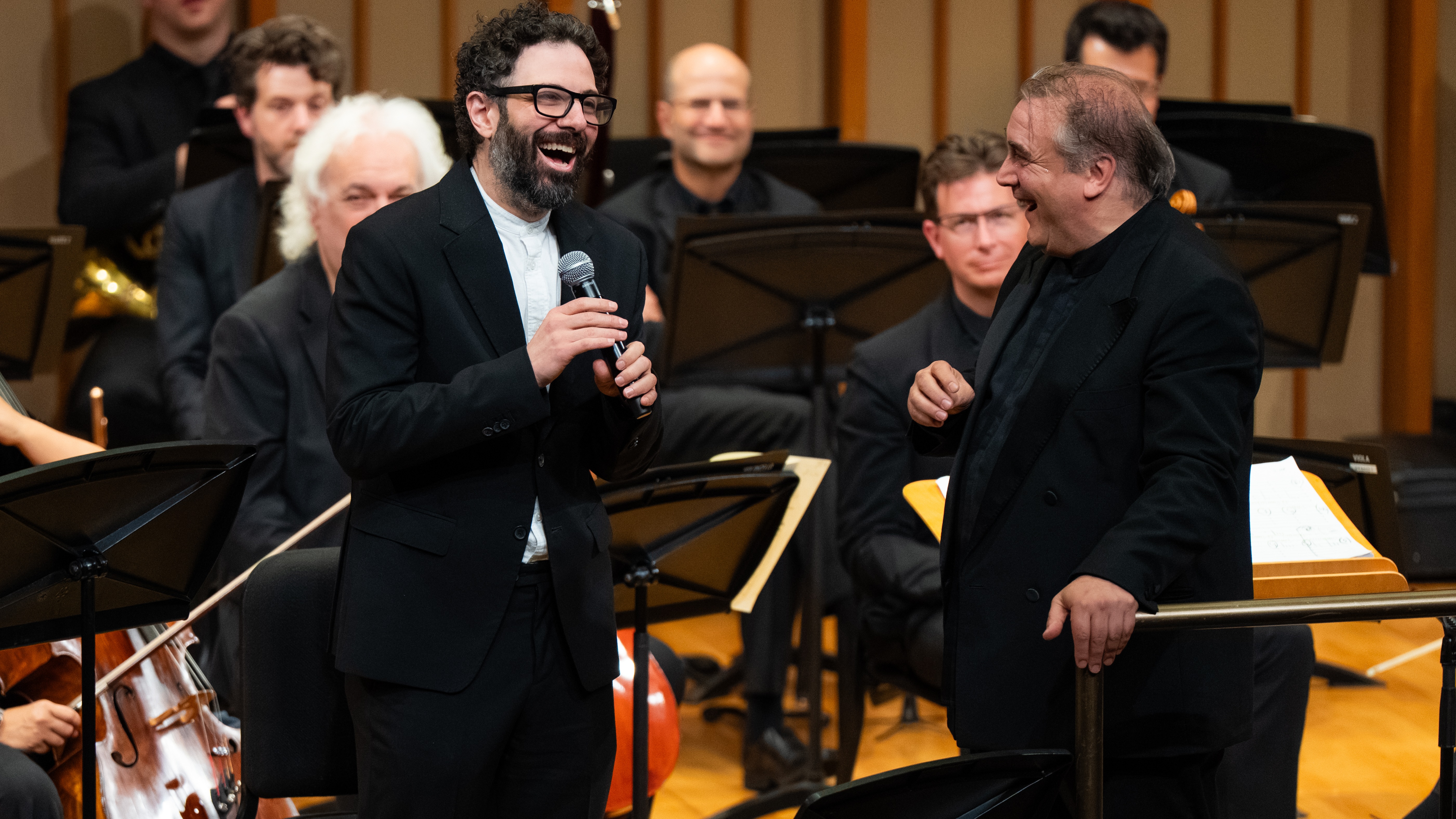
Cerrone is well-known to Los Angeles audiences as the creator of the opera Invisible Cities, which was staged by Yuval Sharon for his hip opera company The Industry at Union Station in 2013, with the audience wearing headphones. For Selah, he ditched the electronics for a (mostly) traditional chamber orchestra and turned for inspiration to the Old Testament.
The Hebrew word “Selah” appears frequently in the Book of Psalms, although its meaning remains unclear, as the composer explained in a brief pre-performance talk — “perhaps a pause, a breath, a moment for reflection.”
Mirroring plays an important role in Selah, where the two soloists throw fragmentary motifs back and forth, like electric shocks, recreating and transforming them in the process. The 22-minute work “lives inside that image, the way a single gesture, reflected endlessly, can become something entirely new,” Cerrone writes in his program notes.
Each of the five short movements, played without pause, bore a descriptive title: “A city on fire,” “Canto Selah,” “Son.Son.Son.Son.,” “Lit at both ends,” and “The mirror repeats.” The crystalline, chiming sound effects, and the rapid back-and-forth of single struck or plucked notes between the soloists, created a constant buzz and chatter. There were few moments of repose.
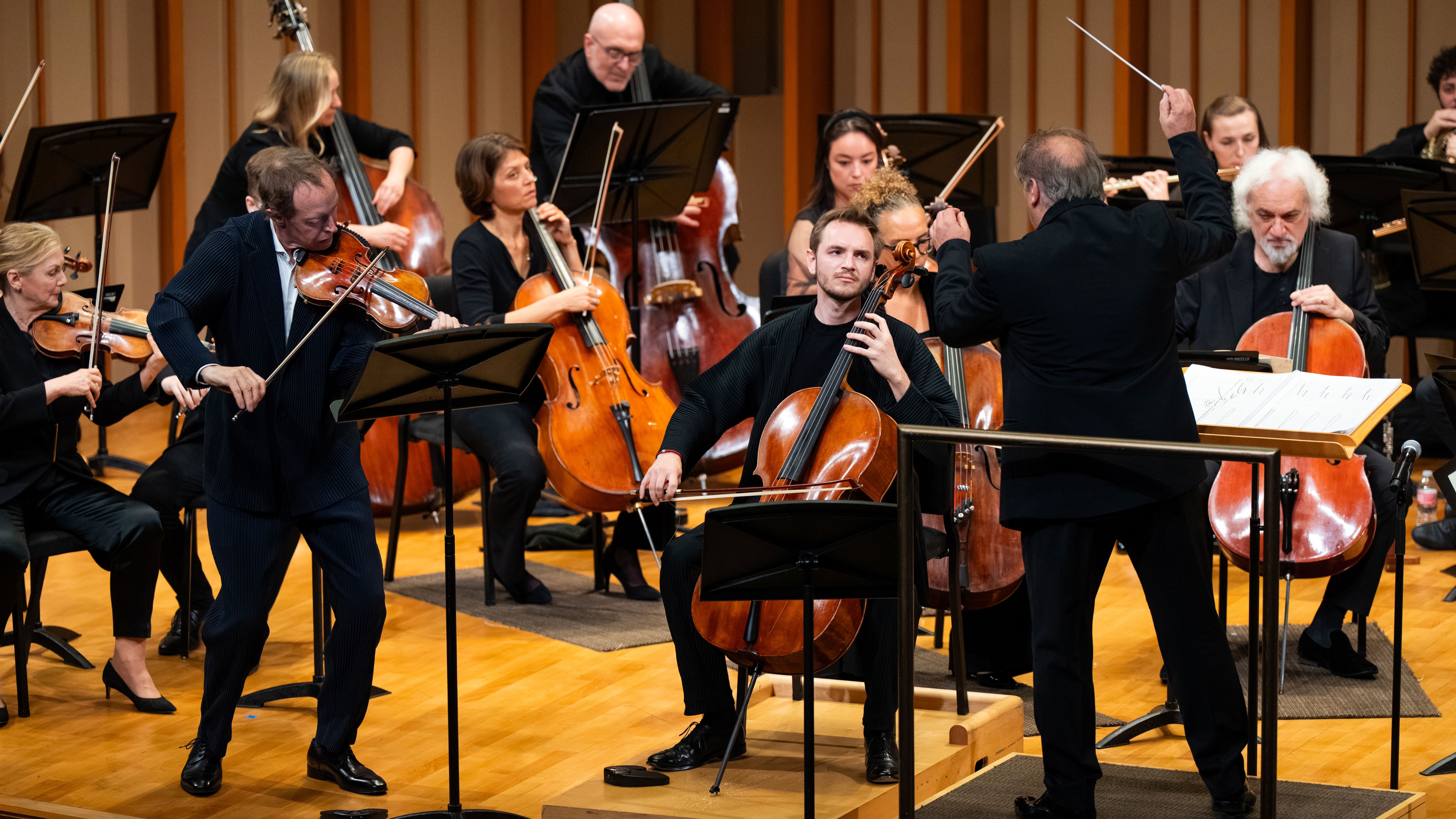
One might expect that a double concerto for violin and cello would exploit the singing quality of the instruments, but Cerrone uses them almost as percussion. Both in the solo and orchestra string parts, pizzicato reigns, resulting in what he calls “anxious, Morse-code-like motion.” Vibraphone and harp soften the edges, with occasional mumblings from the flutes, clarinets, horn, and trumpet.
A four-note ascending motif gradually emerged as the backbone of the piece, heard in many different guises from the soloists, who play on the bridge and over the fingerboard. Some passages resemble Philip Glass-style minimalism or the tintinnabulation effects achieved by Estonian composer Arvo Pärt.
Marwood and Itzkoff drew on their obvious close musical and personal rapport to give a committed and spirited performance, reveling in the rapid-fire dialogue. Selah isn’t an easy piece to pull together.
Both the “Haffner” Symphony and “Mozartiana” offered welcome relief from Selah’s high level of tension.
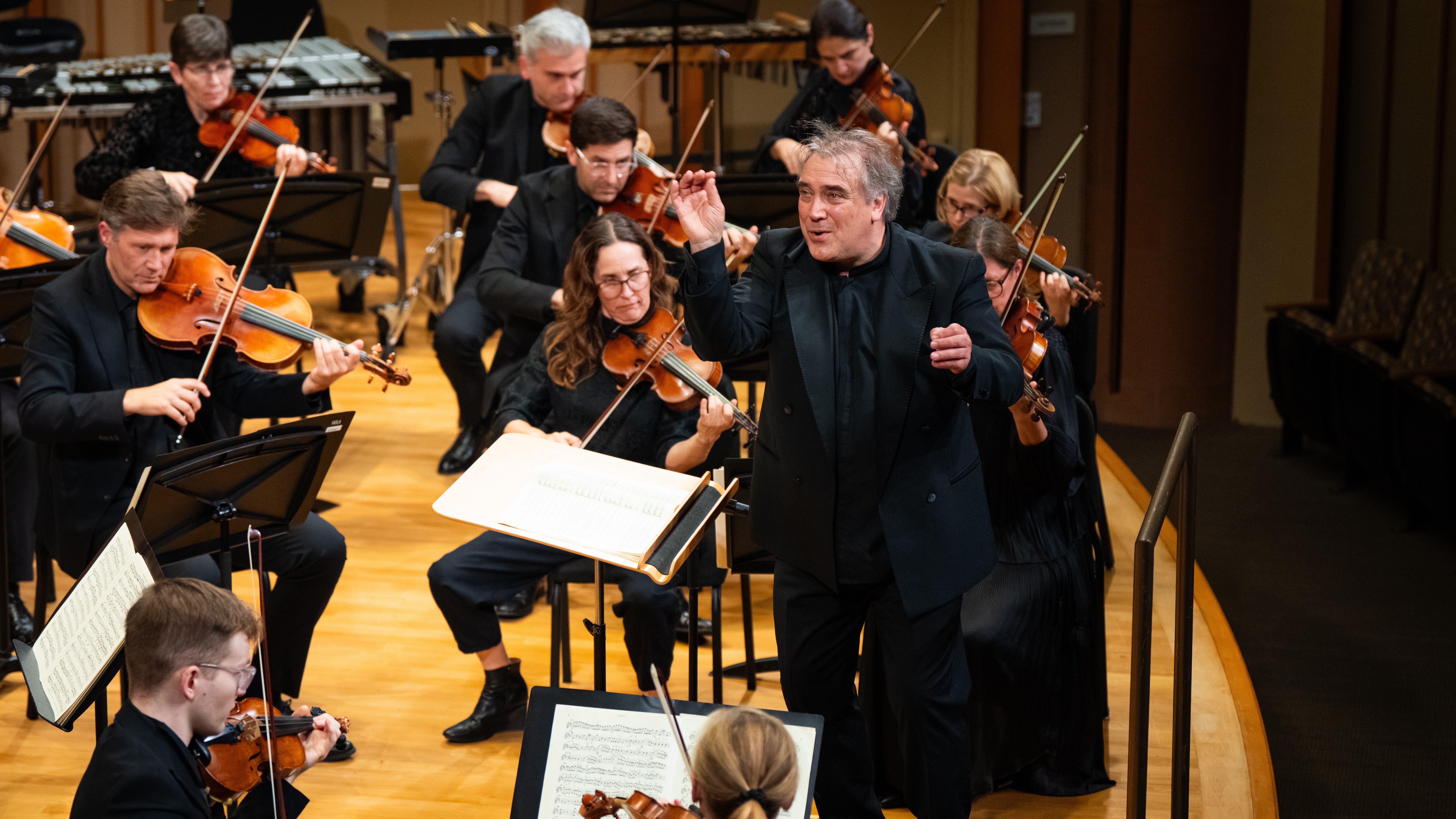
For Tchaikovsky, Wolfgang Amadeus Mozart was “a sunny genius” whose music “moves me to tears.” From childhood, he studied Mozart’s scores and especially loved Don Giovanni. As an adult, he turned to Mozartian themes and style for refuge from his turbulent personal life, finding equilibrium and peace in the world of late 18th-century classicism.
The 1887 centennial of the premiere of Don Giovanni inspired Tchaikovsky to write “Mozartiana.” The suite’s four movements span a wide emotional range, beginning with arrangements of a sprightly gigue and a courtly minuet, both written originally for piano. “Preghiera” (prayer) goes farther afield, giving Franz Liszt’s piano transcription of Mozart’s communion hymn “Ave verum corpus” the full Swan Lake treatment, with harp. The lengthy concluding theme and variations riffs on Mozart’s variations on an operatic aria by Gluck.
It seems odd that a work inspired by the dark and devilish Don Giovanni should be so upbeat and cheerful, but that is the way Tchaikovsky wanted to see Mozart — through a glass brightly. Martin and his nicely balanced ensemble played with elegance and taste, with an outstanding solo contribution from concertmaster Margaret Batjer.
*** Correction: An earlier version of this article referenced the May 15 concert as LACO's final event of the 2025-2026 season. However, LACO has Baroque concerts scheduled on May 30 & 31. This past weekend's concerts were the finale concerts for the orchestral series only. ***