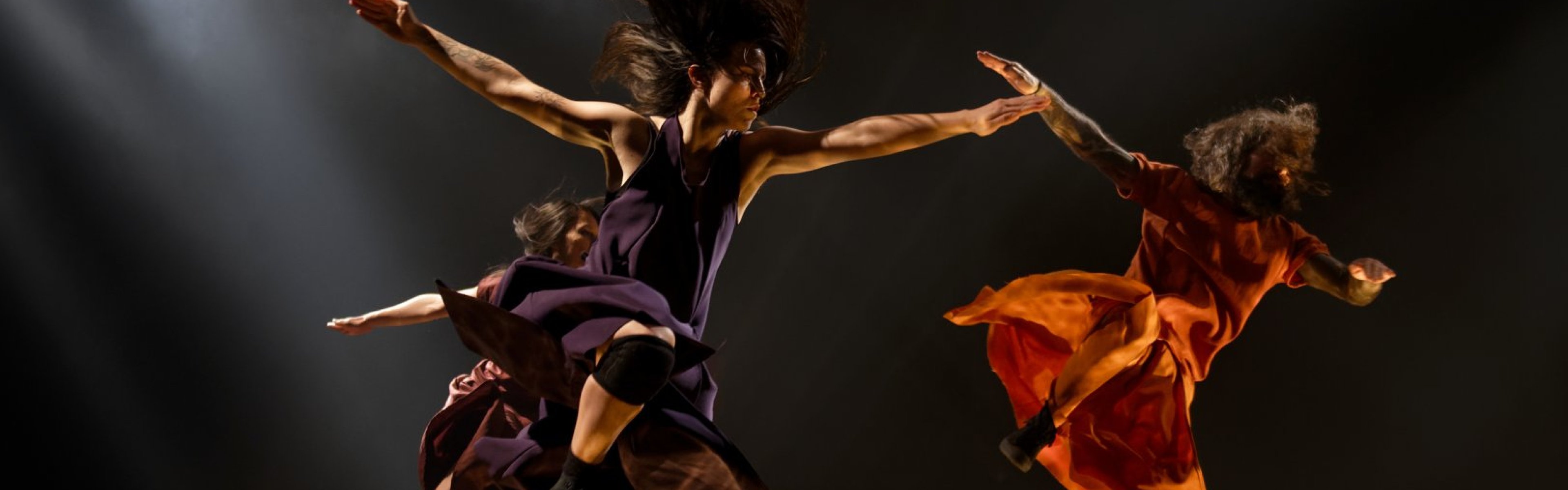
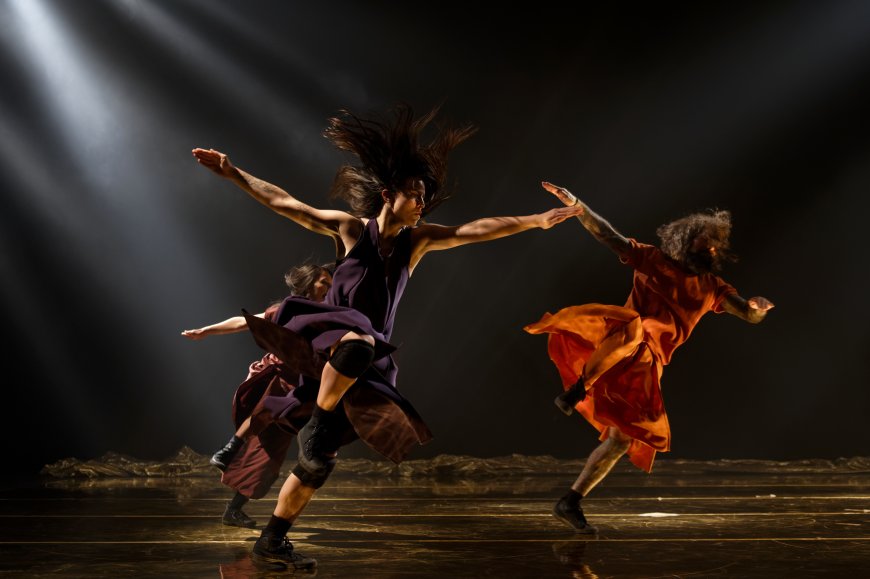
The New Yorker’s Marina Harss described Compagnie Hervé Koubi as “the dancers who could be mistaken for gods,” adding that they “are fierce, weightless, and a step beyond human.” As part of a Southern California tour, the 17-member troupe will make its Los Angeles debut on Feb. 19–21 at the Wallis Annenberg Center for the Performing Arts with performances of its 2023 work Sol Invictus.
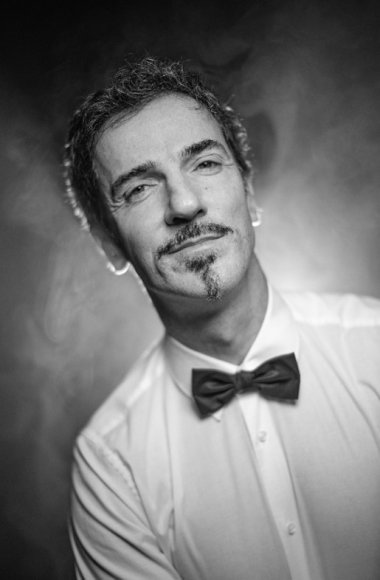
Founded in 2000 by choreographer Hervé Koubi and producer Guillaume Gabriel, who also acts as music arranger and costume designer, the Calais, France-based company is known for its spectacular blend of hip-hop, Capoeira, acrobatics, and sleek contemporary movement. Koubi, who grew up in France, reconnected with his Algerian heritage through travel, inspiring the creation of Compagnie Hervé Koubi — then comprised primarily of street dancers from North Africa.
“I keep [being] amazed that dance has this extraordinary power to bring us together simply,” Koubi said. “It’s probably because dance as an art [form] is very ephemeral. There’s an extract of an interview of Stanley Kubrick who said, ‘We are probably only a little spark lost in the middle of the universe, a huge universe,’ and I want Sol Invictus to be this spark as buoyant as life with the joy of dancing together.”
Describing his choreography, Koubi, 50, pointed out that it is “physical, virtuosity, inclusive.” He said that he prioritizes fleshing out relationships between the dancers onstage and the music they perform to.
That music, as arranged by Gabriel, is integral to Sol Invictus, with Mikael Karlsson’s minimalist score featuring electronics by Maxime Bodson, a touch of Steve Reich and traces of Beethoven, notably from the Seventh Symphony’s funeral procession. But where process is concerned, Koubi admitted that he likes “to be mysterious.”
“The times are getting more and more dark,” Gabriel, reflecting on the title “invincible sun,” said. “We’re not hoping for good things. We only hope for bad things not to happen.
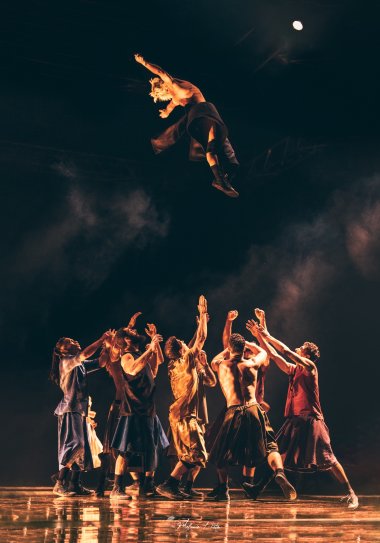
“Sol Invictus was a Roman pagan ritual, a celebration,” he continued. “And our goal was to hope for life to come again, to hope for brighter days, because dance can bring people together, regardless of their nationalities, cultures, religions.”
Since the 75-minute show has no intermission, the dancers are moving non-stop practically throughout. And with the extreme physicality required, one can’t help but wonder about injuries. Koubi attests, however, that his company only sees an injury once every two years, on average.
“Even when I have one dancer with one injury, he’s able to keep on,” Koubi said. “I don’t force him, but he doesn’t stop dancing. I’m very proud of this result, because I take care of my dancers.
“[It’s] probably because one of my former dancers is my assistant, Fayçal Hamlat,” the choreographer continued. “I met him in Algeria, [and] he understands what is best to avoid injuries, to make the best way to understand the work. A lot of these dancers come from everywhere in the world, and most are self-trained. For 12 of them, Sol Invictus is their first experience onstage with this creation. They’re absolutely amazing, and that’s the reason why I ask them to come in my company.”
Koubi made clear that he puts everything into his work and wants the show to resonate emotionally with the audience.
“Probably one of my favorite feedbacks is when [someone] says, ‘I was on my chair, and I was dancing with you in my mind.’ For me, that is the best feedback you can give to a choreographer.