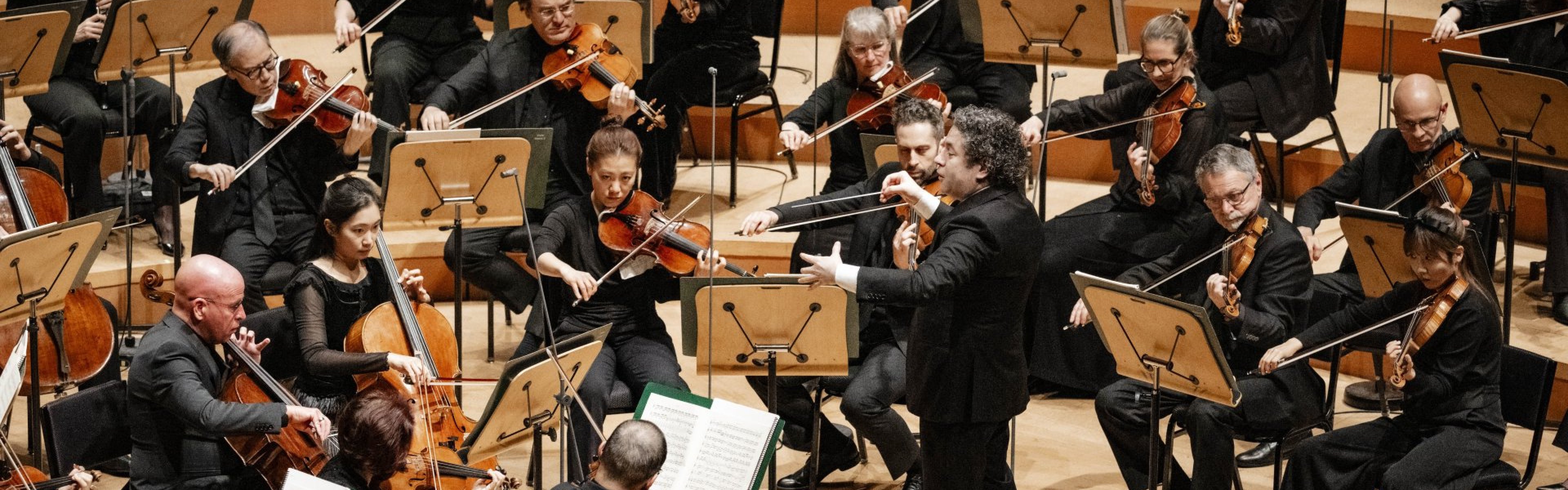

Over the last two weeks, Gustavo Dudamel and the Los Angeles Philharmonic reprised, one after another, two large-scale modern masterworks that were commissioned and premiered during his 17 seasons here. The first, Gabriela Ortiz’s Revolución diamantina, you read about last week. The second, heard Thursday night, March 5, at Disney Hall, was Thomas Adès’s Inferno, the first and most extroverted section of a larger three-part work, Dante.
Both are ballets. Both last about three-quarters of an hour. Both were written by seasoned composers of roughly the same generation, born just seven years apart. Both require ample-sized orchestras with huge percussion sections. Both may well define Dudamel’s legacy at the LA Phil as a champion of bold, rigorous yet rousing, rhythmically alive contemporary music that can appeal to a wider audience outside the usual new music circles. Fortunately, both were recorded.
To recap, the road toward the inception of Dante was long and bumpy. In May 2019, before the rest of the work had been written, Dudamel and the LA Phil introduced Inferno alone to an uproarious response. Not long afterward, Adès himself led the Phil and dancers from the Royal Ballet, based at Covent Garden in London, in Inferno across the street at the Dorothy Chandler Pavilion that July. Given the evidence of Inferno’s inspired vehemence and wit, expectations were sky high for the whole thing.
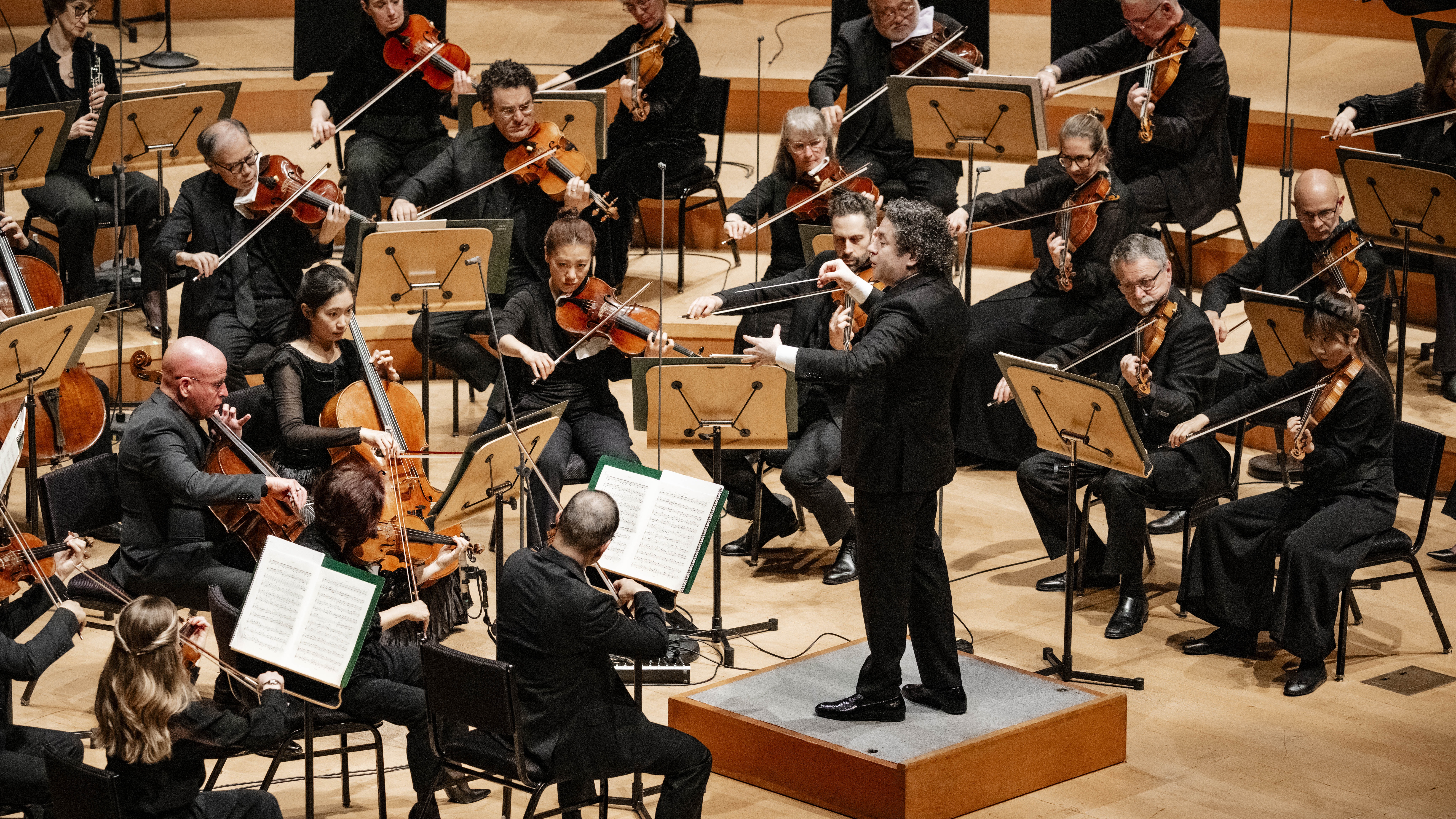
Dudamel was supposed to give the complete ballet its U.S. premiere in April 2021, but the entire 2020–2021 season had been canceled no thanks to COVID. Eventually, the whole work had its belated staged world premiere in London in 2021, followed by Dudamel and the Phil playing it at last in April 2022 as part of the Gen X Festival at Disney Hall. The latter performance was released on disc by Nonesuch in 2023, and the recording really comes off like gangbusters.
In returning to Inferno Thursday, Dudamel seemed to tie Adès’s ballet more to the tradition of the great evening-long ballets of the past in its rhythmic feel and sweep. I wouldn’t say this performance felt more relaxed, just more settled and assured yet without losing any of its zip and gaining greater lilt in the rhythms.
Dudamel leaned into the “Abandon Hope” prelude and “The Selfish” movement with even more volume and violence than before, and the ominous implications of the journey of “The Ferryman” across the river Styx were more audible. The gallery of penitents, popes, and other denizens of the underworld were characterized with spectacular washes of color, nasty/circusy waltzes, and dive-bombing winds and strings, among other effects. Principal cellist Robert deMaine played his featured solo in “The Hypocrites” more vividly than ever.
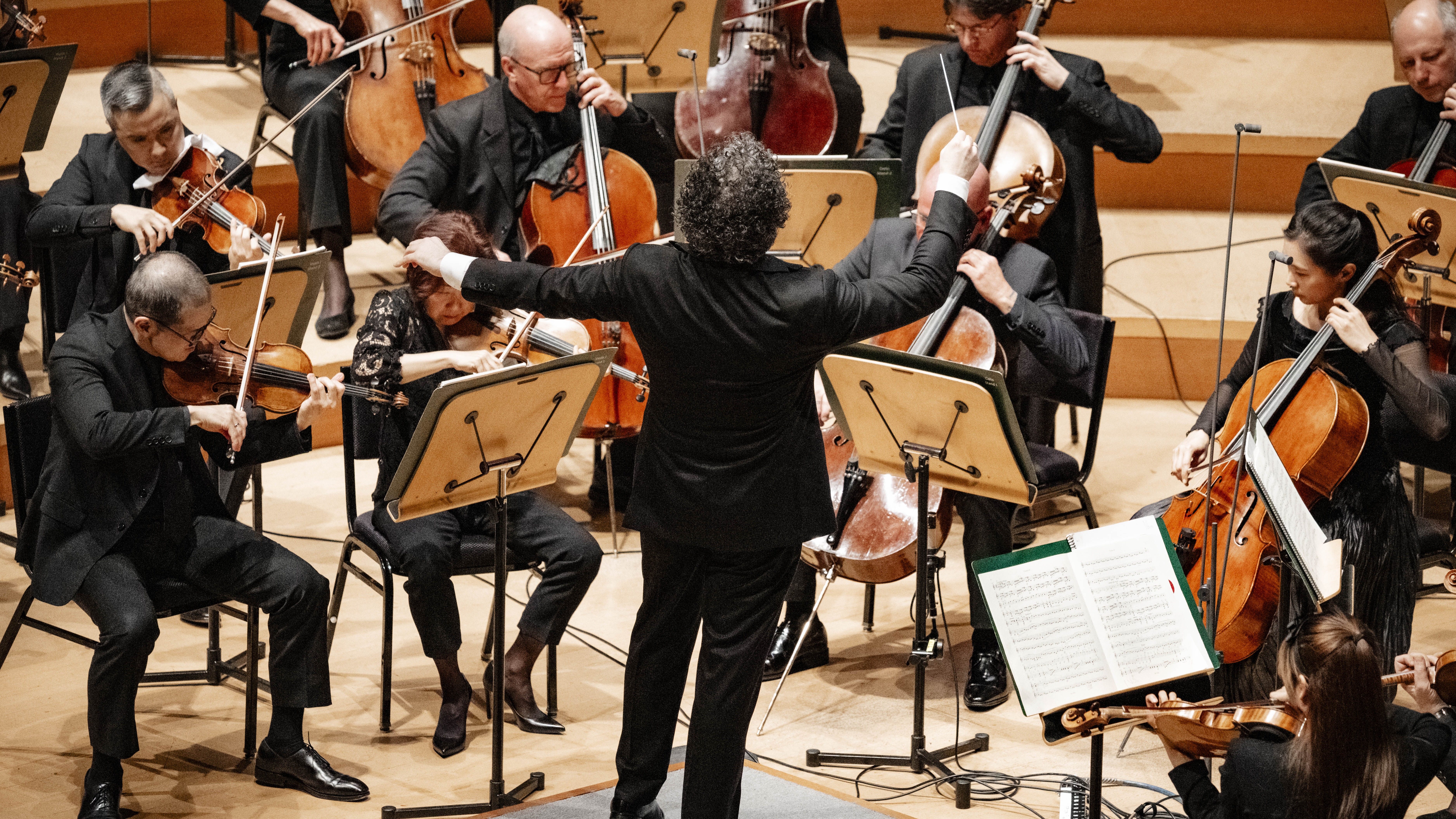
The most popular segment has a Freudian slip of a title, “The Thieves.” It is a mostly literal steal of Franz Liszt’s piano piece Grand Galop chromatique, lavishly and lasciviously orchestrated and warped by Adès with a zany burst of showmanship that would out-Shostakovich Shostakovich. The by-now-automatic applause that this movement provokes — as it did again Thursday at some length — should be written into the score.
Despite all this, the concert’s main selling point was still Beethoven. Symphony No. 6 was the wrap-up piece of the Phil’s Beethoven survey — and Dudamel, whose recording of the piece with the Simón Bolívar Symphony Orchestra of Venezuela was already on the fast side, pressed down on the accelerator a little harder.
In his brisk lope through the countryside in the first movement, there was more of the “Allegro” than the “ma non troppo” (not too fast) — though he relaxed a bit by the brook in the second movement. The Trio of the Scherzo suddenly took boisterous flight, the Storm was a thrill ride, and the Finale moved along swiftly. In an earlier age, this rendition would have faced tough competition from the great interpreters of the past, but in 2026, it can hold its own with almost anything around.
So ended Dudamel’s latest Beethoven festival — and compared with the plans of other major California bands as the 200th anniversary of Beethoven’s death in 2027 looms, it had more imagination than any of ’em. The leaderless San Francisco Symphony is slowly lumbering through the nine symphonies under guest conductor Jaap van Zweden. The Pacific Symphony announced a complete symphony cycle over a two-week span in January and February 2027 with its new music director Alexander Shelley. Except for an all-Beethoven affair with Trevor Pinnock in April, Rafael Payare and the San Diego Symphony are holding their fire until June 2027 with the cliché of concluding their season with the Ninth. I’ll take Dudamel’s enterprising blend of old and new over the others anytime.