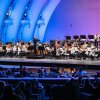
Concert life continued Saturday night April 25 in downtown Los Angeles. John Adams was set to conduct the Los Angeles Philharmonic for the second time in three months at Walt Disney Concert Hall.
But it wasn’t business as usual. A pall hung over Disney Hall, for we had lost Michael Tilson Thomas just three days prior after a nearly five-year battle against cancer during which, against all odds, he defiantly kept on making music.
Los Angeles’ City Hall was illuminated in deep blue — MTT’s favorite color — the night before in memory of the city’s native son. Clearly grieving, Adams paid heartfelt tribute to MTT before the music started, but not without a quip about his friend’s persuasive talents (“Only Michael could talk Jessye Norman into singing John Cage!”).
The first piece on the night’s program, a lilting, lushly harmonized Adams arrangement of Astor Piazzolla’s Oblivion, unintentionally became a touching elegy for MTT, bringing tears to my eyes and, I imagine, to those of many others.
This program, though worked out many months in advance, was one that MTT would have loved. There was American contemporary music, 20th-century Russian music, a tiny touch of jazz and Hollywood — everything that was planted firmly in MTT’s expansive wheelhouse. There are times when serendipity takes over.
Another Piazzolla arrangement by Adams, the spiky Libertango, lifted the general mood out of mourning, as the orchestration turned Piazzolla’s distinctive language into Adams’s own. Now we were ready for original Adams.
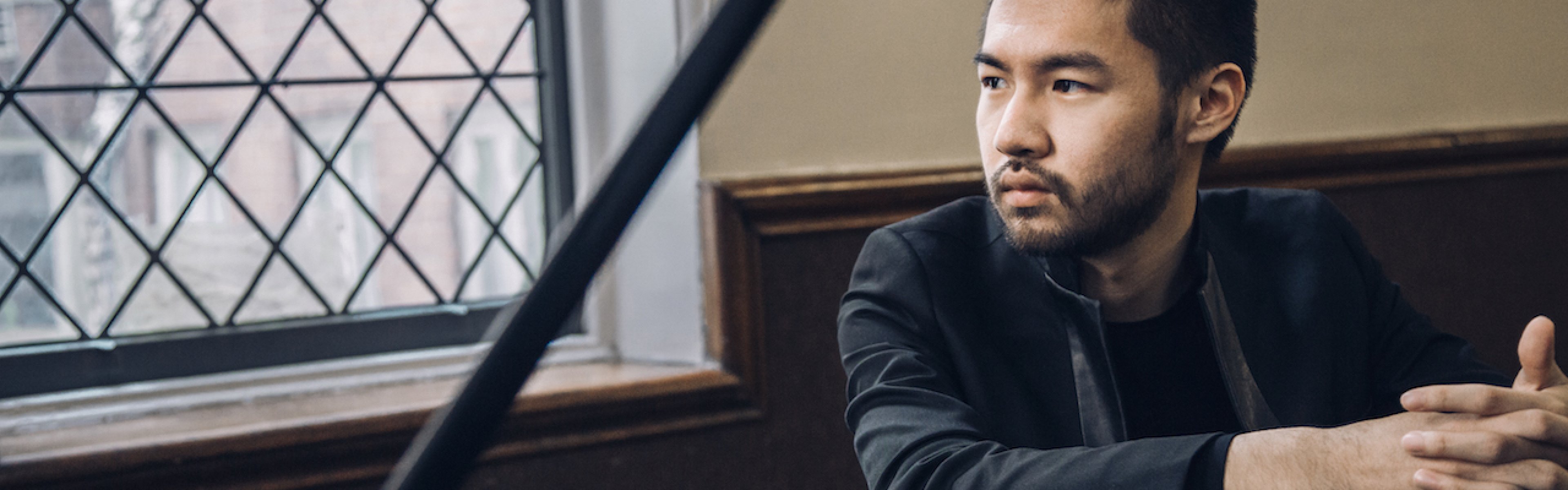
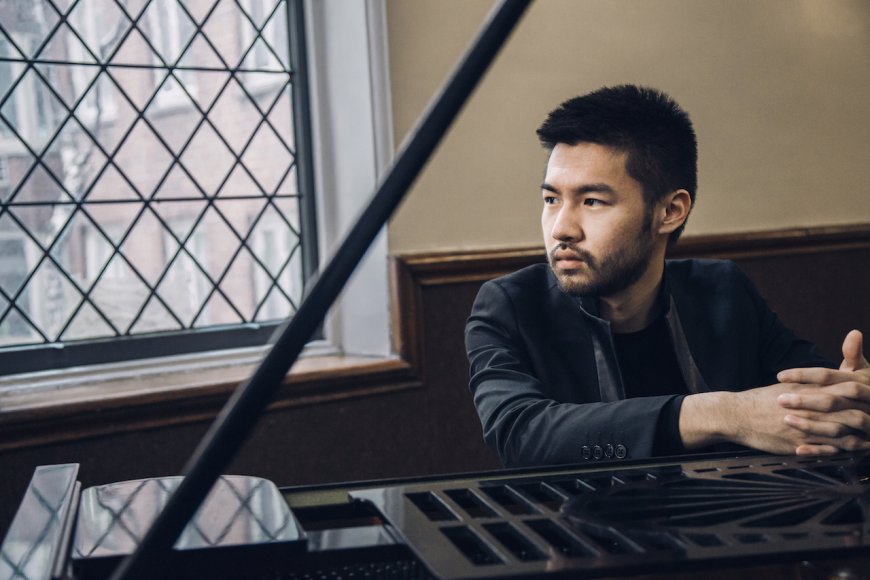
There was a change in the program because the Icelandic pianist Víkingur Ólafsson, was forced to cancel his appearance due to illness and his colleague Conrad Tao was rushed in. Thus, one Adams piano concerto (Must the Devil Have All the Good Tunes?) was swapped for another, Century Rolls.
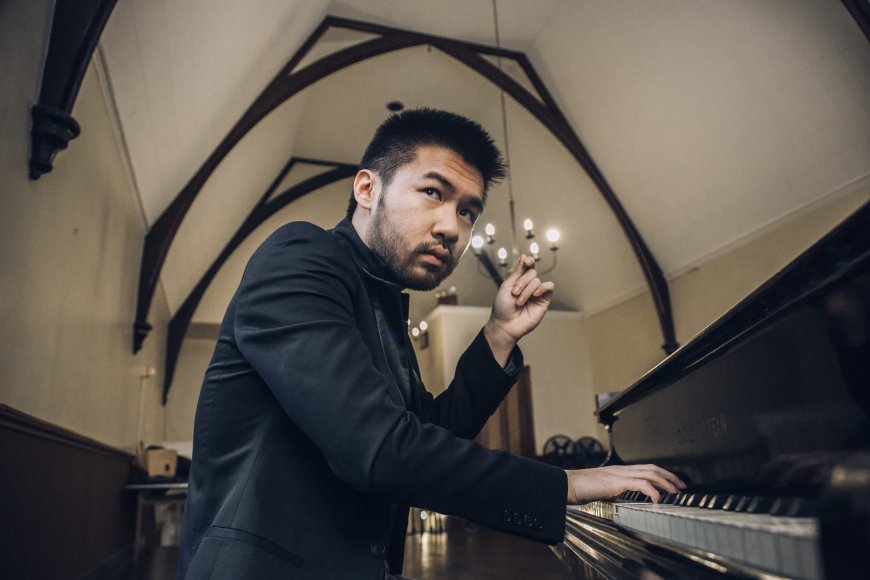
Century Rolls was originally written for pianist Emanuel Ax, which explains the mischievous triple-pun title for the slow movement, “Manny’s Gym.” The name refers at once to Ax’s nickname, Erik Satie’s Gymnopédie No. 2 (from which the movement takes off), and a real or imaginary boxing gym. This songful movement, which contains some of the loveliest music Adams has yet written, is surrounded by two boisterously complex and stuttering ones. The jazzy mode of “Hail Bop,” the third movement was triggered by impressions of composer Conlon Nancarrow’s eccentric piano rolls. This was catnip for the hyper-physical Tao, who with the composer’s encouragement, gave a jagged snap to the outer movements while producing a crystalline, birdlike tone in “Manny’s Gym.”
Tao then put his considerable chops to work on his transcription of a 1953 Art Tatum improvisation on the Harold Arlen/Yip Harburg standard, “Over The Rainbow.” He duplicated the technical feats but with jaggedly abrupt timing and more extreme dynamic contrasts than Tatum would have done. It was a brave try, though, and it was faithful to the risk-taking MTT spirit of crossing boundaries.
After intermission, Adams led two Russian concert rarities. Stravinsky’s The Song of the Nightingale — essentially music from the last two acts of his opera Le Rossignol as rearranged for symphony orchestra — is more-or-less written in the style of The Firebird but owing to the frequently-interrupted pace of its composition also veers into Petrushka territory. Adams emphasized the more grotesque details in the scoring, sometimes resulting in cockeyed balances, but the tempos were right on the money and the hall did the rest, illuminating a spectrum of detail.
Yet Stravinsky’s piece amounts to esoterica next to Prokofiev’s marvelous Lieutenant Kije suite, whose instantly memorable melodies and rhythms have been adapted or pilfered by a wide spectrum of musicians over the years from the Sauter-Finegan Orchestra to Emerson Lake and Palmer, Sting, and a number of films. Why this music isn’t played more often in concert is a complete mystery to me.
With saucy piccolo solos, a tenor saxophone bumping around, huge deep sonorities from the brass section, crisp jaunty rhythms, and poignant offstage trumpet calls, Adams and the Phil did a nice job with Kije. Coincidentally, both Stravinsky’s and Prokofiev’s suites end with quiet, soulful trumpet solos that were heard earlier in the scores — most likely one reason why the erudite Adams programmed them together.