Last week was an extraordinary embarrassment of riches in Los Angeles for symphony orchestra buffs.
Two Sundays ago, we heard Esa-Pekka Salonen, Igor Levit, and the LA Phil score a triumph with Ferruccio Busoni’s rarely played monster Piano Concerto at Disney Hall. Thursday, Riccardo Muti and the mighty Chicago Symphony came to The Soraya with a powerhouse program capped by a stunning encore — a sizzling, in-the-blood rendition of Verdi’s Nabucco overture. Back at Disney Hall on Friday, John Adams and the LA Phil found a place for his new piano concerto After the Fall within a program of top-drawer Americana.
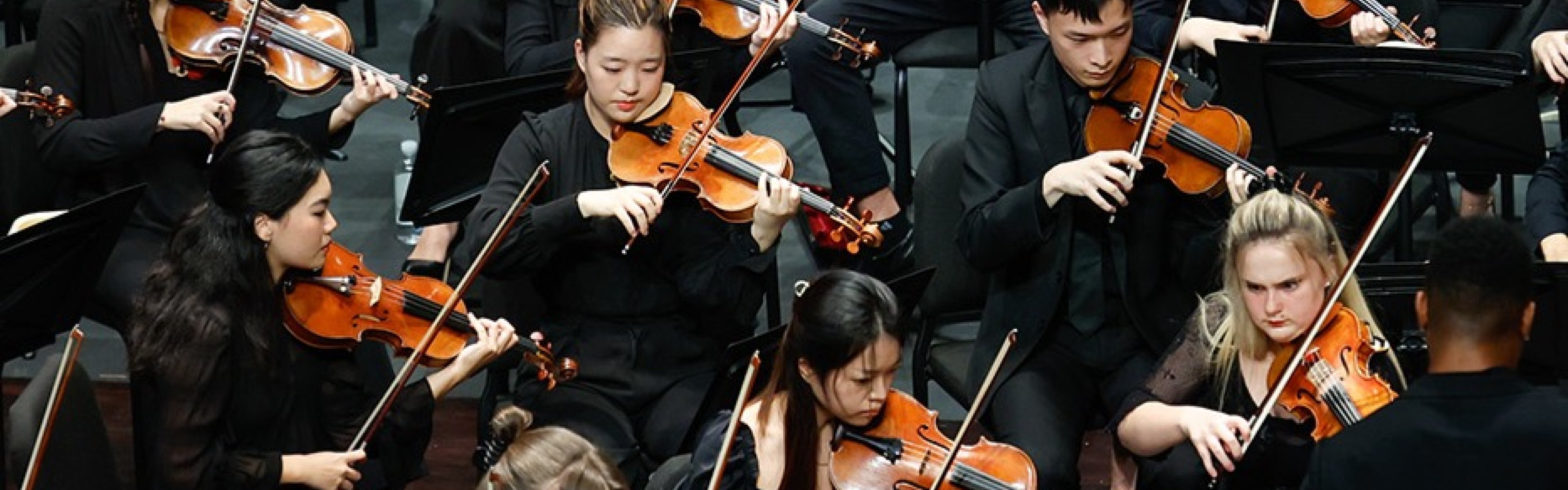
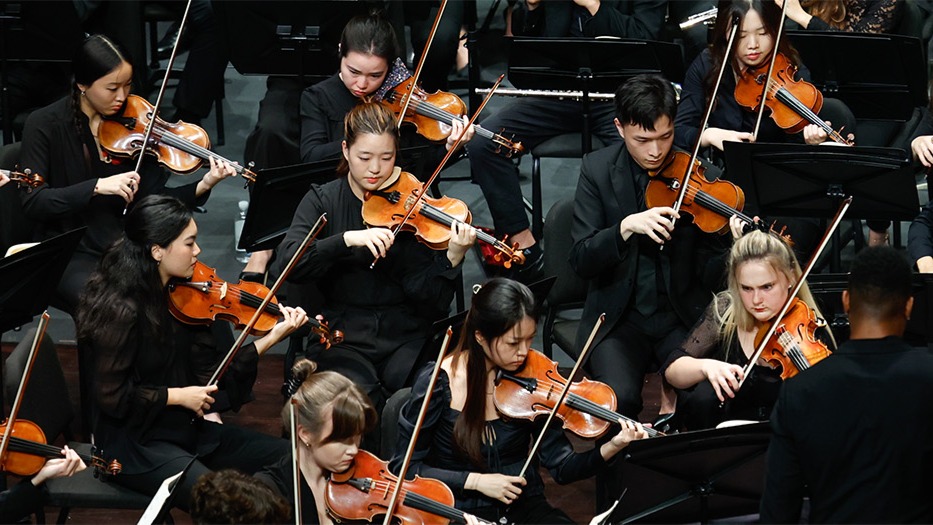
And finally, on Saturday, Jan. 24, in the decreasingly used (for music) confines of UCLA’s Royce Hall, Salonen conducted an object lesson in transforming an excitable, somewhat unruly youth orchestra into a more refined, genuinely musical instrument. An extraordinary week, indeed.
I got a possible tip-off of things to come when I took my assigned seat in Row D as the Colburn Orchestra was warming up en masse. I’ve never heard such a loud, raucous warm-up in my life — so loud that I had to escape to a seat way back in the hall just to hear myself think! (So did some of my colleagues.)
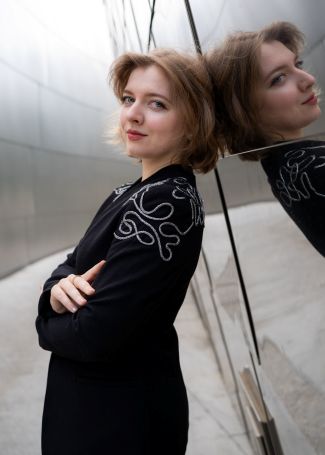
That set the stage for the first of two Salonen Conducting Fellows from the Colburn School’s Negaunee Conducting Program, Aleksandra Melaniuk, to lead Franz Liszt’s Les Préludes. Keeping a rather conservative beat, nothing as fancy as her bright red shoes, Melaniuk could summon a soft, subtle texture from the multitudes in the lyrical passages, but in the whipped-up ones, the Colburn musicians — especially the brass — were positively deafening.
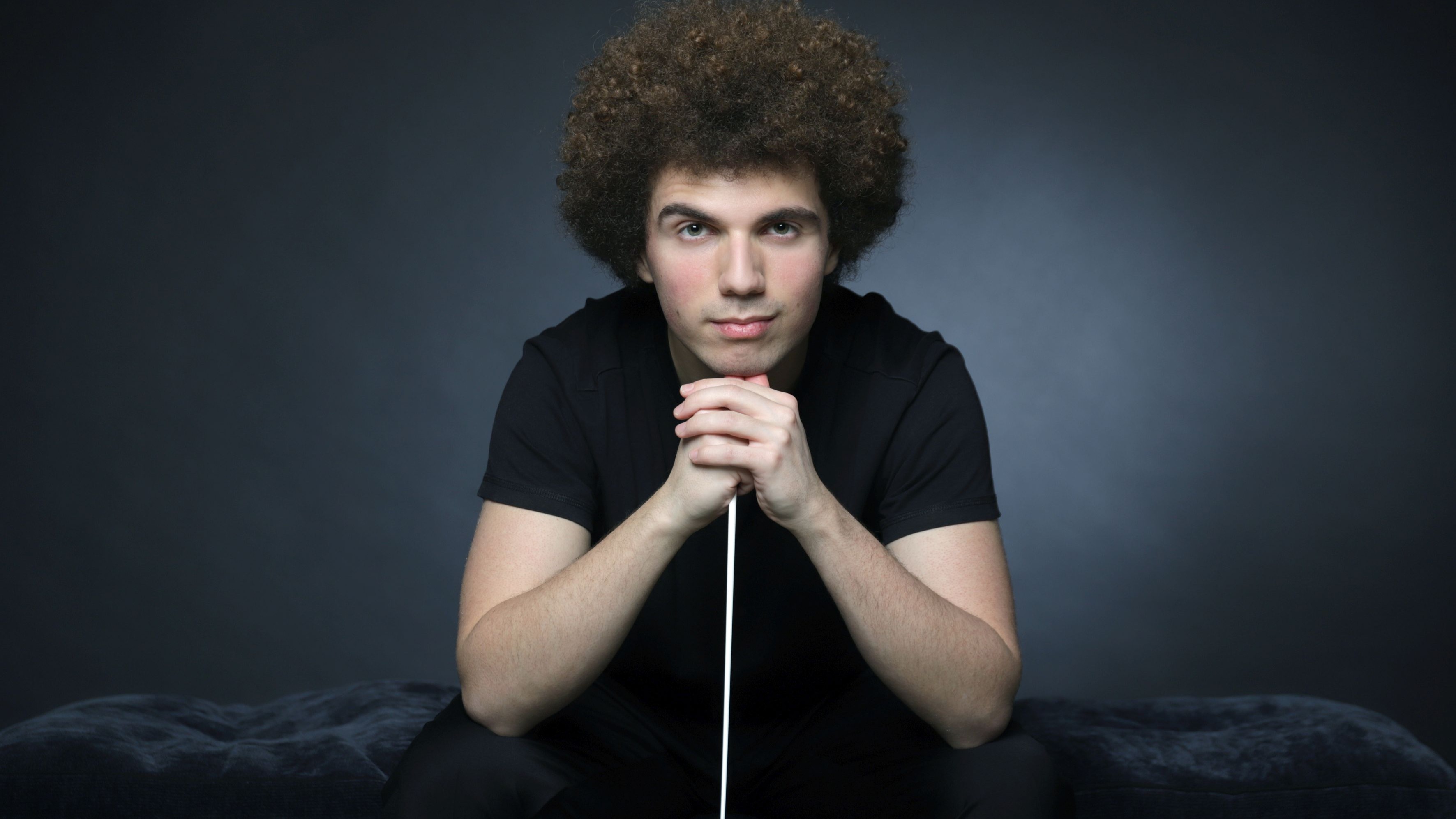
The 22-year-old German-Turkish triple-threat composer/ conductor/ pianist Mert Yalniz, was a very interesting find. He came to the podium with the world premiere of his first orchestral composition, Limit, which he conducted from memory with expansive, wide gestures. Inspired by scientific musings about what the limits are on Earth and in the universe, the 11-minute piece is an engagingly jam-packed, all-encompassing series of episodes with striking instrumental colors coming out of nowhere, rhetorical flourishes, big crunches of sound, and naturally, a razzmatazz close. Yalniz seemed to be running gleefully through an orchestral toy shop. “He can write his own ticket in Hollywood,” my seatmate remarked, but I imagine with Salonen as his self-professed mentor and role model, he will have more concert works in his future.
Salonen himself was there for the greater bulk of the evening leading the orchestra in Anton Bruckner’s sprawling Symphony No. 4 — and what a difference a master conductor can make upon a student ensemble. The opening slowly and patiently unfolded until Salonen unleashed the first tremendous fortissimo theme at full volume. But this time, though it was plenty loud, the balance between the sections was evenly set, and the sound fell comfortably upon the ears.
Even allowing for the differences between Bruckner and Liszt, the whole sonic atmosphere in the hall had changed. I’ve seen this phenomenon demonstrated on this very stage during a 1982 master class when Leonard Bernstein briefly took the baton from a student conductor and raised the level of performance sky-high in a passage from Richard Strauss’s Till Eulenspiegel. “It’s easy,” Lenny said as he handed the baton back to the student. No, it isn’t — and Salonen now has the experience and mastery to make it happen at will.
Though not a natural Brucknerian, he has clearly learned a lot about what makes the pious, visionary Austrian composer tick since his 1997 recording of the Fourth with the LA Phil early in his tenure there. He is a much more sophisticated interpreter now, examining, absorbing, and savoring every phrase while imparting a convincing lilt to the folk-like passages. While his tempos are much faster than they were in 1997 — perhaps he was revving them up especially for his young players — they didn’t feel like rushed because of all the telling details in phrasing and expression.
Salonen’s Bruckner is not the contemplative, monumental, spiritual experience of the great Germanic conductors of the past — or more recently, Zubin Mehta. But with episodes like the dashingly paced hunting-call scherzo, Salonen’s way is a more contemporary, perhaps urban way of hearing this composer.
We’ll get a generous serving of genuinely contemporary things from Salonen’s wheelhouse, along with music by Stravinsky and Schoenberg, when he takes the Colburn Orchestra to the Ojai Music Festival on June 12 and 14.