For works that lay at the intersection of music and technology, the challenge often lies in whether technology can come across as more than just a novelty. Anne Hege, the mastermind behind The Glance: A Laptopera, said “challenge accepted.”
In its world premiere at San Francisco’s ODC Theater last weekend, Hege’s contemporary retelling of the myth of Orpheus and Eurydice successfully incorporated music tech as an essential part of the production’s storytelling. Through motion-tracked instruments, live electronics, screen projections, and a laptop orchestra, The Glance transformed themes of control, surveillance, and connection into an immersive experience for audiences.
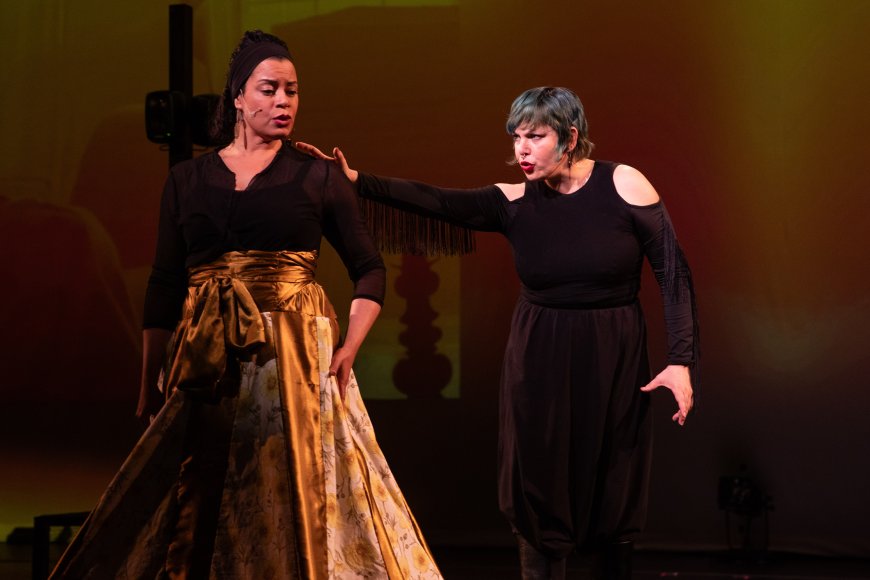
In The Glance, Orphea — a gender-swapped “recasting” of the traditional protagonist — is a successful touring musician who becomes increasingly possessive as Eurydice struggles to escape and maintain independence. This contemporary approach to opera seemed to resonate with younger attendees: the May 29 premiere drew a near full-house and most attendees were young adults.
Rather than simply being there for decorative effects, the opera’s laptop orchestra and custom-built instruments actively filtered and changed sound as it migrated across the theater. Hades’s “Orb,” a motion-tracked hoop that manipulates sound in real time, was particularly memorable. During the scene where Orphea and Eurydice communicate across the living and the underworld via radio, the Orb’s movement gave the impression of sound itself traveling between realms. The effect was both theatrical and interactive.
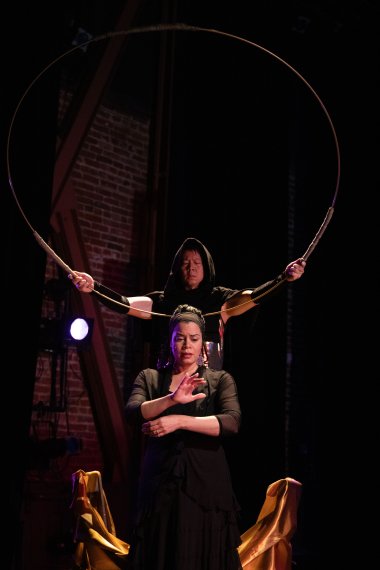
Eurydice’s journey through the underworld was equally immersive. As the performer moved, the motion-tracking technology altered echoes of her voice and projected visuals, creating the illusion of a vast tunnel surrounding her. The combination of sound, gesture, and image was so convincing that one could easily imagine traversing the underworld alongside her. It was in these moments that The Glance showcased how electronic instruments and technology can be carefully incorporated as storytelling tools to create an even more realistic theatrical experience.
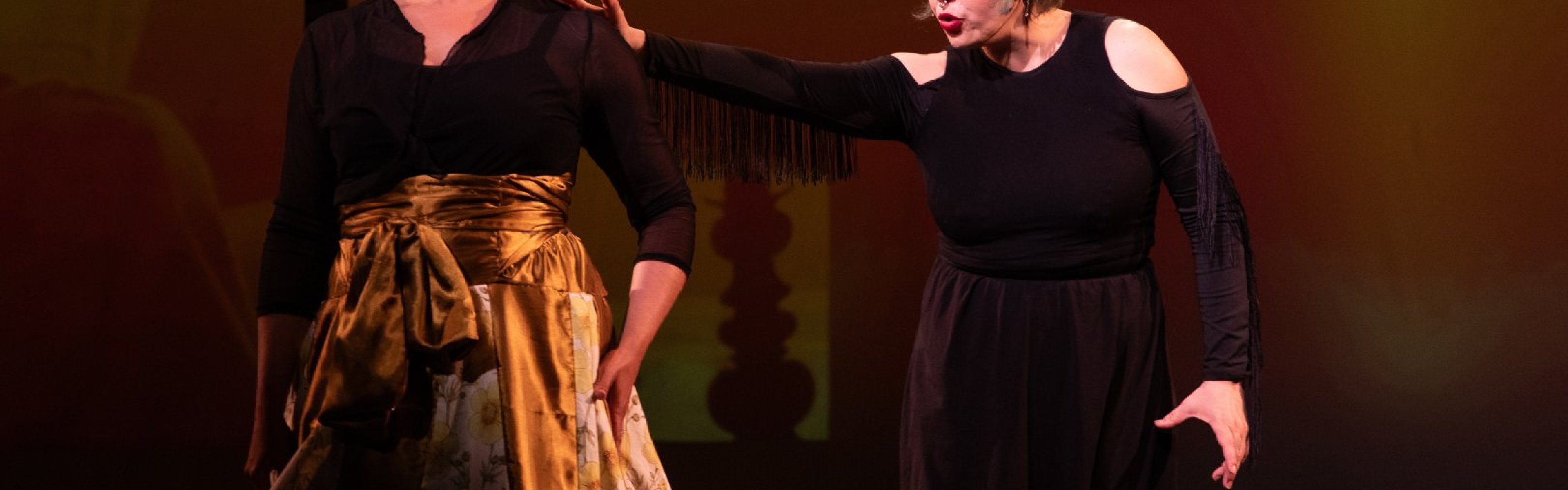
Among the cast, Carmina Escobar delivered the evening’s most commanding performance as Orphea, mastering incredible precision and vocal control. Early in the opera, repeated declarations like “You burn me” and “You are only mine” appear as intimate and romantic expressions of love. But by the time Orphea prepares to descend into the underworld to search for Eurydice, these same declarations become obsessive and suffocating, revealing the chilling, destructive possessiveness underlying this relationship. Escobar skillfully transformed these recurring motifs as feelings of devotion hardened into those of surveillance.
In many traditional retellings of this myth, Orpheus glances backwards out of joy, excitement, or love. Here, this glance takes on a much darker meaning: Orphea’s inability to stop looking at Eurydice is rooted in surveillance, anxiety, and the desire for control. Eurydice’s final declaration of both her love and her desire to be a free becomes one of the work’s most powerful and emotional statements.
The Glance asks the audience to trust the process. Early scenes occasionally felt opaque, and the dramatic purpose of certain elements were unclear until later scenes. Orphea’s concert livestream scene drew laughs from the audience and effectively acted as a humorous reminder of the story’s contemporary setting, but it felt less fully integrated into the opera’s central themes. Still, Act II rewards that patience. As the relationships among technology, music, and narrative become clearer, the opera grows increasingly immersive. By the final moments, as Orphea begins to turn toward Eurydice and the stage abruptly turns into pitch-black darkness, The Glance leaves its audience suspended between trust and possession.
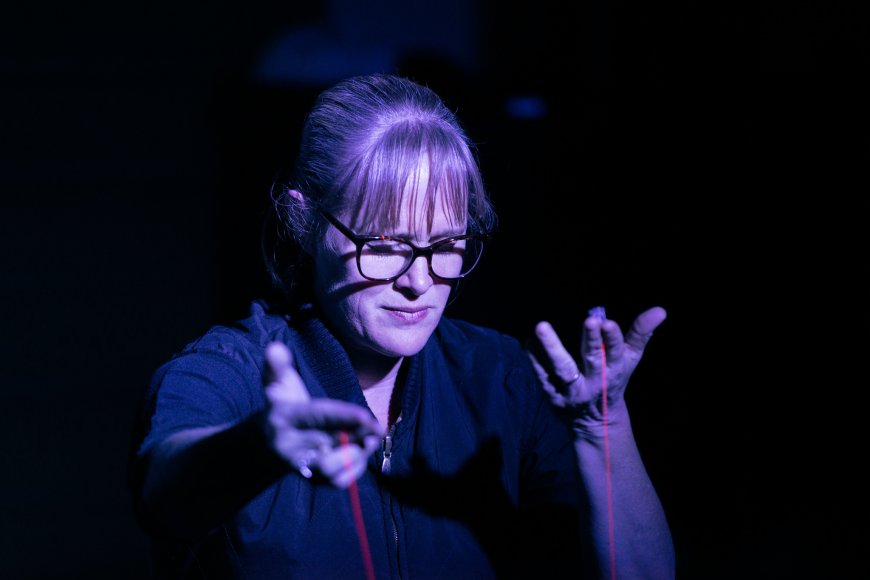
Although many expressed concerns surrounding artificial intelligence infringing upon creativity and the arts, The Glance demonstrates that this is not the case. Through custom-built instruments and the laptop orchestra, The Glance shows that technology can rejuvenate rather than hurt the art form, expanding the potential for expressivity and audience engagement in opera.