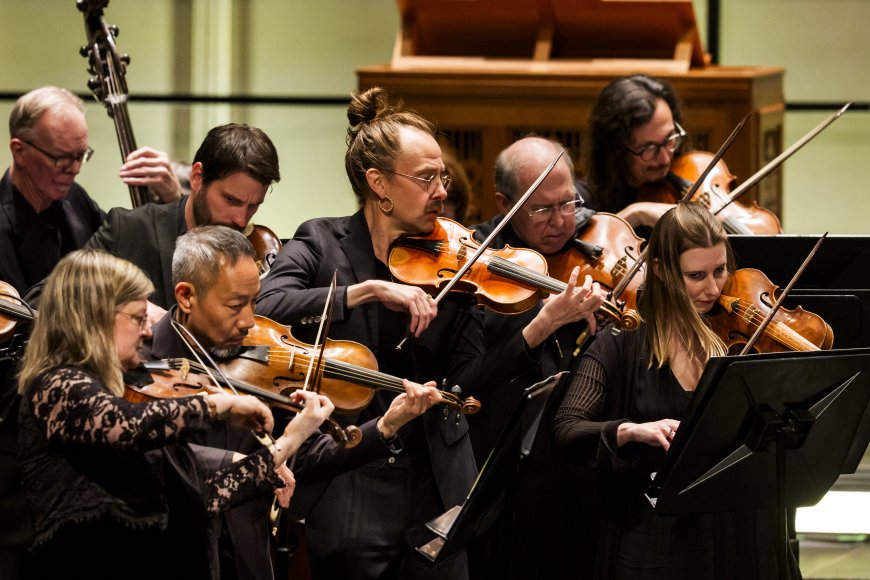
Even after three seasons of Grete Pedersen refreshing the repertoire of the venerable Carmel Bach Festival, it may be that we ain’t seen nothing yet. The former soccer player turned choral director’s theme for the 89th festival is “the nature of sound” – and in her first two programs, she constructed two collages of music from today and long ago that went beyond her earlier experiments in stretching the ears of Carmel’s audiences. Judging from their response, they hugely enjoyed the exercise.
Pedersen has made Haydn’s choral music a prominent feature in three of her four Carmel Bach Festivals, with the mostly secular oratorio The Seasons getting the nod at the Sunset Center Theater Saturday evening, July 11. This time, her increasing boldness in reimagining repertoire resulted in some major surgery.
Instead of presenting the entire Seasons uncut and uninterrupted, Pedersen led extended excerpts from the “Spring,” “Summer,” and “Autumn” sections and laid “Winter” aside altogether. Prior to “Autumn” after intermission, she inserted Muohta – Language of Snow, an avant-garde piece for choir and strings written for her in 2017 by fellow Norwegian Nils Henrik Asheim as a contemporary response to The Seasons.
Muohta is a general word for “snow” among the indigenous Sámi people of Lapland at the top of Scandinavia, where there is a lot of it from mid-October to May. There are an estimated 300 words in the Northern Sámi language for snow, depending upon quantity, texture, and usefulness to animals and residents. Asheim chose 18 of these words as titles for 18 brief pieces that soar, bend, fizz, and provide a dissonant counterpoint to Haydn’s mostly cheerful affirmations. Needless to say, the contrast was extreme.
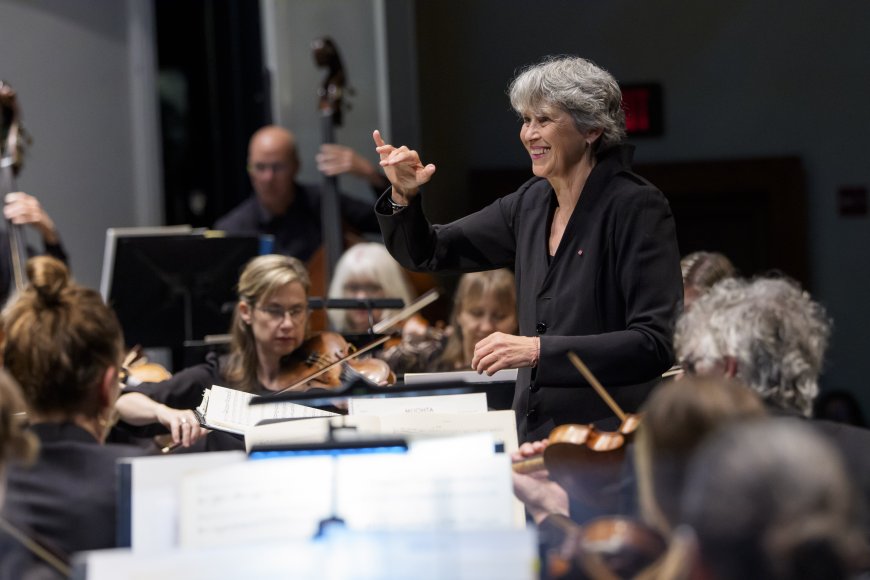
The Seasons excerpts were chosen with an ear toward leaving in the dramatic moments like the thunderstorm toward the end of “Summer” — with timpani pounding out the thunder and the flutes suggesting lightning — and the hunting episodes in “Autumn,” complete with raucous natural horns. Pedersen had three excellent vocal soloists who blended beautifully – Carmel Bach mainstays soprano Clara Rottsolk and tenor Thomas Cooley, plus the commanding baritone of Edward Nelson – and she enforced vigorous tempos and got zesty singing from the split Festival Chorale and Chorus.
Muohta makes a smashing impression when heard live: The falling glissandos, microtones, whistlings, strings playing on the bridge and other extended techniques were clarified and enhanced to a degree that doesn’t quite come through on the piece’s recordings (led by Pedersen). The closest comparison that comes to mind would be György Ligeti in his clouds-minus-clocks mode.
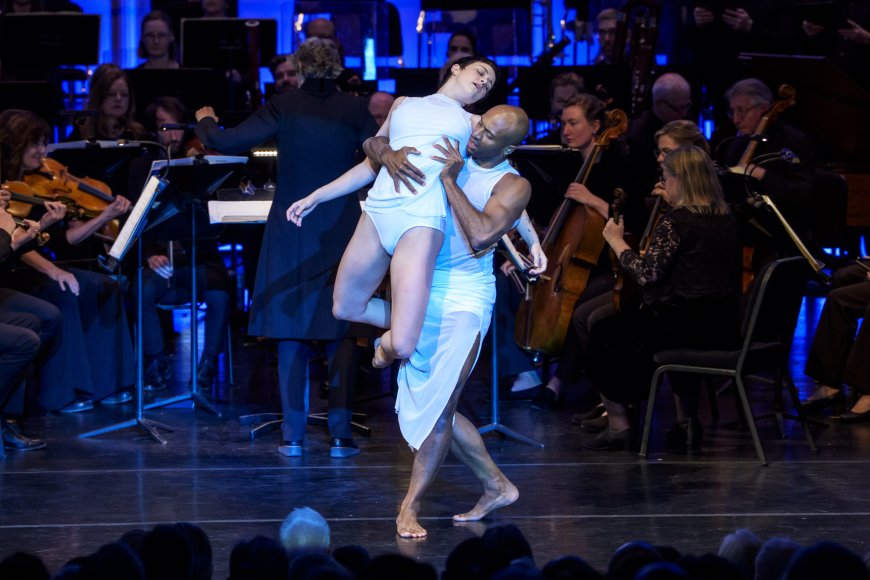
Not only that, two agile white-clad dancers from the Carmel Dance Festival, Natalie Leibert and Babatunji Johnson, offered their own abstract representations of snow as dots of light resembling falling snowflakes were projected on the Gothic arches framing the hall. It was a pity that about one-third of Muohta's sections had been deleted; the piece deserved a fuller hearing.
But did this combination really work? Yes and no. When taken individually, both the Haydn and Asheim performances were successes, and their coupling made a lot of enterprising sense on paper. Yet when heard in succession, “Autumn” came off as a rather awkward, somewhat anticlimactic follow-up to the wild sound explorations of Muohta. It might have worked better had Muohta been placed before “Spring,” thus restoring the natural sequence of the seasons — which, ironically, Pedersen achieved in her first Carmel season, in 2023, when Karin Rehnqvist's wintry 'Breaking the Ice' led to a spring-to-summer journey with Mahler and Mozart.
No such reservations applied to the sequencing of Sunday afternoon’s concert (July 12) in which Pedersen constructed a bridge between the centuries that was stunning in its impact. Her theatrical bent was in full gear. First, two drummers on either side of the Sunset stage and four brass players wielding baroque instruments launched the March from Henry Purcell’s Music for the Funeral of Queen Mary, which in Wendy Carlos’s electronic garb three centuries on formed the title music for Stanley Kubrick’s future-shock film A Clockwork Orange.
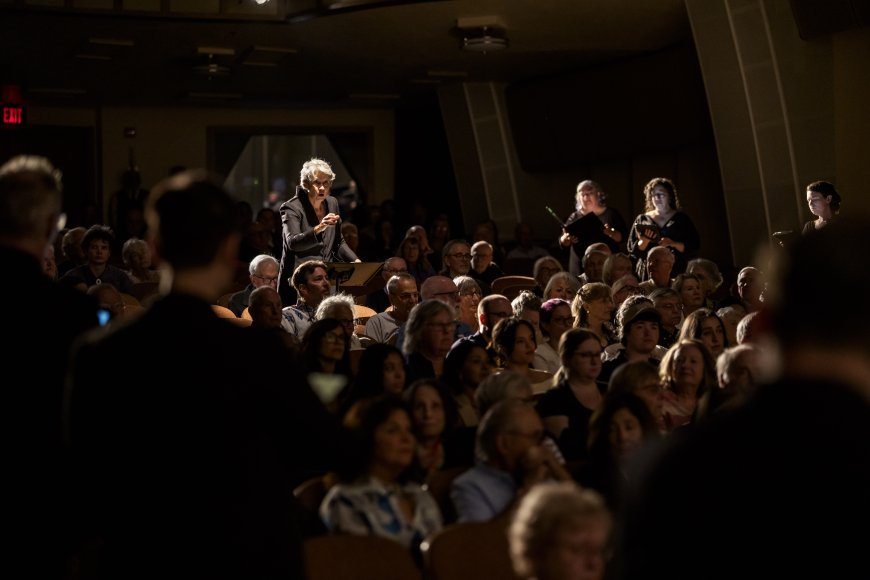
Then, choristers lined the aisles singing Sven-David Sandström’s elaboration of Purcell’s “Hear My Prayer, O Lord,” in surround-sound formation with Pedersen leading them from a spot in the middle of the audience. Sandström gradually blurs the harmonies and works up a froth of dissonance that becomes emotional and even frightening.
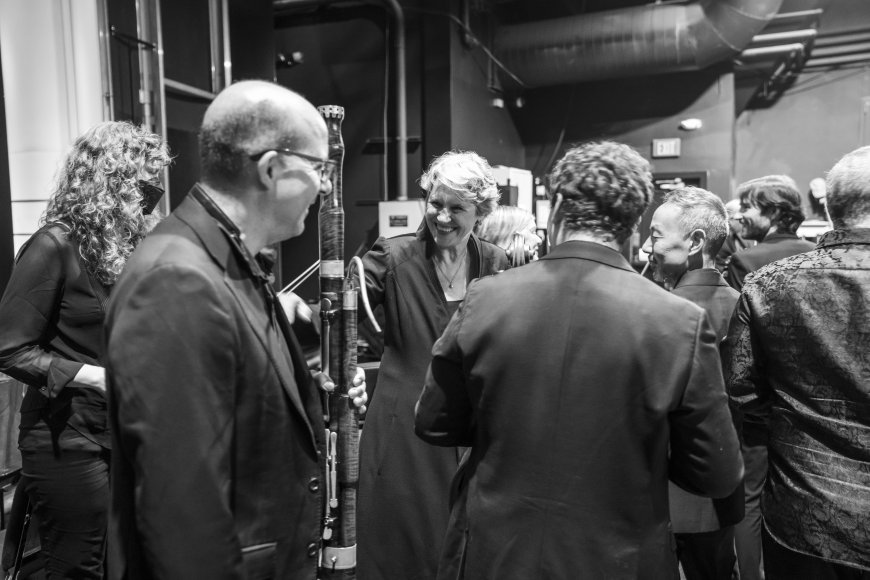
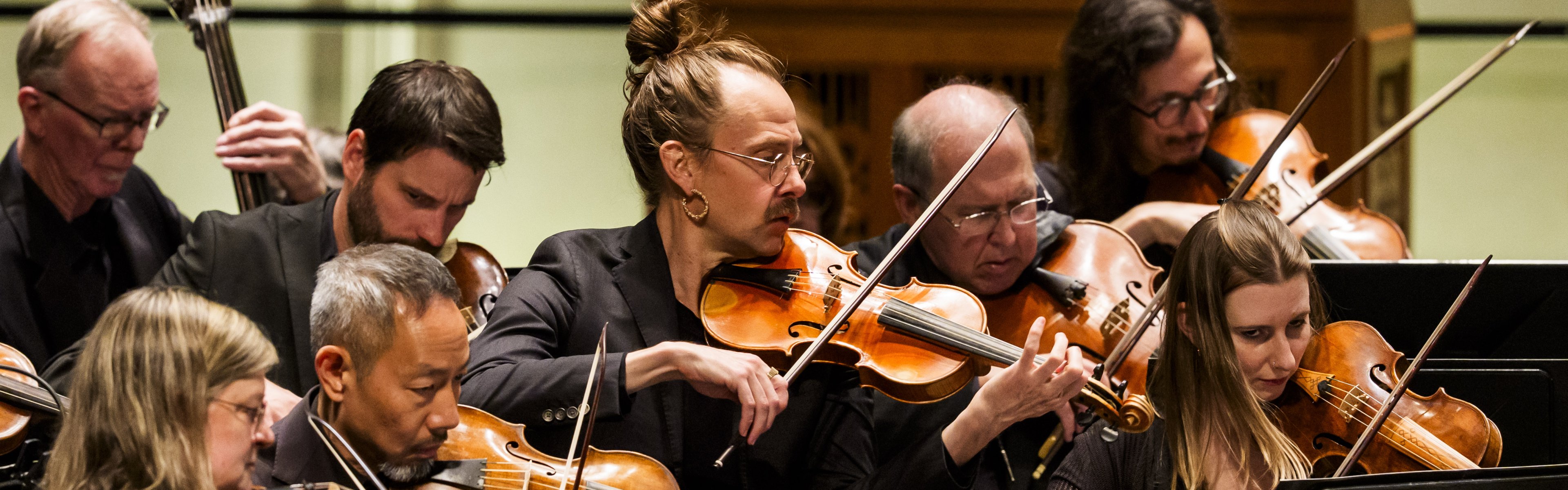
Some more authentic Purcell from the Funeral music dialed down the angst for a bit, but as Pedersen scrambled onto the stage, the dissonances came roaring back in the form of the shattering chord that leads off Jean-Féry Rebel’s Les élémens, simphonie nouvelle. No contemporary elaboration was needed, for this representation of chaos well before Haydn’s or anyone else’s time was achieved by simply playing Rebel’s notes with baroque instruments. Again, Pedersen performed excerpts from the score (six of the ten movements), inserting Kaija Saariaho’s Nuits, adieux — a conglomeration of singing, babbling, and simulated electronic hissing sounds for 12 versatile choristers — exactly at the halfway point of the Rebel excerpts.
By the time Saariaho was through, Rebel had calmed down, and after a solo flute interlude, the Festival Orchestra kicked up its heels with a saucy pair of Rebel’s Tambourins. This whole continuous sequence lasted 38½ minutes, and every supposedly incongruous element seemed ingeniously linked up.
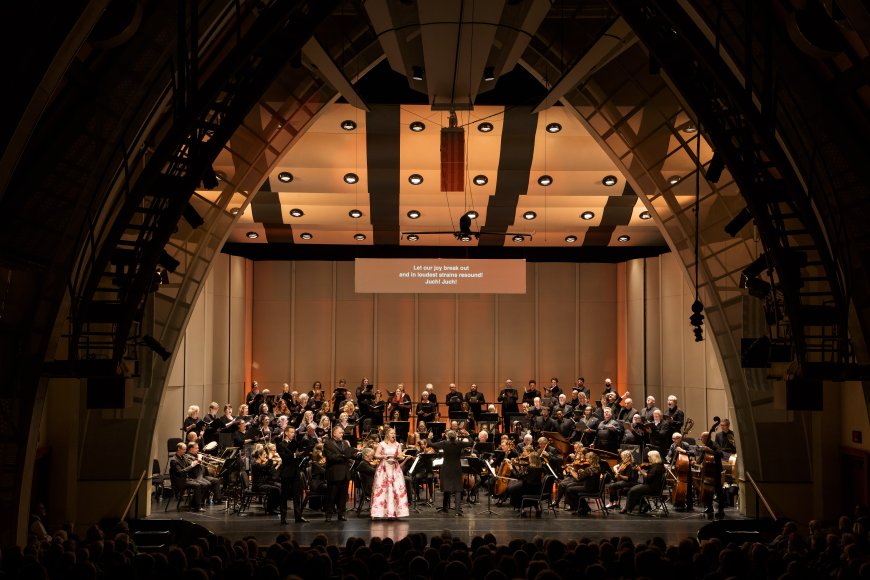
After all of that, J.S. Bach’s Cantata BWV 214, “Tönet, ihr Pauken! Erschallet, Trompeten” concluded the concert with enough rhythmic energy to make the ensemble seem to levitate above the stage. Again, there was excellent singing from Rottsolk and Cooley, now joined by baritone Jesse Blumberg and the expressively fluid countertenor of Reginald Mobley. Pedersen may not lead the tidiest of ensembles, but she can inspire turbocharged performances from them.