Contemporary classical music organization Bang on a Can’s co-founder David Lang — or, should we say, david lang, since he is addicted to titling his pieces in all lowercase — has been an occasional collaborator with Grant Gershon and the Los Angeles Master Chorale for over a decade and a half. In fact, the use of lowercase does suit Lang’s compositional sensibilities in the works that the Master Chorale and others have performed. They tend to be subdued, meditative, and thoughtful, fragmented in the line and economical in means.
The Master Chorale has performed and recorded Lang’s much-honored oratorio the little match girl passion (a minority opinion: I found it to be an interminable bore, then and now) and another choral piece that they commissioned, the national anthems. The Chorale’s latest project with Lang, before and after nature, as heard at Walt Disney Concert Hall Sunday night (Nov. 16), is their most expansive collaboration — and for this listener, the most interesting of the lot.

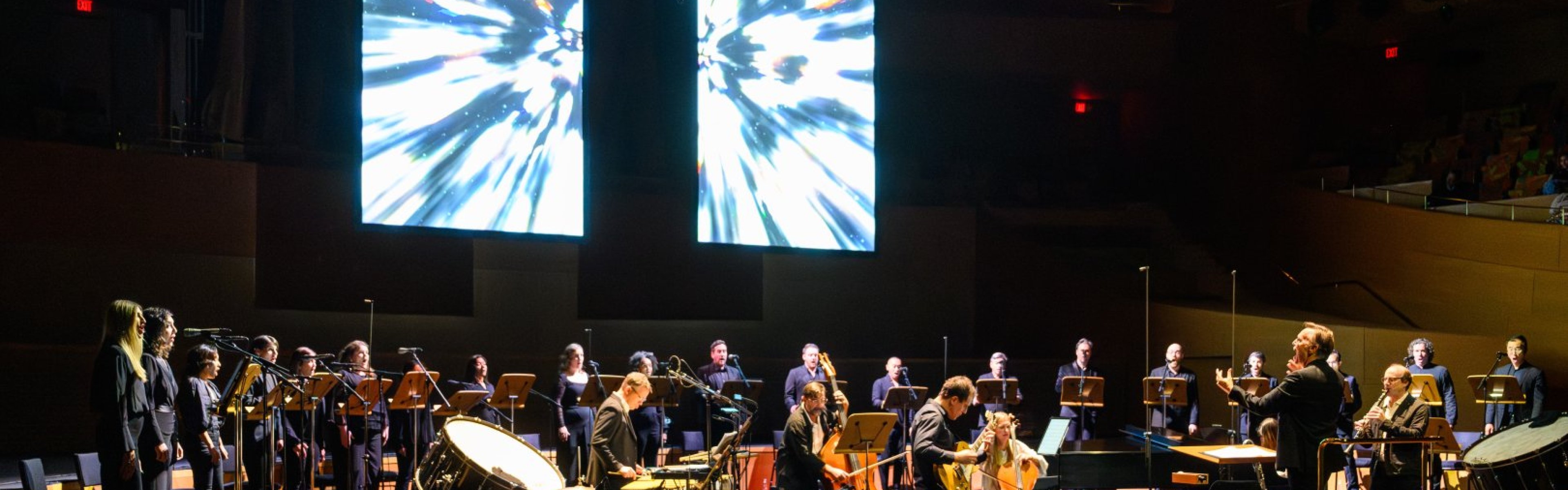
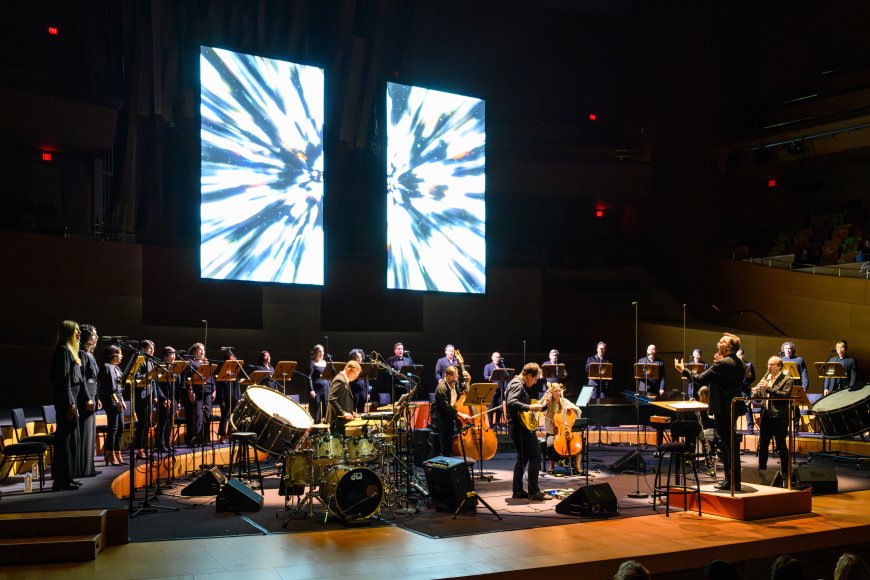
First presented at Stanford Live’s Bing Concert Hall in February and recorded a day before the Disney Hall performance, before and after nature uses a 20-voice contingent from the Master Chorale and six instrumentalists from the Bang on a Can All-Stars, all amplified. Video and visual designer Tal Rosner — no stranger to multimedia projects at Disney Hall — provided video accompaniments on twin screens behind the performers.
Like many contemporary works in these times of climate change, before and after nature addresses humanity’s relationship to nature — or rather, “our limitations in seeing and understanding the world around us.”
Limitations, indeed there are. Lang’s score and many of Rosner’s video accompaniments lacked specific or graphic depictions of nature in sight or sound. The libretto, which Lang wrote himself with some words taken from John Muir’s writings and a speech President John F. Kennedy gave at a 1962 dinner hosted by the Australian ambassador, is a patchwork of fragments of sentences and phrases, the majority of which were unintelligible without the help of the provided texts.
The seven-movement, 57-minute choral work begins with a lone pianist repeating a single note. Lang gradually adds notes, instruments, volume and complexity to the mix in a minimalist manner. Rosner introduces amorphous amoeba-like shapes on the twin screens, which eventually morph into gorgeous images that seem to suggest flames and galaxies. Soon the chorus presents us with a laundry list of earthly things that didn’t exist before the Big Bang of Creation (“no earth, no height, no depth, no name … no reed, no tree,” and so forth). Duke Ellington did much the same thing in “In the Beginning God” from his first Sacred Concert, but with some humor and pizzazz that you won’t find here.
The fourth part is a purely instrumental interlude for piano, clarinet/bass clarinet, double bass, cello, electric guitar, and percussion that gently tumbles around until loud snaps of the snare drum animate a violent episode accompanied by visual suggestions of explosions on the sun’s surface. Other images by Rosner in this section include melting glaciers and green mountains, but the majority are abstract kaleidoscopic swirls that suggest nothing more than a master video designer reacting to the music. A Lang signature that pervades the little match girl passion rears its head in Part 5 — short a cappella choral phrases separated by pauses, kind of like football’s three-yards-and-a-cloud-of-dust running play.
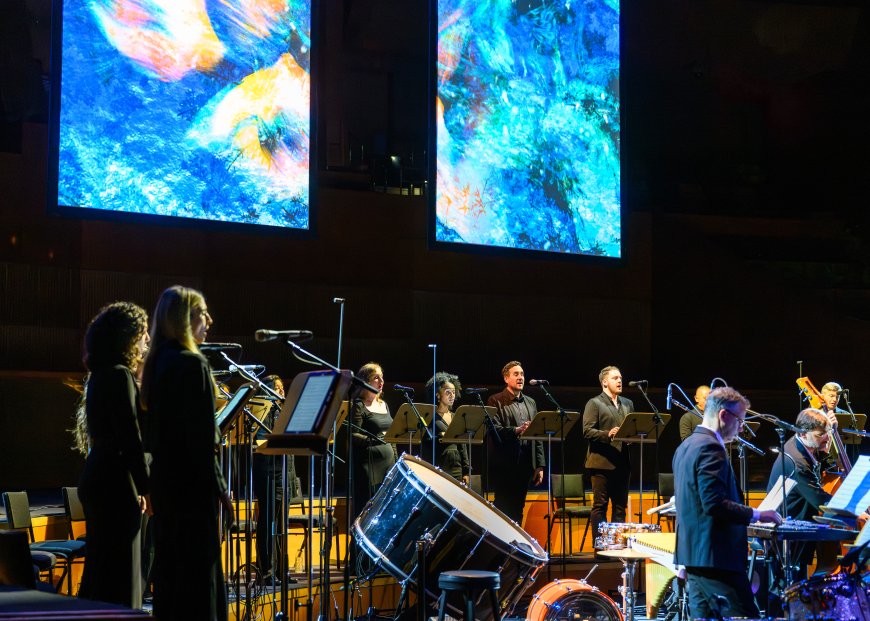
Ultimately Lang saves his finest inspirations for last in the enigmatic Part 7. Against simple pinpointed notes for piano, electric guitar, and vibraphone and punctuating bumps from the bass drum and bass clarinet, the choir delivers a mixed message in delicate, sustained complex harmonies — “every night the world will end / every day the world will start again.”
The words leave the listener in a quandary between pessimism and optimism about the natural world, a state of mind that quickly fades from consciousness. But the haunting music lingers on, a good payoff for nearly an hour of one’s attention.