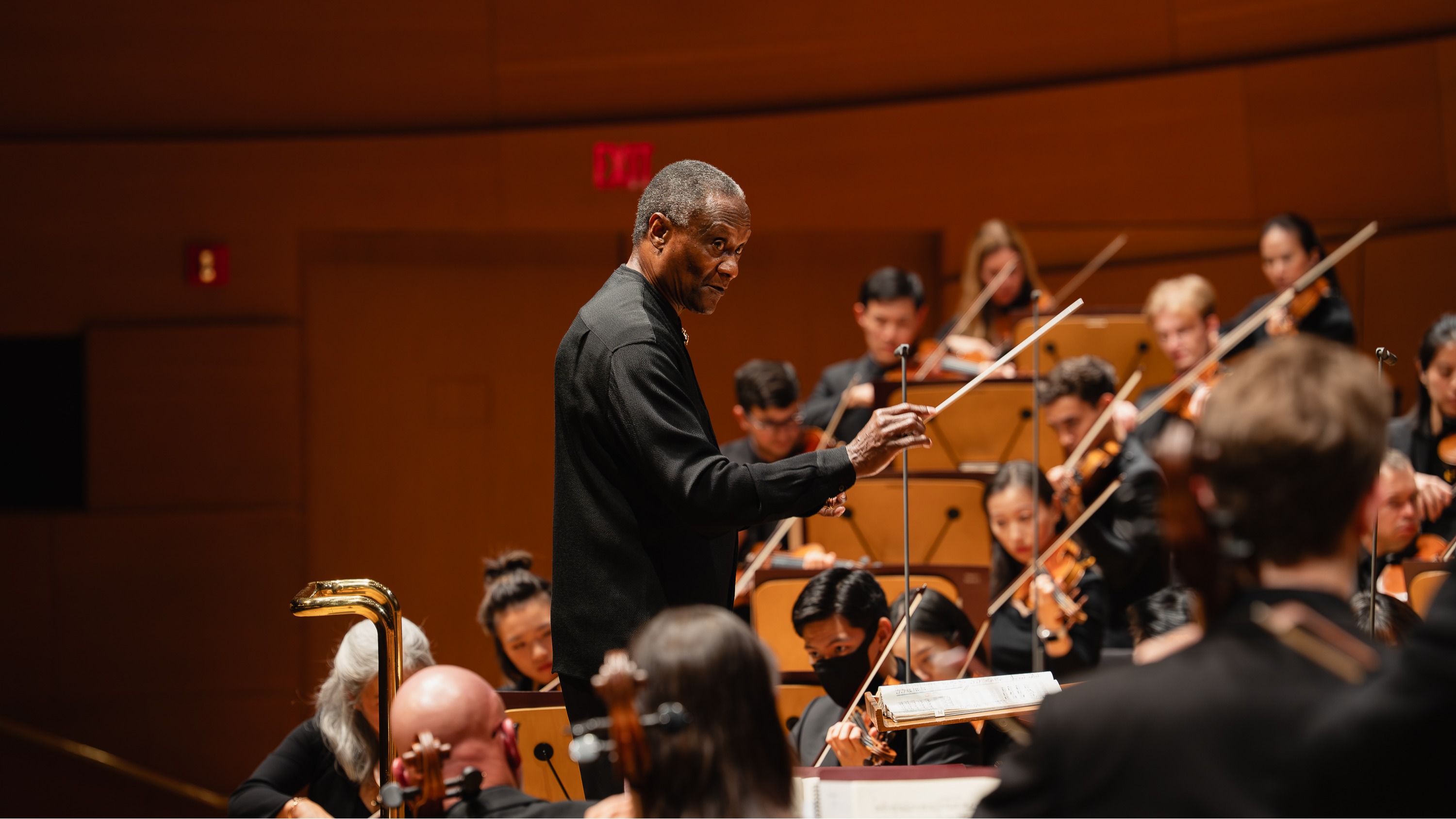
The weather outside was hardly frightful. Indeed, it felt like summer, but inside the festively decorated Walt Disney Concert Hall, the Los Angeles Philharmonic created a delightful wintry mood as Thomas Wilkins, principal conductor of the Hollywood Bowl Orchestra and a regular visitor to Disney Hall, led a spirited and colorful holiday concert.
The program of the Dec. 18 event ranged from the big band sound of Duke Ellington's Nutcracker Suite to the genteel folksiness of Tchaikovsky's rarely performed Symphony No. 1. Carlos Simon's Four Black American Dances opened the evening with big splashes of percussion that may not have been Christmas-y but nonetheless set the stage for some serious celebration.
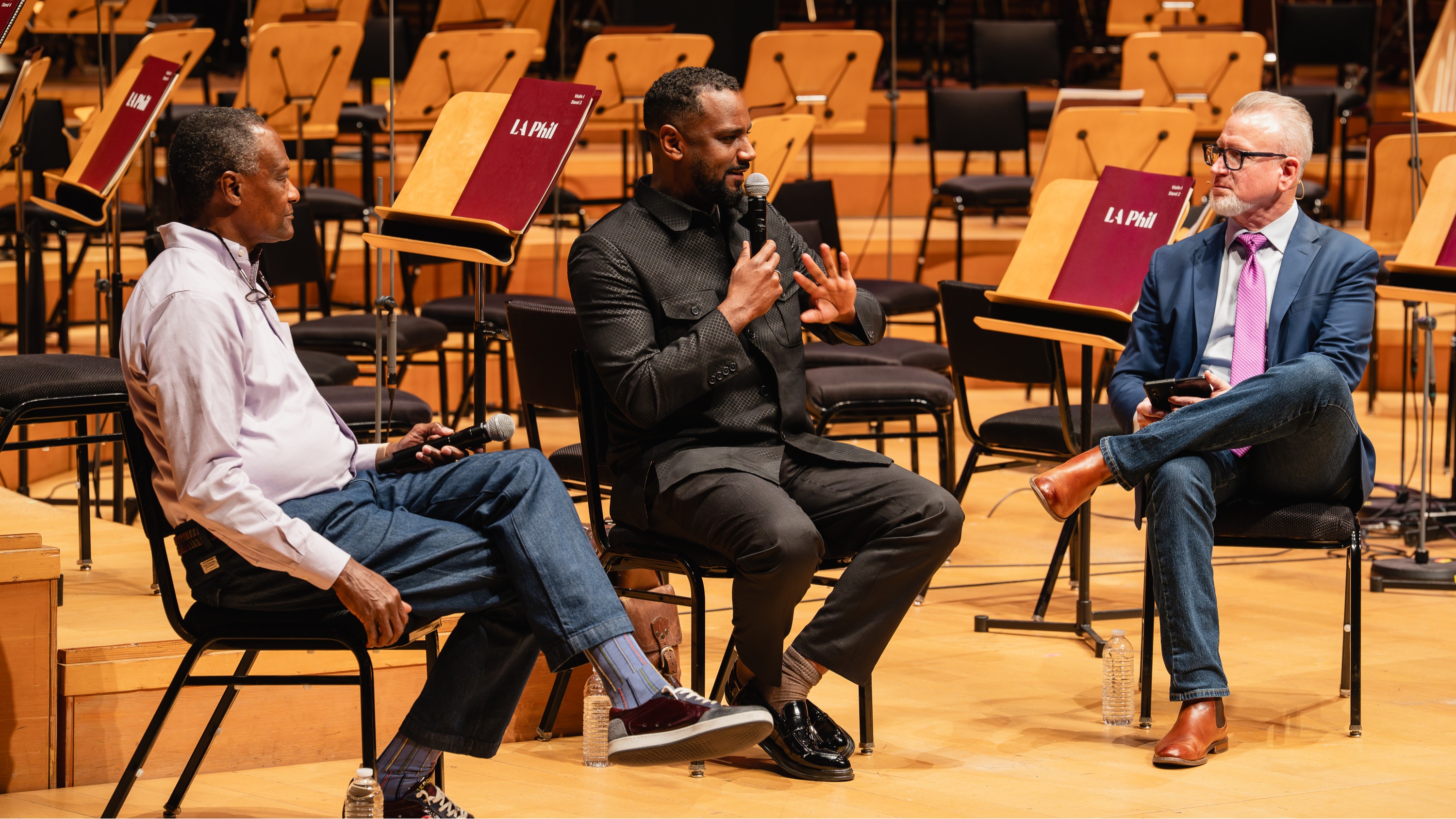
Wilkins has said what Simon does in Four Black American Dances (2022) is "to invite all of us from the very beginning of the evening to think about the body in motion." Known for intense multimedia works such as Requiem for the Enslaved, Simon synthesizes religious and secular traditions of the black community fusing classical and folk styles. Four American Dances spans high and low culture across its four movements: transcendent ritual practiced by slaves in “Ring Shout,” upper-class cotillion balls in “Waltz,” theatrical dance in “Tap,” and Christian worship in “Holy Dance.”
A loud snap — a stick slapping a wooden floorboard —opens the piece. Elsewhere, Simon makes inventive use of a battery of percussion: vibraphone, marimba, chimes, splash cymbal, shaker, whip, toms, hand claps. The drummer strikes the snare drum's side rim to mimic tap dancing. Principal Matthew Howard led the percussionists in a joyful romp.
Duke Ellington's toe-tapping The Nutcracker Suite also defies genre boundaries, recasting the music from Tchaikovsky's ballet for jazz band. Ellington and his longtime collaborator Billy Strayhorn scored the suite for his usual ensemble, with five saxophones (tenor, alto, baritone) leading the way — and no strings. He recorded this hot, swinging version in 1960.
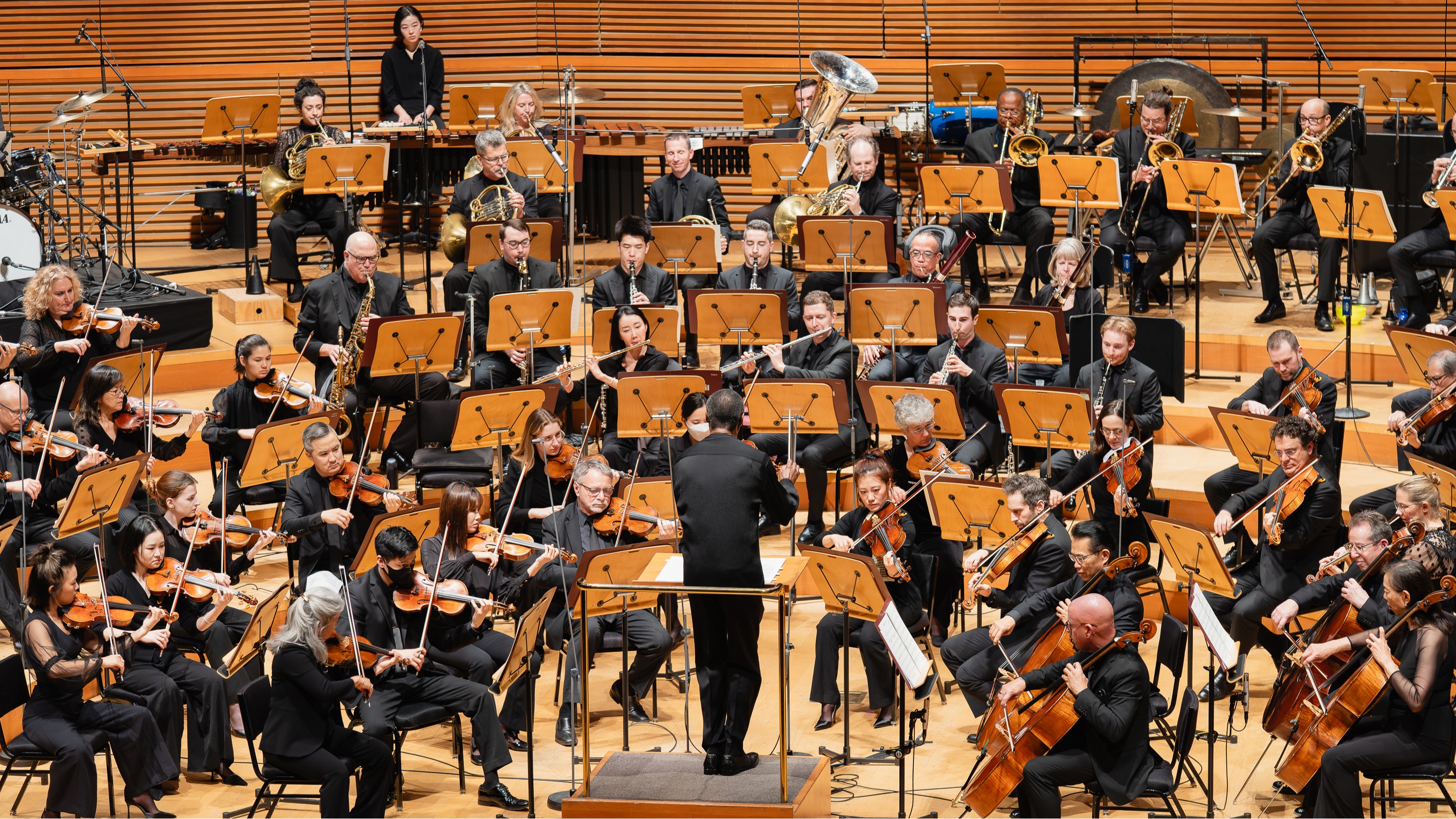
Jeff Tyzik's 1998 orchestral version added violins and other woodwinds. Wilkins conducted five of Tyzik's Ellington arrangements, including "Toot Toot Tootie Toot (Dance of the Reed Pipes)" and "Sugar Rum Cherry Dance (Dance of the Sugar Plum Fairy).”
While Tyzik's cooler and more sedate version doesn't pack the original's brassy punch, it still displays Ellington's arranging and composing chops. With plunger mutes, the pulsing of the trombones adds an aspect of sensuality. Three clarinets (one a bass), two oboes, alto and tenor saxophone gently wail. The drummer keeps up a steady vamp, moving to tom-toms in "Sugar Rum Cherry," supported by the pizzicato bass. Ellington replaced Tchaikovsky's famous icy celesta part with a film-noir-esque tenor sax. Wilkins guided the LA Phil with understated aplomb and rhythmic freedom, giving the soloists plenty of space to shine.
Tchaikovsky wrote his First Symphony in 1866, 25 years before The Nutcracker, and revised it in 1874. Although the composer said its composition caused him enormous “effort and anguish,” and feared he would die before completing it, the music is mostly cheerful and sweet, especially compared to the much darker symphonic works to come.

The symphony’s evocative title Zimnie gryozy (Winter Daydreams) transports us to a snowy afternoon, perhaps spent dozing in a comfortable armchair by the fire. It doesn't tell a particular story but instead creates a very Russian atmosphere of melancholy and nostalgia.
The strings found a silky, light tone in the LA Phil’s performance of the first movement's Mozartian main theme. Wilkins handled the tricky transitional passages with care, especially a dramatic three-measure pause before the cello entrance halfway through.
Principal Oboist Ryan Roberts introduced the second movement's sweetly wistful theme with tender nuance. In the extended (even over-extended) set of variations painting a scene Tchaikovsky called “Land of Gloom, Land of Mists,” Wilkins added momentum and tension to what can become a static tableau.
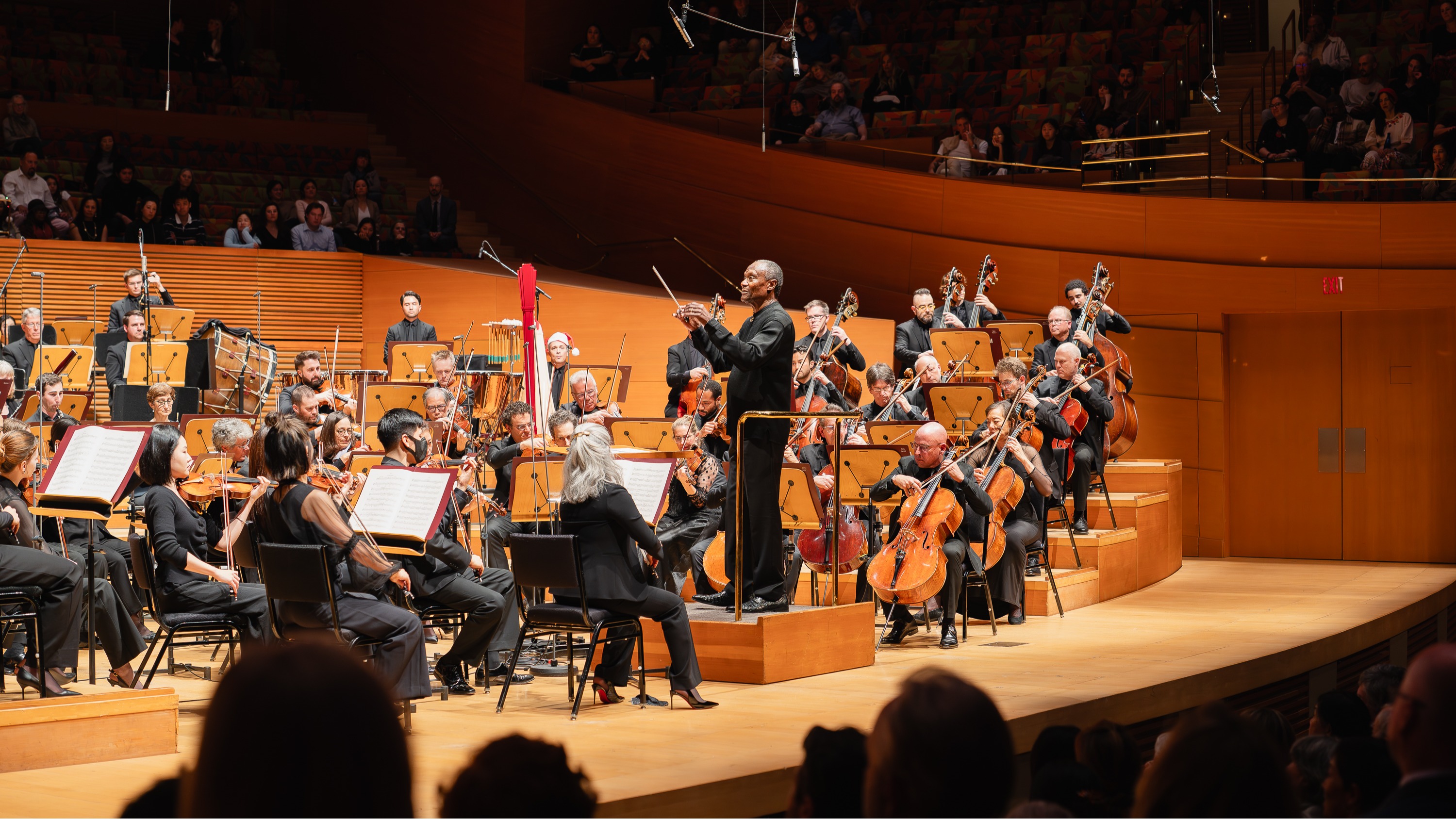
We expect waltzes from Tchaikovsky, and he delivers a gliding one in the middle of the third movement scherzo, a forerunner to the ballet waltzes to come. The finale, in optimistic D major, marches towards a majestically prolonged sequence of emphatic chords.
Wilkins saved a little surprise for an encore. After some hesitation from the orchestra, whose members had begun to exit the stage, he herded them back for The Nutcracker's "Waltz of the Flowers" — the inspiration for Ellington's more rambunctious "Dance of the Floreadores," heard earlier.
Harpist Emmanuel Ceysson even donned a Santa hat for the dazzling opening arpeggios.